Approaches of debugging in software engineering refer to structured techniques used to detect, analyze, and correct errors in software systems. Debugging is an essential activity in software development because it helps developers improve functionality, maintain system stability, and ensure accurate program execution. Effective debugging methods are widely used in web development, embedded systems, enterprise software, and mobile applications to reduce operational failures and improve software quality.
Key Takeaways
- Approaches of debugging in software engineering help identify and resolve software defects systematically.
- Common debugging methods include brute force, backtracking, and cause elimination.
- Hardware and software debugging tools support enterprise, embedded, and mobile application development.
- Testing detects defects, while debugging corrects them.
- Effective debugging improves software reliability, maintainability, and system performance.
Software Debugging Techniques and Methods
What are the main approaches of debugging in software engineering?
Approaches of debugging in software engineering are commonly classified into several structured methods based on how developers identify and analyze defects.
The most widely used debugging approaches include:
- Brute Force Method
- Uses logs, memory dumps, and print statements
- Suitable for small applications and quick diagnostics
- Backtracking
- Starts from the point where the error appears
- Traces program execution backward to locate the fault
- Cause Elimination
- Uses testing and hypothesis validation
- Eliminates possible causes until the root issue is identified
- Program Slicing
- Isolates relevant sections of code affecting a variable or output
- Common in complex enterprise applications
- Static and Dynamic Debugging
- Static debugging analyzes code without execution
- Dynamic debugging analyzes runtime behavior
| Debugging Approach | Primary Use | Common Environment |
| Brute Force | Quick issue tracing | Small applications |
| Backtracking | Logic error detection | Structured programs |
| Cause Elimination | Root-cause analysis | Enterprise systems |
| Program Slicing | Dependency analysis | Large codebases |
| Dynamic Debugging | Runtime monitoring | Web and mobile apps |
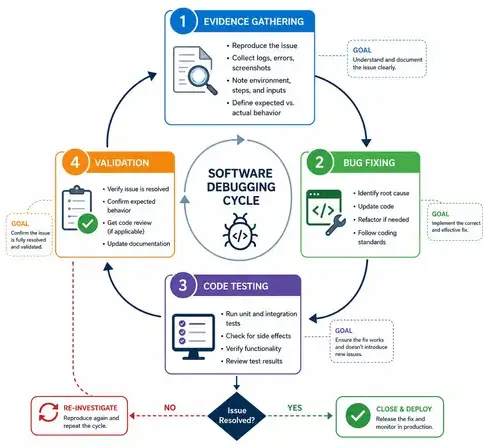
Many developers also explore debugging tools in software engineering, debugging techniques in embedded systems, and debugging diagrams when learning advanced troubleshooting workflows.
Why are debugging methods important in software engineering?
Approaches of debugging in software engineering help reduce software failures, improve maintainability, and support software validation standards.
Key benefits include:
- Faster identification of coding errors
- Improved application reliability
- Reduced downtime in production systems
- Better software testing outcomes
- Enhanced cybersecurity and stability
Industries such as healthcare, banking, aerospace, and automotive systems rely on structured debugging because software defects can affect compliance and operational safety.
Hardware and Software Debugging Tools
Which hardware and software debugging tools are commonly used?
Approaches of debugging in software engineering often depend on specialized debugging tools for code analysis and hardware communication.
Common software debugging tools include:
- GDB (GNU Debugger) for C and C++
- Visual Studio Debugger for enterprise applications
- Chrome DevTools for JavaScript debugging
- PyCharm Debugger for Python applications
Common hardware debugging tools include:
- JTAG debugging systems
- Oscilloscopes
- Logic analyzers
- Embedded system emulators
USB Debugging Software for Windows and PC
USB debugging software enables communication between Android devices and computers for testing and troubleshooting.
Typical uses include:
- Android app testing
- ADB command execution
- Device log monitoring
- Firmware diagnostics
Popular tools include Android SDK Platform Tools and Windows-based USB debugging utilities.
Software Used to Debug C++ and JavaScript Code
C++ and JavaScript applications require different debugging environments because of runtime and execution differences.
Examples include:
| Programming Language | Common Debugging Tool |
| C++ | GDB, LLDB |
| JavaScript | Chrome DevTools, Node Inspector |
| Python | PyCharm, pdb |
| Java | Eclipse Debugger |
Software Testing and Debugging Difference
What is the difference between software testing and debugging?
Approaches of debugging in software engineering differ from software testing because testing identifies defects, while debugging fixes them.
Testing and Debugging in Software Engineering
| Factor | Testing | Debugging |
| Purpose | Detect defects | Fix defects |
| Performed By | Testers and QA teams | Developers |
| Process Type | Validation activity | Correction activity |
| Output | Error reports | Corrected software |
Testing verifies whether software meets requirements, while debugging identifies the exact source of failures.
How does debugging support software quality assurance?
Approaches of debugging in software engineering improve software quality assurance by reducing runtime failures and increasing code reliability.
Debugging supports:
- Unit testing
- Integration testing
- System validation
- Embedded system verification
- Performance optimization
In embedded systems, debugging is especially important because hardware and software interactions can create timing-related or memory-related defects.
Conclusion
Approaches of debugging in software engineering provide structured methods for identifying, analyzing, and correcting software defects across modern development environments. Organizations increasingly combine debugging tools, testing frameworks, and runtime monitoring techniques to improve software reliability and maintain long-term system stability.
Modern development practices also integrate debugging with related workflows such as application development software with debugging to support faster deployment, maintenance, and quality assurance processes.
FAQ
What are the main approaches of debugging in software engineering?
The main approaches include brute force, backtracking, cause elimination, program slicing, and dynamic debugging.
What is debugging in programming?
Debugging is the process of identifying, analyzing, and correcting errors in software code.
Why is debugging important in software development?
Debugging improves software reliability, security, stability, and overall application performance.
What tools are used for debugging software?
Common tools include GDB, Visual Studio Debugger, Chrome DevTools, JTAG systems, and Android debugging utilities.
What is the difference between testing and debugging?
Testing identifies software defects, while debugging focuses on locating and fixing the root causes of those defects.
Sources
- https://www.geeksforgeeks.org/software-engineering/software-engineering-debugging-approaches/
- https://www.slideshare.net/slideshow/debugging-approachespptx/255506356
- https://wearebrain.com/blog/10-effective-debugging-techniques-for-developers/
- https://www.ranorex.com/blog/what-is-debugging-software-testing/
- https://www.ibm.com/think/topics/debugging
- https://www.studocu.com/in/messages/question/6469006/explain-different-debugging-approaches
- https://medium.com/@imtiyaazkhan/what-is-debugging-what-are-the-different-debugging-approaches-in-software-development-2b35d465cdfa
- https://www.tricentis.com/learn/debugging
- https://www.expertsmind.com/questions/what-are-the-main-approaches-in-debugging-30195889.aspx