What is the purpose of debugging in software testing? The purpose of debugging in software testing is to investigate the reasons behind software failures and resolve the code or configuration issuescausing them. While testing detects failures and unexpected behavior, debugging investigates why those issues occur and implements corrective actions. Effective debugging improves software stability, reduces maintenance costs, and supports the delivery of reliable applications across industries.
Key Takeaways
- Debugging focuses on identifying and fixing software defects.
- Testing discovers problems, while debugging resolves them.
- Structured debugging improves software quality and reliability.
- Root cause identification is a key element of efficient software debugging.
- Specialized tools support embedded, mobile, and system software debugging.
- Regression testing confirms that software enhancements and fixes preserve existing functionality.
- Debugging reduces maintenance costs and enhances user satisfaction.
What Is Debugging in Software Testing?
What is the purpose of debugging in software testing? Its primary objective is to identify the exact source of a software defect and eliminate it without introducing new errors.
Testing reveals that a problem exists, while debugging determines:
- Where the defect originated
- Why the defect occurred
- How the defect can be corrected
- Whether the fix resolves the issue permanently
Example
A login page rejects valid user credentials.
| Activity | Result |
| Testing | Detects login failure |
| Debugging | Finds incorrect database query |
| Fix | Corrects authentication logic |
| Retesting | Verifies successful login |
Debugging is a core practice within software engineering and quality assurance frameworks.
Why Do We Need Debugging in Software Testing?
What is the purpose of debugging in software testing? Organizations use debugging to improve software quality, reliability, security, and maintainability.
Key Benefits
- Reduces software failures
- Improves user experience
- Enhances application performance
- Prevents recurring defects
- Supports secure coding practices
- Lowers maintenance expenses
Industries such as healthcare, finance, aviation, and manufacturing rely on effective debugging because software errors can create operational and regulatory risks.
Many professionals also explore related topics such as software testing, defect management, software quality assurance, and root cause analysis.
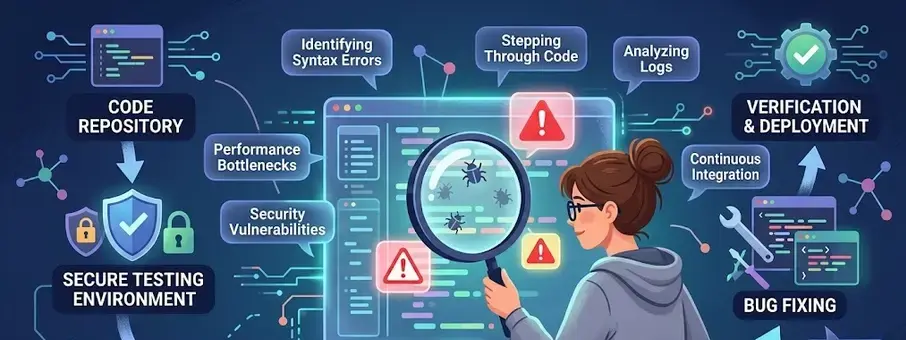
What Are the Steps in the Software Debugging Process?
What is the purpose of debugging in software testing? It is achieved through a structured defect-resolution workflow.
Common Debugging Steps
- Identify the defect
- Detect the issue through testing.
- Reproduce the problem
- Confirm that the defect occurs consistently.
- Analyze the root cause
- Review code, logs, and execution traces.
- Develop a solution
- Modify the affected code or configuration.
- Verify the fix
- Execute tests to validate correction.
- Perform regression testing
- Ensure related functions remain unaffected.
This process aligns with widely adopted software development and quality management practices.
What Is the Purpose of Debugging in Software Testing with Example?
What is the purpose of debugging in software testing? A practical example demonstrates its value.
Scenario
An e-commerce website calculates incorrect discount amounts during checkout.
Debugging Process
- Testing identifies inaccurate totals.
- Developers inspect pricing logic.
- A calculation formula error is discovered.
- Code is corrected.
- Validation confirms accurate discounts.
Without debugging, customers could receive incorrect pricing, leading to revenue loss and reduced trust.
How Does Debugging Differ from Testing?
What is the purpose of debugging in software testing compared with testing itself? The two activities serve different functions.
| Testing | Debugging |
| Detects defects | Fixes defects |
| Performed by testers and developers | Usually performed by developers |
| Evaluates software behavior | Investigates root causes |
| Reports failures | Resolves failures |
| Focuses on quality verification | Focuses on defect correction |
Testing and debugging work together to deliver reliable software products.
What Tools and Methods Support Software Debugging?
What is the purpose of debugging in software testing when using modern tools? Specialized tools accelerate defect detection and resolution.
Common Debugging Tools in Software Engineering
- Integrated Development Environment (IDE) debuggers
- Log analyzers
- Memory profilers
- Performance monitoring tools
- Static code analysis tools
- Remote debugging platforms
Debugging Embedded Software
Embedded systems debugging often uses:
- JTAG debuggers
- Hardware emulators
- Real-time tracing tools
- Microcontroller debugging environments
These tools help engineers diagnose issues in resource-constrained devices.
Android and Mobile App Debugging Software
Android developers commonly use:
- Android Studio Debugger
- Android Debug Bridge (ADB)
- Logcat
- Performance profiling tools
These solutions assist with application crashes, memory leaks, and device compatibility issues.
Debugging Methods in System Software
System software debugging frequently involves:
- Kernel debugging
- Memory analysis
- Process tracing
- Driver diagnostics
These methods support operating systems, firmware, and infrastructure software.
Conclusion
Debugging remains an essential software engineering activity because it transforms identified defects into verified solutions. Understanding defect classification, root cause analysis, and structured debugging processes helps organizations deliver more reliable software systems. For a broader understanding of practical techniques and workflows, readers may also explore how to debug software as a complementary topic.
FAQ
What is the purpose of debugging in software testing?
Debugging identifies the root cause of software defects and corrects them after testing reveals an issue.
What is debugging in software engineering?
Debugging helps developers identify code defects, analyze system issues, and apply corrective solutions to restore proper performance.
What is debugging in programming?
Debugging in programming involves examining code execution to identify and correct logic, syntax, or runtime errors.
What is the importance of debugging?
Debugging improves software reliability, security, performance, and maintainability while reducing operational risks.
What is debugging in C?
Debugging in C is the process of finding and fixing issues such as memory errors, pointer problems, logic defects, and program crashes.
Sources
- https://www.geeksforgeeks.org/software-engineering/software-engineering-debugging/
- https://www.ranorex.com/blog/what-is-debugging-software-testing/
- https://testfort.com/blog/what-is-debugging-in-software-testing
- https://www.frugaltesting.com/blog/what-is-debugging-in-software-engineering
- https://debugagent.com/software-testing-as-a-debugging-tool
- https://medium.com/@lenaztyson/why-software-testing-is-the-ultimate-debugging-tool-2ee320fc73e4
- https://www.theknowledgeacademy.com/blog/what-is-debugging/
- https://www.edureka.co/blog/what-is-debugging/
- https://www.janbasktraining.com/blog/debugging-guide-importance-challenges-strategies/