Healthcare organizations deal with private patient information every day. HIPAA-compliant medical software Medical histories, prescriptions, test results, insurance details, billing records, and appointment information all need to be handled carefully. A security mistake can put patient privacy at risk and create serious problems for a healthcare organization.
Key Takeaways
- Protects patient data: Helps keep sensitive health information secure.
- Controls access: Allows authorized staff to access the right information.
- Supports compliance: Provides security features that can help meet HIPAA requirements.
- Needs proper management: Software alone does not guarantee HIPAA compliance.
This is why HIPAA-compliant medical software is an important consideration when choosing a digital healthcare system. Such software is designed to support the security and privacy of electronic protected health information (ePHI) through appropriate safeguards.

What Is HIPAA-Compliant Medical Software?
HIPAA-compliant medical software is software that can support healthcare organizations in meeting applicable HIPAA requirements when it handles protected health information.
It may be used for a wide range of healthcare activities, including:
- Patient record management
- Appointment scheduling
- Medical billing
- Telehealth services
- Clinical documentation
- Prescription management
- Patient communication
- Insurance and claims processing
- Laboratory and diagnostic information
HIPAA does not require healthcare providers to use one particular type of software or technology. The Security Rule is designed to be flexible and technology-neutral. Organizations are expected to choose safeguards that are appropriate for their size, systems, and security risks.
Also Read:Medical Software Expert
Important Features to Consider
Not every medical software platform offers the same level of security. Before choosing a system, healthcare organizations should look carefully at its security controls on HIPAA-compliant medical software.
| Feature | Purpose |
| User authentication | Helps verify the identity of people accessing the system |
| Role-based access | Restricts information according to a user’s responsibilities |
| Audit trails | Helps track activity involving electronic health information |
| Data protection | Helps protect information from unauthorized access |
| Secure data transmission | Protects information while it moves between systems |
| Backup and recovery | Helps restore important information after a disruption |
| Access controls | Limits system access to authorized users |
| BAA support | Helps establish appropriate arrangements with business associates |
HIPAA’s Security Rule includes technical safeguards covering access control, audit controls, authentication, data integrity, and transmission security.
Why Does HIPAA Compliance Matter?
Patient information is valuable and highly sensitive. Unauthorized access can expose personal and medical details, while data loss can interfere with patient care and daily operations. Healthcare organizations also need to identify potential risks and take reasonable steps to address them.
For a medical practice, this means security should not be treated as something handled only by the software provider. Employees, devices, passwords, access permissions, internal policies, and third-party services also play a role.
Is Cloud-Based Medical Software HIPAA Compliant?
Cloud-based systems can be used to handle ePHI, but healthcare organizations need to understand how the cloud provider handles that information.
When a cloud service provider acts as a business associate and handles ePHI on behalf of a covered entity, appropriate contractual arrangements, including a Business Associate Agreement where required, are important. The responsibilities of the provider and healthcare organization should be clearly understood.
Before selecting a cloud-based medical platform, ask:
- How is patient information protected?
- Who can access the data?
- Are user activities recorded?
- What security controls are available?
- How are backups managed?
- Does the provider enter into a BAA when required?
- What happens to patient data if the service is discontinued?
Benefits of HIPAA-Compliant Medical Software
Choosing software with appropriate security controls can help healthcare organizations:
- Protect sensitive patient information
- Manage access to medical records
- Monitor user activity
- Support secure communication
- Reduce avoidable security risks
- Keep important healthcare information organized
- Support safer digital workflows
However, purchasing software alone does not make an organization fully HIPAA compliant. Compliance also involves risk analysis, policies, workforce practices, training, access management, and ongoing security reviews.
How to Choose the Right Software
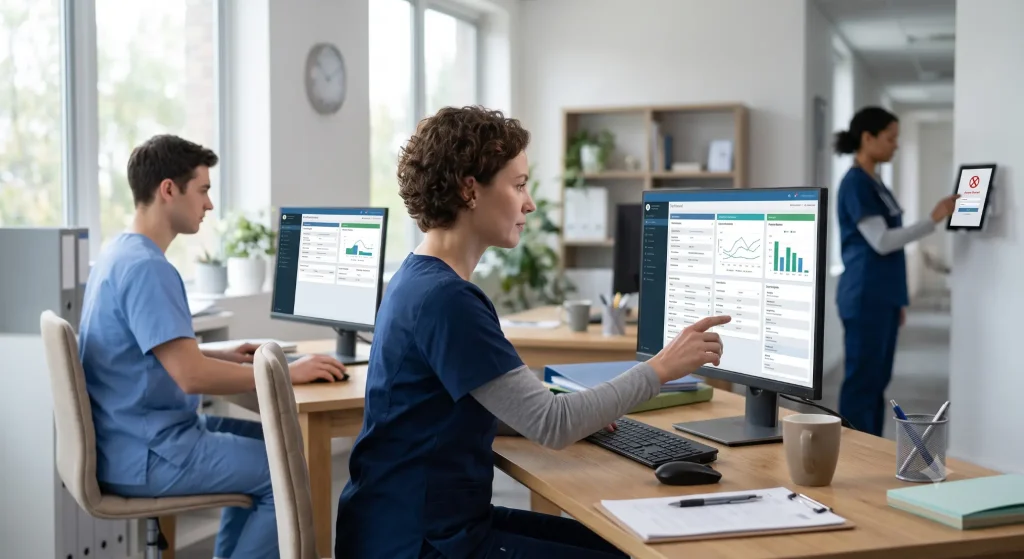
Selecting medical software should involve more than comparing features and prices. A good system needs to work well for your practice, protect sensitive patient information, and be practical for your staff to use every day.
Keep these factors in mind before choosing a platform:
- Data security: Find out what measures the software uses to protect patient information and prevent unauthorized access.
- Access management: Check whether administrators can assign different permissions based on each employee’s role and responsibilities.
- Activity tracking: A useful system should keep records of important actions, such as access to or changes made to patient records.
- Backup and recovery: Ask how patient data is backed up and what procedures are available if information is lost or the system becomes unavailable.
- Business Associate Agreement: If the software provider will handle protected health information for your practice, check whether a BAA is needed and whether the provider offers one.
- User experience: The software should be straightforward enough for staff to learn and use without creating unnecessary delays or confusion.
- Future growth: Consider whether the platform can continue to support your practice if you add more patients, employees, locations, or services.
- Technical support: Look for a provider that offers dependable assistance, system maintenance, and regular security updates.
Ultimately, the right medical software is not simply the one with the most features. It should offer suitable security measures, match the way your practice operates, and remain manageable as your needs change.
Also Read: Cloud Medical Software
Frequently Asked Questions
1. What is HIPAA-compliant medical software?
It is healthcare software designed to support the protection of electronic protected health information through appropriate security and privacy measures.
2. Is HIPAA compliance only about encryption?
No. HIPAA security involves several areas, including access controls, authentication, audit controls, risk management, data integrity, and transmission security.
3. Can small medical practices use cloud-based software?
Yes. Cloud technology can be used by healthcare organizations when appropriate safeguards are in place and applicable HIPAA requirements are addressed.
4. What is a Business Associate Agreement?
A Business Associate Agreement, commonly called a BAA, is a written arrangement that establishes certain responsibilities when a business associate handles protected health information for a covered entity.
5. Does HIPAA require a specific medical software system?
No. The HIPAA Security Rule is technology-neutral. Organizations can select security measures based on their circumstances, risks, resources, and technical environment.
6. Is buying HIPAA-compliant software enough for compliance?
No.Healthcare organizations also need appropriate policies, procedures, risk assessments, employee practices, and ongoing security management.