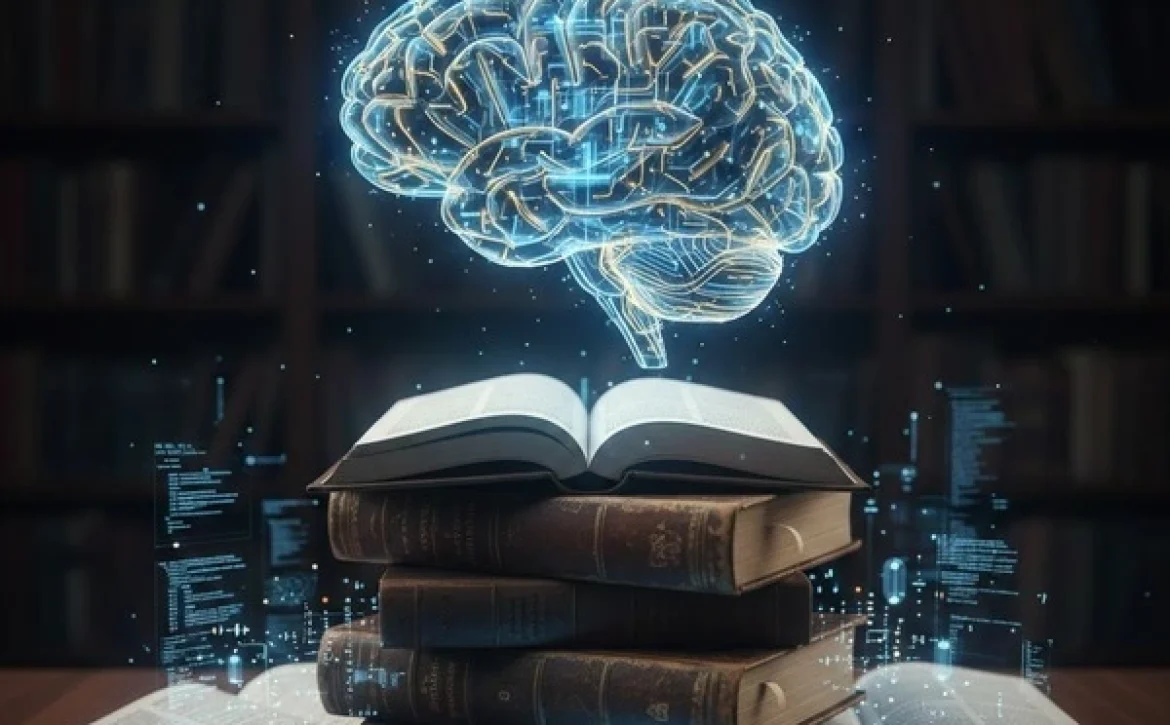
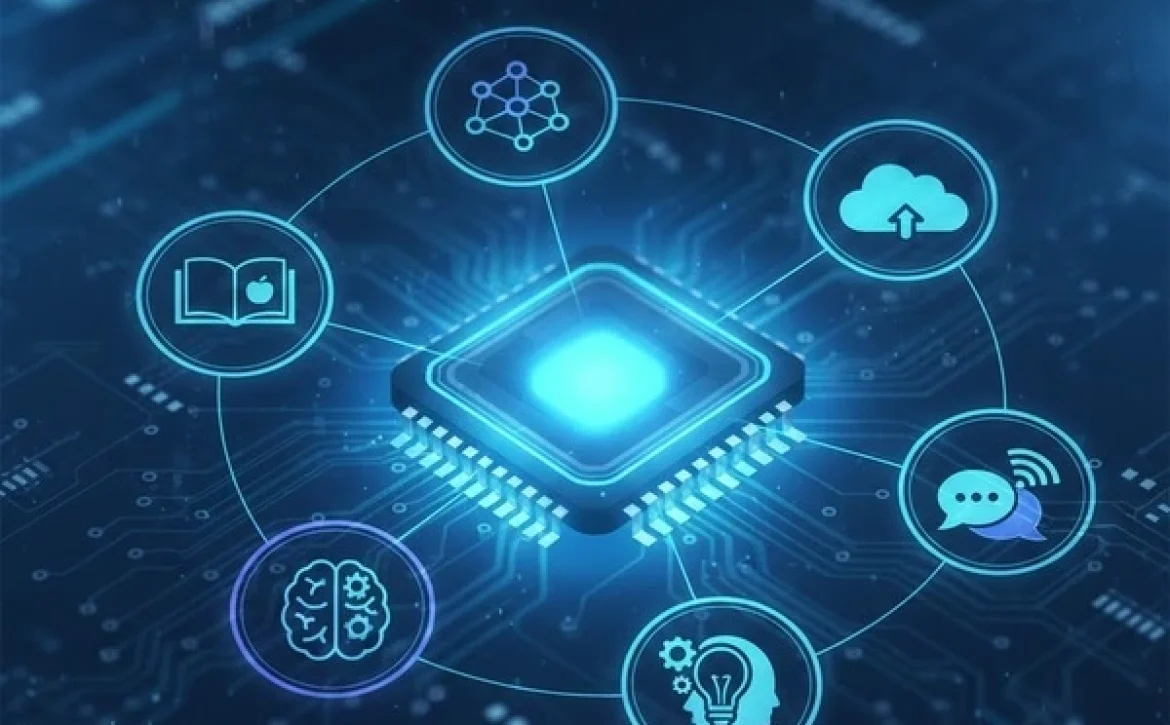
AI and education refer to the integration of artificial intelligence technologies within academic environments to improve teaching efficiency, learning experiences, and administrative processes. By transforming both traditional classrooms and digital learning systems, AI enables more effective and customized educational outcomes. Its functions extend from creating personalized learning paths to implementing intelligent assessment solutions.
Key Takeaways
- AI and education personalize learning experiences and streamline teaching.
- Adaptive learning, intelligent assessment, and virtual assistants are primary applications.
- Implementation challenges include privacy, equity, and teacher preparedness.
- Integration supports improved engagement, retention, and learning outcomes.
Main Applications of AI in Education:
AI technologies are increasingly being utilized across schools, universities, and e-learning platforms in several impactful ways. Major applications include:
- Personalized Learning: Tailoring lessons and educational materials to each student’s abilities and progress through adaptive learning systems.
- Intelligent tutoring systems: Providing instant feedback and guidance on assignments.
- Administrative automation: Automating grading, scheduling, and enrollment processes.
- Predictive analytics: Identifying students at risk and recommending interventions.
- Virtual assistants: Supporting students and teachers with 24/7 information access.
Example: Khan Academy’s AI tools for education track student progress and recommend tailored exercises.
How do AI and education improve teaching effectiveness?
AI and education enhance teaching by supporting instructors with data-driven insights.
- Performance dashboards: Track student engagement and mastery of concepts.
- Lesson planning tools: Suggest resources and exercises based on class performance.
- Real-time feedback: Provides instant recommendations during lessons.
Educational institutions increasingly integrate AI and education courses to train teachers in these tools.
What are notable AI in education examples?
AI and education examples highlight practical classroom and online applications:
| Application | Description | Example |
| Adaptive Learning | Personalized content paths | DreamBox Learning |
| Chatbots | Instant student support | AdmitHub |
| Automated Assessment | AI grading essays and quizzes | Gradescope |
| Learning Analytics | Identify knowledge gaps | Smart Sparrow |
Related context: AI is often discussed alongside free AI tools for education, education AI for teachers, and artificial intelligence in education research papers.
How does AI support student engagement and learning outcomes?
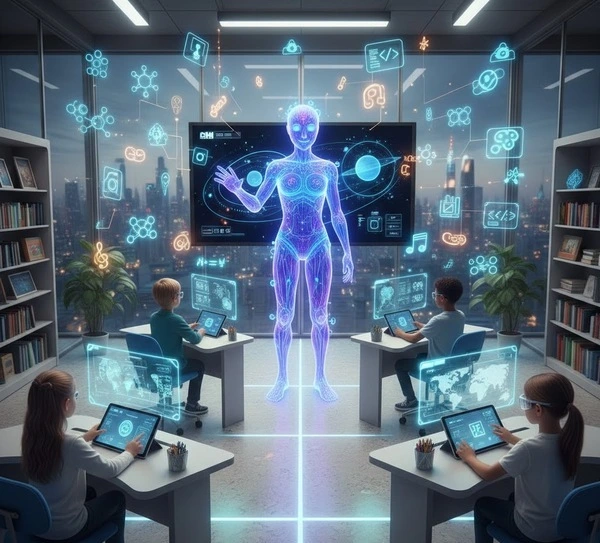
AI and education tools enhance student engagement by providing interactive, tailored experiences:
- Gamified learning modules that adjust difficulty.
- Multimedia recommendations based on learning style.
- Machine learning algorithms detect and notify users of assignments that are missing or unfinished.
These methods increase participation and retention, aligning with UNESCO digital education standards.
What challenges exist in implementing AI and education?
While AI and education provide benefits, challenges include:
- Data privacy: Ensuring the protection of sensitive student information.
- Digital equity: Access to AI tools may vary by region.
- Teacher training: Educators require adequate preparation for AI integration.
- Bias and accuracy: Ensuring AI recommendations are fair and evidence-based.
Addressing these challenges is critical for responsible adoption in schools and universities.
Conclusion
AI and education offer measurable improvements in learning personalization, teaching efficiency, and student outcomes. Understanding the classifications of applications—adaptive learning, assessment, analytics, and virtual support—enables practical implementation. For broader insight, see how ai education in india is evolving in schools and higher education institutions.
FAQ
How is AI used in education?
AI is used to personalize learning, automate grading, provide tutoring, and analyze student performance.
What are 7 types of AI?
AI can be classified into seven types: reactive machines, limited memory, theory of mind, self-aware AI, machine learning, natural language processing, and expert systems.
How is AI going to impact education?
AI will improve personalized learning, optimize administrative processes, and provide data-driven teaching insights.
What are 20 benefits of AI?
Benefits include personalized learning, automated grading, adaptive testing, predictive analytics, virtual assistants, accessibility support, engagement tracking, administrative efficiency, resource recommendations, early intervention, language translation, gamification, plagiarism detection, curriculum optimization, collaboration tools, student performance forecasting, content creation, intelligent tutoring, remote learning facilitation, and improved feedback systems.
Sources
https://www.unesco.org/en/digital-education/artificial-intelligence
https://www.aiforeducation.io/
https://onlinedegrees.sandiego.edu/artificial-intelligence-education/
https://www.eduaide.ai/
https://education.illinois.edu/about/news-events/news/article/2024/10/24/ai-in-schools–pros-and-cons
https://www.sciencedirect.com/science/article/pii/S0957417424010339
https://www.khanacademy.org/college-careers-more/ai-for-education