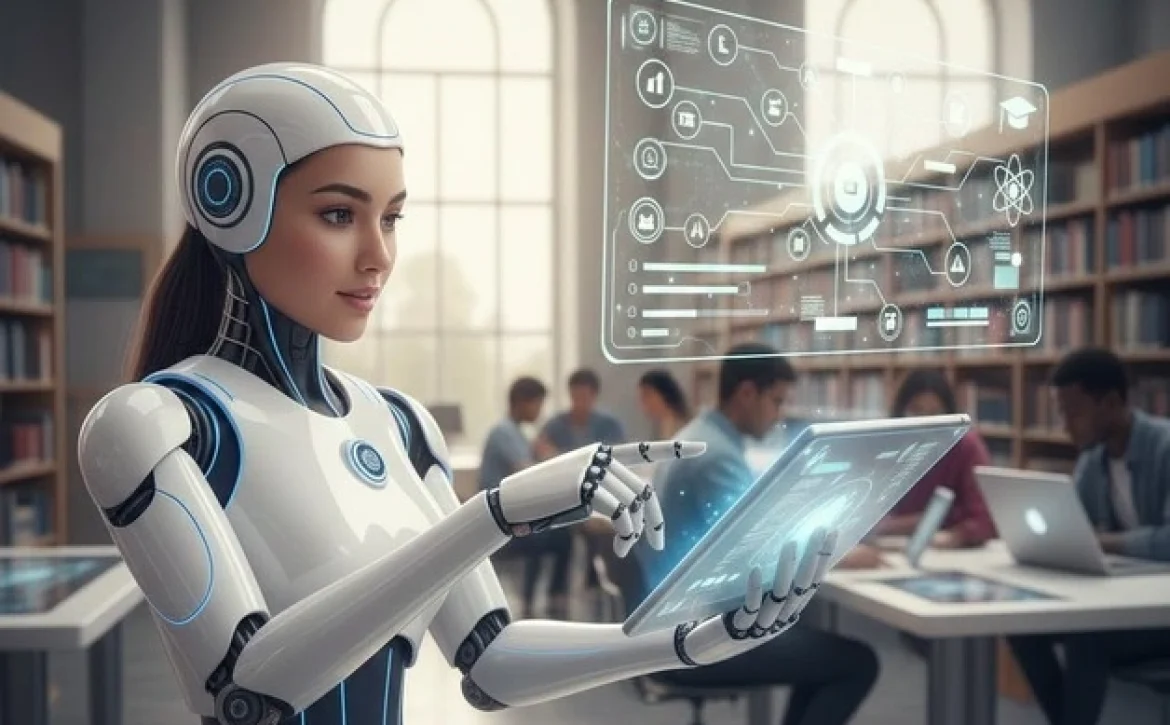
Research on AI in education investigates the use of artificial intelligence in learning environments, showing how it refines teaching practices, personalizes instruction, and boosts administrative productivity. How are these applications shaping schools, universities, and lifelong learning programs?
Key Takeaways
- AI supports adaptive and personalized learning experiences.
- Automation supported by AI reduces the workload of administrative tasks.
- Notable AI-powered platforms include Duolingo, Knewton, and Gradescope.
- Benefits include efficiency, engagement, and insights; risks involve privacy and bias.
- Emerging trends focus on hybrid models, predictive analytics, and virtual assistants.
What are the main applications of AI in education?
AI in education articles often highlight these applications:
- Personalized Learning Platforms: AI adjusts content and pacing based on student performance.
- Intelligent Tutoring Systems: Provide real-time guidance and feedback for individual learners.
- Automated Grading: Reduces time spent on assessments while ensuring consistency.
- Administrative Efficiency: AI streamlines enrollment, scheduling, and resource allocation.
- Predictive analytics: enables educators to foresee academic risks and implement personalized intervention strategies.
Example: Illinois schools use predictive analytics to improve student retention rates by identifying struggling learners early.
How does AI improve classroom learning experiences?
AI in education articles demonstrate improvements through:
- Adaptive learning content tailored to student needs.
- AI-driven educational games and simulations for active learning.
- Through real-time analytics, institutions can assess participation and understanding as learning unfolds.
| Benefit | Description |
| Personalized pace | Learners progress according to skill level |
| Instant feedback | Errors and misconceptions corrected immediately |
| Enhanced engagement | Interactive AI simulations motivate learning |
What are some AI in education examples currently in use?
AI in education articles cite practical examples:
- Duolingo: Artificial intelligence enables Duolingo to create adaptive and personalized language lessons.
- Knewton: Adaptive learning platform for K–12 students.
- Gradescope: Automates grading for essays and assignments.
- ChatGPT for Education: Assists students with writing, coding, and research tasks.
These examples illustrate AI integration across K–12, higher education, and online learning programs.
What are the benefits and drawbacks of AI in education?
AI in education articles often discuss both sides:
Pros:
- Supports individualized learning
- Reduces teacher workload
- Provides data-driven insights
- Enhances engagement
Cons:
- Privacy concerns regarding student data
- Potential over-reliance on technology
- Unequal access for under-resourced schools
Contextual note: People also search for AI in education articles 2022 and artificial intelligence in education research paper for historical perspectives and case studies.
How does AI affect education negatively?
AI in education articles identify key risks:
- Reduced critical thinking if overused
- Algorithmic biases in learning recommendations
- High implementation costs for schools
- Data security vulnerabilities
Addressing these challenges requires policy guidance and ethical frameworks for AI deployment in classrooms.
What are the emerging trends in AI for schools and universities?
AI in education articles highlight trends including:
- Hybrid learning models combining AI tools with traditional teaching.
- Virtual teaching assistants aiding educators.
- Advanced predictive analytics for personalized curriculum design.
- Gamified learning environments powered by AI.
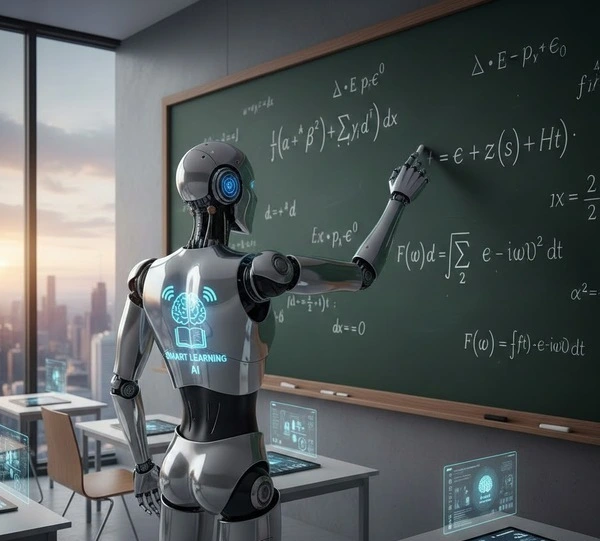
These trends indicate a move toward more adaptive, student-centered education systems.
Conclusion
AI-focused educational publications emphasize its growing influence on instruction, learning, and school management. Recognizing both its strengths and drawbacks equips decision-makers to use AI effectively and ethically. For broader insights on technology in learning, see ai and education.
FAQ
How is AI used in education?
The use of AI in education spans personalized instruction, automated scoring, intelligent tutor systems, and institutional support functions.
What are 7 types of AI?
Reactive machines, limited memory AI, theory of mind, self-awareness, machine learning, natural language processing, and expert systems represent key branches of artificial intelligence.
How is AI going to impact education?
AI will enhance personalization, improve student outcomes, and streamline administrative processes.
What are 20 benefits of AI?
Includes personalized learning, predictive analytics, automated grading, engagement tools, time efficiency, adaptive content, real-time feedback, and data-driven decisions, among others.
Sources
https://www.unesco.org/en/digital-education/artificial-intelligence
https://onlinedegrees.sandiego.edu/artificial-intelligence-education/
https://education.illinois.edu/about/news-events/news/article/2024/10/24/ai-in-schools–pros-and-cons
https://www.nea.org/nea-today/all-news-articles/how-ai-changing-way-you-teach
https://edtechmagazine.com/k12/article/2024/09/ai-education-2024-educators-express-mixed-feelings-technologys-future-perfcon
https://www.researchgate.net/publication/369545925_Role_of_AI_in_Education
https://www.ucanwest.ca/blog/education-careers-tips/advantages-and-disadvantages-of-ai-in-education