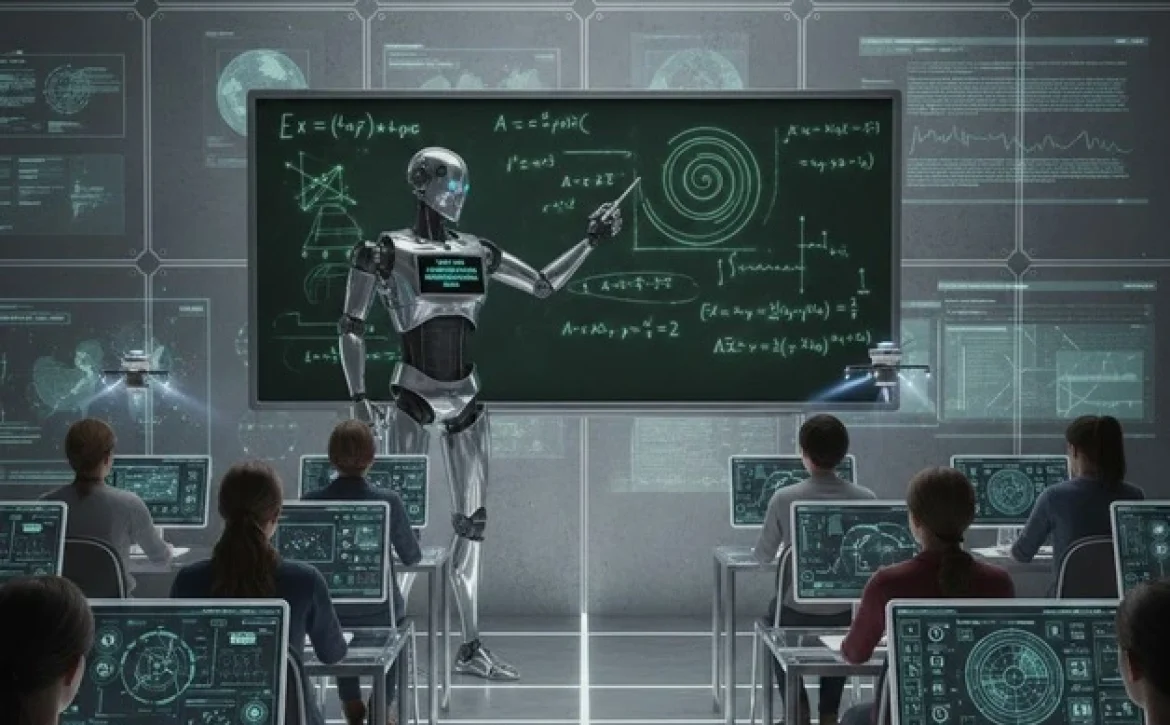
The impact of AI in education is the use of advanced computational tools to optimize learning experiences, teaching strategies, and administrative operations. How are educational institutions leveraging these systems to improve student outcomes, engagement, and operational efficiency? Educators, policymakers, and learners must recognize this impact to make informed decisions.
Key Takeaways
- AI in education supports personalized learning for every student.
- Administrative operations, including grading and class scheduling, are made more efficient through automation.
- Engagement and learning outcomes improve through adaptive and gamified methods.
- AI enables precise assessment, feedback, and predictive performance insights.
- Challenges include privacy, equity, and over-reliance on technology.
How does AI improve personalized learning for students?
Artificial intelligence in education promotes customized learning paths that cater to every learner’s abilities and progress.
- Adaptive platforms automatically adjust lesson difficulty based on student outcomes.
- Targeted feedback: Instant recommendations help students improve weak areas.
- Learning analytics: Tracks progress, engagement, and retention rates.
Example: Platforms like DreamBox and Smart Sparrow personalize math and science content according to each learner’s pace and comprehension.
In what ways does AI assist educators in administrative tasks?
AI optimizes school management by reducing manual administrative duties and increasing efficiency levels.
- Automated grading: Speeds up assessment of objective tests and written assignments.
- Scheduling and resource allocation: Optimizes class timetables and staff assignments.
- Student service automation: Chatbots provide instant answers to recurring questions..
Table: AI Administrative Use Cases
| Task | AI Solution Example | Benefit |
| Grading | Gradescope | Faster evaluations, error reduction |
| Scheduling | AI timetabling tools | Resource efficiency |
| Student support | Chatbot assistants | Immediate responses to queries |
What are the positive impacts of AI on student engagement?
The impact of AI in education enhances student engagement through interactive and immersive learning methods.
- Gamified learning: AI integrates game mechanics to motivate participation.
- Virtual simulations: AI-based labs allow hands-on experimentation remotely.
- Predictive insights: Identifies students at risk of disengagement early.
Related areas of interest include personalized learning platforms, adaptive testing, and interactive educational apps.
How does AI support assessment and feedback?
AI-driven assessment tools offer rapid, precise, and scalable evaluation methods.
- Formative assessment: Continuous feedback guides learning improvement.
- Summative assessment: Automated marking of assignments and tests ensures consistency.
- AI-assisted writing analysis: Tools validate originality and refine students’ writing quality.
Example: Turnitin combines plagiarism detection with AI-based writing feedback.
What are the challenges and limitations of AI in education?
Even with its numerous advantages, AI implementation in education has certain obstacles.
• Data concerns security: Educational institutions must comply with GDPR and FERPA to protect learners’ data.
- Equity gaps: Unequal access to technology can widen educational disparities.
- Dependence risk: Over-reliance may reduce human teaching interaction.
How is AI shaping the future of educational institutions?
AI transforms both curriculum delivery and institutional operations.
- Predictive analytics: Anticipates enrollment trends and resource needs.
- Smart classrooms: AI-enabled devices facilitate blended and hybrid learning.
- Curriculum optimization: AI identifies effective teaching methods and content alignment.
Conclusion
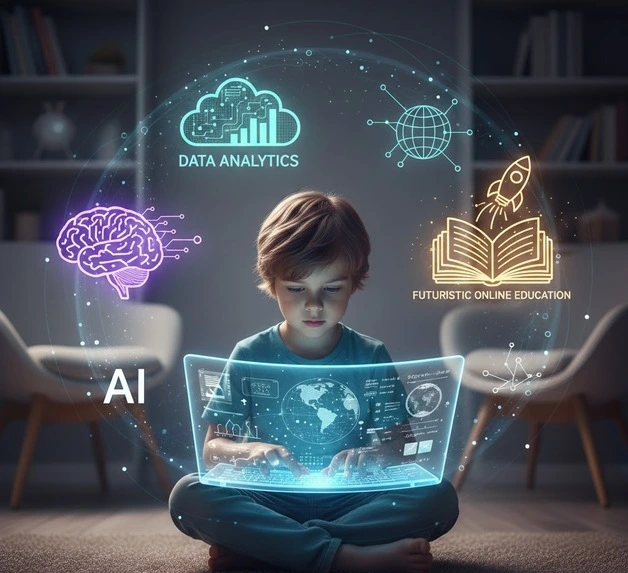
The impact of AI in education demonstrates practical benefits in personalized learning, administrative efficiency, and student engagement. More educational institutions are turning to these technologies to elevate student success and tackle operational issues. For a deeper perspective, see our related discussion on ai used in education.
FAQ
What are 5 positive impacts of AI?
Personalized learning
Automated grading
Student engagement improvement
Administrative efficiency
Predictive insights for student performance
What is the impact of AI in Indian education?
AI in India enhances adaptive learning, supports teacher efficiency, and improves digital access in schools.
What was the impact of artificial intelligence?
AI has improved personalized instruction, automated administrative tasks, and increased data-driven decision-making in education.
Can AI improve student engagement?
Yes, AI increases engagement through gamified learning, virtual labs, and predictive support systems.
Does AI reduce teacher workload?
Yes, AI automates grading, scheduling, and repetitive tasks, allowing teachers to focus on instruction.
Sources
https://www.eschoolnews.com/digital-learning/2024/02/05/impact-of-artificial-intelligence-in-education/
https://www.ucanwest.ca/blog/education-careers-tips/advantages-and-disadvantages-of-ai-in-education
https://www.lpu.in/blog/the-impact-of-artificial-intelligence-on-education-in-india/
https://education.illinois.edu/about/news-events/news/article/2024/10/24/ai-in-schools–pros-and-cons
https://www.kasigaschool.com/blog/positive-and-negative-effects-of-ai-on-education/
https://www.unesco.org/en/digital-education/artificial-intelligence
https://www.edweek.org/technology/rising-use-of-ai-in-schools-comes-with-big-downsides-for-students/2025/10
https://keymakr.com/blog/how-ai-is-impacting-on-the-education-system/