AI in Ophthalmology: How Intelligent Technology is Reshaping the Future of Eye Care
The integration of artificial intelligence (AI) into ophthalmology is not just a technological advancement-it’s a paradigm shift. By merging clinical expertise with machine learning, AI is redefining diagnostics, surgical precision, patient engagement, and practice efficiency. For ophthalmologists, this evolution promises to alleviate administrative burdens, enhance decision-making, and prioritize patient-centered care.
Below, we explore how AI is transforming every facet of eye care, from early disease detection to ethical adoption.
Streamlining Clinical Workflows: Liberating Time for Patient Care
Administrative tasks consume 30-40% of an ophthalmologist’s day. AI is tackling these inefficiencies head-on, automating repetitive processes and integrating seamlessly with EHR systems.
Automating Documentation
Ambient Voice Assistants: One of the trending AI technologies today in Ophthalmology is Speech-to-Text transcription that listens to doctor-patient communications and transcribes notes in real-time, drafts structured notes, and auto-populates EHR fields. Clinicians save 7-10 minutes per visit, reclaiming hours weekly for meaningful patient interactions.
Smart Templates: AI-generated templates adapt to subspecialties. For instance, a retina specialist’s template auto-fills fields for intravitreal injections, while a pediatric ophthalmologist’s template prioritizes amblyopia screening metrics.
Prior Authorization & Revenue Cycle Management
- AI-Powered Appeals: Billing systems with built-in intelligence analyze denied claims, cross-reference clinical data (e.g., visual field tests, OCT scans), and autogenerate appeals with insurer-specific rationale. This saves the staff hours, which usually get spent arguing with payers, trying to resolve a claim issue; Many of the time just one claim issue requires them to do a lot of to and fro-ing, usually because the staff is less aware of the clinical side of errors and it takes them very long to figure it out, in the end requiring the doctor to take some time off their busy schedule and intervene in the matter to have it resolved. However, AI can take care of these things in a matter of minutes, as it has been trained on all the aspects necessary and with seamless interoperability, it can verify all the necessary aspects quickly and provide fast resolutions.
- Real-Time Coding Guardrails: Imagine finishing a long clinic day, only to face denied claims because of a mismatched billing code. AI steps in as your silent partner, scanning every chart in real time. It catches errors-like pairing a retinal imaging code (CPT 92134) with a glaucoma diagnosis (ICD-10 H40.9)-before claims even leave your desk. No more headaches from rejected claims or wasted hours unraveling billing tangles. With fewer denials and faster reimbursements, you’re free to focus on what matters: your patients and your craft.
Impact on Practice Economics

A 2024 MGMA report highlighted that clinics using AI-driven administrative tools recovered $300,000 annually in lost revenue and reduced staffing costs by 20%.
Personalized Care: From One-Size-Fits-All to Precision Medicine
AI’s ability to synthesize historical data, genetic profiles, and lifestyle factors is enabling hyper-personalized treatment plans.
Predictive Analytics in Chronic Disease
- Glaucoma Management: AI is revolutionizing glaucoma management by analyzing intraocular pressure trends, medication adherence patterns, and OCT imaging data to predict which patients are at highest risk of progression. These smart algorithms can detect subtle changes in retinal nerve fiber layer thickness and identify nonadherent patients up to 18 months before traditional methods, enabling earlier interventions. Clinics using these predictive tools report better outcomes, with one study showing a 40% reduction in disease progression through timely treatment adjustments and targeted patient monitoring.
- Post-Operative Risks: Algorithms assess variables like corneal thickness, diabetes status, and surgical techniques to predict cystoid macular edema (CME) risk postcataract surgery. Proactive NSAID regimens reduced CME incidence by 40% in a 2024 trial.
Patient Engagement Reimagined
- AI Chatbots: AI-powered chatbots are transforming patient communication by instantly answering common questions like post-op care instructions or billing inquiries. These smart assistants handle routine queries (e.g., “When can I drive after dilation?” or “What’s my copay for a retinal scan?”), freeing your staff to focus on complex patient needs. Clinics using this technology report cutting call center volume in half while improving patient satisfaction scores by 15-20%. The chatbots learn from each interaction, continuously improving their ability to provide accurate, helpful responses in multiple languages.
- Tailored Education: AI now personalizes health education by analyzing patient demographics, language preferences, and health literacy levels. For a Spanishspeaking glaucoma patient, it might refer a video tutorial demonstrating proper drop administration techniques. For a busy executive with dry eyes, it could suggest a quick-reference infographic about lifestyle modifications. This hyper-relevant approach has been shown to boost medication adherence by 35% and reduce noshow rates by 25%. The system automatically updates materials as treatment protocols evolve, ensuring every patient receives current, culturally appropriate guidance.
Revolutionizing Diagnostics: AI as a Collaborative Partner
Ophthalmology thrives on precision, and AI is emerging as a critical ally in interpreting complex data. Retinal scans, visual field tests, and optical coherence tomography (OCT) generate vast datasets that AI can analyze with unparalleled speed and accuracy.
Early Detection of Sight-Threatening Conditions
- Diabetic Retinopathy (DR): AI algorithms evaluate fundus images to identify microaneurysms, hemorrhages, and exudates. A 2023 study in Nature Medicine found that AI systems achieved 98% sensitivity in detecting DR, enabling timely interventions that prevent blindness.
- Glaucoma Progression: Machine learning models track changes in optic nerve head topography and retinal nerve fiber layer thickness. These tools predict which patients will require surgical intervention, allowing ophthalmologists to act before irreversible vision loss occurs.
- Age-Related Macular Degeneration (AMD): AI analyzes OCT scans for drusen volume and geographic atrophy, stratifying patients into risk categories. Early detection enables lifestyle modifications and anti-VEGF therapy to slow progression.
Beyond Imaging: Predictive Biomarkers
AI is uncovering novel biomarkers for diseases like keratoconus and uveitis. For example, algorithms analyzing corneal topography patterns can predict ectasia progression years before clinical symptoms manifest.
Surgical Innovation: Enhancing Precision Beyond Human Limits
AI is redefining ophthalmic surgery, blending machine precision with human expertise.
Robotic Assistance & Real-Time Guidance
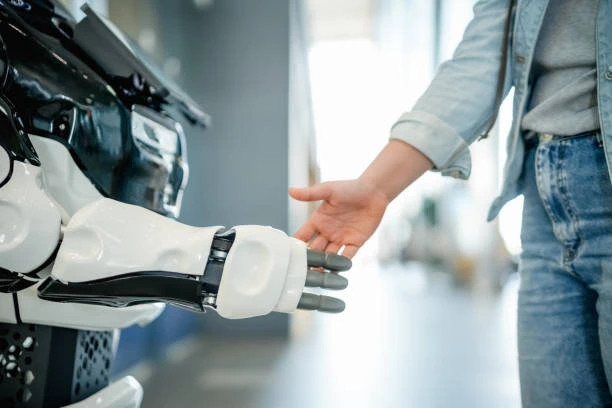
- Laser-Assisted Cataract Surgery: AI precisely calculates capsulotomy size and IOL positioning using 3D imaging, reducing human error. Studies show 22% better refractive outcomes and faster visual recovery compared to manual techniques.
- Vitreoretinal Procedures: AR overlays project real-time vascular maps during surgery, helping surgeons avoid delicate vessels. This “X-ray vision” cuts iatrogenic retinal tears by 30% in complex vitrectomies.
Outcome Forecasting
AI models analyze preoperative data (axial length, corneal curvature) to recommend ideal IOL power. A 2023 study by Ophthalmology showed AI predictions reduced postoperative refractive surprises by 50%.
The Road Ahead: AI-Driven Practice Models
The future of ophthalmology lies in unified ecosystems where AI, EHRs, and diagnostic devices work synergistically.
Interoperability
- Unified Platforms: Modern platforms like EHNOTE seamlessly combine AI capabilities with EHR ASC billing, and patient engagement tools in one system. By breaking down data silos, they enable clinics to access complete patient histories instantly, streamline workflows, and reduce administrative redundancies – all while maintaining HIPAA compliance and data security.
- Real-Time Decision Support: AI-enhanced EHRs analyze patient data, offering clinicians deeper insights – empowering evidence-based care. With treatment history and imaging results all in one place physicians can make precision decisions at the point of care.
Embracing AI as a Catalyst for Human-Centric Care
AI is not a replacement for ophthalmologists-it’s a force multiplier. By automating administrative tasks, enhancing diagnostic accuracy, and personalizing treatments, AI allows clinicians to refocus on the human elements of medicine: empathy, trust, and innovation.
For practices ready to lead, the future is not about choosing between technology and humanity. It’s about harnessing both to redefine what’s possible.
To know more visit www.rceenetworks.com