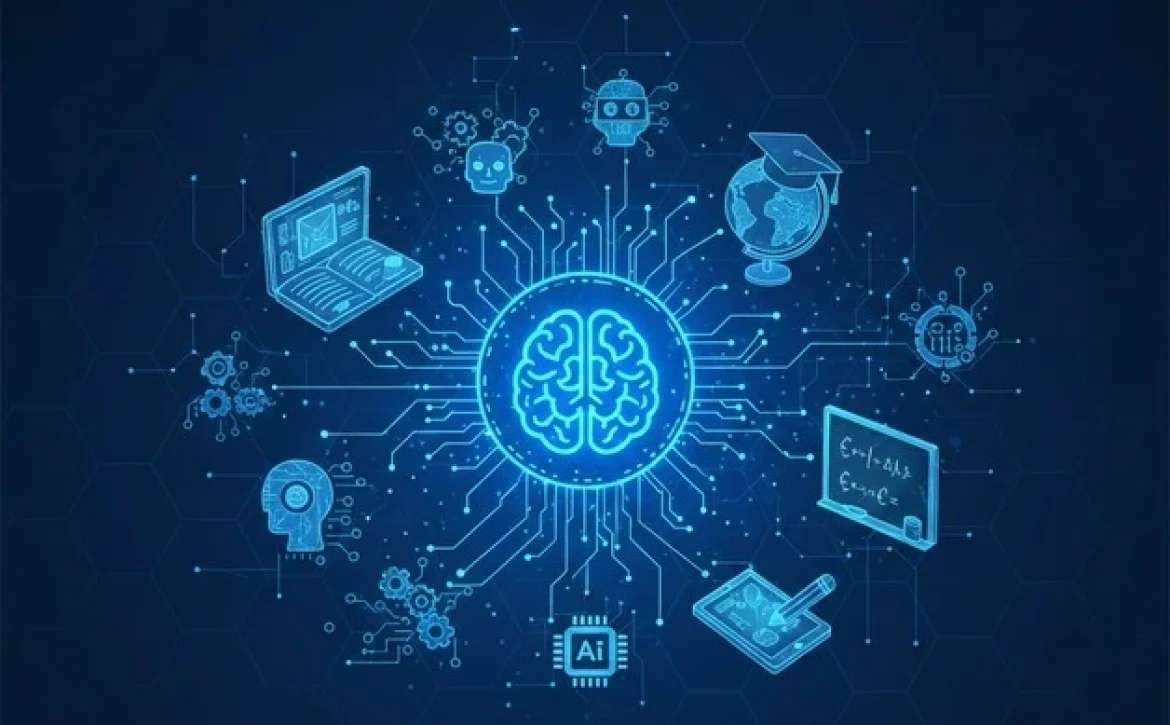
What is AI in education? Using AI in education centers on automating routine tasks, adapting learning to individual students, and refining educational operations. By integrating machine learning and natural language processing into learning systems, AI enables educators to create adaptive, data-informed environments that enhance both teaching and learning outcomes. How is it redefining modern classrooms today?
Key Takeaways
- AI in education enhances personalization and efficiency.
- It supports teachers through automation and analytics.
- Ethical, equitable use of AI remains a central challenge.
- Continuous evolution promises smarter and more inclusive learning systems.
How Does AI in Education Work in Practice?
AI in education functions by analyzing learning data to adapt content and methods according to individual student needs.
Key operational features include:
- Adaptive learning systems: Lessons are tailored to individual learning needs using performance-based adaptive systems..
- Automated grading tools: Real-time evaluation of assignments is enabled through automated grading systems.
- Chatbots and virtual assistants: AI chat systems assist learners by handling both administrative and educational questions
- Predictive analytics: Help identify learning gaps and at-risk students.
These tools allow institutions to optimize teaching time and personalize the learning experience.
How AI Enhances Education: Major Benefits?
AI brings multiple advantages to the education sector, such as:
- Personalized learning – Students receive content that matches their progress.
- Efficiency for educators – Automation of grading, scheduling, and reporting.
- Global accessibility – AI-driven translation and text-to-speech make learning inclusive.
- Continuous assessment – Real-time performance tracking ensures timely intervention.
As related discussions show, educators often compare these benefits with topics like advantages and disadvantages of AI in education and AI in education examples to understand overall impact.
Limitations of Artificial Intelligence in Education?
Potential risks and challenges of AI in education include:
- Data privacy risks due to the collection of personal information.
- Bias in algorithms leading to unfair assessments.
- Reduced human interaction when automation replaces personal mentoring.
- High implementation costs that may widen inequality between institutions.
Balancing innovation with ethical and regulatory oversight is crucial.
How Does AI Support Teachers and Students?
AI tools assist educators and learners in several measurable ways:
| Area | AI Application | Impact |
| Teaching | Automated content generation, lesson planning | Saves time, improves course design |
| Learning | Intelligent tutoring systems | Offers 24/7 personalized support |
| Assessment | Real-time performance analytics | Enables continuous evaluation |
| Administration | Smart scheduling and resource management | Reduces workload and errors |
Such support ensures educators focus on creative and human-centric aspects of teaching.
What Are Real-World Examples of AI in Education?
Leading examples of AI implementation include:
- Carnegie Learning: AI-driven mathematics tutoring.
- Coursera and Duolingo: Adaptive course recommendations and feedback.
- IBM Watson Education: Data-based student performance analysis.
- Squirrel AI (China): Personalized learning for large-scale student populations.
These systems demonstrate AI’s ability to scale individualized education worldwide.
How Has AI in Education Evolved Over Time?
The history of AI in education spans over five decades:
- 1960s–1980s: Early expert systems and computer-assisted learning.
- 1990s–2000s: Growth of internet-based learning management systems.
- 2010s–present: Integration of machine learning, NLP, and analytics tools.
Today’s AI technologies build upon these foundations to deliver adaptive, interactive educational ecosystems.
What Is the Future Outlook for AI in Education?
Future trends point to:
- Ethical AI standards for fairness and privacy.
- AI-driven lifelong learning ecosystems.
- Voice-enabled and immersive learning environments.
- Integration with policy frameworks for sustainable education delivery.
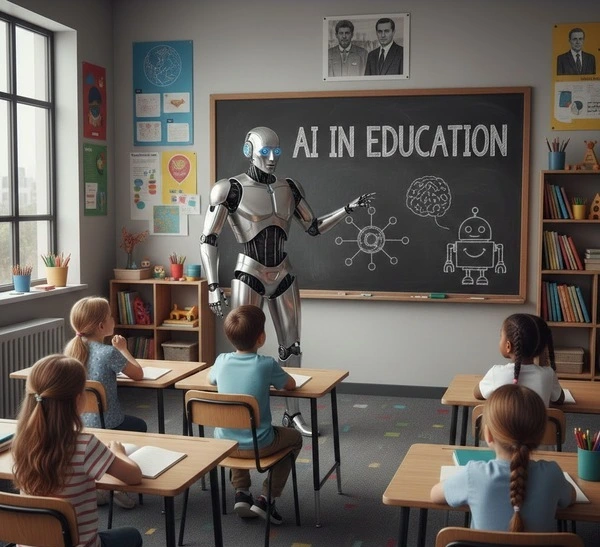
These developments will help balance human expertise with machine intelligence to enhance education globally.
Conclusion
By blending AI-driven automation with human innovation, teaching, learning, and administration are improved, creating a more inclusive and efficient educational system. For a deeper understanding of related innovation, explore our insights on google ai education to see how leading frameworks are redefining digital learning ecosystems.
FAQ
What is the meaning of AI in education?
In education, artificial intelligence helps streamline teaching, learning, and management processes.
How does AI help students in education?
It personalizes learning experiences, provides instant feedback, and helps identify areas for improvement.
What is AI in simple words?
AI represents technology that enables machines or software to process information, learn, and make human-like decisions.
What are examples of AI in education?
Examples include adaptive learning platforms, chatbots, and automated grading tools.
What are the disadvantages of AI in education?
Key drawbacks include data privacy risks, algorithmic bias, and potential loss of human connection.
Sources
https://www.unesco.org/en/digital-education/artificial-intelligence
https://tophat.com/glossary/a/ai-in-education/
https://www.intel.com/content/www/us/en/learn/ai-in-education.html
https://en.wikipedia.org/wiki/Artificial_intelligence_in_education
https://onlinedegrees.sandiego.edu/artificial-intelligence-education/
https://www.sciencedirect.com/science/article/pii/S0957417424010339
https://education.illinois.edu/about/news-events/news/article/2024/10/24/ai-in-schools–pros-and-cons
https://www.ucanwest.ca/blog/education-careers-tips/advantages-and-disadvantages-of-ai-in-education