Running a small clinic does not mean there is less work. Doctors still have to manage patient records, appointments, prescriptions, billing, follow-ups, and daily administrative tasks. When these jobs are handled through paper files, notebooks, spreadsheets, or separate apps, things can quickly become difficult to keep track of.
That is where cloud-based medical practice software can help. It brings important clinic tasks into one online system, allowing doctors and staff to access information from supported devices without maintaining their own server. When comparing the Best Cloud-Based Medical Practice Software for Small Clinics, ease of use and reliability should be among the first things to consider.
For a small clinic, however, more features do not always mean better software. The right system should be simple, affordable, secure, and easy to use during a busy consultation day.
What Is Cloud-Based Medical Practice Software?
Cloud-based medical practice software is an online platform designed to manage both clinical and administrative activities. Instead of keeping everything on a computer in the clinic, information is stored on cloud infrastructure and can be accessed by authorized users.
Common features include:
- Patient registration and medical records
- Appointment scheduling
- Digital prescriptions
- Billing and receipts
- Follow-up reminders
- Lab and pharmacy management
- Patient communication
- Reports and practice analytics
Many Indian platforms now focus specifically on small and independent clinics, rather than large hospitals. This makes it easier for doctors to find the Best Cloud-Based Medical Practice Software for Small Clinics based on their actual requirements.
Als Read:Integrated Medical Software
Best Options for Small Clinics
There is no single software that is best for every practice. A general physician may have different requirements from a dental, dermatology, physiotherapy, or multi-specialty clinic.
| Software | Suitable for | Key strengths |
| Practo Ray | Solo doctors and small practices | Practice management and patient-related workflows |
| HealthPlix | Doctors focused on EMR | Digital records and prescription workflows |
| MocDoc | Clinics wanting broader management | Clinic and healthcare management features |
| Eka Care | Digitally connected practices | Digital health records and health-data workflows |
| MyClinicDesk | Small and budget-conscious clinics | Records, appointments, billing and WhatsApp |
| Clinemo | Independent clinics and polyclinics | OPD, EMR, billing, pharmacy and lab features |
| SimpleRx EMR | Indian doctors and growing practices | Cloud EMR, prescriptions, billing and additional hospital features |
When comparing the Best Cloud-Based Medical Practice Software for Small Clinics, remember that feature availability, pricing, integrations, and plans can change. It is worth checking each provider’s current offering before making a decision.

Features Small Clinics Should Look For
1. Easy Patient Records
Finding an old patient file should take seconds, not several minutes. Look for searchable records that include consultation history, diagnoses, prescriptions, and relevant reports.
A good patient-record system is one of the most important features to look for when selecting the Best Cloud-Based Medical Practice Software for Small Clinics.
2. Appointment Management
The software should make it easy for reception staff to book, change, and cancel appointments. Reminders can also help reduce missed appointments.
Online booking can be particularly useful for clinics that receive appointments through phone calls, websites, or messaging platforms.
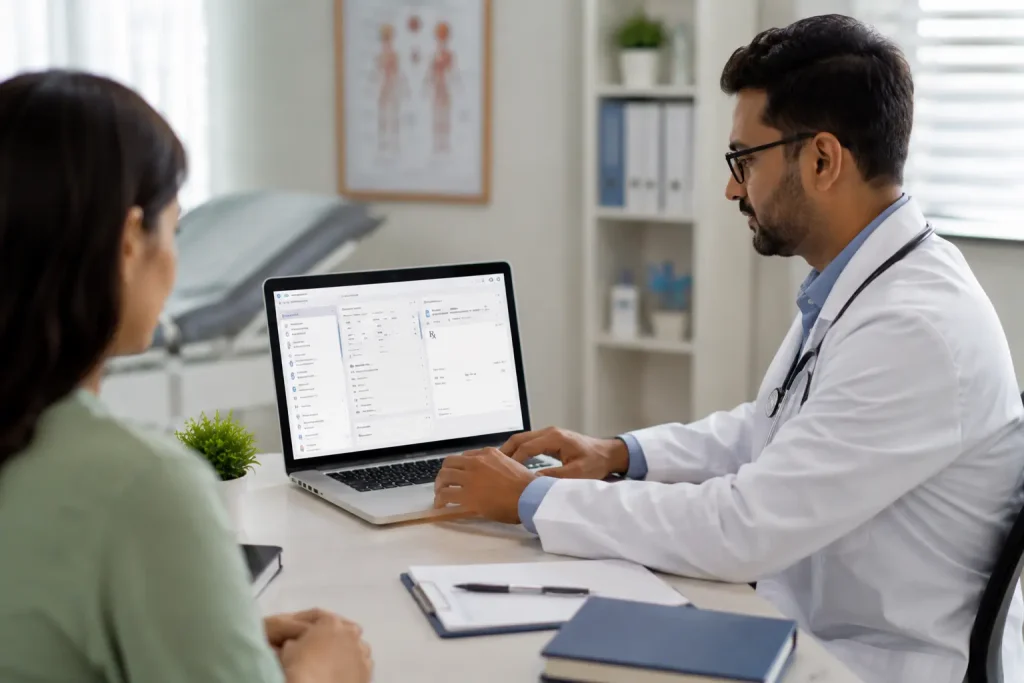
3. Digital Prescriptions
Digital prescriptions save time and make previous prescriptions easier to find. Some Indian systems also support regional languages and customized prescription formats.
Doctors should check whether the prescription format can be adjusted to suit their specialty and consultation style.
4. Billing
Basic billing should cover invoices, receipts, payments, outstanding amounts, and useful daily or monthly reports. Clinics that charge GST should also check whether the software supports their billing requirements.
For clinics comparing the Best Cloud-Based Medical Practice Software for Small Clinics, billing should be tested during the product demo rather than judged only from the feature list.
5. Patient Communication
WhatsApp or SMS reminders can be useful for appointment confirmations, prescriptions, and follow-ups. This is particularly helpful when one receptionist is handling several tasks.
Automated reminders can also reduce the amount of time staff spend making routine confirmation calls.
6. Data Security
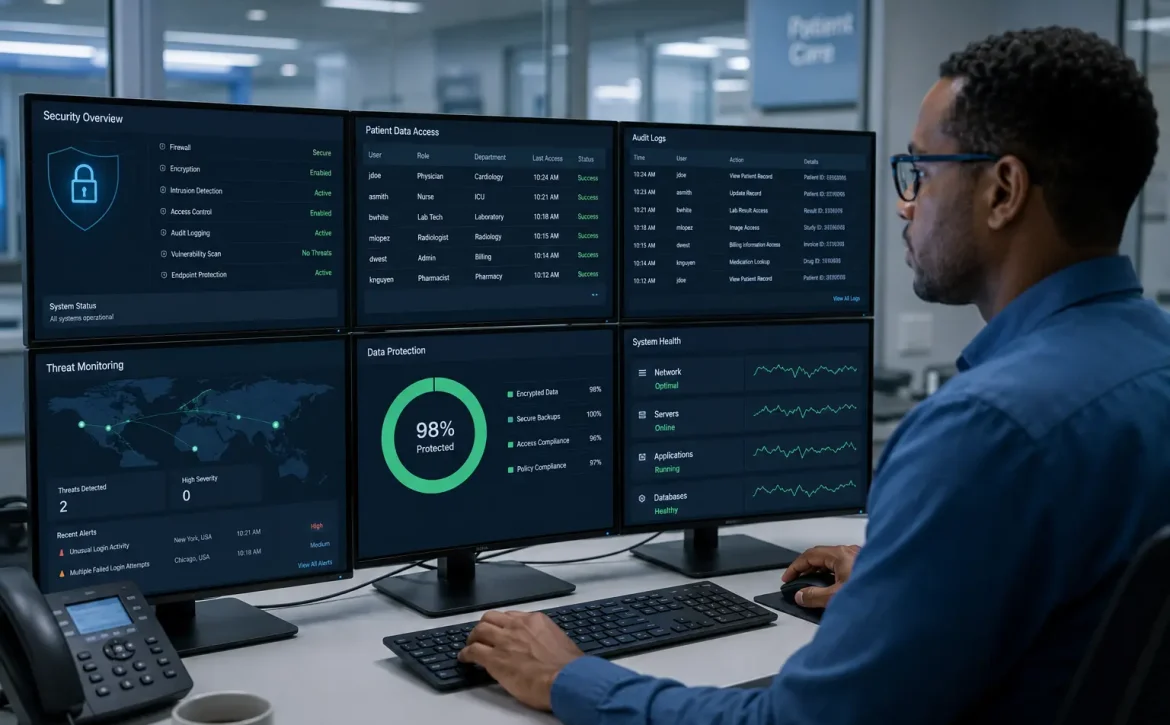
Medical records are sensitive. Before choosing a platform, ask about:
- Data encryption
- User permissions
- Backups
- Audit logs
- Data ownership
- Data export
- Account recovery
- Server location and security practices
Security should not be treated as an optional feature. Clinics should understand who controls the data and what happens to patient records if the subscription ends.
7. Cloud and Mobile Access
A cloud system should work reliably through supported browsers or mobile devices. This can be useful when a doctor needs to check information away from the main clinic computer.
Mobile access can also be helpful for doctors who work across more than one clinic or occasionally need to review records outside normal consultation hours.
Cloud Software vs. Traditional Software
| Factor | Cloud-based software | Traditional software |
| Installation | Usually minimal | Usually required |
| Access | Internet-connected devices | Often limited to installed computers |
| Updates | Usually handled by provider | May require manual updates |
| Hardware | No local server usually needed | May require additional hardware |
| Maintenance | Mostly provider-managed | Often clinic-managed |
| Scalability | Generally easier | May require additional setup |
Cloud software is not automatically the right choice, though. A clinic should still check internet requirements, backup procedures, technical support, and what happens if the practice decides to change providers.
These factors can help a clinic narrow down the Best Cloud-Based Medical Practice Software for Small Clinics without focusing only on the number of features offered.
How to Choose the Right Software
Before buying anything, make a list of the problems you actually want the software to solve.
For example:
- Do you need electronic medical records?
- Do you need online appointment booking?
- Will reception staff handle billing?
- Do you need WhatsApp communication?
- Do you need pharmacy or laboratory management?
- Do you need ABDM or ABHA-related functionality?
- How many doctors and staff members will use it?
- What is your monthly or annual budget?
Then test the shortlisted software with a real workflow. Register a patient, create a consultation, write a prescription, generate a bill, and check the patient’s history. If these basic tasks feel complicated, the system may not be a good fit.
This practical test is especially useful when deciding between different options for the Best Cloud-Based Medical Practice Software for Small Clinics.
For small clinics, a simple system that staff actually use every day is usually more valuable than a complicated platform packed with features nobody needs.
Also Read: FDA Software as a Medical Device Guidance
Final Thoughts
The Best Cloud-Based Medical Practice Software for Small Clinics should make everyday work easier without adding another layer of complexity.
Start with the basics: patient records, appointments, prescriptions, billing, communication, security, and reliable support. Additional features such as pharmacy, laboratory integration, analytics, telemedicine, and health-record integrations can be considered based on the clinic’s needs.
Frequently Asked Questions
1. What is the best medical practice software for a small clinic?
There is no universal answer. Platforms such as Practo Ray, HealthPlix, MocDoc, Eka Care, MyClinicDesk, Clinemo, and SimpleRx EMR offer different combinations of features. The best option depends on your specialty, budget, staff size, and workflow.
2. Is cloud-based clinic software safe?
It can be, but security depends on the provider. Ask about encryption, backups, access controls, audit logs, and data export before signing up.
3. Does cloud-based software require a server?
Generally, no. The software provider manages the cloud infrastructure. Your clinic normally needs compatible devices and a reliable internet connection.
4. Can a small clinic use EMR and billing software together?
Yes. Many modern clinic platforms combine electronic medical records with appointments, prescriptions, billing, and other practice-management functions.
5. Should I choose software with more features?
Not necessarily. Choose the features your clinic will actually use. A simple system that staff can learn quickly may be a better choice than a large platform designed for hospitals.