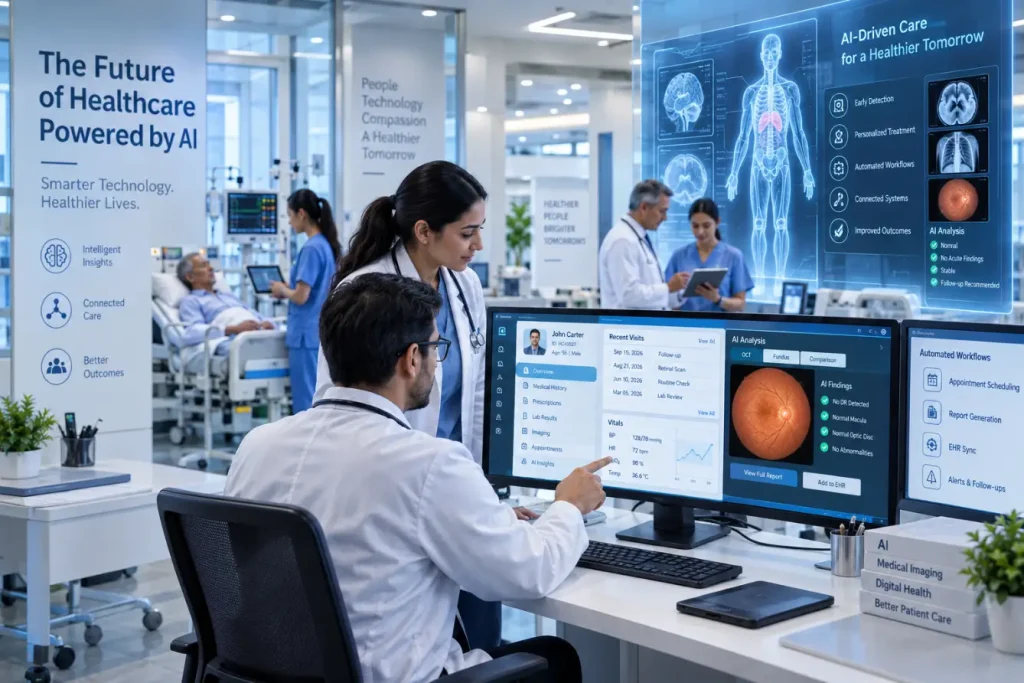
Long wait times can make an otherwise good healthcare experience frustrating. A patient may arrive on time but still spend a long time at the reception desk, wait for a consultation, or sit for test results and billing. For healthcare providers, these delays can also put pressure on staff and make it harder to manage daily appointments.
Medical Software Solutions for Reducing Patient Wait Times can help reduce many of these unnecessary delays. By connecting scheduling, registration, patient records, diagnostics, billing, and communication, healthcare organizations can make everyday processes easier to manage.
The goal is not to rush patients through appointments. It is to remove avoidable delays so healthcare professionals can focus more on patient care.
What Causes Long Patient Wait Times?
Patient waiting can happen at several stages of a healthcare visit. Some delays are clinical and cannot be avoided, but others are caused by administrative or communication problems.
Common reasons include:
- Manual registration and paperwork
- Poorly managed appointment schedules
- Delayed access to patient records
- Long reception queues
- Slow laboratory or imaging workflows
- Communication gaps between departments
- Insurance verification and billing delays
- Patients arriving without required information
- Limited visibility into appointment or queue status
When several of these issues occur during the same visit, waiting time can quickly increase.

How Medical Software Helps Reduce Waiting
Medical Software Solutions for Reducing Patient Wait Times can connect different parts of the patient journey and reduce repetitive work. Instead of handling every process separately, healthcare teams can use digital systems to coordinate information and tasks.
1. Online Appointment Scheduling
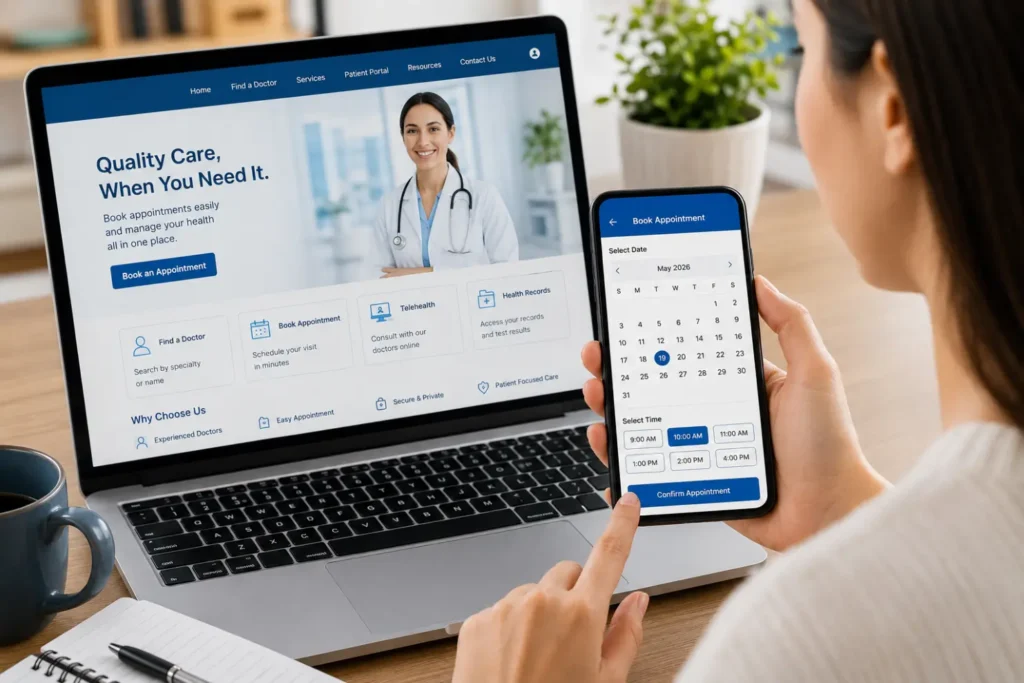
Online scheduling allows patients to book appointments without calling a clinic or visiting the reception desk.
Patients can usually:
- View available time slots
- Select a doctor or service
- Reschedule appointments
- Receive confirmation messages
- Get appointment reminders
For staff, scheduling software provides a clearer view of appointments and can help identify gaps, cancellations, and scheduling conflicts.
2. Digital Registration and Check-In
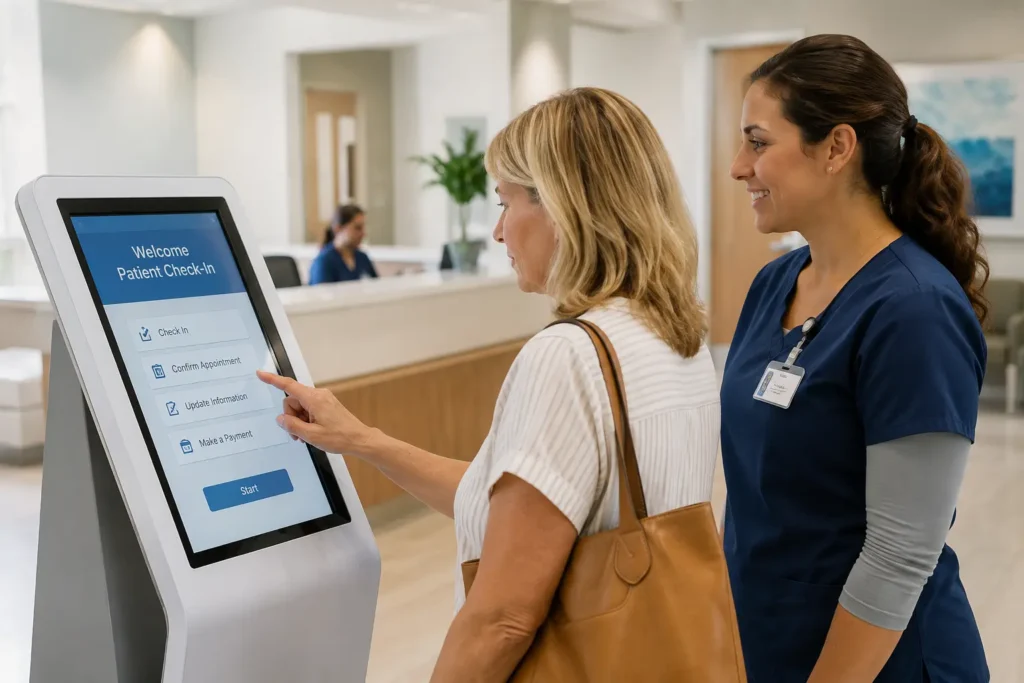
Paper forms can create long queues, especially during busy hours. Digital registration allows patients to enter basic information before arriving.
A patient portal or digital check-in system may allow patients to:
- Enter personal information
- Update existing details
- Provide insurance information
- Complete required forms
- Confirm their appointment
This reduces repetitive data entry and gives reception staff more time to handle patients who need assistance.
Also Read: Best Cloud-Based Medical Practice Software for Small Clinics
3. Queue Management Software
Queue management can be particularly useful in busy hospitals and clinics. Staff can see which patients have arrived, who is waiting, and which appointments are ready to proceed.
Depending on the system, patients may also receive notifications when their turn is approaching.
This can help reduce confusion and make waiting more predictable.
4. Electronic Health Records
Doctors should not have to spend valuable appointment time searching for basic patient information.
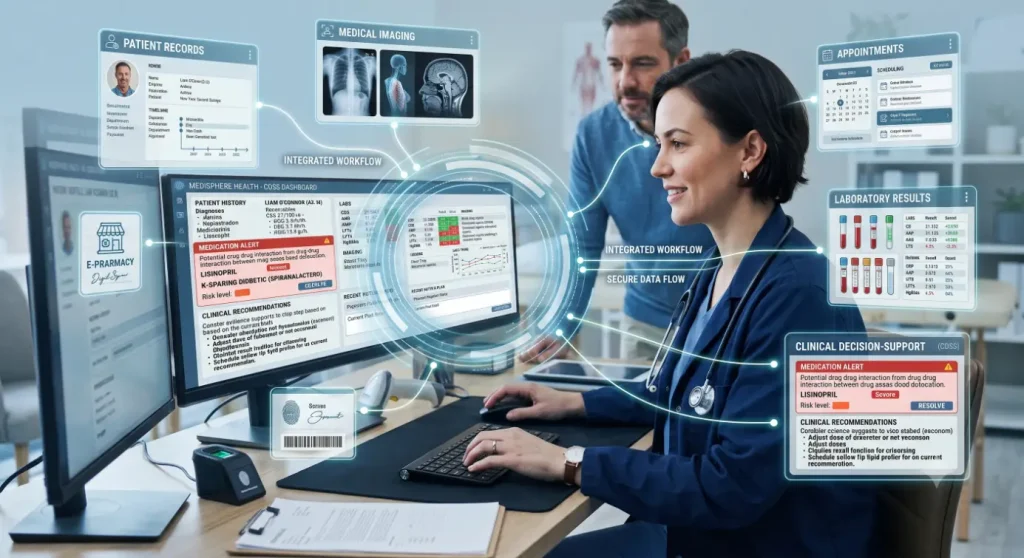
Electronic health records can provide authorized healthcare professionals with access to relevant information such as:
- Medical history
- Previous diagnoses
- Medications
- Laboratory results
- Imaging reports
- Clinical notes
When records are available electronically, clinicians can spend less time locating information and more time discussing the patient’s needs.
5. Laboratory Integration
Laboratory testing can create delays when test orders and results are handled through disconnected systems.
Integrated laboratory software can connect the process from ordering to reporting:
Test Order → Sample Collection → Processing → Result → Doctor Review
Electronic transfer of results can reduce manual entry and make reports available to authorized clinicians more quickly.
6. Medical Imaging Integration
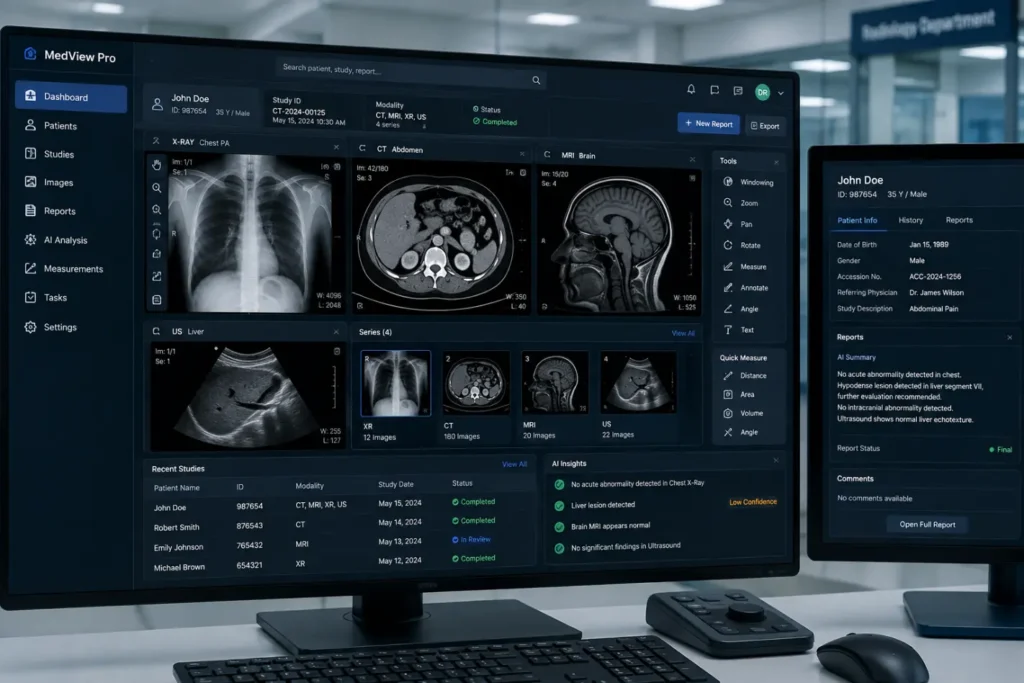
Imaging departments often handle large volumes of X-rays, CT scans, MRIs, and ultrasound examinations.
Medical Software Solutions for Reducing Patient Wait Times can connect patient information, imaging orders, images, and reports. This can reduce the need for staff to transfer files manually and help physicians access relevant imaging information when making clinical decisions.
7. Faster Billing and Insurance Processing
Billing can be another source of waiting after a consultation.
Medical billing software can help organize:
| Process | How software can help |
| Patient information | Reuse information from connected records |
| Billing | Generate digital invoices |
| Insurance | Manage required information and documentation |
| Payments | Record transactions electronically |
| Claims | Organize claim-related data |
The exact capabilities depend on the software and the healthcare organization’s processes.
8. Automated Patient Communication
Patients can become frustrated when they do not know whether an appointment has changed or a doctor is running late.
Medical software can send automated:
- Appointment reminders
- Check-in instructions
- Cancellation notices
- Rescheduling messages
- Queue updates
- Follow-up reminders
- Test-result notifications
Better communication can prevent some avoidable waiting and missed appointments.
Benefits for Healthcare Providers and Patients
Reducing unnecessary waiting can improve several parts of the healthcare experience.
| Area | Potential benefit |
| Patients | Less time spent on administrative tasks |
| Doctors | Easier access to relevant information |
| Reception staff | Fewer repetitive registration tasks |
| Laboratories | Faster transfer of test orders and results |
| Imaging teams | Easier access to connected patient information |
| Administrators | Better scheduling and billing visibility |
What Should Healthcare Organizations Consider?
Choosing Medical Software Solutions for Reducing Patient Wait Times should start with the organization’s actual problems. A small clinic may only need appointment scheduling, digital registration, EHR, and billing tools. A large hospital may require integration across laboratories, imaging, pharmacy, insurance, and multiple departments.
Important factors include:
- Ease of use
- System integration
- Data security and privacy
- Interoperability
- Scalability
- Mobile accessibility
- Reporting capabilities
- Technical support
- Implementation cost
Software should make existing workflows easier rather than create additional complexity.
Frequently Asked Questions
Can Medical Software Solutions for Reducing Patient Wait Times completely eliminate patient waiting?
No. Some waiting is unavoidable, particularly when emergencies or complex cases require immediate attention. Medical Software Solutions for Reducing Patient Wait Times are most useful for reducing unnecessary administrative and operational delays.
How does appointment software reduce waiting?
Appointment software helps organize available time slots, manage cancellations, send reminders, and reduce scheduling conflicts. As part of Medical Software Solutions for Reducing Patient Wait Times, it can improve patient flow throughout the day.
Can small clinics use medical software?
Yes. Small clinics can start with basic solutions such as online scheduling, digital registration, electronic records, billing, and automated reminders. These Medical Software Solutions for Reducing Patient Wait Times can be scaled as the clinic grows.
Does electronic health record software reduce delays?
It can. Authorized healthcare professionals can access relevant patient information without searching through paper files or requesting records from another department. This makes EHRs an important part of Medical Software Solutions for Reducing Patient Wait Times.
Can software improve the patient experience?
Yes. Patients may spend less time filling out forms, waiting for information, or repeating details that have already been provided. Medical Software Solutions for Reducing Patient Wait Times can make the overall healthcare journey more convenient and organized.
Also Read: Medical Device Software Design