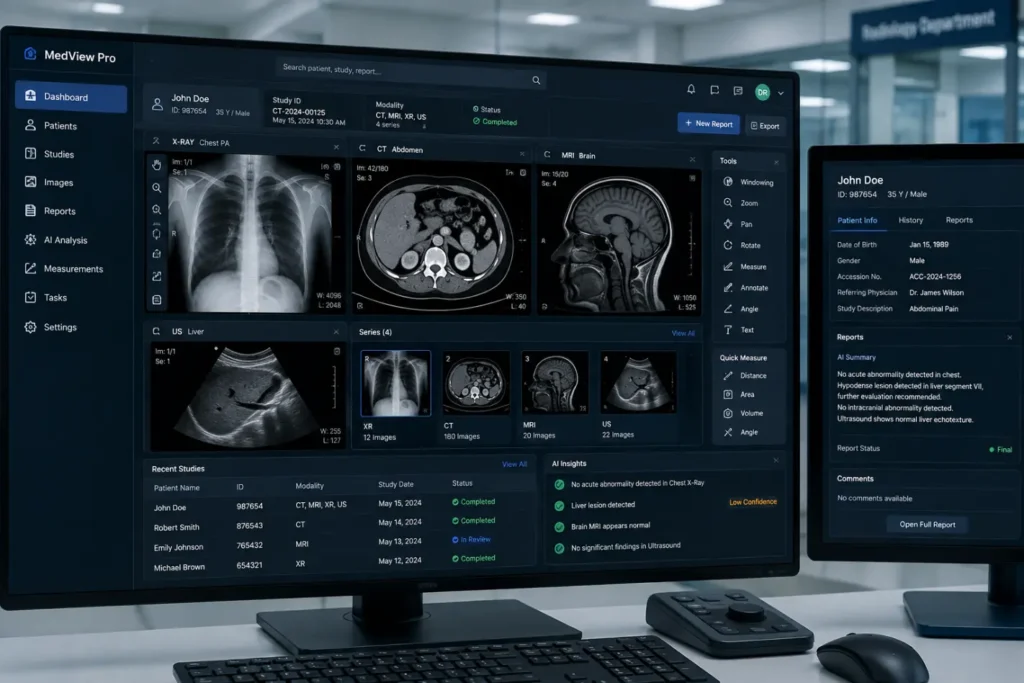
Running a medical practice involves much more than seeing patients. Doctors and staff also have to manage appointments, patient records, reports, billing, documentation, and follow-ups. When these tasks are handled manually, they can take valuable time away from patient care. Here Best Software for Reducing Administrative Burden in Medical Practices
Key Takeaways
- AI reduces repetitive medical tasks.
- It helps lower administrative workload.
- RetinaWiseAI supports retinal image analysis.
- Better workflows mean more time for patients.
This is where AI medical software can make a practical difference. By assisting with repetitive tasks and organizing clinical information, AI-based tools can help medical practices work more efficiently without adding unnecessary complexity to everyday operations.
What Can AI Medical Software Do?
AI medical software can support both administrative and clinical workflows. The exact features depend on the platform, but common uses include:
- Organizing patient information
- Supporting clinical documentation
- Managing appointments and follow-ups
- Assisting with medical image analysis
- Generating or organizing reports
- Reducing repetitive data entry
- Supporting clinical decision-making
- Connecting information across healthcare systems
The goal is not to replace doctors or medical staff. Instead, AI can take care of certain repetitive processes so healthcare professionals can spend more time with patients.
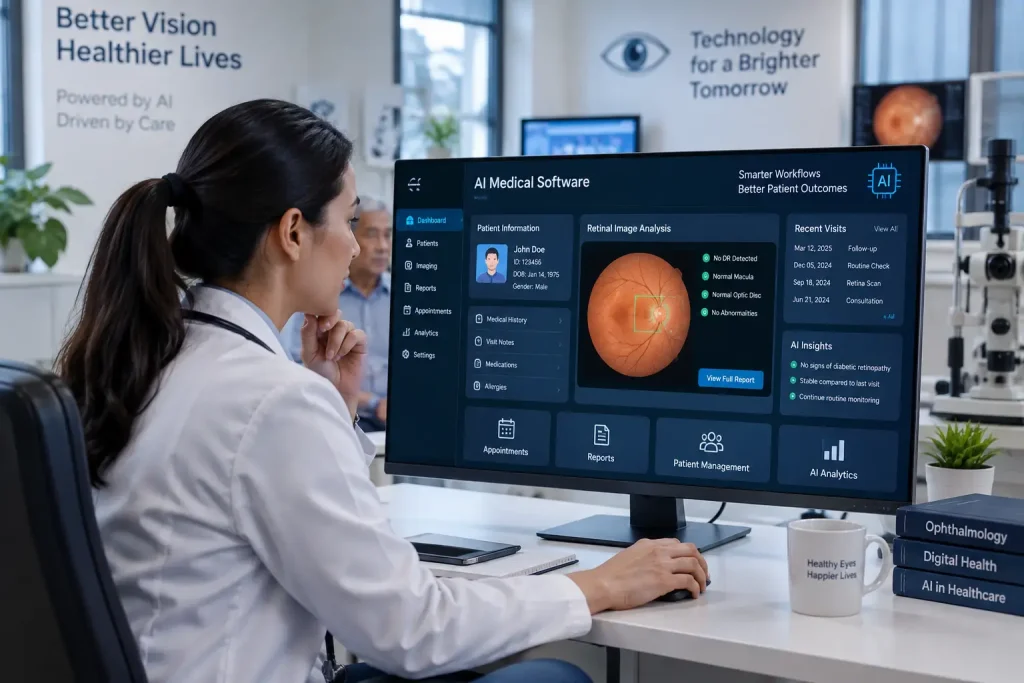
How AI Can Reduce Administrative Work?
Administrative work can become particularly difficult in busy practices where staff handle dozens or hundreds of patient interactions each day.
| Practice Task | Manual Approach | AI-Supported Approach |
| Patient records | Repeated data entry | Organized digital information |
| Appointment management | Manual scheduling | Automated workflow support |
| Reports | Prepared manually | AI-assisted report generation |
| Medical images | Manual sorting and review | Computer-assisted analysis |
| Follow-ups | Staff reminders | Automated workflow support |
| Data management | Multiple records and systems | Centralized access |
Reducing these repetitive activities can help staff work with fewer interruptions and give doctors quicker access to relevant patient information.
What to Look for in Best Software for Reducing Administrative Burden in Medical Practices
Choosing healthcare software should be based on the actual needs of the practice. A useful solution should be easy for staff to understand and fit into the existing workflow.
Important features include:
- Simple and user-friendly interface
- Secure patient data management
- Integration with existing systems
- Medical imaging support where required
- Reporting capabilities
- Cloud-based access when appropriate
- Scalable functionality for growing practices
- Reliable technical support
Security is especially important because medical software handles sensitive patient information. Practices should carefully review the provider’s security measures, data handling policies, and applicable compliance requirements before implementation.
Also Read: AI Medical Software
Best Software for Reducing Administrative Burden in Medical Practices
There is no single solution that works equally well for every medical specialty. The right choice depends on the type of practice, patient volume, existing technology, and specific administrative challenges. Here Best Software for Reducing Administrative Burden in Medical Practices
For eye care practices, RetinaWiseAI is one option worth considering. It focuses on retinal imaging and AI-assisted analysis while helping healthcare professionals manage related clinical workflows.
RetinaWiseAI can help ophthalmology and optometry practices with tasks around retinal image review and reporting. By bringing image analysis into a digital workflow, it can reduce some of the repetitive work associated with handling retinal images and clinical information.
Why Consider RetinaWiseAI?
- AI-assisted retinal image analysis
- Support for retinal imaging workflows
- Faster access to image-based insights
- Digital organization of retinal information
- Support for clinical decision-making
- Designed for eye care professionals
- Can help reduce repetitive workflow tasks
RetinaWiseAI is intended to support clinicians, not replace their professional judgment. Medical professionals remain responsible for interpreting results and making diagnosis and treatment decisions.
Benefits for Medical Practices
When implemented appropriately, AI medical software can provide practical benefits across a practice.
For Doctors
- Less time spent on repetitive tasks
- Easier access to relevant information
- Support during image and data review
For Administrative Staff
- Better organization of patient information
- Fewer repetitive processes
- Easier coordination of routine workflows
For Patients
- More efficient visits
- Reduced waiting associated with manual processes
- Better organized follow-up and clinical information
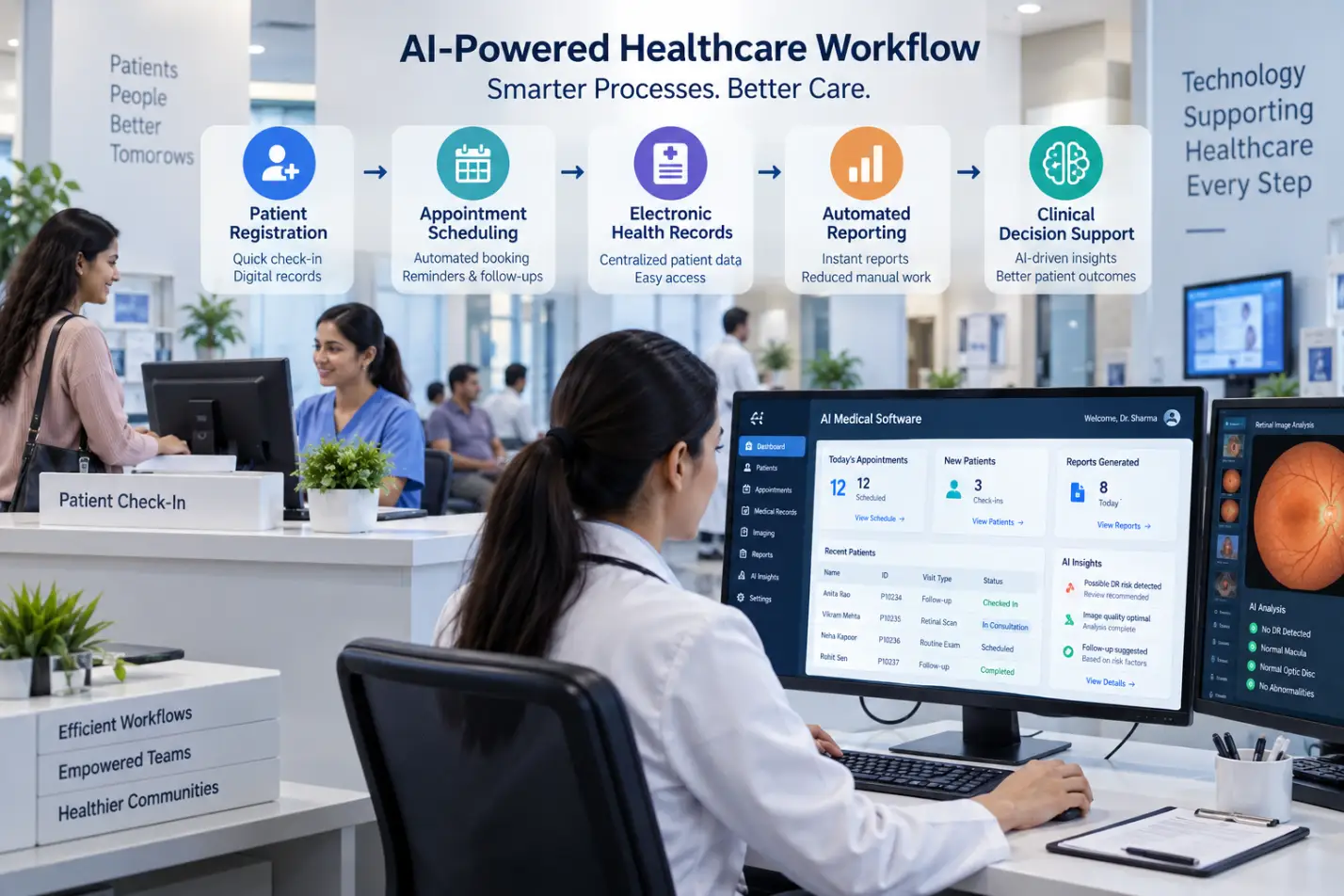
Is AI Medical Software Worth Considering?
For many practices, the value of AI is not about replacing existing staff or changing everything at once. It is about identifying time-consuming tasks and using technology where it can genuinely help.
A practice can start by looking at where staff spend the most time. If documentation, image management, reporting, scheduling, or data entry creates regular delays, an appropriate AI medical software solution may help reduce that workload.
Also Read:
Frequently Asked Questions
1. What is AI medical software?
AI medical software uses artificial intelligence to assist healthcare professionals with tasks such as data management, documentation, medical image analysis, reporting, and workflow support.
2. How does AI reduce administrative burden in medical practices?
It can reduce repetitive work related to documentation, records, reporting, scheduling, and information management, giving staff more time for patient-focused activities.
3. What is the best software for reducing administrative burden in medical practices?
The right software for Best Software for Reducing Administrative Burden in Medical Practices depends on the specialty and workflow of the practice. For ophthalmology and retinal imaging workflows, RetinaWiseAI is a relevant option for AI-assisted image analysis and clinical workflow support.
4. Can Best Software for Reducing Administrative Burden in Medical Practices replace doctors?
No. AI medical software is generally designed to assist healthcare professionals. Clinical interpretation, diagnosis, and treatment decisions should remain with qualified medical professionals.
5. Is AI medical software useful for small clinics?
Yes. Small and medium-sized practices can use AI tools to reduce repetitive work and organize workflows, provided the software matches their needs and available infrastructure.
6. What should a clinic consider before adopting AI software?
Clinics should evaluate ease of use, security, integration, cost, scalability, support, and whether the software addresses a genuine workflow problem.