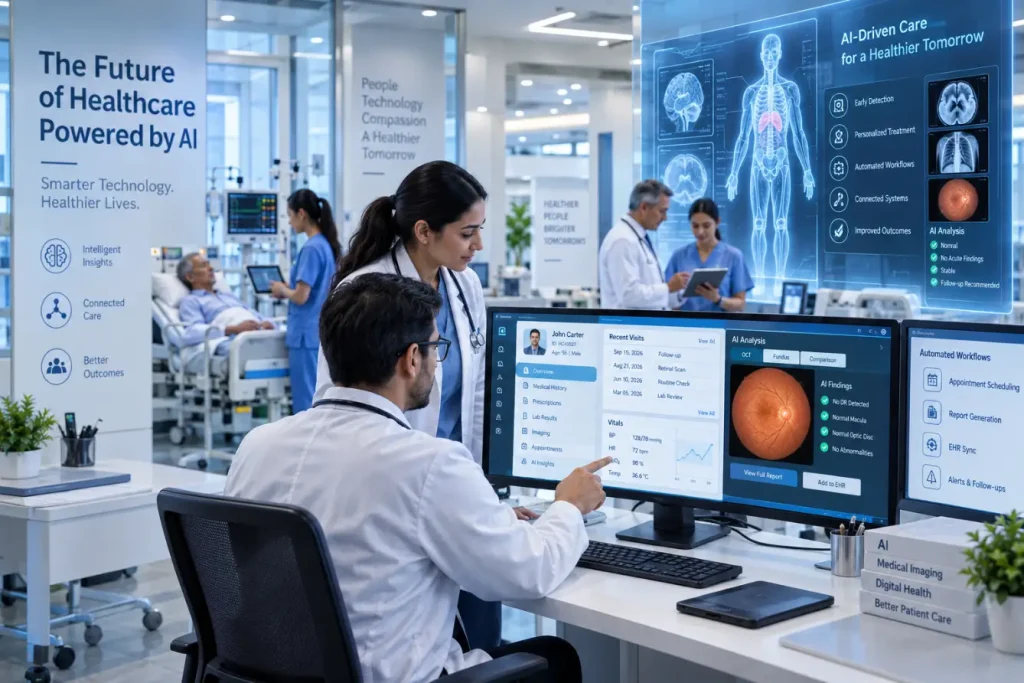
Healthcare professionals spend a significant portion of their day managing appointments, updating patient records, preparing reports, and coordinating workflows. While these tasks are essential, they often reduce the time available for direct patient care. This is why AI medical software has become an important investment for hospitals, clinics, and specialty practices.
Key Takeaways
- AI automates healthcare workflows.
- Reduces administrative workload.
- RetinaWiseAI improves practice efficiency.
- More time for quality patient care.
Modern AI-powered healthcare solutions automate repetitive administrative processes, improve operational efficiency, and help medical teams work smarter. From intelligent scheduling to automated documentation and image analysis, the right software reduces workload while improving the overall patient experience.
Why Medical Practices Need AI Medical Software?
Administrative tasks continue to increase as healthcare regulations, documentation requirements, and patient volumes grow. AI medical software helps practices simplify these responsibilities without disrupting existing workflows.
Common Administrative Challenges
- Time-consuming patient documentation
- Appointment scheduling conflicts
- Manual report preparation
- Managing electronic health records (EHR)
- Billing and insurance documentation
- Coordinating patient follow-ups
- Handling large volumes of diagnostic images
Automating these tasks allows physicians and clinical staff to spend more time focusing on patient care instead of paperwork.
Also Read:Medical Equipment Software

Key Benefits of AI Medical Software
| Feature | Benefit |
| Workflow Automation | Reduces repetitive administrative tasks |
| Smart Scheduling | Minimizes missed appointments and scheduling errors |
| Electronic Record Management | Faster access to patient information |
| Automated Reporting | Saves time preparing clinical reports |
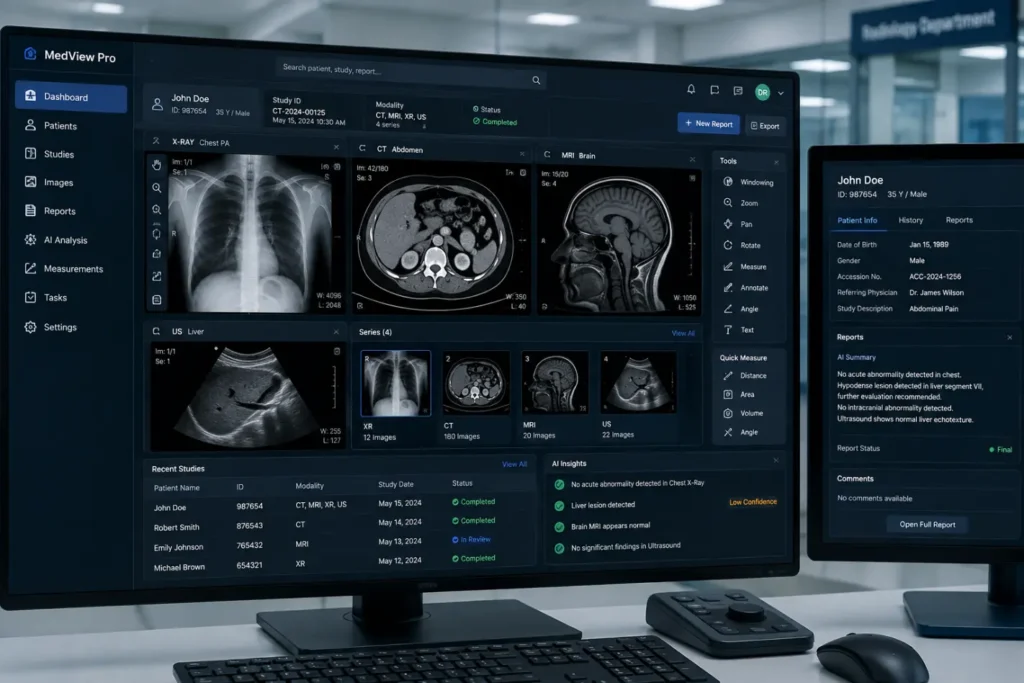
| Medical Image Analysis | Speeds up image review and clinical workflows |
| Cloud Access | Secure access from multiple locations |
| Data Integration | Connects with existing healthcare systems |
Features to Look for in AI Medical Software
Choosing the right platform requires more than just automation. The best solutions combine clinical support with efficient practice management.
Look for software that offers:
- AI-powered workflow automation
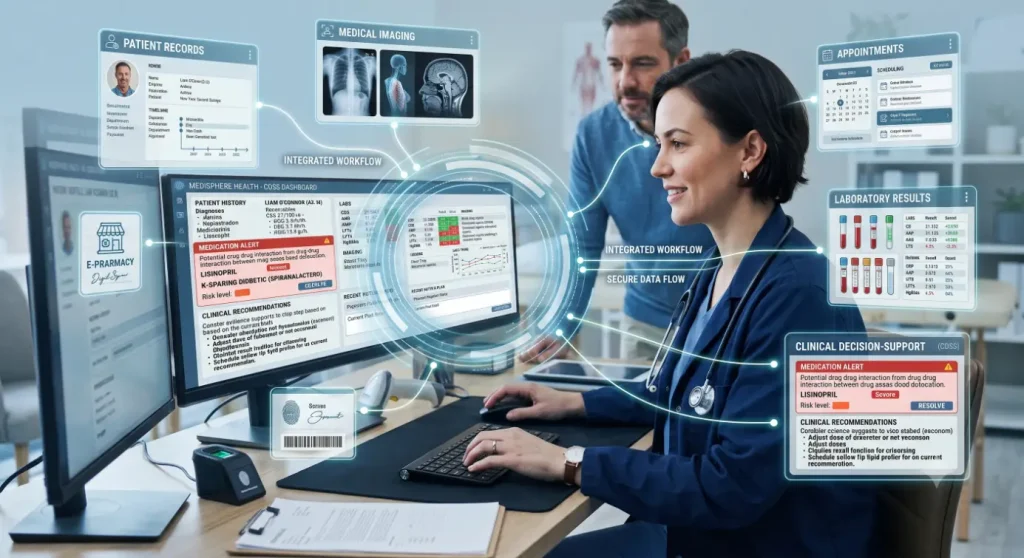
- Electronic health record integration
- Automated patient documentation
- Secure cloud-based storage
- Medical image analysis
- Report generation
- Patient management dashboard
- HIPAA and GDPR compliance
- Easy integration with existing devices
As a result, physical labor is reduced, time is saved, and the speed and efficiency of the entire operation increase.
Best Software for Reducing Administrative Burden in Medical Practices
When evaluating the best software for reducing administrative burden in medical practices, healthcare providers should prioritize solutions that automate workflows while supporting clinical decision-making.
For ophthalmology clinics and eye care providers, RetinaWiseAI stands out as one of the most effective AI-powered platforms available.
RetinaWiseAI combines intelligent retinal image analysis with workflow automation, helping practices streamline both clinical and administrative operations. Instead of manually organizing retinal scans, preparing reports, and managing patient imaging records, clinicians can work through a centralized platform that simplifies daily workflows.
Why RetinaWiseAI?
✔ AI-assisted retinal image analysis
✔ Faster report generation
✔ Centralized patient image management
✔ Integration with retinal imaging devices
✔ Secure cloud-based platform
✔ Simplified workflow for ophthalmology clinics
✔ Supports faster patient review and follow-up
By reducing manual administrative work, RetinaWiseAI allows healthcare professionals to dedicate more attention to diagnosis, treatment planning, and patient care rather than paperwork.
How AI Medical Software Improves Daily Operations?
Here’s how AI makes a measurable difference in everyday clinical practice.
| Administrative Task | Traditional Process | AI Medical Software |
| Patient Scheduling | Manual booking | Automated scheduling |
| Clinical Documentation | Manual entry | AI-assisted documentation |
| Medical Reports | Time-consuming preparation | Automated report generation |
| Patient Records | Multiple systems | Centralized digital access |
| Image Review | Manual organization | AI-assisted image management |
| Workflow Tracking | Manual coordination | Real-time workflow management |
The result is a more organized practice with reduced administrative workload and improved operational efficiency.
Also Read: Cloud Medical Software
Who Can Benefit?
AI medical software is suitable for various healthcare organizations, including:
- Hospitals
- Ophthalmology clinics
- Optometry practices
- Diagnostic centers
- Multi-specialty hospitals
- Community healthcare centers
- Telemedicine providers
Practices handling large patient volumes often experience the greatest improvement because automation reduces repetitive administrative tasks across departments.

The Future of AI in Healthcare Administration
With the continuous advancement of healthcare technology, artificial intelligence (AI) is making modern medical systems smarter, faster, and more effective. Future AI platforms will provide even greater automation, predictive analytics, intelligent patient management, and seamless integration across healthcare systems.
Practices that adopt AI today can improve efficiency, reduce operational costs, and create a better experience for both healthcare professionals and patients.
Conclusion
Managing administrative responsibilities doesn’t have to slow down patient care. AI medical software enables healthcare providers to automate routine tasks, improve workflow efficiency, and reduce operational burdens while maintaining high-quality clinical services.
For eye care providers searching for the best software for reducing administrative burden in medical practices, RetinaWiseAI is an excellent choice. Its combination of AI-powered retinal image analysis, intelligent workflow management, secure cloud infrastructure, and streamlined reporting helps ophthalmology practices operate more efficiently while allowing clinicians to focus on delivering exceptional patient care.
Frequently Asked Questions (FAQs)
1. What is AI medical software?
AI medical software uses artificial intelligence to automate administrative tasks, assist with clinical workflows, analyze medical data, and improve operational efficiency in healthcare settings.
2. How does AI medical software reduce administrative burden?
AI-powered medical software reduces administrative burdens by automating appointment scheduling, patient data management, medical report generation, Electronic Health Record (EHR) management, and workflow coordination. As a result, healthcare providers can devote their time and attention to patient care more efficiently.
3. What is the best software for reducing administrative burden in medical practices?
The best software depends on your specialty and workflow requirements. For ophthalmology and vision care practices, RetinaWiseAI is an excellent choice because it combines AI-powered retinal image analysis with workflow automation, secure patient data management, and faster report generation.
4. Is AI medical software suitable for small clinics?
Yes. Many AI medical software solutions are scalable and can be used by private clinics, specialty practices, diagnostic centers, and large hospitals. They help improve efficiency regardless of practice size.
5. Can AI medical software integrate with existing healthcare systems?
Most modern AI medical software is designed to integrate with Electronic Health Record (EHR) systems, retinal imaging devices, hospital information systems, and cloud-based platforms, ensuring a smooth workflow without replacing existing infrastructure.
6. Is patient data secure with AI medical software?
Reputable AI medical software platforms use encryption, secure cloud infrastructure, and comply with healthcare data protection standards such as HIPAA and GDPR to safeguard patient information.
7. Does AI medical software replace doctors?
No. AI medical software is designed to support healthcare professionals by automating routine tasks and providing clinical decision support. Final diagnoses and treatment decisions remain the responsibility of qualified medical practitioners.