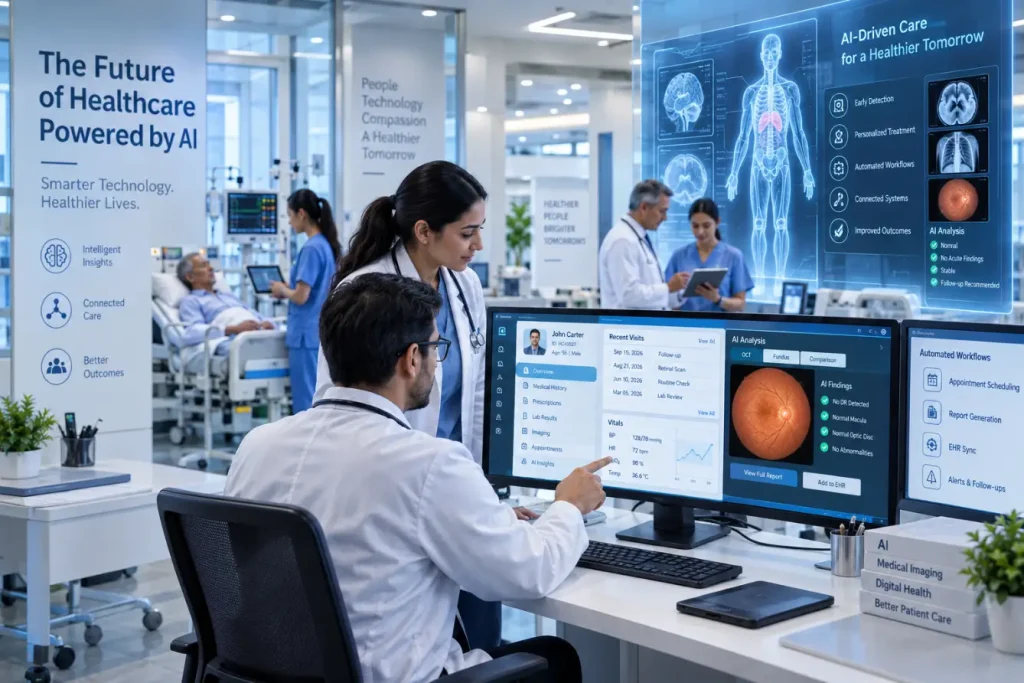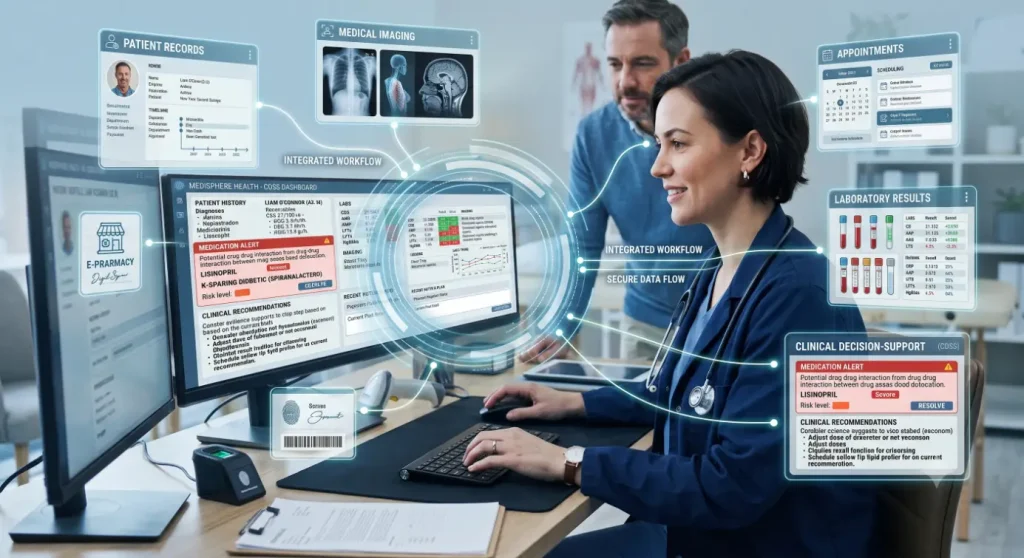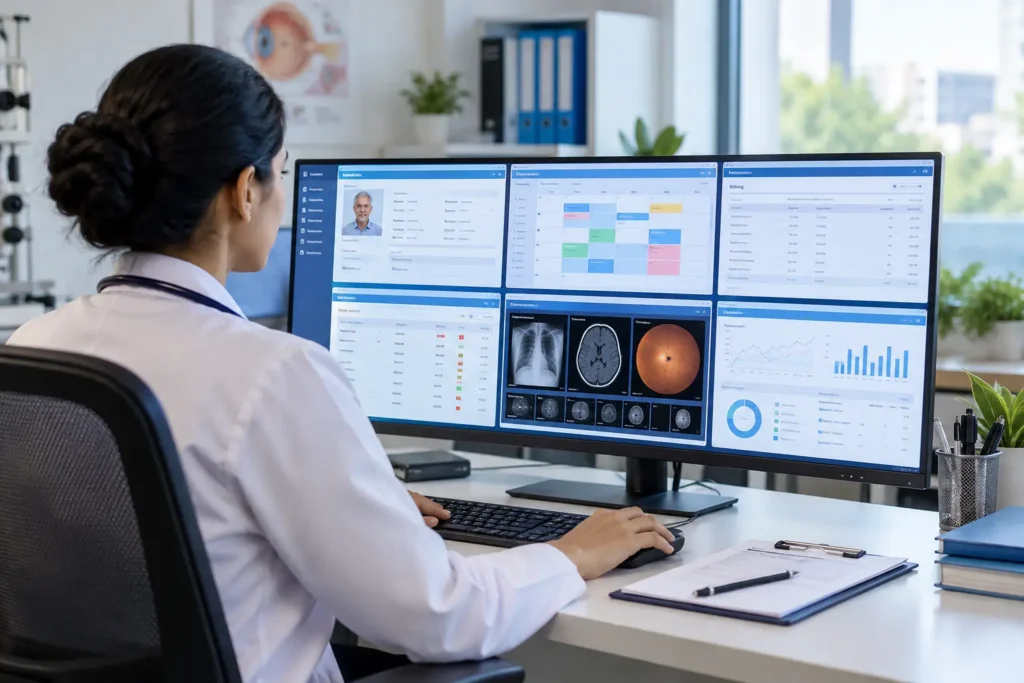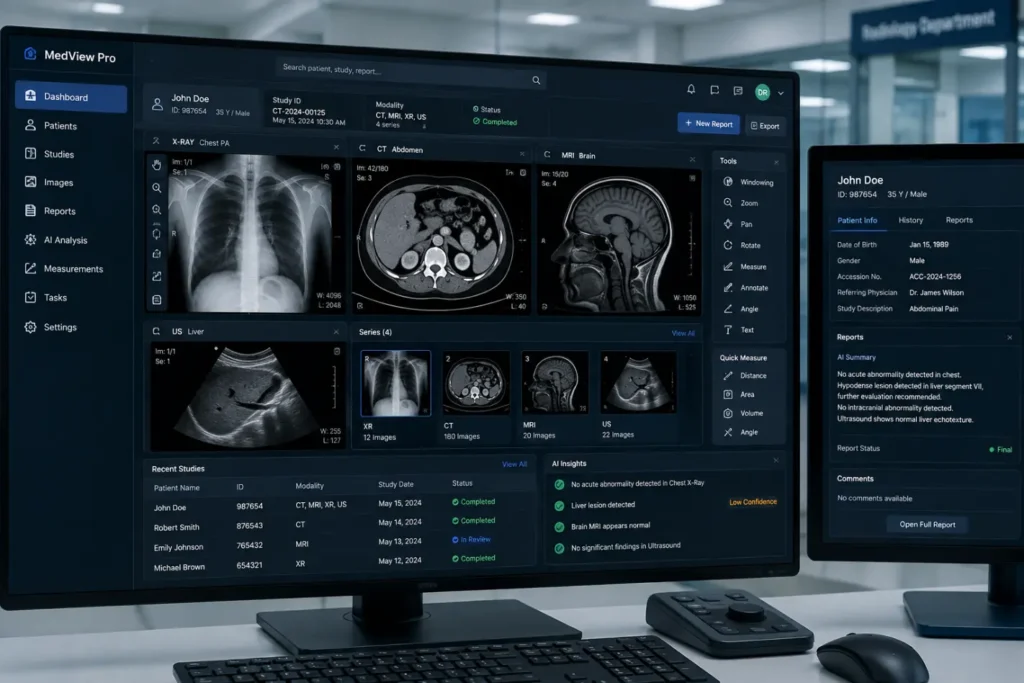
Medical imaging is an important part of modern healthcare. Doctors use X-rays, CT scans, MRI, ultrasound, mammography, retinal images, and other imaging methods to examine different parts of the body. These images provide useful information for diagnosis, treatment planning, and monitoring.
Key Takeaways
- Medical image software helps analyze and manage digital medical images.
- Custom solutions can support radiology, ophthalmology, oncology, and pathology.
- AI-powered clinical decision-support can assist with specific image analysis tasks.
- Security, DICOM integration, testing, and compliance are important during development.
As hospitals and diagnostic centers handle more digital images, they need software that can store, organize, process, and examine these files. A medical image analysis software development company helps healthcare organizations build software for these needs. Such companies develop applications that allow medical professionals to view images, take measurements, compare scans, add notes, prepare reports, and perform specific image analysis tasks.
What Is Medical Image Analysis Software?
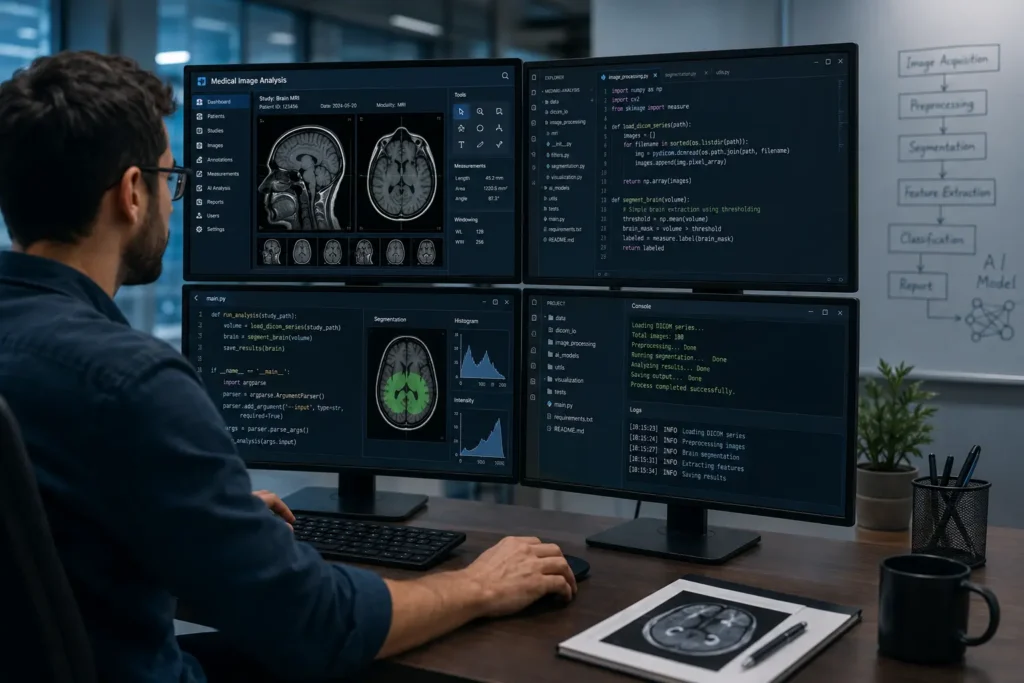
Medical image analysis software is designed to process and examine medical images using computer-based tools. It can make images easier to view and can provide functions for measuring, marking, comparing, and analyzing selected areas.
Also Read:Integrated Medical Software
The software may be developed for different types of medical images, such as:
- X-rays
- CT scans
- MRI scans
- Ultrasound images
- Mammograms
- Retinal images
- PET scans
- Digital pathology slides
The features depend on the intended medical use. For example, radiology software may focus on CT and MRI image viewing, while ophthalmology software may be designed to analyze retinal photographs.
Why Do Healthcare Organizations Need This Software?
Medical images can contain a large amount of information. Healthcare professionals may need to review multiple images for one patient and compare them with earlier examinations. A Medical Image Analysis Software Development Company can create software that helps organize this information in one place.
Medical image analysis software can provide tools for image viewing, measurements, annotations, comparison, and reporting. A Medical Image Analysis Software Development Company can also customize the software according to the workflow of a hospital, diagnostic center, or medical device company.
For example, a diagnostic center may need a system where technicians upload images, doctors review them, measurements are recorded, and reports are prepared and stored with the related patient information.
Key Features of Medical Image Analysis Software
1. Image Viewing
The software can provide tools for zooming, rotating, panning, adjusting brightness and contrast, and viewing images in different formats. These features help users examine specific parts of an image.
2. Measurement and Annotation
Medical professionals may need to measure distances, areas, angles, or other features. Annotation tools can also allow users to mark a particular region and add notes.
3. Image Segmentation
Image segmentation separates a selected structure or area from the rest of an image. It can be used for applications involving organs, tissues, lesions, tumors, or other regions of interest.
4. Image Comparison
Doctors may need to compare current images with previous scans. Comparison features can make it easier to review changes over time and record relevant observations.
5. AI-Powered Clinical Decision-Support
AI-powered clinical decision-support can be included in medical imaging software for specific image analysis tasks. A Medical Image Analysis Software Development Company can develop solutions that assist with image classification, segmentation, detection, and measurement based on the intended application.
These tools should support healthcare professionals rather than replace their clinical assessment. A Medical Image Analysis Software Development Company should develop and test such features according to the software’s intended purpose, clinical requirements, and applicable standards.
6. Reporting
Reporting features allow users to record observations, measurements, and findings. Reports can be linked with the relevant patient and imaging study for easier access and record keeping.
Applications of Medical Image Analysis Software
Medical image analysis software can be used across several healthcare areas.
- Radiology: Software can support the review of X-rays, CT scans, and MRI images.
- Ophthalmology: Retinal image analysis applications can help examine fundus images and support specific screening tasks.
- Oncology: Image analysis tools can assist with measuring and comparing tumors or other lesions.
- Cardiology: Software can support the review of cardiac images obtained through ultrasound, CT, or MRI.
- Digital Pathology: Image analysis can assist with examining tissue samples, identifying cells, and measuring selected structures in pathology images.
Medical Image Analysis Software Development Process
Development usually begins with identifying the medical problem and understanding how the intended users work. A Medical Image Analysis Software Development Company can then plan the software based on clinical requirements, image types, user needs, workflow, and required analysis features.
A typical process includes:
- Requirement collection
- Clinical workflow analysis
- Software architecture planning
- Interface design
- Image processing development
- Integration of analysis tools
- Testing and validation
- Deployment
- Maintenance
Testing should be performed with suitable data and against clearly defined software requirements. If the software is intended for regulated medical use, applicable regulatory requirements should also be considered during development.
Security and System Integration
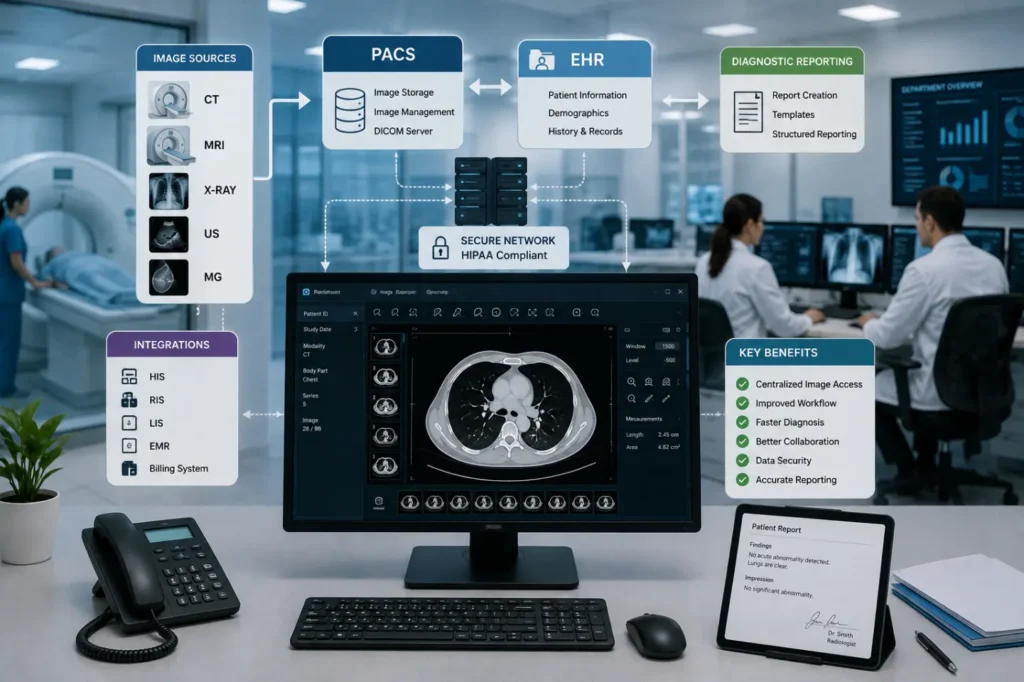
Medical imaging applications can contain sensitive patient information. A Medical Image Analysis Software Development Company can build security measures such as user authentication, access controls, encryption, audit records, secure data transfer, and backup procedures to help protect medical imaging data.
The software may also need to connect with existing healthcare systems such as PACS, RIS, and EHR platforms. DICOM and HL7 are commonly used standards that can support communication between healthcare systems.
How to Choose a Medical Image Analysis Software Development Company?
Before selecting a development company, healthcare organizations should check its experience with medical imaging, healthcare software, image processing, data security, and system integration.
It is also useful to ask whether the company has experience with DICOM, medical image viewers, clinical workflows, testing, and long-term software maintenance.
A good development partner should first understand the medical use case and then build the software around the needs of its users.
Conclusion
Medical image analysis software helps healthcare organizations manage and examine digital medical images more effectively. With features such as image viewing, measurement, segmentation, comparison, reporting, and AI-powered clinical decision-support, these systems can support different medical workflows.
Choosing an experienced medical image analysis software development company can help organizations build software that fits their clinical requirements, integrates with existing systems, and provides appropriate security and testing.
Also Read:FDA Software as a Medical Device Guidance
Frequently Asked Questions
1.What is medical image analysis software?
It is software that helps healthcare professionals view, process, measure, compare, and analyze medical images such as X-rays, CT scans, MRI scans, and retinal images.
2.What types of medical images can the software analyze?
Depending on its design, the software can work with X-rays, CT, MRI, ultrasound, mammography, retinal images, PET scans, and digital pathology images.
3.Can AI be included in medical image analysis software?
Yes. AI-powered clinical decision-support can be included for specific tasks such as classification, segmentation, detection, and measurement. Its use should be properly tested and matched to the intended purpose.
4.How long does it take to develop medical imaging software?
The timeline depends on the number of features, imaging types, integrations, testing requirements, and regulatory needs. A simple application may require less development time than a large clinical platform.
5.Is medical image analysis software secure?
It can be designed with security measures such as authentication, access controls, encryption, audit logs, and secure data storage. Security requirements should be considered throughout development.