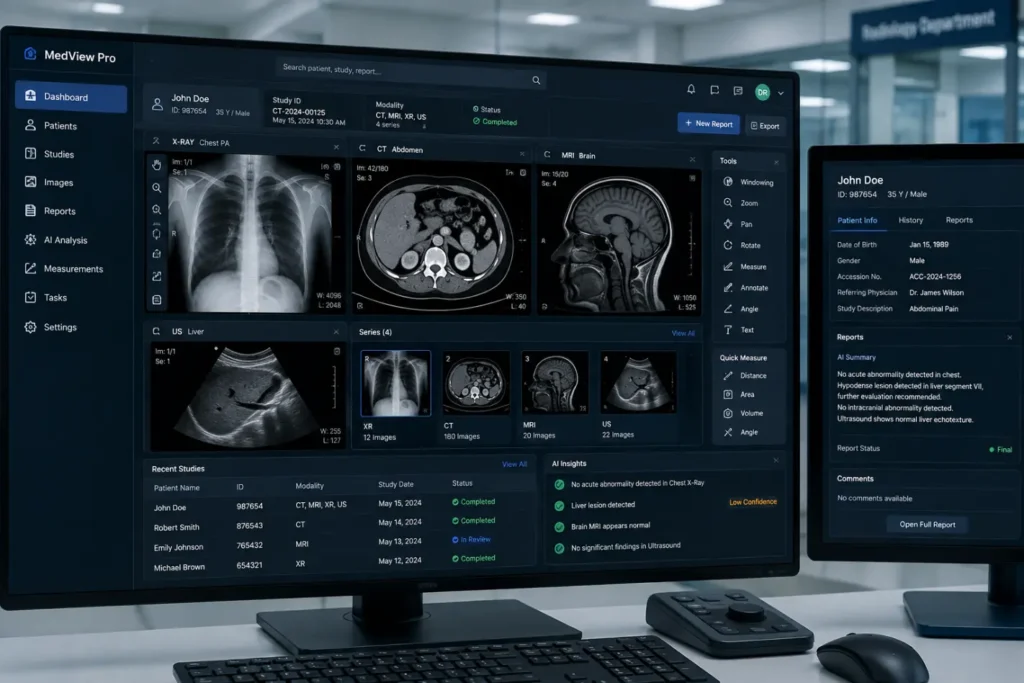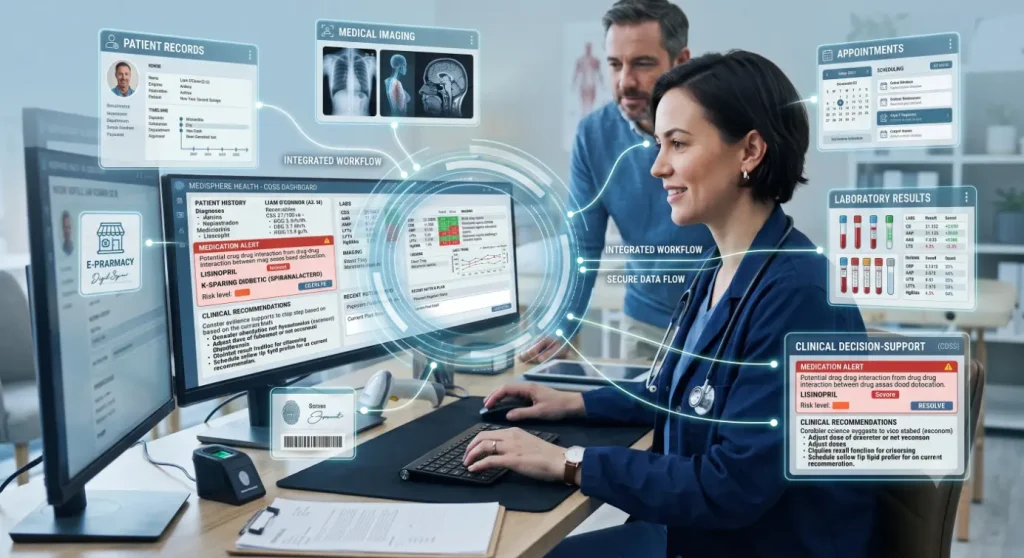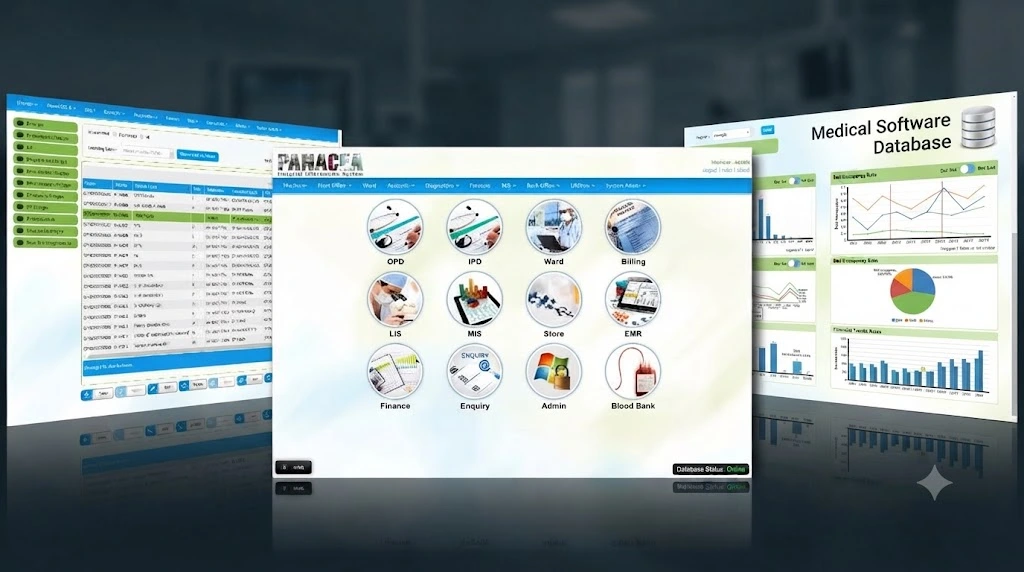
A medical software database is an example of a database that assists in storing and managing patient data in the healthcare industry in a secure way. The database is used for keeping the records of the patients electronically, making appointments for them, diagnosing them, and keeping clinical data.
Since healthcare technologies are advancing rapidly nowadays, it has become more relevant to manage the high volume of data in the medical sphere. Using the appropriate database can make the job of the healthcare staff easier.
Table of Contents
Medical Software Database: Types, Features, and Applications
A medical software database provides the foundation for storing and managing healthcare information. Its architecture determines how data is organized, retrieved, secured, and shared across applications.
Key Features of a Medical Software Database
A reliable healthcare database should support clinical workflows and protect sensitive information.
| Feature | Description |
| Patient data management | Stores patient histories, diagnoses, prescriptions, and treatment records. |
| Data encryption | Helps protect sensitive information during storage and transmission. |
| Access controls | Restricts patient data access according to user roles. |
| Data integration | Connects EHRs, imaging systems, and other healthcare applications. |
| Automated backups | Supports data recovery following accidental loss or system failure. |
| Reporting and analytics | Helps healthcare teams analyze clinical and operational data. |
| Scalable storage | Accommodates growing patient records and medical imaging files. |
These features help healthcare organizations maintain accessible, consistent, and secure medical information.
Types of Medical Software Databases
Different database architectures serve different healthcare requirements.
1. Relational Databases
Relational databases store information in tabular form. They link patients’ information, appointments, medication orders, and billing information. They are appropriate where data integrity and queries are critical.
2. NoSQL Databases
NoSQL databases allow flexible data models such as documents and key-value pairs. They can handle different types of information in clinics and some devices used in medicine. The appropriateness of using them depends on the applications.
3. Cloud-Based Databases
Cloud-based databases facilitate remote access and scalable data storage. They can assist health care providers in organizing their information. They should be evaluated on security configurations, data storage location, and vendors’ reputation.
4. On-Premises Databases
On-premises databases run on the infrastructure that is managed by the health care organizations. They give health care organizations full control over configurations and data storage. However, they have to take responsibility for maintenance and security.
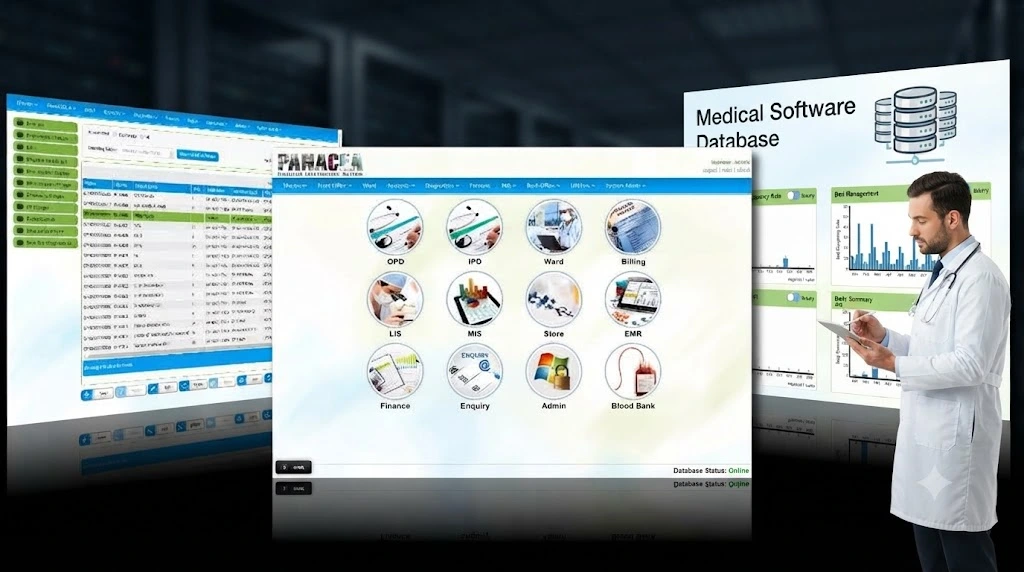
Applications of Medical Software Databases in Healthcare
Some of the key applications which medical software databases can cater to include:
- Electronic health records: To organize the history of patients, clinical notes, diagnosis, and treatment.
- Medical imaging systems: To organize images, scans, and other patient information relating to their eyes.
- Laboratory information systems: To coordinate tests, samples, and test reports.
- Hospital management systems: To coordinate admission, appointment, billing, and discharge.
- Telemedicine: To maintain the details of consultations along with patient information.
- Clinical analytics: To organize healthcare data.
For ophthalmology practices, specialized databases can also support retinal imaging workflows. For example, RetinaWiseAI™ from RCEENetworks supports retinal image management and AI-assisted clinical workflows.
Benefits of Medical Software Database Management
Effective database management can improve healthcare operations in several ways.
- Improved data accessibility: Centralized information helps authorized professionals retrieve relevant patient records efficiently.
- Streamlined workflows: Integrated systems reduce repetitive data entry and simplify information sharing between departments.
- Better clinical coordination: Accessible medical histories and diagnostic results help healthcare professionals review patient information.
- Enhanced security: Encryption, authentication, and audit trails help protect confidential medical records.
- Operational insights: Organized data supports reporting, resource planning, and performance monitoring.
Challenges
Healthcare organizations must address several challenges when implementing database systems.
- Data privacy: Weak security controls can expose confidential patient information.
- System integration: Incompatible applications can complicate data exchange.
- Data accuracy: Duplicate or incomplete records can affect reporting and clinical workflows.
- Scalability: Growing medical records and imaging files require sufficient storage and processing capacity.
- Maintenance: Regular updates, backups, and security assessments require ongoing investment.
How to Choose the Right Medical Software Database
Database selection depends on assessing technical needs and clinical processes.
- Determine the data needs: Specify the type of data that your healthcare apps require.
- Perform a security assessment: Check encryption, authentication, access control, and logging capabilities.
- Assess interoperability: Make sure the database is compatible with current EHR/EMR and imaging systems.
- Review the recovery procedures: Consider the backup frequency, recovery processes, and disaster recovery capabilities.
- Compare the cost: Take into account the price for licensing, development, infrastructure, and support.
- Perform customization assessment: Check if the database supports specialized clinical workflows.
The Future of Medical Software Databases
The development of artificial intelligence, cloud computing, and healthcare interoperability transforms database management. AI-powered analytics could be used to detect patterns in large clinical databases. Cloud infrastructure may provide flexible storage and access options for healthcare providers.
The use of interoperability standards like HL7 FHIR allows exchanging structured healthcare information. At the same time, enhanced encryption and security monitoring cope with cybersecurity threats.
Wrapping Up
A medical software database plays an important role in modern healthcare operations. It supports patient data management, clinical workflows, medical imaging, and operational reporting. Selecting the right architecture requires careful attention to security, integration, scalability, and reliability.
RCEENetworks develops specialized healthcare software solutions that support imaging workflows and clinical information management. Its technology helps eye care practices modernize their operations while maintaining established clinical workflows.
Frequently Asked Questions
1. What is a medical software database?
A medical software database is a digital system that stores, organizes, and manages patient records and other healthcare information.
2. Which database is commonly used in medical software?
Relational databases are commonly used for structured medical records, while NoSQL databases support flexible data requirements.
3. How does a medical software database improve patient care?
It improves access to patient information, supports clinical coordination, and helps healthcare professionals review medical histories.
4. Are cloud-based medical software databases secure?
Cloud databases can provide strong security through encryption, access controls, monitoring, and appropriate compliance measures.
Also Read: Medical Imaging Displays and Post-Processing Software Market