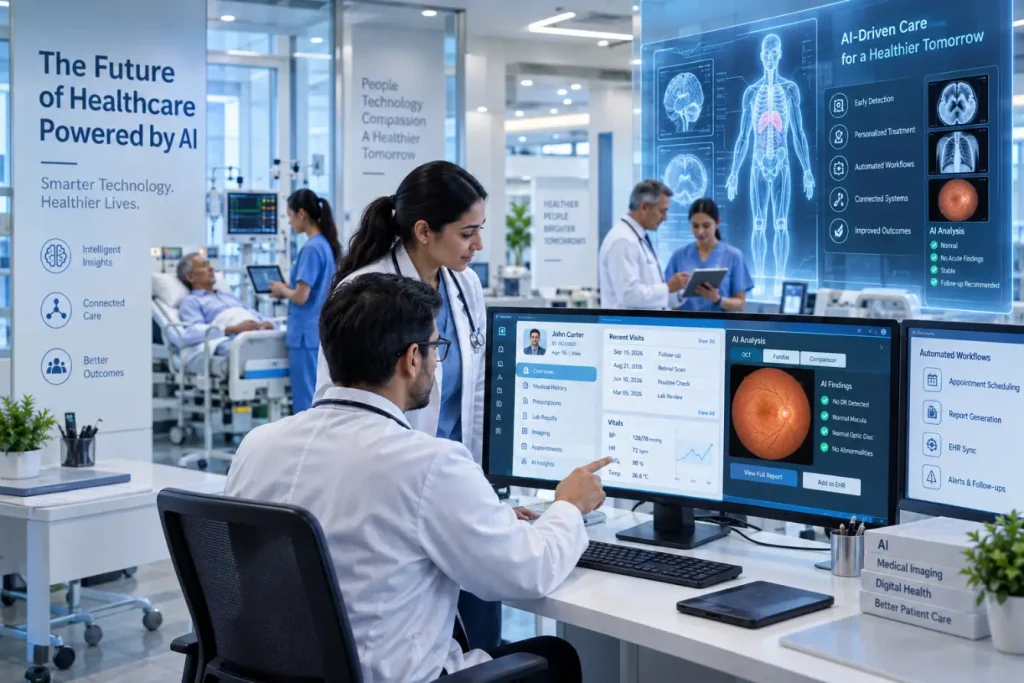
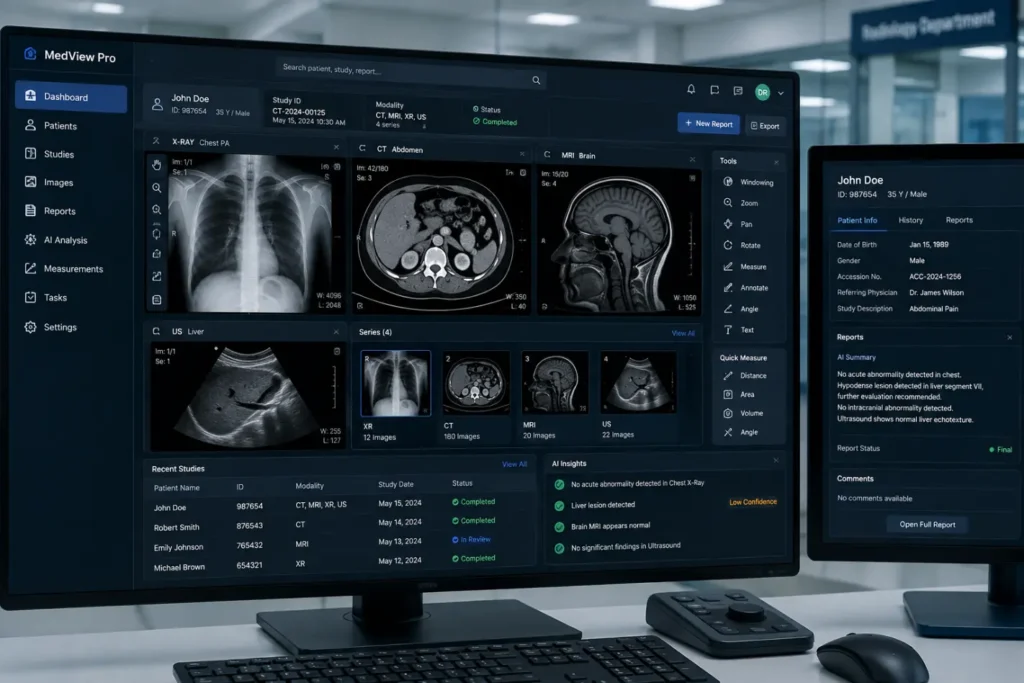
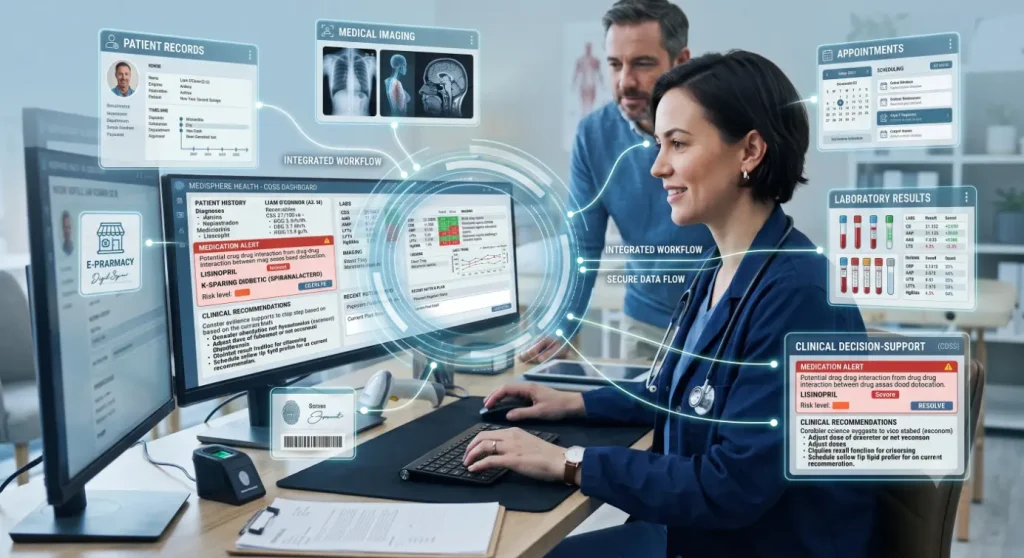
The medical imaging displays and post processing software market covers two things clinicians rely on every day. One is the diagnostic-grade monitor used to read scans. The other is the software that turns raw images into 3D, multiplanar and AI-enhanced views.
As imaging volumes grow and film disappears, these tools shape how quickly and confidently doctors reach a diagnosis. Medical imaging displays have brought a revolution in the healthcare sector.
Key Takeaways
- Demand is rising as imaging goes fully digital and AI enters daily workflows.
- Integrated display-plus-software workstations lead today, while standalone and cloud options are growing.
- Calibration, integration and total cost matter as much as screen specs.
Table of Contents
Medical Imaging Displays and Post Processing Software Market – Driving Demand
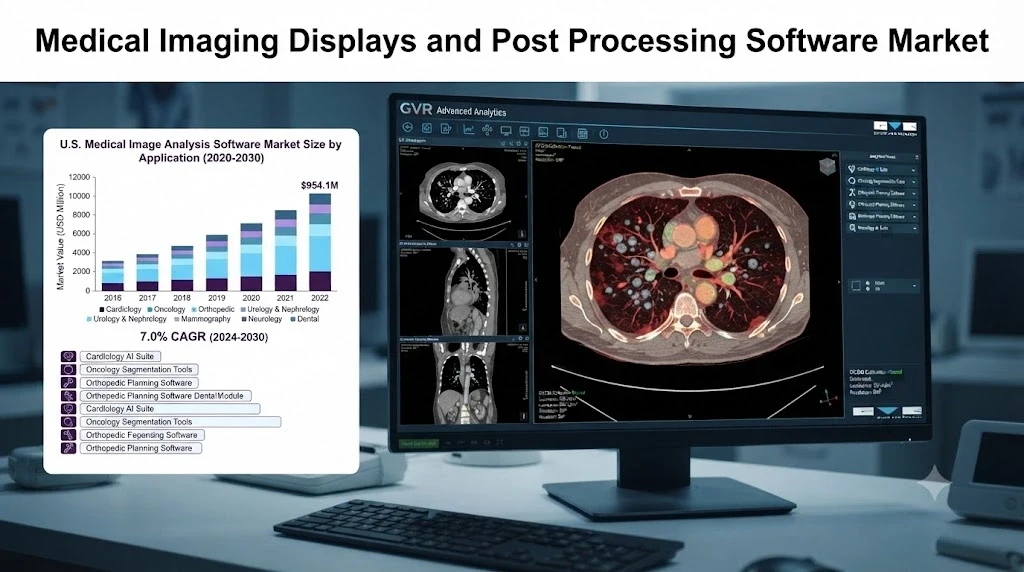
According to Data Bridge Market Research, the medical imaging displays and post processing software market was worth about USD 4.05 billion in 2025. It is projected to reach USD 8.13 billion by 2033, a 9.10% CAGR from 2026 to 2033.
Several forces are pushing adoption:
- Digital transition: Hospitals continue replacing film-based imaging with the latest versions of software.
- Rising scan volumes: Chronic disease and aging populations mean more imaging studies.
- Telemedicine: Remote reading and cloud viewing are creating demand for flexible access.
- AI tools: Automated segmentation, reconstruction and lesion detection speed up post-processing.
- Better displays: OLED and 4K panels improve contrast and clarity.
How the Market Breaks Down
Within the medical imaging displays and post processing software market, some estimates show clear leaders and faster-growing challengers.
- By type: Integrated systems lead with a 58.4% share, while standalone solutions are expected to grow fastest.
- By technology: CT leads with a 37.2% share, while MRI is the fastest grower at a 10.2% CAGR.
- By image type: 3D leads with a 48.6% share, while 4D is the fastest grower at a 12.5% CAGR.
- By indication: Radiology leads with a 52.3% share, while cardiology is the fastest grower at a 10.8% CAGR.
- By region: North America leads with a 39.2% share, while Asia-Pacific is the fastest grower at an 11.8% CAGR.
CT dominates because it is widely used in oncology, cardiology and emergency care. MRI and 4D imaging are rising as clinicians want finer soft-tissue detail and real-time views of motion and blood flow.

Why Displays Matter More Than Specs Suggest
A medical-grade monitor is more than a sharper screen. Key points include:
- Calibration: Diagnostic displays follow the DICOM Part 14 grayscale standard so images look consistent across workstations.
- Quality assurance: Regular checks keep brightness and uniformity within range.
- Resolution and luminance: Both of them help radiologists spot subtle findings.
- Intended use: Displays cleared for primary diagnosis differ from those meant for clinical review.
What Post-Processing Software Adds
Post-processing software transforms image data sets into clinically relevant visual information. The capabilities of the software may include:
- Multiplanar reformatting
- Three-dimensional volume rendering
- Virtual endoscopy
- Quantitative measurements
- Computer-aided detection (CAD)
- AI segmentation and workflow prioritization of organs
Physicians continue interpreting the data. Software assists but does not substitute.
Why This Matters for Eye Care
Specialized applications that use highly detailed imaging, like ophthalmology, definitely experience these trends.
There is a need to consider the following characteristics in the solutions:
- Fast image access from multiple devices
- Security of cloud or hybrid infrastructure
- Well-thought migration strategy for older images
- AI-driven assistance in decision making
One example of such solution is RetinaWiseAI™ by RCEENetworks – an application which provides retinal image analysis with necessary workflow capabilities.
Recent Developments Worth Watching
There are several moves that show where the field is heading:
- Web-based image viewing: Philips presented a zero-footprint, browser-based diagnostic viewer as a part of its Image Management 15 platform.
- Immersion: Barco, in cooperation with Avatar Medical, presented a glasses-free 3D visualization platform.
- FDA clearance: Philips obtained FDA 510(k) clearance for its SmartSpeed Precise dual-AI MRI software.
Challenges Holding Back Adoption
Cost is the primary obstacle. Complex technology could overwhelm small-scale facilities, while cost is further compounded by the inclusion of integration and maintenance.
Additional obstacles are:
- Compatibility: Compatibility of new technologies with already established PACS, RIS, and EHR systems.
- Training: Research and Markets points out that training is a costly process.
- Regulation: The use of diagnostic software is governed by the FDA in the U.S.
In the medical imaging displays and post processing software market, companies that overcome such obstacles are most likely to attract new customers.
Future of the Medical Imaging Displays and Post Processing Software Market
- Growth should stay steady through 2033. Expect more cloud-based viewing, wider use of cleared AI tools and stronger demand in Asia-Pacific.
- Providers that plan for interoperability now will adapt more easily as these technologies mature.
The Bottom Line
The medical imaging displays and post processing software market is growing because better images, smarter software and flexible access help clinicians work faster and with more confidence.
Experience faster, clearer eye care screenings and more accurate diagnostic insights with advanced retinal imaging technology from RCEENetworks.
Frequently Asked Questions
1. What is the size of the medical imaging displays and post processing software market?
Medical imaging displays and medical software are valued at about USD 4.05 billion in 2025, with a projection of USD 8.13 billion by 2033.
2. Which region leads the market?
North America held the largest share in 2025, while Asia-Pacific is expected to grow fastest.
3. What is post-processing software in medical imaging?
It is software that enhances and analyzes scans through tools such as 3D rendering, multiplanar reformatting, segmentation and measurement.
4. What are the main challenges for buyers?
High costs, integration with existing systems, staff training needs and regulatory requirements are the most common obstacles.
Also Read: Automated Analysis of Retinal Images at Population Scale