Healthcare is becoming increasingly software-driven, making medical device software design a critical part of modern medical technology. From diagnostic imaging systems and connected medical devices to AI-powered clinical decision-support platforms, well-designed software improves efficiency, supports accurate clinical decisions, and enhances patient care.
Key Takeaways
- Medical device software design ensures healthcare software is safe, secure, and compliant.
- Standards like IEC 62304 and ISO 14971 guide quality development.
- Platforms like RetinaWiseAI demonstrate how intelligent software improves clinical workflows.
- Scalable architecture, cybersecurity, and interoperability are essential for future-ready medical solutions.
Beyond functionality, successful medical device software must prioritize patient safety, regulatory compliance, cybersecurity, and seamless integration with existing healthcare systems. A structured design approach helps organizations develop reliable solutions that meet both clinical and regulatory expectations.
What Is Medical Device Software Design?
Medical device software design is the process of planning, developing, testing, and maintaining software used in or with medical devices. The goal is to create secure, reliable, and compliant software that supports healthcare professionals while ensuring patient safety.
Common applications include:
- Diagnostic imaging software
- Patient monitoring systems
- Medical laboratory equipment
- Connected healthcare devices
- AI-powered clinical decision-support solutions
- Remote patient monitoring platforms
Whether embedded within a device or delivered as Software as a Medical Device (SaMD), effective design ensures consistent performance throughout the product lifecycle.
Key Components of Medical Device Software Design
A successful development process typically includes the following stages:
| Design Stage | Purpose |
| Requirements Analysis | Define clinical, technical, and regulatory requirements |
| Software Architecture | Build a secure and scalable system |
| Risk Management | Identify and reduce patient safety risks |
| UI/UX Design | Create intuitive workflows for clinicians |
| Verification & Validation | Confirm software performs as intended |
| Documentation | Support regulatory compliance and traceability |
Each stage contributes to delivering high-quality medical software that healthcare providers can trust.
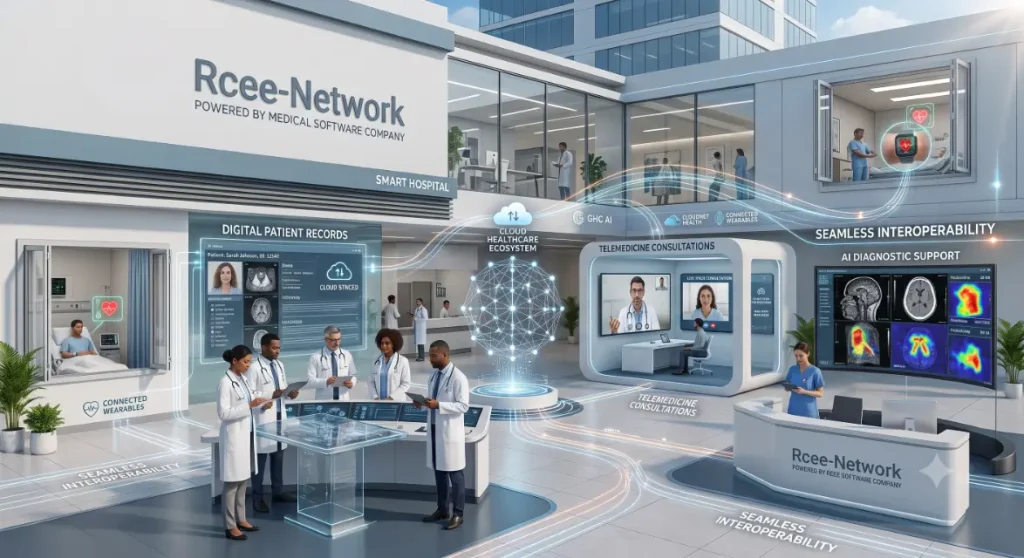
Essential Design Considerations
When developing medical device software, organizations should focus on:
- Patient safety and risk reduction
- Regulatory compliance
- Cybersecurity and data privacy
- User-friendly clinical interfaces
- Reliable system performance
- Integration with EMR/EHR systems
- Scalability for future updates
Addressing these considerations early helps reduce development risks and accelerates product deployment.
Also Read:Medical Softwares
Real-World Example: RetinaWiseAI
A practical example of medical device software design is RetinaWiseAI, an AI-powered clinical decision-support platform developed for retinal imaging workflows. The platform demonstrates how intelligent software can enhance clinical efficiency while maintaining security and interoperability.
RetinaWiseAI Design Highlights
| Feature | Clinical Benefit |
| Cloud-based deployment | Enables secure access across multiple clinics |
| Fundus & OCT image support | Compatible with multiple retinal imaging systems |
| EMR/EHR integration | Simplifies patient record management |
| Secure image processing | Protects sensitive patient data |
| Automated workflow support | Reduces manual tasks and improves productivity |
| Scalable architecture | Supports clinics, hospitals, and healthcare networks |
By combining intelligent image analysis with secure cloud infrastructure and seamless integration, RetinaWiseAI reflects the principles of modern medical device software design—creating software that improves clinical workflows while supporting healthcare professionals in making informed decisions.
Industry Standards That Matter
Medical device software should be developed according to internationally recognized standards.
| Standard | Purpose |
| IEC 62304 | Medical device software lifecycle |
| ISO 14971 | Risk management |
| ISO 13485 | Quality management system |
| IEC 62366 | Usability engineering |
| FDA Guidance | Software validation and compliance |
Following these standards helps improve software quality and supports regulatory approval.
Benefits of Effective Medical Device Software Design
A well-designed software solution provides significant advantages for healthcare organizations.
- Improves patient safety
- Enhances software reliability
- Supports regulatory compliance
- Strengthens cybersecurity
- Simplifies maintenance and updates
- Improves clinical workflow efficiency
- Enables interoperability across healthcare systems
- Scales with evolving healthcare needs

Best Practices for Development
To build high-quality medical device software, development teams should:
- Define clear software requirements before coding.
- Apply risk management throughout development.
- Build security into every layer of the application.
- Conduct comprehensive verification and validation testing.
- Maintain detailed regulatory documentation.
- Design intuitive interfaces for healthcare professionals.
- Develop scalable and modular software architectures.
These practices help reduce errors, improve compliance, and support long-term product success.
Conclusion
As healthcare technology continues to evolve, medical device software design has become essential for creating safe, secure, and intelligent healthcare solutions. By combining regulatory compliance, strong cybersecurity, intuitive user experiences, and scalable architecture, organizations can develop software that supports clinicians and improves patient outcomes.
Solutions like RetinaWiseAI demonstrate how modern medical software can integrate advanced imaging, secure cloud infrastructure, and AI-powered clinical decision-support into a unified platform, helping healthcare providers deliver more efficient and informed care.
Frequently Asked Questions
1. What is medical device software design?
Medical device software design is the process of developing software that operates medical devices or supports clinical functions while meeting safety, quality, and regulatory requirements.
2. Why is software design important for medical devices?
It helps ensure patient safety, reliable performance, cybersecurity, regulatory compliance, and efficient clinical workflows.
3. What standards are commonly used for medical device software?
IEC 62304, ISO 14971, ISO 13485, and IEC 62366 are among the most widely followed standards for medical device software development.
4. How does RetinaWiseAI reflect modern medical device software design?
RetinaWiseAI combines cloud deployment, retinal image compatibility, EMR/EHR integration, secure image processing, and AI-powered clinical decision-support to create an efficient, scalable, and clinician-friendly platform.
Also Read:Medical Software Company