Medical devices are at the heart of modern healthcare, but managing them manually can be time-consuming and prone to errors. Medical equipment software helps hospitals, clinics, laboratories, and specialty healthcare providers track, maintain, and optimize medical devices from installation to replacement. It centralizes equipment information, automates maintenance schedules, and improves operational efficiency while supporting regulatory compliance.
4 Short Key Takeaways
- Centralizes medical equipment management.
- Reduces downtime with preventive maintenance.
- Integrates with hospital systems and diagnostic devices.
- Supports AI-powered clinical decision-support.
Whether managing a few devices or thousands of assets, the right software reduces downtime and ensures equipment is always ready for patient care.
Why Medical Equipment Software Matters
Healthcare organizations use medical equipment software to simplify everyday equipment management.
Key Advantages
- Centralized equipment inventory
- Automated preventive maintenance
- Real-time equipment tracking
- Faster repair management
- Reduced operational costs
- Improved compliance documentation
- Better equipment utilization
- Increased patient safety
Core Features of Medical Equipment Software
| Feature | Purpose | Benefit |
| Asset Inventory | Maintain a digital equipment database | Easy asset tracking |
| Preventive Maintenance | Schedule routine servicing | Reduce unexpected breakdowns |
| Work Order Management | Assign repair requests | Faster maintenance |
| Calibration Tracking | Monitor calibration dates | Accurate device performance |
| Warranty Management | Track vendor contracts | Lower repair expenses |
| Service History | Store maintenance records | Better audit readiness |
| Dashboard & Reports | Monitor equipment status | Data-driven decisions |
| User Access Control | Secure role-based access | Enhanced data security |
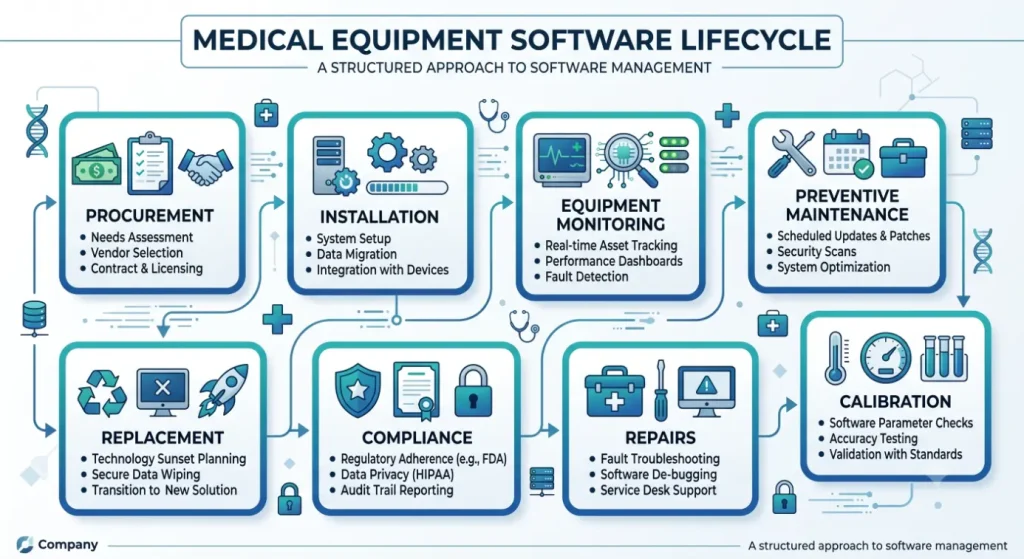
Medical Equipment Lifecycle Management
A complete medical equipment software solution supports every stage of an asset’s lifecycle.
| Lifecycle Stage | Software Function |
| Procurement | Register new equipment |
| Installation | Create equipment profile |
| Daily Usage | Monitor equipment status |
| Maintenance | Schedule preventive servicing |
| Repairs | Track service requests |
| Calibration | Maintain compliance records |
| Replacement | Analyze asset performance |
Where Medical Equipment Software is Used
Medical equipment software is suitable for various healthcare environments.
- Hospitals
- Multi-specialty clinics
- Diagnostic centers
- Imaging centers
- Laboratories
- Surgical centers
- Ophthalmology clinics
- Biomedical engineering departments
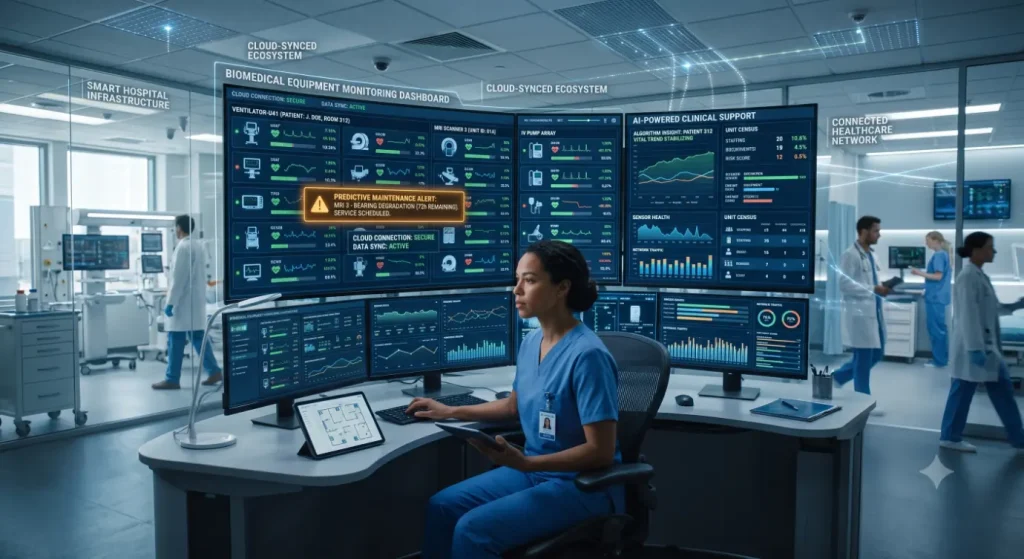
Essential Modules to Consider
Before choosing a solution, ensure it includes these important modules:
1. Equipment inventory management
2. Preventive maintenance scheduler
3. Asset lifecycle management
4. Calibration management
5. Warranty tracking
6. Vendor management
7. Compliance reporting
8. Dashboard and analytics
9. Mobile technician support
10. Multi-location asset management
Integration with Healthcare Systems
Modern medical equipment software delivers greater value when connected with existing hospital platforms.
Common Integrations
| System | Purpose |
| EHR / EMR | Patient record synchronization |
| HIS | Hospital workflow integration |
| LIS | Laboratory equipment connectivity |
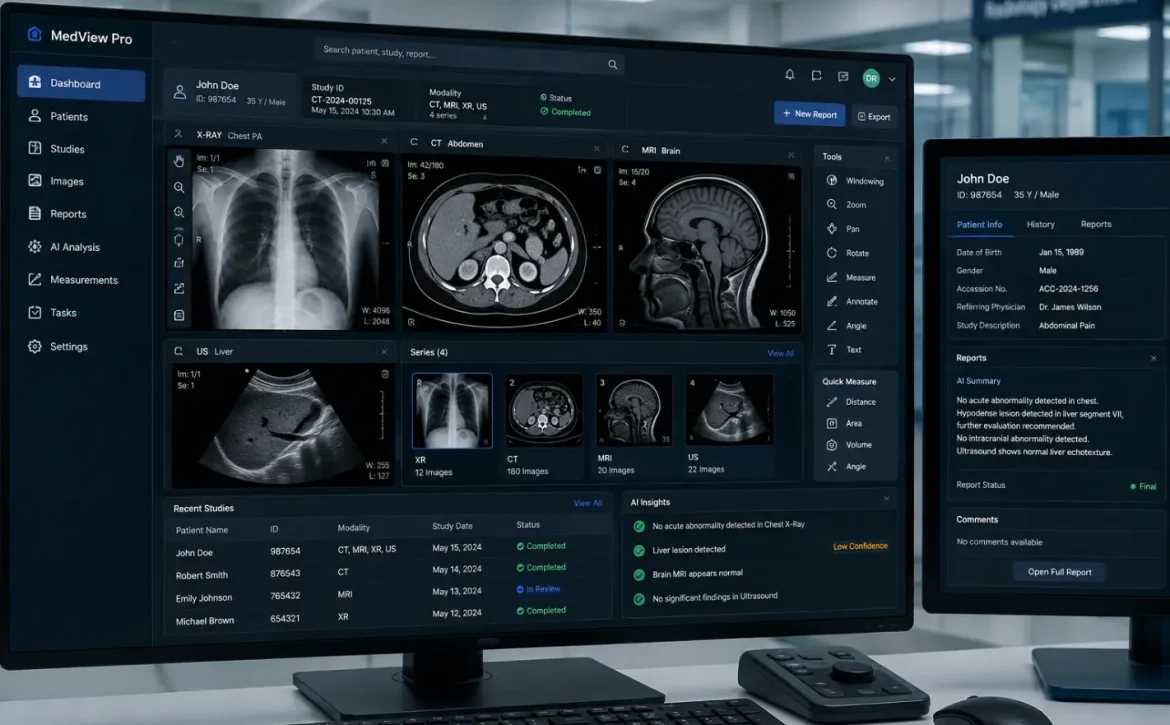
| PACS | Imaging data management |
| Cloud Platforms | Remote access and backup |
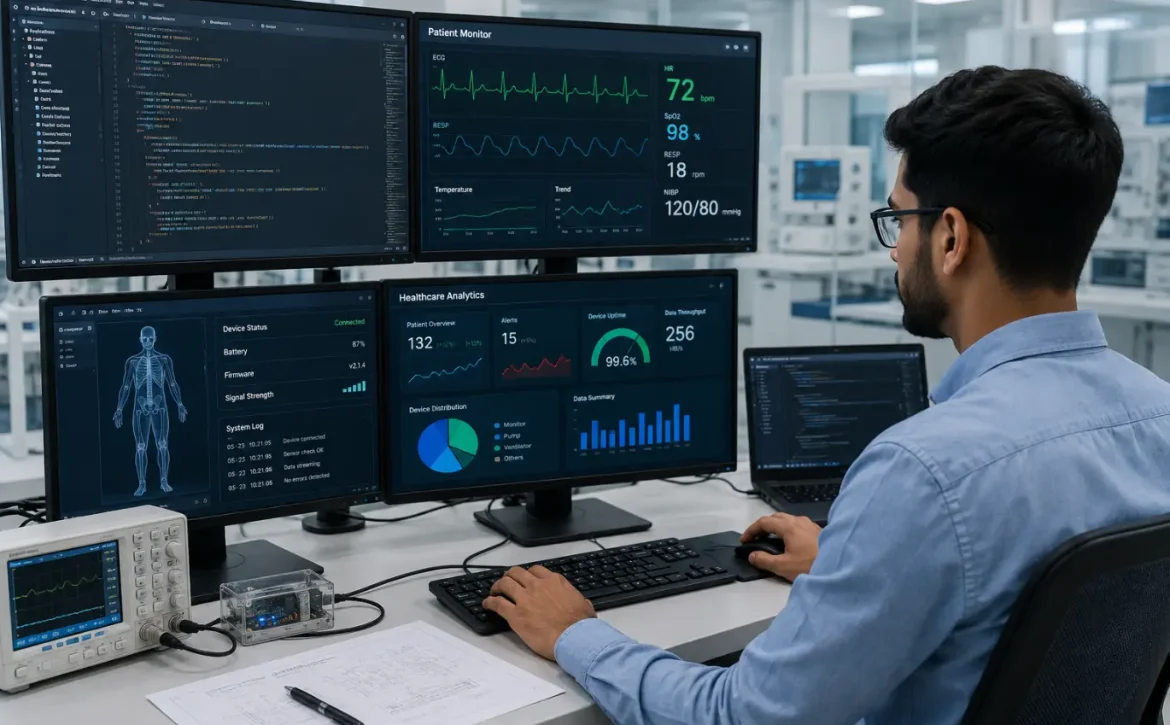
| IoT Medical Devices | Real-time equipment monitoring |
These integrations reduce manual data entry and improve workflow efficiency.
Medical Equipment Software in Ophthalmology
Medical equipment software is increasingly used in eye care to connect diagnostic devices with digital workflows. A good example is RetinaWiseAI™ by RCEENetworks, which demonstrates how intelligent software can work alongside retinal imaging equipment.
Also Read:Medical Software Company
Instead of functioning only as an asset management tool, RetinaWiseAI™ integrates retinal imaging devices with cloud technology and AI-powered clinical decision-support to streamline ophthalmology workflows.
RetinaWiseAI™ Highlights
| Capability | Benefit |
| Fundus Camera Compatibility | Connects with retinal imaging devices |
| OCT Image Support | Supports advanced eye diagnostics |
| Cloud-Based Access | Secure image storage and sharing |
| EMR/EHR Integration | Simplifies clinical workflows |
| AI-Powered Clinical Decision-Support | Assists healthcare professionals during image analysis |
| Secure Data Management | Supports HIPAA & GDPR compliance |
| Multi-Clinic Access | Centralized workflow management |
Benefits for Healthcare Providers
Implementing medical equipment software helps organizations improve operational performance.
Operational Benefits
1. Reduce equipment downtime
2. Improve maintenance planning
3. Extend equipment lifespan
4. Simplify regulatory compliance
5. Improve technician productivity
6. Enhance equipment visibility
7. Support faster clinical workflows
8. Reduce paperwork
How AI-Powered Clinical Decision-Support Adds Value
Many modern medical equipment software platforms include intelligent capabilities that assist healthcare professionals.
Examples include:
- Predictive maintenance alerts
- Equipment health monitoring
- Device utilization analytics
- Workflow optimization
- Image quality assessment
- Automated maintenance reminders
These tools help healthcare teams make informed decisions while maintaining reliable equipment performance.
Choosing the Right Medical Equipment Software
Before investing, compare solutions based on these factors.
| Selection Criteria | Why It Matters |
| Scalability | Supports future growth |
| Integration | Works with existing hospital systems |
| Security | Protects healthcare data |
| Compliance | Meets healthcare regulations |
| User-Friendly Interface | Faster staff adoption |
| Reporting | Better operational insights |
| Technical Support | Reliable long-term assistance |
Conclusion
As healthcare facilities continue to digitize operations, medical equipment software has become an essential solution for managing medical devices efficiently. It helps healthcare organizations automate maintenance, improve compliance, reduce downtime, and optimize equipment performance through centralized management.
Advanced platforms like RetinaWiseAI™ also demonstrate how medical equipment software can integrate with specialized diagnostic devices, cloud technology, and AI-powered clinical decision-support to create smarter, more connected healthcare workflows. Investing in the right software not only protects valuable medical assets but also supports better clinical efficiency and patient care.
Also Read: Medical Device Software Design
FAQs
What is medical equipment software?
Medical equipment software helps healthcare organizations manage, monitor, maintain, and optimize medical devices throughout their lifecycle.
Who uses medical equipment software?
Hospitals, diagnostic centers, laboratories, imaging facilities, specialty clinics, and biomedical engineering teams.
Can medical equipment software integrate with hospital systems?
Yes. Most modern solutions integrate with EHR, EMR, HIS, LIS, PACS, and cloud-based healthcare platforms.
Does medical equipment software improve compliance?
Yes. It maintains maintenance logs, calibration records, service history, and compliance documentation.