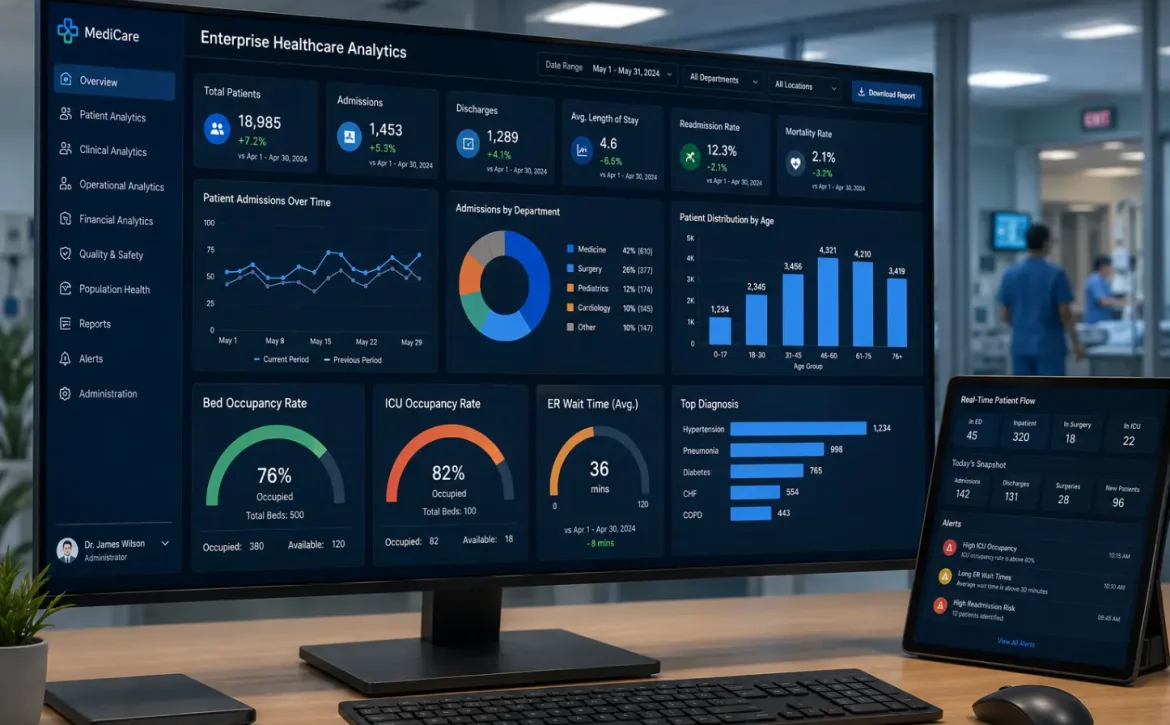
Healthcare providers are increasingly adopting cloud medical software to simplify clinical workflows, improve data accessibility, and enhance patient care. Instead of relying on local servers, cloud-based solutions securely store medical data online, allowing authorized users to access patient information, medical images, and reports from virtually anywhere.
Key Takeaways
- This software enables secure, remote access to healthcare data.
- It reduces IT costs while improving collaboration and workflow efficiency.
- Cloud platforms support medical imaging, telemedicine, and EHR integration.
- Solutions like RetinaWiseAI™ combine cloud technology with AI-powered clinical decision-support.
From hospitals and clinics to diagnostic centers and ophthalmology practices, cloud medical software helps organizations reduce IT costs while improving collaboration and operational efficiency.
What Is Cloud Medical Software?
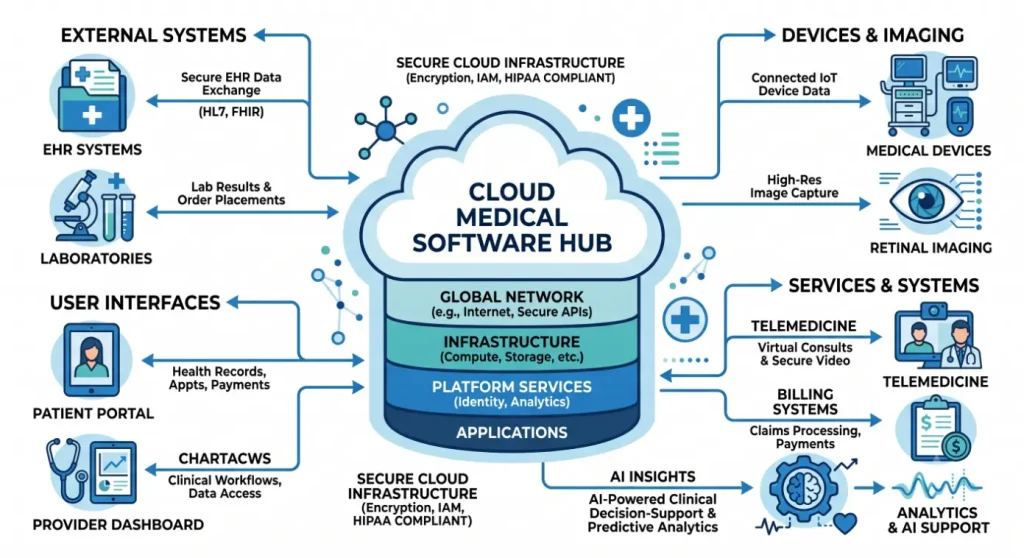
This is a healthcare application hosted on secure cloud infrastructure. It enables healthcare professionals to manage patient records, diagnostic data, scheduling, billing, and clinical workflows through a secure internet connection.
Key Benefits
- Access patient records from any authorized location
- Reduce hardware and server maintenance costs
- Automatic software updates and backups
- Secure cloud storage with data encryption
- Easy collaboration between healthcare teams
- Scalable for growing healthcare organizations
Also Read:Medical Equipment Software
Key Features of Cloud Medical Software
| Feature | Benefit |
| Cloud Data Storage | Securely stores medical records and images |
| Electronic Health Records (EHR) | Centralized patient information |
| Appointment Management | Simplifies scheduling |
| Medical Imaging Support | Access diagnostic images remotely |
| Billing & Claims | Streamlines financial workflows |
| Analytics Dashboard | Improves operational insights |
| Multi-User Access | Supports team collaboration |
| Security & Compliance | Protects sensitive healthcare data |
Applications of Cloud Medical Software
This medical software is widely used across different healthcare settings.
- Hospitals
- Multi-specialty clinics
- Diagnostic laboratories
- Radiology centers
- Ophthalmology practices
- Telemedicine providers
- Community screening programs
- Medical device management
.
Why Healthcare Providers Choose Cloud Medical Software
Healthcare organizations are investing in cloud platforms because they offer measurable operational benefits.
1.Clinical Benefits
- Faster access to patient records
- Better coordination between departments
- Simplified diagnostic workflows
- Improved medical image sharing
- Support for remote consultations
2.Business Benefits
- Lower infrastructure costs
- Reduced software maintenance
- Automatic system upgrades
- Easy scalability for multiple locations
- Improved disaster recovery
3.Security Features
Security is one of the most important aspects of this software. Modern platforms typically include:
- End-to-end encryption
- Multi-factor authentication
- Automatic cloud backups
- User access controls
- Audit logs
- Disaster recovery support
- Compliance with healthcare privacy standards
These features help healthcare organizations protect sensitive patient information while maintaining regulatory compliance.
Cloud Medical Software vs Traditional Medical Software
| Cloud Medical Software | Traditional Software |
| Accessible from anywhere | Limited to local computers |
| Automatic updates | Manual updates |
| Cloud backup | Manual backup |
| Lower infrastructure costs | Higher hardware investment |
| Easy scalability | Expansion requires additional hardware |
| Better remote collaboration | Limited accessibility |
Choosing the Right Cloud Medical Software
When evaluating a cloud medical solution, consider the following:
- Secure cloud infrastructure
- Healthcare compliance standards
- EHR/EMR integration
- Medical imaging compatibility
- User-friendly interface
- Scalability for future growth
- Reliable technical support
- Backup and disaster recovery options
If your organization works with diagnostic imaging, selecting software that integrates with retinal cameras, OCT devices, or other medical imaging systems can further improve workflow efficiency.
Future of Cloud Medical Software
Cloud technology continues to transform healthcare through:
- AI-powered clinical decision-support
- Remote patient monitoring
- Telemedicine integration
- Cloud-based medical imaging
- Predictive healthcare analytics
- Population health management
- Connected medical devices
As healthcare becomes increasingly digital, cloud medical software will play a central role in improving efficiency, accessibility, and patient outcomes.

Conclusion
This software provides healthcare organizations with a secure, scalable, and cost-effective way to manage clinical operations. From patient records and billing to diagnostic imaging and telemedicine, cloud-based platforms simplify workflows while supporting better collaboration across healthcare teams.
Also Read: Medical Software Development
Solutions like RetinaWiseAI™ highlight how cloud medical software can extend beyond data storage by integrating secure retinal image management with AI-powered clinical decision-support. This enables eye care providers to streamline screening workflows, improve access to diagnostic information, and support informed clinical decisions while maintaining the highest standards of patient data security.
Frequently Asked Questions (FAQs)
1. What is cloud medical software?
Cloud medical software is a healthcare solution hosted on secure cloud servers that allows providers to access patient records, medical imaging, billing, and clinical workflows online.
2. What are the benefits of cloud medical software?
It offers remote access, lower IT costs, automatic updates, secure data storage, better collaboration, and easy scalability for healthcare organizations.
3. Is cloud medical software secure?
Yes. Most cloud medical software includes encryption, role-based access, multi-factor authentication, regular backups, and compliance with healthcare data privacy standards.
4. Can cloud medical software integrate with medical imaging systems?
Yes. Many platforms integrate with medical imaging devices, EHR/EMR systems, and AI-powered clinical decision-support tools to streamline diagnostic workflows.