Healthcare depends on information. Doctors need patient histories, laboratories need test orders, radiologists need clinical details, and administrative teams need accurate billing and appointment records. When these functions operate through separate systems, staff may spend too much time moving information from one platform to another.
Key Takeaways
- Connects Healthcare Systems: Links EHRs, labs, imaging, billing, and other platforms.
- Reduces Manual Work: Limits duplicate data entry and improves information sharing.
- Supports Better Care: Gives authorized clinicians easier access to relevant patient information.
- Improves Security: Uses access controls, encryption, monitoring, and secure data exchange.
Integrated medical software helps solve this problem by connecting different healthcare applications and allowing relevant information to move between them. It can support hospitals, clinics, diagnostic centers, laboratories, pharmacies, and other healthcare organizations.
The purpose is simple: make healthcare information easier to access, manage, and use while reducing unnecessary manual work.
What Is Integrated Medical Software?
Integrated medical software connects healthcare systems that are responsible for different parts of patient care and administration.
For example, a hospital may use separate software for electronic health records, laboratory testing, medical imaging, appointments, billing, and pharmacy management. With proper integration, these systems can exchange information instead of requiring staff to enter the same details repeatedly.
Common integrations include:
- Electronic health records (EHRs)
- Electronic medical records (EMRs)
- Laboratory information systems
- Radiology and imaging systems
- Pharmacy software
- Appointment scheduling
- Billing and insurance systems
- Telemedicine platforms
- Patient portals
- Clinical decision-support tools
The exact combination depends on the organization’s size, services, and existing technology.
Also Read:https://www.rceenetworks.com/medical-image-analysis-software-development-company/
Why Is Medical Software Integration Important?
A patient’s care often involves several departments. Consider a patient who visits a physician, receives a blood test, undergoes an imaging examination, and later sees a specialist. If each department uses disconnected software, staff may have to transfer information manually.
An integrated system can connect these steps.
For example:
Patient Visit → Test Order → Laboratory Result → Doctor Review → Updated Patient Record
This type of connection can reduce duplicate data entry and make important information available to authorized healthcare professionals more easily.
Key Benefits of Integrated Medical Software
| Benefit | How it helps |
| Better access to records | Clinicians can find relevant patient information more easily |
| Less manual entry | Information can move between connected systems |
| Faster communication | Departments can exchange results and records electronically |
| Fewer data errors | Reducing repeated entry can lower the risk of transcription mistakes |
| Better patient experience | Patients may spend less time repeating information |
| Improved coordination | Clinical and administrative teams can work with connected information |
Integration can also help healthcare organizations understand how information moves through their daily operations.
Important Features
1. EHR Integration
Connecting medical applications with an EHR allows patient information to be shared across appropriate systems. Test results, reports, medications, and other records can become part of a connected patient history.
2. Laboratory Integration
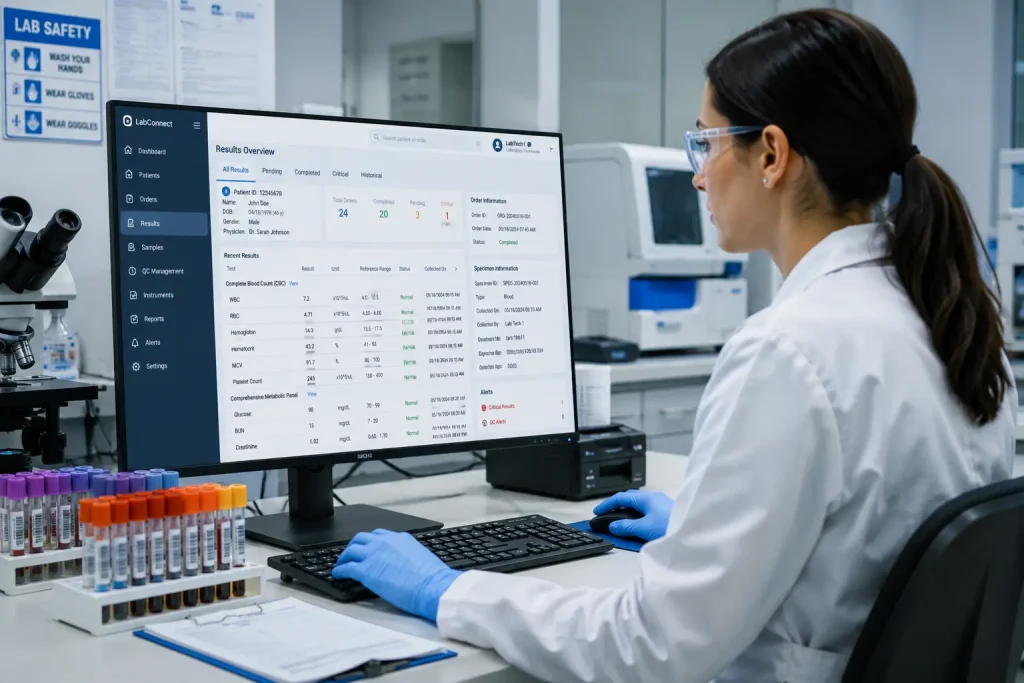
Laboratory integration can connect test ordering with sample processing and result reporting.
A typical workflow may look like:
3. Medical Imaging Integration
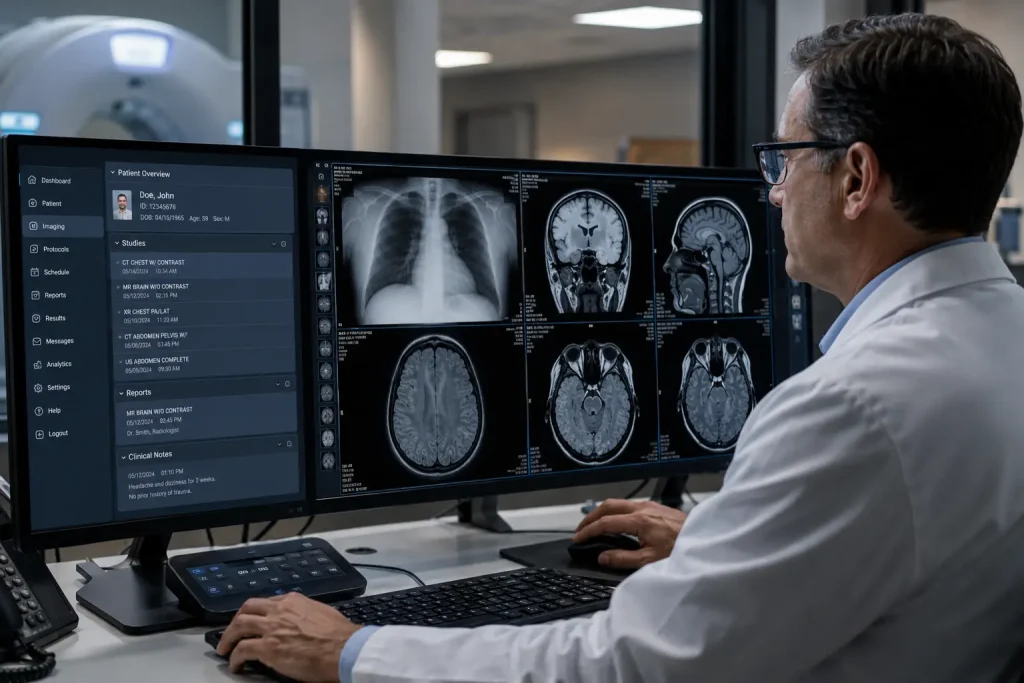
Hospitals and diagnostic centers handle large volumes of X-rays, CT scans, MRIs, ultrasounds, and other medical images. Integrated software can connect imaging systems with patient records and reporting platforms.
DICOM is commonly used for medical imaging communication, while healthcare APIs and standards such as HL7 and FHIR can support broader information exchange.
4. Appointment and Billing Integration
Scheduling and billing can also be connected with clinical systems. This allows administrative information to relate more closely to the patient’s visit and the services provided.
5. Telemedicine Integration
Telemedicine software can be connected with patient records, appointment systems, prescriptions, and clinical documentation. This makes virtual consultations part of the wider care process rather than a separate workflow.
Security Matters
Connecting healthcare systems also means protecting more data across more points of access. Medical software should therefore include appropriate security measures, such as:
- Role-based access
- Strong authentication
- Encryption
- Audit logs
- Secure data exchange
- Regular backups
- Access monitoring
- Privacy and regulatory controls
Not every employee should have access to every patient record. Permissions should reflect each person’s responsibilities.
The Role of AI-Powered Clinical Decision-Support
Integrated medical software can also work with AI-powered clinical decision-support tools. These tools may help clinicians review medical images, identify patterns, organize information, or assess certain clinical risks.
For example, an imaging system could send a medical image to a decision-support application and return relevant findings to the authorized clinician.
These tools are intended to support professional judgment, not replace doctors or other qualified healthcare professionals.
Common Challenges
Medical software integration is useful, but it is not always simple. Organizations may face:
- Older systems that lack modern integration options
- Inconsistent patient data
- High implementation and maintenance costs
- Cybersecurity concerns
- Staff training requirements
- Compatibility issues between vendors
- Privacy and regulatory requirements
Good planning is important before connecting multiple systems. Healthcare teams, IT professionals, software providers, and compliance specialists should understand the workflow and requirements before implementation begins.
FAQs
1. What is integrated medical software?
Integrated medical software connects different healthcare applications so they can exchange relevant information and support connected clinical and administrative workflows.
2. What systems can be integrated?
EHRs, laboratory systems, imaging platforms, pharmacy software, appointment systems, billing platforms, telemedicine tools, and clinical decision-support applications can often be integrated.
3. Does integration improve patient care?
It can support better care by making relevant information easier for authorized healthcare professionals to access and reducing unnecessary manual processes.
4. Is integrated medical software secure?
It can be secure when designed with appropriate authentication, encryption, access controls, monitoring, backups, and privacy safeguards. Security depends on how the system is designed, implemented, and maintained.
5. Can small clinics use integrated medical software?
Yes. Integration is not limited to large hospitals. Small clinics can connect selected systems based on their needs, budget, and existing technology.