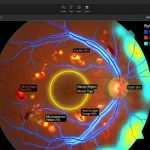
AI in Ophthalmology is the application of computational algorithms and data-driven models to analyze ocular data for clinical decision-making. It aids in recognizing retinal abnormalities, estimating treatment outcomes, and optimizing patient care strategies. How does this technology integrate into real-world ophthalmic workflows and regulatory systems?
Key Takeaways
- AI in Ophthalmology enhances early detection and diagnostic precision
- Widely used in retinal imaging, glaucoma, and OCT analysis
- Relies on machine learning, deep learning, and computer vision
- Requires regulatory compliance and clinical validation
- Functions primarily as a decision-support
In what ways is AI utilized in Ophthalmology?
AI in Ophthalmology is widely used across diagnostic and clinical workflows to enhance accuracy and efficiency.
Major applications include:
- Retinal disease screening: Detection of diabetic retinopathy and macular degeneration using fundus imaging
- Glaucoma assessment: Automated optic nerve head analysis
- Optical coherence tomography (OCT) analysis: Layer segmentation and fluid detection
- Surgical planning: Risk prediction and outcome modeling
Example: AI-based screening tools can identify diabetic retinopathy in primary care settings without specialist involvement.
How does AI in Ophthalmology improve diagnostic accuracy?
AI in Ophthalmology improves diagnostic accuracy by analyzing large datasets and identifying subtle patterns not easily visible to clinicians.
Key mechanisms:
- Pattern recognition in imaging data
- Standardized grading systems
- Reduction of inter-observer variability
| Diagnostic Area | Improvement with AI |
| Retinal imaging | Higher sensitivity in early detection |
| Glaucoma | Consistent optic nerve analysis |
| OCT scans | Automated fluid and layer detection |
Clinical validation studies show high sensitivity and specificity when systems are properly trained and tested.
What technologies power AI in Ophthalmology systems?
AI in Ophthalmology relies on multiple computational approaches tailored to medical imaging and predictive analytics.
Core technologies:
- Machine learning (ML): Learns from labeled datasets
- Deep learning (DL): Uses neural networks for image analysis
- Computer vision: Processes retinal images and scans
- Natural language processing (NLP): Extracts data from clinical records
A related area often discussed includes machine learning in healthcare, deep learning for medical imaging, and clinical decision support systems.
What are the regulatory and ethical considerations?
AI in Ophthalmology is governed by strict regulatory and ethical principles to ensure safe clinical use and data protection.
Key considerations:
- Regulatory approvals: Systems must meet standards set by agencies such as the FDA
- Data privacy: Compliance with HIPAA and GDPR
- Bias and fairness: Ensuring diverse training datasets
- Clinical validation: Prospective trials and real-world testing
These requirements ensure safe integration into healthcare systems.
How is AI in Ophthalmology used in clinical workflows?
AI in Ophthalmology is integrated into clinical workflows to enhance efficiency and decision-making.
Typical workflow integration:
- Image acquisition (fundus/OCT)
- Automated analysis by AI system
- Risk classification or diagnosis suggestion
- Clinician review and final decision
Industry practice: AI tools are often used as decision-support systems rather than standalone diagnostic tools.
What are the challenges in implementing AI in Ophthalmology?
AI in Ophthalmology faces several technical and operational challenges.
Common challenges:
- Data quality and standardization issues
- Integration with legacy hospital systems
- High implementation costs
- Need for clinician training
Addressing these challenges is critical for large-scale adoption.
Conclusion
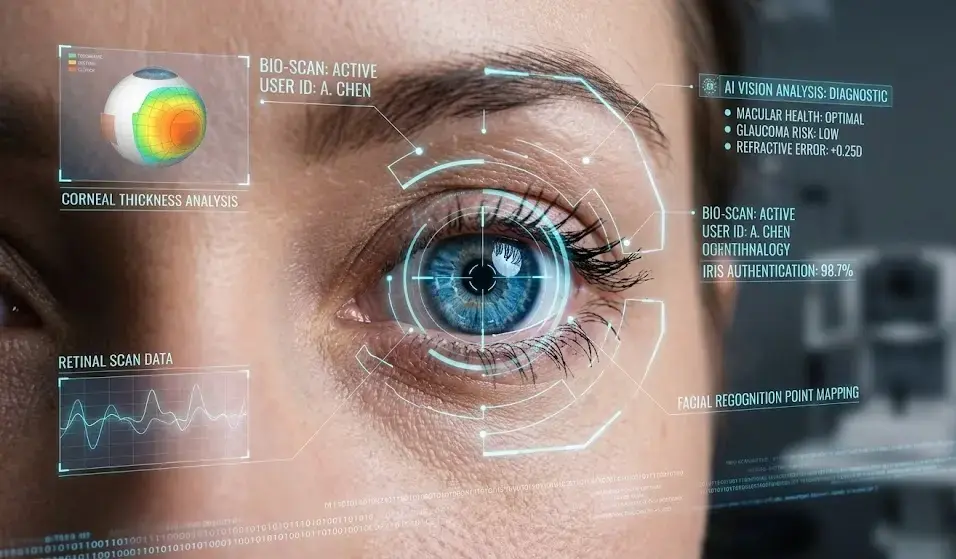
AI in Ophthalmology is advancing clinical diagnostics through structured classification systems and validated applications across screening, imaging, and workflow optimization. Its future lies in scalable, regulation-compliant integration with healthcare systems. For a broader perspective on vision care technologies, see AI in Optometry, which complements ophthalmic applications in primary eye care
FAQ
How is AI being used in ophthalmology?
AI is used for disease detection, imaging analysis, screening programs, and clinical decision support.
What are the 4 types of AI?
These four classifications are reactive machines, limited memory systems, theory of mind, and self-aware AI.
Will AI take over ophthalmology?
AI will not replace ophthalmologists but will enhance diagnostic accuracy and workflow efficiency.
What is the FDA approved AI system in ophthalmology?
IDx-DR is an FDA-cleared AI platform used for autonomous screening of diabetic retinopathy.
Is AI accurate in ophthalmology diagnosis?
With proper clinical validation and implementation, AI systems can achieve excellent sensitivity and specificity.
Sources
https://eyewiki.org/Artificial_Intelligence_in_Ophthalmology
https://pmc.ncbi.nlm.nih.gov/articles/PMC10394169/
https://www.ophthalmologytimes.com/view/how-ai-is-reshaping-ophthalmology-in-2025-and-beyond
https://ijceo.org/archive/volume/10/issue/2/article/21597
https://www.sciencedirect.com/science/article/pii/S1350946225000473
https://www.ophtai.com/
https://www.aao.org/education/artificial-intelligence
https://www.jmaj.jp/detail.php?id=10.31662%2Fjmaj.2024-0139
https://www.cera.org.au/research/artificial-intelligence-research/