

Medical Softwares
The healthcare industry is rapidly embracing digital transformation, and medical softwares have become an essential part of delivering efficient, secure, and patient-focused care. From managing electronic health records to supporting diagnostic imaging and clinical workflows, the right software helps healthcare providers improve productivity while enhancing patient outcomes.
Key Takeaways
- Medical softwares improve healthcare efficiency and patient care.
- Medical software systems streamline clinical and administrative workflows.
- Custom medical software programs offer secure and scalable solutions.
- RetinaWiseAI™ enhances retinal screening and clinical decision support.
At RCEENetworks, we develop intelligent medical software systems tailored to the unique needs of hospitals, clinics, diagnostic centers, and specialty practices. Our custom healthcare solutions are designed to simplify operations, integrate with existing platforms, and support long-term growth.
What Are Medical Softwares?
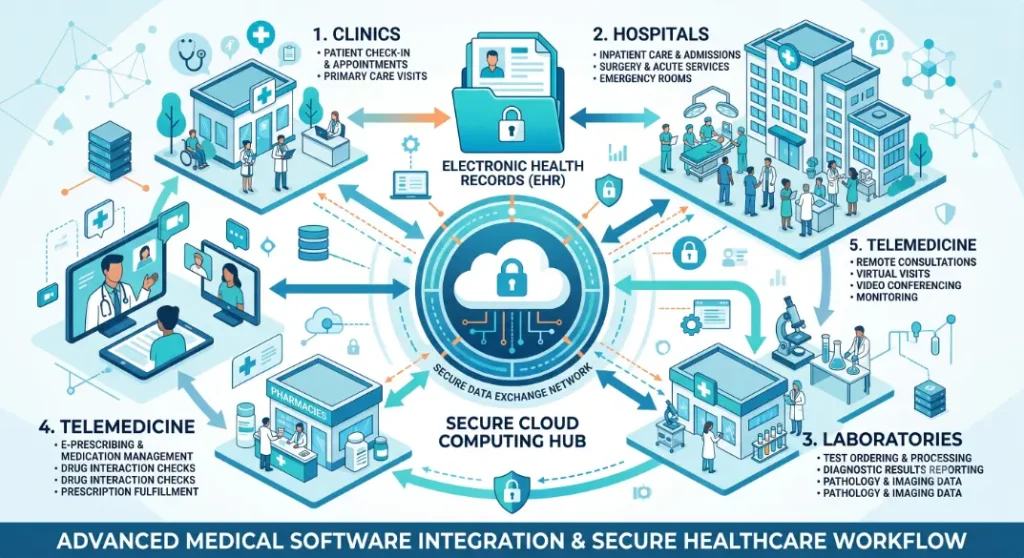
Medical softwares are digital applications that help healthcare organizations manage clinical, administrative, and operational processes. Instead of relying on multiple disconnected tools, providers can use integrated Medical software programs to improve efficiency and reduce manual work.
Common applications include:
- Electronic Health Records (EHR)
- Electronic Medical Records (EMR)
- Patient scheduling
- Medical billing and insurance management
- Laboratory management
- Medical imaging integration
- Telemedicine platforms
- Reporting and analytics
Types of Medical Software Systems
Different healthcare providers require different software solutions depending on their services.
| Medical Software System | Primary Purpose |
| EHR Software | Store and manage complete patient records |
| EMR Software | Maintain patient data within a practice |
| Practice Management Software | Scheduling, billing, and administration |
| Medical Billing Software | Claims and payment processing |
| Laboratory Information System (LIS) | Laboratory workflow management |
| Radiology Information System (RIS) | Imaging and reporting |
| Telemedicine Software | Virtual consultations and remote care |
Benefits of Medical Software Programs
Modern medical software programs provide value across clinical and administrative operations.
1.Clinical Benefits
- Faster access to patient information
- Better clinical documentation
- Improved care coordination
- Reduced medical errors
- Enhanced decision-making
2.Operational Benefits
- Automated scheduling
- Faster billing processes
- Reduced paperwork
- Improved workflow efficiency
- Better resource management
3.Business Benefits
- Lower operational costs
- Increased staff productivity
- Improved patient satisfaction
- Better regulatory compliance
- Scalable technology for future growth
Essential Features of Medical Softwares
A reliable healthcare platform should include features that improve both security and usability.
- Secure patient record management
- Appointment scheduling
- Billing and payment integration
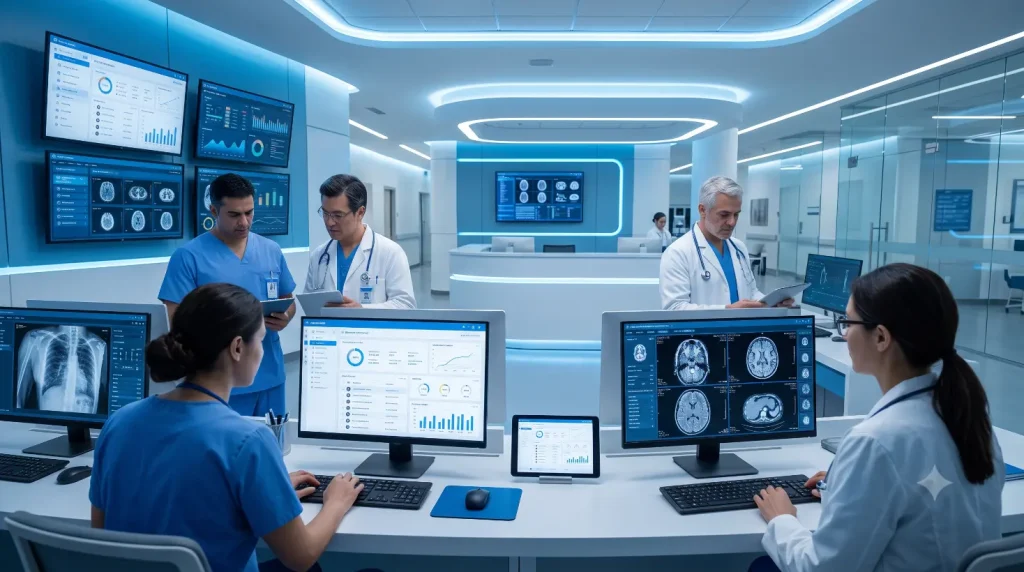
- Medical imaging support
- Cloud-based access
- Role-based user permissions
- Data encryption and backup
- Reporting dashboards
- Mobile accessibility
- Integration with existing healthcare systems
These features ensure software can support daily clinical operations while protecting sensitive patient information.
Why Choose Custom Medical Software?
Every healthcare organization has unique workflows, making custom development a better choice than one-size-fits-all solutions.
| Custom Solution | Advantage |
| Tailored workflows | Matches your clinical processes |
| System integration | Connects with EHR, EMR, PACS, and imaging devices |
| Enhanced security | Protects sensitive healthcare data |
| Scalable architecture | Supports organizational growth |
| Flexible development | Easily adapts to future requirements |
Custom medical software programs improve efficiency while reducing unnecessary complexity.
Medical Softwares in Action: RetinaWiseAI™
A great example of specialized medical softwares is RetinaWiseAI™, developed by RCEENetworks. Designed for ophthalmology and optometry practices, the platform streamlines retinal imaging workflows and supports clinicians with AI-powered clinical decision-support.
Also Read:Retinal Image Analysis Software
RetinaWiseAI™ integrates with existing retinal imaging devices and healthcare systems, allowing providers to enhance screening efficiency without disrupting established workflows.
Key Capabilities
| Feature | Benefit |
| Cloud-based platform | Secure access across multiple locations |
| Retinal image analysis | Faster image review and screening |
| EMR/EHR integration | Seamless clinical workflow |
| AI-powered clinical decision-support | Assists clinicians in diagnosis |
| Secure data management | Supports HIPAA-compliant workflows |
| Progress tracking | Monitor patient outcomes over time |
RetinaWiseAI™ demonstrates how specialized software systems can improve efficiency, support clinical decision-making, and enhance patient care.
Why Partner with RCEENetworks?
Healthcare software requires technical expertise and an understanding of clinical workflows. RCEENetworks develops secure and scalable software programs that help healthcare organizations modernize their operations.
Our expertise includes:
- Custom medical software development
- Healthcare application modernization
- Ophthalmology software solutions
- Medical imaging software
- AI-powered clinical decision-support integration
- Cloud healthcare platforms
- Software maintenance and support
Whether you’re building a new healthcare platform or upgrading an existing solution, our team delivers software designed for performance, security, and scalability.
Conclusion
Modern medical softwares play a critical role in improving healthcare delivery. By combining automation, secure data management, and intelligent clinical workflows, today’s medical software systems help providers deliver better patient care while improving operational efficiency.
At RCEENetworks, we create innovative software programs that are customized to meet the evolving needs of healthcare organizations. From general healthcare applications to specialized platforms like RetinaWiseAI™, our solutions help providers embrace the future of digital healthcare.
Frequently Asked Questions
1. What are medical softwares?
They are digital applications used to manage patient records, clinical workflows, billing, scheduling, diagnostics, and other healthcare operations.
2. What are medical software systems?
These software systems are integrated healthcare platforms that combine multiple functions such as EHR, billing, reporting, imaging, and patient management into one solution.
3. Why are medical software programs important?
This programs improve efficiency, reduce manual errors, automate workflows, enhance patient care, and support healthcare compliance.
4. Can medical software be customized?
Yes. Custom medical software is designed to match an organization’s workflows, integrate with existing systems, and scale as healthcare needs evolve.