RCEE+Networks LLC
  • Home
  • RetinaWiseAI™
  • IMACAM™
  • Resource Center
  • About
Contact
logotype
  • Home
  • RetinaWiseAI™
  • IMACAM™
  • Resource Center
  • About
logotype
  • Home
  • RetinaWiseAI™
  • IMACAM™
  • Resource Center
  • About
AI in Medical Software
Home Archive by Category "AI in Medical Software"

Category: AI in Medical Software

AI in Medical Software
Umesh Kumar KhiriAugust 13, 2026 0 Comments
Share article:TwitterFacebookLinkedin
7 Views
6 Likes

FDA Software as a Medical Device Guidance

When software is developed for a specific medical purpose, companies need to determine whether it falls under U.S. Food and Drug Administration (FDA) medical device regulations. FDA Software as a Medical Device Guidance helps developers understand how software functions may be evaluated and what regulatory considerations may apply. “Software as a Medical Device (SaMD)” is a term commonly used for software that performs a medical function without being built into a physical medical device.

For FDA purposes, the regulatory status of software depends on what it is intended to do, how it works, who uses it, and the potential risks associated with its use.

What Is Software as a Medical Device?

SaMD refers to software that can perform a medical function on its own rather than serving only as part of a physical medical device. Some common examples include software that:

  • Reviews and analyzes medical images
  • Helps identify possible diseases
  • Tracks or monitors health conditions
  • Calculates clinical measurements
  • Supports diagnostic decisions
  • Provides information that may assist treatment
  • Analyzes patient or clinical data

However, being used in a healthcare setting does not automatically mean that software is regulated by the FDA. For example, a basic wellness application that records daily activity may have different regulatory requirements from software designed to identify signs of a disease.

Also Read: Medical Software Development

This is why developers should clearly establish the intended use of their software before making regulatory decisions. FDA Software as a Medical Device Guidance can help developers understand the regulatory considerations associated with different software functions.

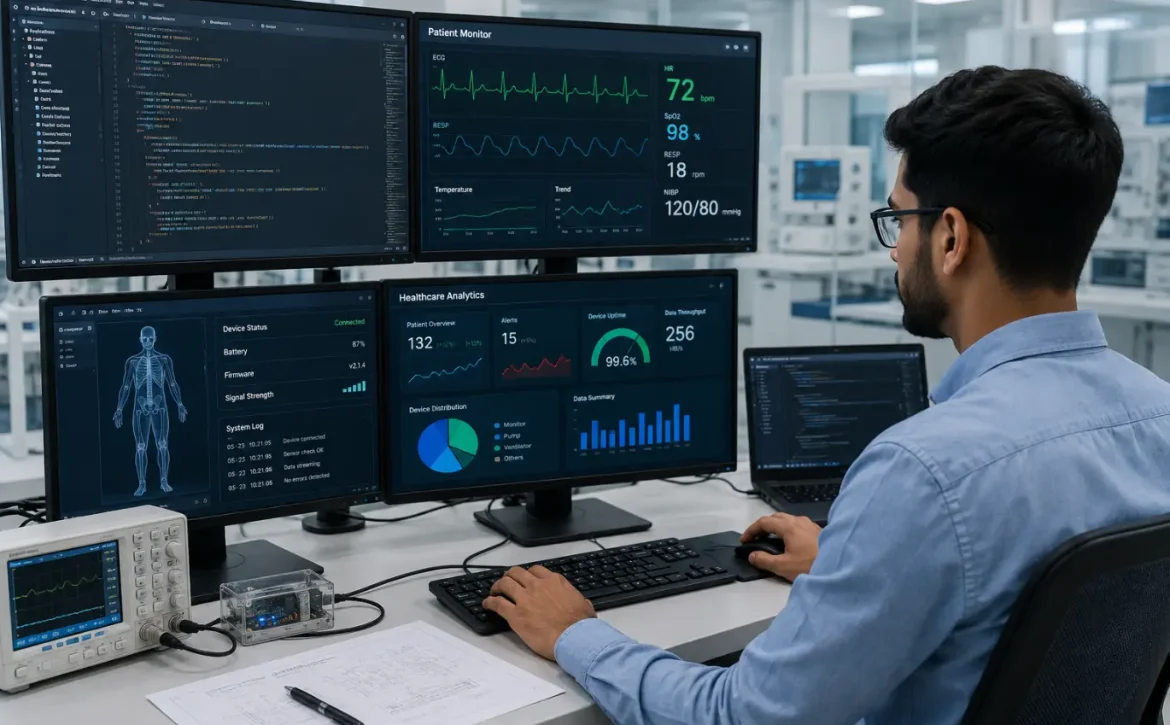
Software Compliance Team Meeting-FDA Software as a Medical Device Guidance 2

Key FDA Guidance for Medical Device Software

The FDA’s Content of Premarket Submissions for Device Software Functions, finalized in June 2023, provides guidance on the software-related information manufacturers may need to provide during a premarket review. It helps developers understand what technical and development details can be relevant when the FDA evaluates the safety and performance of medical device software.

The type and amount of information needed can vary depending on the product and its risk level. As part of FDA Software as a Medical Device Guidance, developers should consider areas such as:

AreaWhat Developers Should Address
Intended useExplain the medical purpose, users, and conditions involved
Software functionalityDescribe what the software does and how users operate it
RequirementsDefine expected functions and performance
ArchitectureExplain the main software components and how they connect
Risk managementIdentify possible hazards and measures used to control them
VerificationShow that the software meets its specified requirements
ValidationDemonstrate that the software works as intended
TestingDocument testing methods, results, and significant findings
CybersecurityIdentify security risks and safeguards
Software anomaliesRecord known unresolved issues and their potential impact
Version controlKeep track of releases, modifications, and updates

Much of this information should come from the normal software development and testing process rather than being created only for an FDA submission.

How Does the FDA Determine Whether Software Is Regulated?

The FDA does not treat every healthcare software product as a medical device. Developers need to look closely at the software’s specific purpose and functions. Before deciding on a regulatory strategy, developers should ask:

  • What is the software’s intended medical purpose?
  • What functions does the software perform?
  • Who will use the software?
  • What type of information does it process?
  • Could its output influence diagnosis or treatment?
  • What risks could result from incorrect or incomplete outputs?

Understanding these factors is an important part of applying FDA Software as a Medical Device Guidance to a specific product.

Clinical Decision-Support Software

Clinical decision-support (CDS) software requires careful assessment because certain CDS functions may not be considered medical devices when they meet specific legal requirements.

The FDA’s Clinical Decision Support Software guidance, issued in January 2026, explains how certain CDS functions may qualify for exclusion from the medical device definition. It also clarifies that software functions that do meet the definition of a medical device can remain subject to FDA requirements.

When evaluating CDS software, developers should look at:

  1. What information the software provides
  2. How that information is generated
  3. Who will use the software
  4. Whether healthcare professionals can independently review the information
  5. Whether the software gives recommendations or conclusions
  6. How the software’s output could affect patient care

These considerations should be evaluated alongside the broader principles described in FDA Software as a Medical Device Guidance.

Cybersecurity Requirements

Cybersecurity should be considered from the early stages of medical software development. This is especially important when software connects with hospital networks, cloud platforms, electronic health records, or other medical devices.

The FDA‘s cybersecurity guidance provides recommendations for secure device development, labeling, and cybersecurity information that may be included in premarket submissions. Developers should pay attention to areas such as:

  • Threat modelling
  • User authentication
  • Access controls
  • Data protection
  • Security testing
  • Vulnerability management
  • Secure software updates
  • Incident response
  • Software Bill of Materials (SBOM) security

Security should be part of the development process, not something addressed just before an FDA submission. This approach also supports the documentation and risk-management expectations relevant to FDA Software as a Medical Device Guidance.
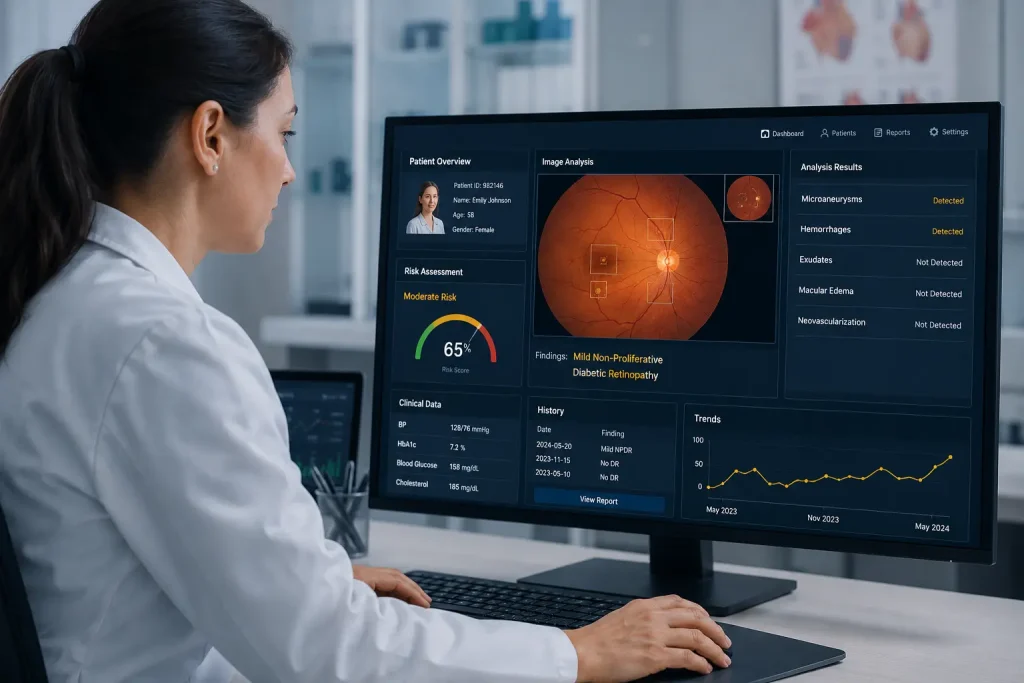
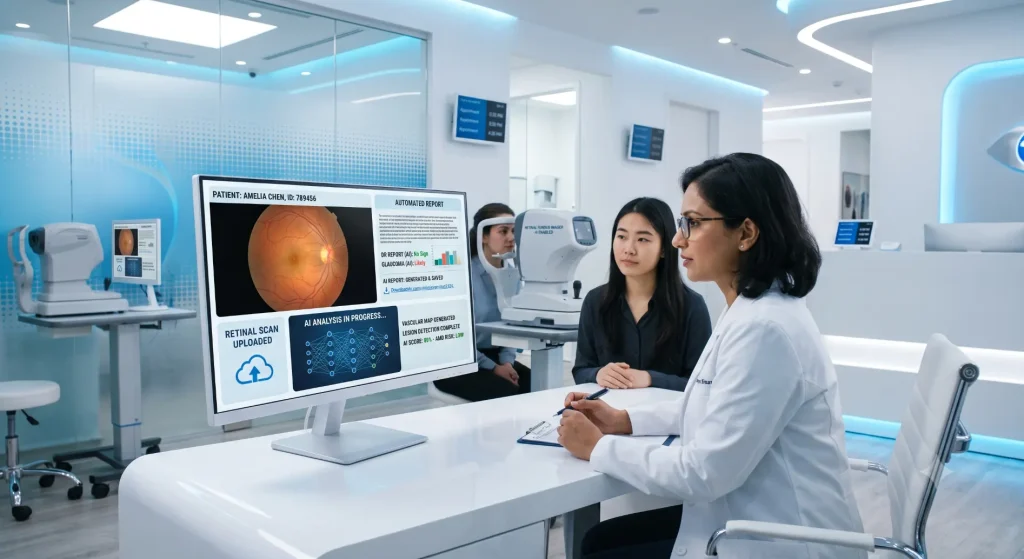
Doctor Reviewing Retinal Imaging Dashboard-FDA Software as a Medical Device Guidance 3

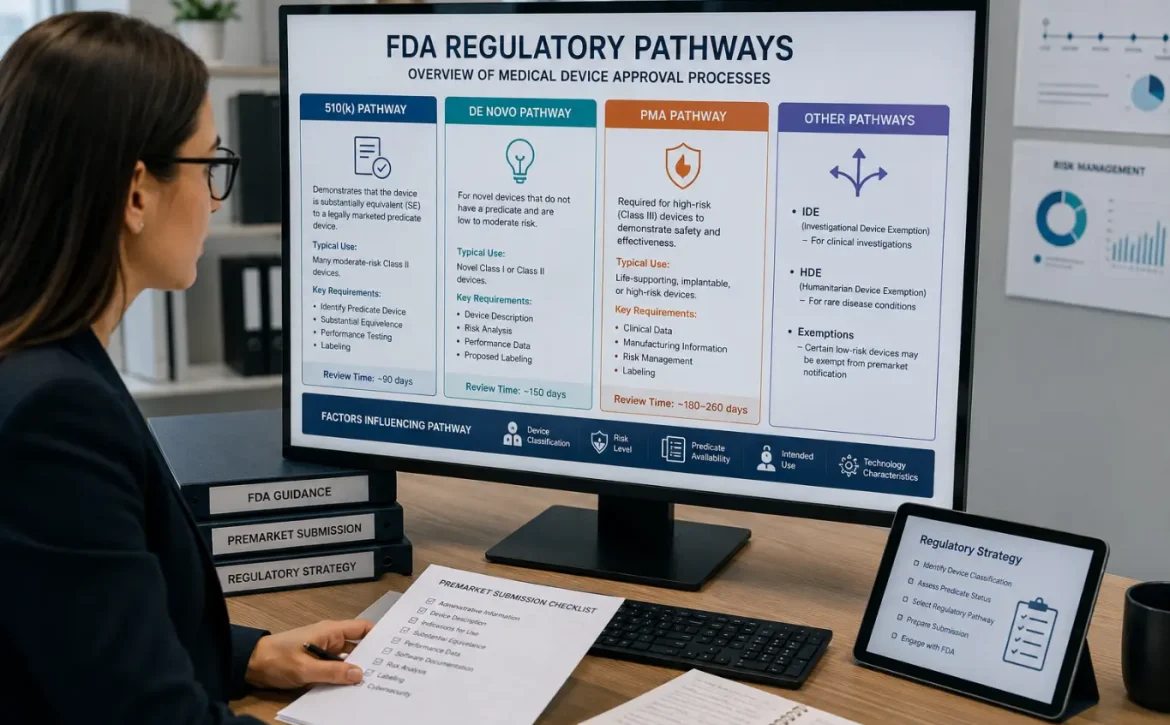
FDA Regulatory Pathways

PathwayGeneral Purpose
510(k)Used to demonstrate that a device is substantially equivalent to an appropriate legally marketed device
De NovoAvailable for certain novel devices that do not have a suitable predicate
PMAUsed for certain higher-risk Class III devices that require a detailed review of safety and effectiveness
IDEMay apply when a medical device is being evaluated in a clinical investigation
HDEApplies to certain devices intended for humanitarian use that meet FDA requirements

The correct pathway depends on the software’s intended use, risk level, classification, technology, and whether an appropriate predicate device is available. Developers should assess these factors carefully rather than assuming that one pathway applies to all software products.

Steps for FDA SaMD Preparation

Developers can approach FDA preparation through the following steps:

  1. Define the intended use and medical purpose.
  2. Determine whether the software falls within the medical device definition.
  3. Assess the likely device classification and regulatory pathway.
  4. Document software requirements and specifications.
  5. Identify potential risks and establish appropriate controls.
  6. Develop and test the software.
  7. Carry out verification and validation activities.
  8. Identify and address cybersecurity risks.
  9. Prepare the relevant regulatory documentation.
  10. Keep records of software changes, releases, and updates.

Following these steps can help organize the regulatory process and support the documentation principles associated with FDA Software as a Medical Device Guidance.

Common Challenges

Medical software companies can face regulatory problems when compliance planning begins too late. Some common challenges include:

  1. An unclear intended use
  2. Incomplete risk assessment
  3. Limited software testing
  4. Poor technical documentation
  5. Weak links between requirements and test results
  6. Cybersecurity weaknesses
  7. Poor change management
  8. Selecting an unsuitable regulatory pathway

Addressing these issues early can reduce delays and help developers build regulatory considerations into the software lifecycle.

Also Read: Exploring enterprise-level analytics in medical software solutions

Conclusion

FDA requirements for Software as a Medical Device depend on several factors, including the software’s intended purpose, functionality, risk, and classification. There is no single regulatory checklist that applies to every medical software product.

A practical approach is to consider regulatory needs throughout the entire software lifecycle. Clear requirements, risk assessment, testing, validation, cybersecurity, and proper documentation should be part of development from the start. By applying FDA Software as a Medical Device Guidance throughout the development process, companies can better organize their regulatory strategy and prepare appropriate documentation.

Frequently Asked Questions

1. Is all healthcare software regulated by the FDA?

No. FDA oversight depends on the software’s intended use and functionality. Software used in healthcare does not automatically qualify as a regulated medical device.

2. Does every medical software product need FDA approval?

When FDA oversight does apply, the appropriate pathway may include 510(k), De Novo, PMA, or another applicable process. The appropriate route depends on the product’s classification, intended use, risk, and other factors.

3. Does the FDA regulate AI-based medical software?

AI-based software may fall under FDA medical device regulations when it meets the applicable definition. The FDA has also developed guidance addressing AI-enabled device software and certain planned changes to these products.

4. Why is cybersecurity important for SaMD?

A cybersecurity weakness can affect software reliability, data security, and potentially patient safety. Developers should consider cybersecurity throughout the product lifecycle, including threat modelling, testing, vulnerability management, and secure updates.

5. Why is intended use important in FDA software regulation?

Intended use helps establish what the software is designed to accomplish and whether its functions may fall within the medical device definition. Developers should define intended use clearly before selecting a regulatory strategy.

Overall, FDA Software as a Medical Device Guidance should be considered alongside the specific FDA regulations and guidance documents applicable to the product. Developers can then determine whether FDA requirements apply, assess the likely classification and regulatory pathway, and identify the guidance relevant to their software.
READ MORE
AI in Medical Software
Umesh Kumar KhiriAugust 11, 2026 0 Comments
Share article:TwitterFacebookLinkedin
11 Views
5 Likes

Exploring enterprise-level analytics in medical software solutions

Healthcare organizations handle a huge amount of information every day. Patient records, medical images, laboratory results, prescriptions, billing details, and appointment data all contribute to the larger picture of patient care. The challenge is not simply collecting this information. It is making sense of it and using it responsibly. So that Exploring enterprise-level analytics in medical software solutions plays a vital role.

Key Takeaways

  • Enterprise analytics connects data from multiple healthcare systems.
  • It can support clinical, operational, financial, and population health decisions.
  • Data integration, quality, security, and governance are essential for reliable analytics.
  • Enterprise analytics provides a broader view than department-level reporting.

Exploring enterprise-level analytics in medical software solutions shows how healthcare organizations can bring data from different systems together, identify useful patterns, and use those findings to support clinical and operational decisions.

What Is Enterprise-Level Analytics in Medical Software?

Enterprise-level analytics refers to the use of analytics tools across different departments, systems, and locations within a healthcare organization. Instead of reviewing information from one application at a time, organizations can analyze data from multiple sources within a common environment.

These sources may include:

  • Electronic health records (EHRs)
  • Laboratory information systems
  • Medical imaging and PACS platforms
  • Pharmacy management systems
  • Billing and claims software
  • Patient monitoring devices
  • Hospital management applications
  • Appointment and scheduling systems

For example, a hospital could compare emergency department visits with bed availability, diagnostic turnaround times, and staffing information. Looking at these factors together can help management understand where delays are occurring and whether additional resources may be required.

This is an important part of exploring enterprise-level analytics in medical software solutions, particularly for organizations managing large volumes of clinical and operational data.

Also Read: Medical Equipment Software

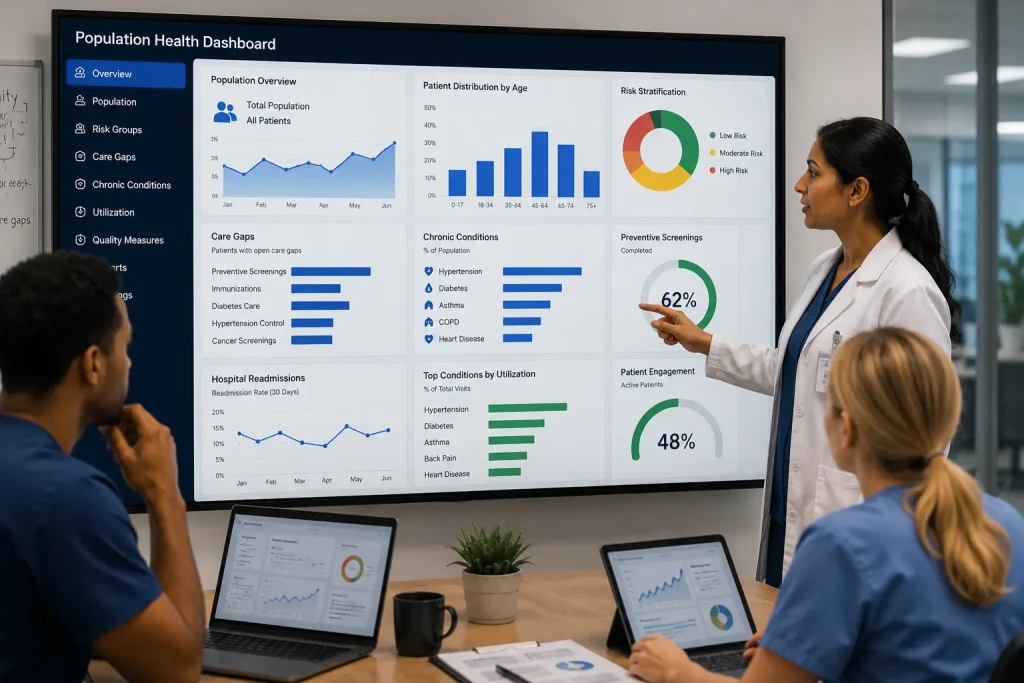
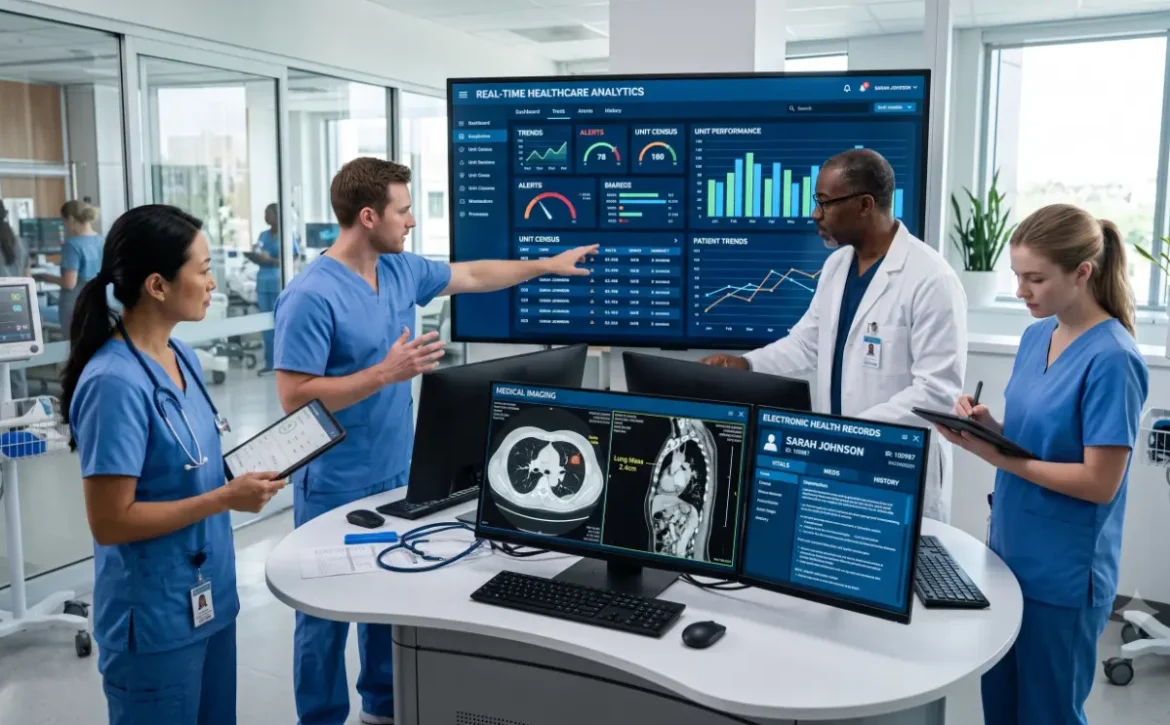
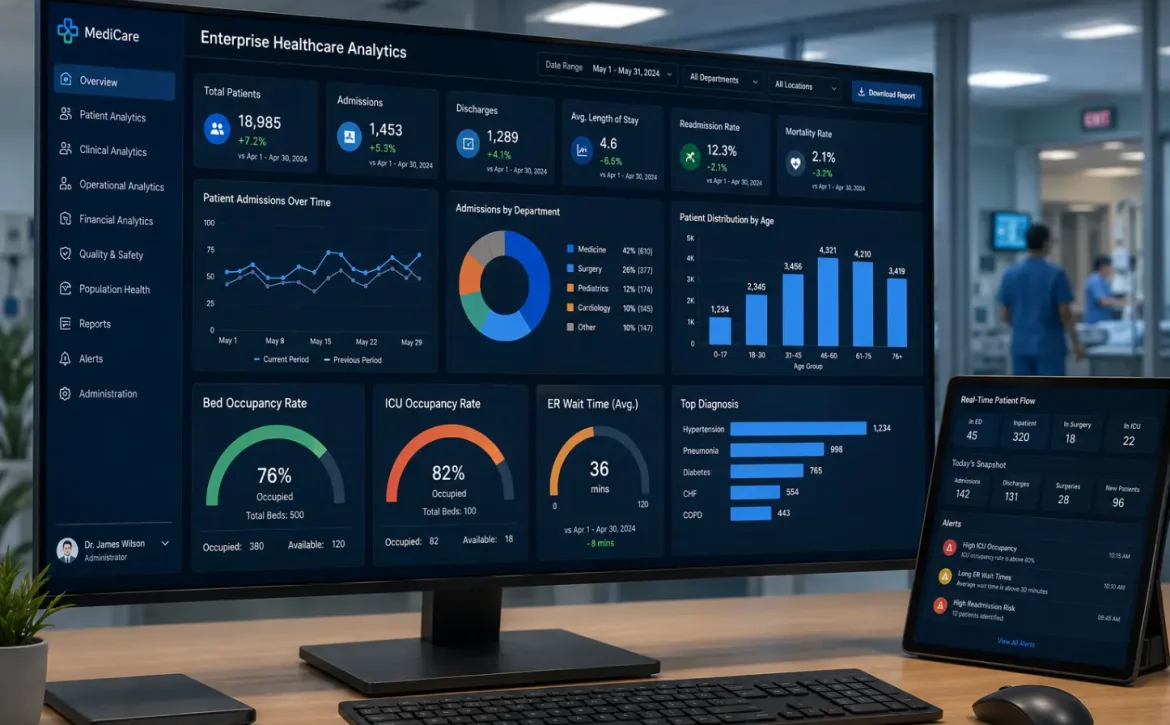
Secure medical analytics platform-Exploring Enterprise-Level Analytics in Medical Software Solutions 2

How Healthcare Organizations Use Enterprise Analytics

Supporting Clinical Decisions

Medical software can analyze patient information and present relevant findings to healthcare professionals. Depending on the application, analytics may help identify changes in laboratory results, patient history, imaging findings, or treatment patterns.

AI-powered clinical decision-support tools can also assist with recognizing patterns in medical data. These systems are intended to support healthcare professionals rather than replace their clinical judgment.

Monitoring Hospital Operations

Running a hospital involves managing many different activities at the same time. Analytics can help administrators monitor for Exploring enterprise-level analytics in medical software solutions.

  • Patient volumes
  • Appointment utilization
  • Bed occupancy
  • Operating room usage
  • Diagnostic turnaround times
  • Equipment utilization
  • Department-level workload

Having this information available can help administrators identify capacity problems and understand where delays may be occurring. Exploring enterprise-level analytics in medical software solutions also involves understanding how information from separate departments can contribute to a broader view of hospital operations.

Managing Population Health

Exploring enterprise-level analytics in medical software solutions is useful when healthcare providers need to study groups of patients rather than individual cases.

For example, a healthcare network may analyze data to identify patients who are overdue for preventive screenings or groups with higher rates of hospital readmission. These findings can help healthcare teams plan appropriate follow-up and preventive care programs.

This broader approach is another important consideration when exploring enterprise-level analytics in medical software solutions, especially for healthcare networks serving large patient populations.

Understanding Costs and Resource Use

Healthcare organizations also need to manage financial and operational resources carefully. Analytics can provide information about procedure volumes, service utilization, resource consumption, and departmental performance.

Healthcare AreaData AnalyzedPotential Use
Clinical carePatient records, lab results, imagingSupport clinical assessment
Hospital operationsBeds, appointments, patient volumesMonitor capacity and workflow
RadiologyImaging studies, reporting timesTrack diagnostic performance
LaboratoryTest volumes and turnaround timesIdentify service delays
Population healthPatient groups and health trendsSupport preventive care planning
FinanceProcedures, billing, resource useReview financial performance
EquipmentUsage and maintenance dataPlan equipment management

Important Components of Medical Analytics

A reliable enterprise analytics system usually depends on several parts working together. Exploring enterprise-level analytics in medical software solutions requires looking beyond dashboards and considering how information is collected, stored, processed, and protected.

Data Integration

Data integration connects information from different medical applications. It helps organizations bring together information that would otherwise remain separated across departments or systems.

Data Warehouses and Data Platforms

Data warehouses and other data platforms provide an environment for storing and analyzing information from multiple sources. Historical data can also be retained for reporting and trend analysis.

Dashboards and Reporting

Dashboards present complex information in a format that users can understand. A hospital executive may need information about overall performance, while a radiology manager may focus on imaging volumes and reporting times.

Advanced Analytics

Advanced analytics can use statistical methods and predictive models to identify trends and potential risks. Where appropriate, AI-powered clinical decision-support can provide additional assistance with data interpretation.

Security and Governance

Healthcare analytics systems may process sensitive patient information. Appropriate access controls, encryption, auditing, data governance, and security practices are therefore essential. These considerations are central to exploring enterprise-level analytics in medical software solutions responsibly.

Challenges to Consider

Implementing enterprise analytics is not always simple. Healthcare organizations may have older software, different data formats, disconnected systems, and varying workflows between departments.

Common challenges include:

  • Fragmented healthcare data
  • Legacy software and infrastructure
  • Inconsistent data formats
  • Duplicate or incomplete records
  • Integration difficulties
  • Patient data privacy concerns
  • Security and access-control requirements
  • Limited staff familiarity with analytical tools

Data quality is particularly important. If information is incomplete, duplicated, outdated, or inconsistent, the resulting analysis may be unreliable.

Privacy and security also require careful planning. Only authorized users should have access to information relevant to their roles. Organizations must also consider applicable healthcare regulations and internal data policies.

These issues should be addressed early when exploring enterprise-level analytics in medical software solutions, rather than after an analytics platform has already been deployed.

Enterprise Analytics vs Department-Level Analytics

There is an important difference between analyzing information within one department and analyzing data across an entire healthcare organization.

FeatureDepartment-Level AnalyticsEnterprise-Level Analytics
Data scopeUsually one departmentMultiple departments and systems
Main usersDepartment teamsClinicians, managers, executives
Data sourcesLimitedMultiple healthcare applications
FocusSpecific workflowOrganization-wide performance
ReportingDepartment reportsCross-functional dashboards
Decision supportLocal decisionsBroader clinical and operational decisions

Enterprise analytics does not necessarily replace department-level reporting. Both can serve different purposes and work together.

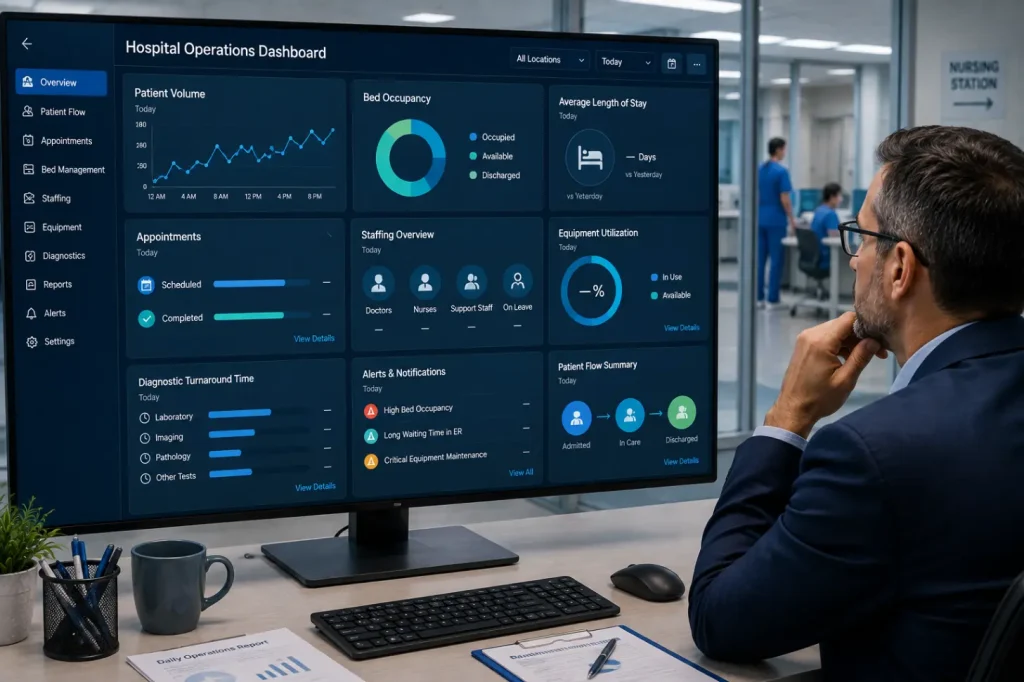
Hospital operations analytics system-Exploring Enterprise-Level Analytics in Medical Software Solutions 3

The Future of Enterprise Analytics

As medical software continues to develop, analytics will become more closely connected with clinical and operational workflows. Healthcare organizations are likely to use data from EHRs, imaging systems, laboratory platforms, connected devices, and patient-generated sources.

The goal should not be to create more reports simply for the sake of having more data. Useful analytics should help users find relevant information, understand what it means, and make informed decisions.

Also Read: Medical Software Development

Exploring enterprise-level analytics in medical software solutions also means considering how future systems can handle larger datasets while maintaining data quality, security, interoperability, and usability.

Healthcare providers will likely continue looking for analytics platforms that fit into existing workflows instead of requiring staff to work across disconnected systems. The focus should remain on making information useful and accessible to the people who need it.

Conclusion

Enterprise-level analytics gives healthcare organizations a practical way to understand information collected across multiple systems. It can support clinical decision-making, hospital operations, population health management, and resource planning.

Exploring enterprise-level analytics in medical software solutions makes it clear that successful implementation depends on more than analytical software alone. Reliable data, good integration, security, clear reporting, and responsible use all matter.

When these elements are properly considered, enterprise analytics can help healthcare organizations make better use of the information they already have without adding unnecessary complexity to everyday workflows.

Frequently Asked Questions

1. What is enterprise-level analytics in healthcare?

It is the process of collecting and analyzing data from multiple healthcare systems and departments to support clinical, operational, and management decisions.

2. What systems can be connected to medical analytics software?

Depending on the organization, analytics platforms may connect with EHRs, PACS, laboratory systems, pharmacy software, billing platforms, patient monitoring systems, and hospital management applications.

3. Can analytics improve clinical decision-making?

Analytics can provide healthcare professionals with useful patterns and information. AI-powered clinical decision-support may provide additional assistance, but final clinical decisions remain with qualified healthcare professionals.

4. What are the main challenges of healthcare analytics?

Common challenges include fragmented data, legacy systems, inconsistent information, privacy concerns, security requirements, and difficulties integrating different healthcare applications.

5. Why is data quality important in medical analytics?

Analytics depends on the information being analyzed. Incomplete, outdated, duplicated, or inaccurate data can produce misleading results and reduce the usefulness of the system.

6. Why is enterprise analytics useful for healthcare organizations?

It provides a broader view of information across departments and systems. This can help organizations understand clinical activity, operational performance, resource use, and patient trends more effectively.

READ MORE
AI in Medical Software
Umesh Kumar KhiriAugust 10, 2026 0 Comments
Share article:TwitterFacebookLinkedin
12 Views
7 Likes

Medical Image Analysis Software Development Company

Medical imaging is an important part of modern healthcare. Doctors use X-rays, CT scans, MRI, ultrasound, mammography, retinal images, and other imaging methods to examine different parts of the body. These images provide useful information for diagnosis, treatment planning, and monitoring.

Key Takeaways

  • Medical image software helps analyze and manage digital medical images.
  • Custom solutions can support radiology, ophthalmology, oncology, and pathology.
  • AI-powered clinical decision-support can assist with specific image analysis tasks.
  • Security, DICOM integration, testing, and compliance are important during development.

As hospitals and diagnostic centers handle more digital images, they need software that can store, organize, process, and examine these files. A medical image analysis software development company helps healthcare organizations build software for these needs. Such companies develop applications that allow medical professionals to view images, take measurements, compare scans, add notes, prepare reports, and perform specific image analysis tasks.

What Is Medical Image Analysis Software?

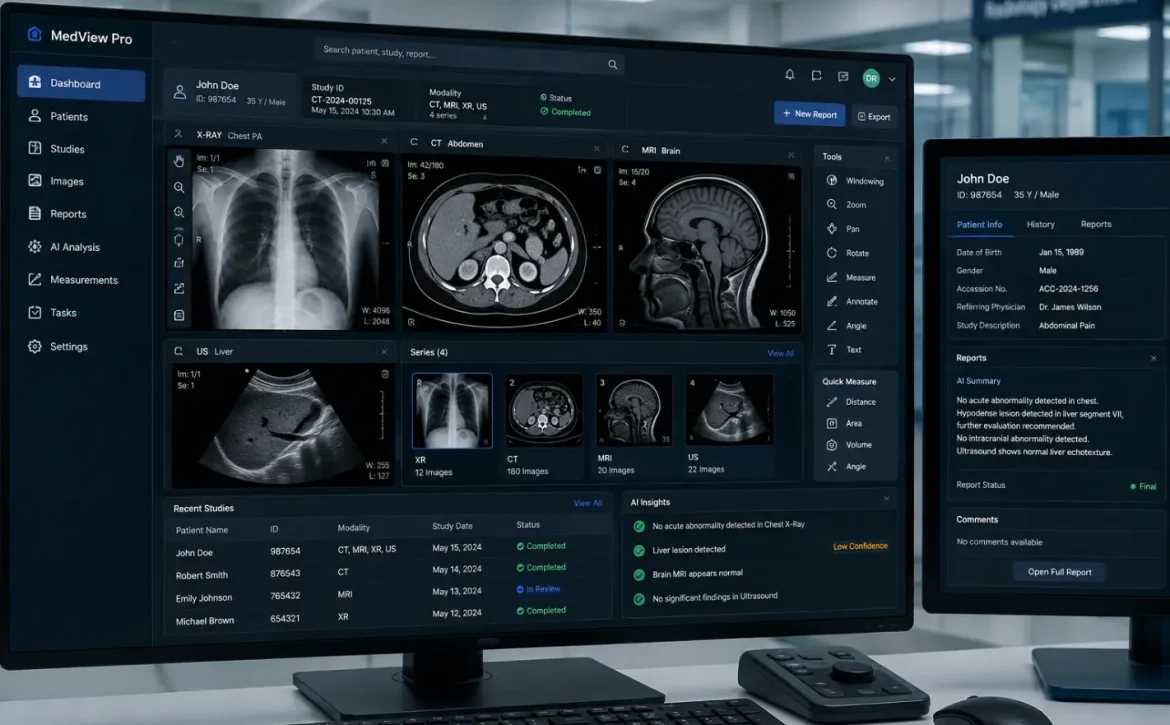
Medical image analysis software is designed to process and examine medical images using computer-based tools. It can make images easier to view and can provide functions for measuring, marking, comparing, and analyzing selected areas.

Also Read:Medical Software Development

The software may be developed for different types of medical images, such as:

  • X-rays
  • CT scans
  • MRI scans
  • Ultrasound images
  • Mammograms
  • Retinal images
  • PET scans
  • Digital pathology slides

The features depend on the intended medical use. For example, radiology software may focus on CT and MRI image viewing, while ophthalmology software may be designed to analyze retinal photographs.

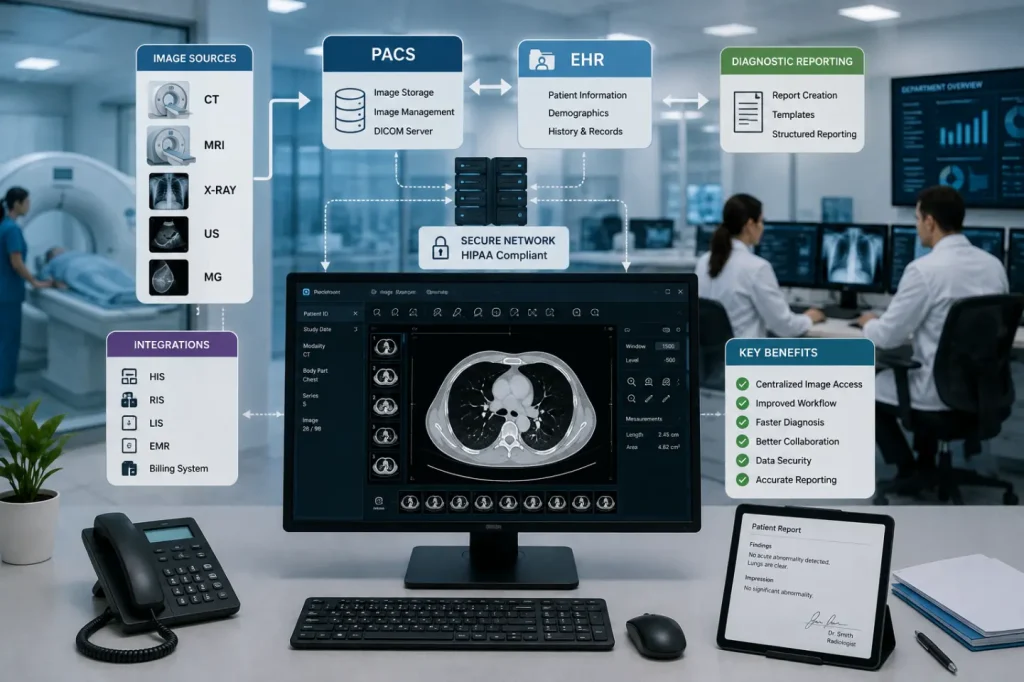
Connected healthcare imaging systems-Medical Image Analysis Software Development Company 1

Why Do Healthcare Organizations Need This Software?

Medical images can contain a large amount of information. Healthcare professionals may need to review multiple images for one patient and compare them with earlier examinations. A Medical Image Analysis Software Development Company can create software that helps organize this information in one place.

Medical image analysis software can provide tools for image viewing, measurements, annotations, comparison, and reporting. A Medical Image Analysis Software Development Company can also customize the software according to the workflow of a hospital, diagnostic center, or medical device company.

For example, a diagnostic center may need a system where technicians upload images, doctors review them, measurements are recorded, and reports are prepared and stored with the related patient information.

Key Features of Medical Image Analysis Software

1. Image Viewing

The software can provide tools for zooming, rotating, panning, adjusting brightness and contrast, and viewing images in different formats. These features help users examine specific parts of an image.

2. Measurement and Annotation

Medical professionals may need to measure distances, areas, angles, or other features. Annotation tools can also allow users to mark a particular region and add notes.

3. Image Segmentation

Image segmentation separates a selected structure or area from the rest of an image. It can be used for applications involving organs, tissues, lesions, tumors, or other regions of interest.

4. Image Comparison

Doctors may need to compare current images with previous scans. Comparison features can make it easier to review changes over time and record relevant observations.

5. AI-Powered Clinical Decision-Support

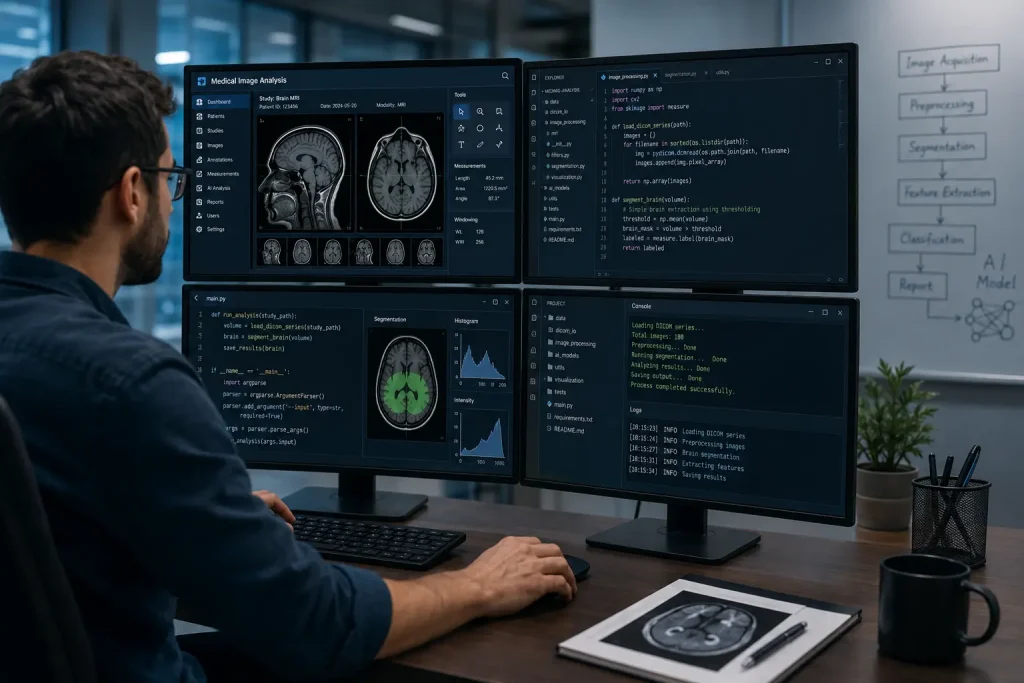
AI-powered clinical decision-support can be included in medical imaging software for specific image analysis tasks. A Medical Image Analysis Software Development Company can develop solutions that assist with image classification, segmentation, detection, and measurement based on the intended application.

These tools should support healthcare professionals rather than replace their clinical assessment. A Medical Image Analysis Software Development Company should develop and test such features according to the software’s intended purpose, clinical requirements, and applicable standards.

6. Reporting

Reporting features allow users to record observations, measurements, and findings. Reports can be linked with the relevant patient and imaging study for easier access and record keeping.

Developer building medical imaging software-Medical Image Analysis Software Development Company 3

Applications of Medical Image Analysis Software

Medical image analysis software can be used across several healthcare areas.

  • Radiology: Software can support the review of X-rays, CT scans, and MRI images.
  • Ophthalmology: Retinal image analysis applications can help examine fundus images and support specific screening tasks.
  • Oncology: Image analysis tools can assist with measuring and comparing tumors or other lesions.
  • Cardiology: Software can support the review of cardiac images obtained through ultrasound, CT, or MRI.
  • Digital Pathology: Image analysis can assist with examining tissue samples, identifying cells, and measuring selected structures in pathology images.

Medical Image Analysis Software Development Process

Development usually begins with identifying the medical problem and understanding how the intended users work. A Medical Image Analysis Software Development Company can then plan the software based on clinical requirements, image types, user needs, workflow, and required analysis features.

A typical process includes:

  1. Requirement collection
  2. Clinical workflow analysis
  3. Software architecture planning
  4. Interface design
  5. Image processing development
  6. Integration of analysis tools
  7. Testing and validation
  8. Deployment
  9. Maintenance

Testing should be performed with suitable data and against clearly defined software requirements. If the software is intended for regulated medical use, applicable regulatory requirements should also be considered during development.

Security and System Integration

Medical imaging applications can contain sensitive patient information. A Medical Image Analysis Software Development Company can build security measures such as user authentication, access controls, encryption, audit records, secure data transfer, and backup procedures to help protect medical imaging data.

The software may also need to connect with existing healthcare systems such as PACS, RIS, and EHR platforms. DICOM and HL7 are commonly used standards that can support communication between healthcare systems.

How to Choose a Medical Image Analysis Software Development Company?

Before selecting a development company, healthcare organizations should check its experience with medical imaging, healthcare software, image processing, data security, and system integration.

It is also useful to ask whether the company has experience with DICOM, medical image viewers, clinical workflows, testing, and long-term software maintenance.

A good development partner should first understand the medical use case and then build the software around the needs of its users.

Conclusion

Medical image analysis software helps healthcare organizations manage and examine digital medical images more effectively. With features such as image viewing, measurement, segmentation, comparison, reporting, and AI-powered clinical decision-support, these systems can support different medical workflows.

Choosing an experienced medical image analysis software development company can help organizations build software that fits their clinical requirements, integrates with existing systems, and provides appropriate security and testing.

Also Read:Custom Software for Medical Devices

Frequently Asked Questions

1.What is medical image analysis software?

It is software that helps healthcare professionals view, process, measure, compare, and analyze medical images such as X-rays, CT scans, MRI scans, and retinal images.

2.What types of medical images can the software analyze?

Depending on its design, the software can work with X-rays, CT, MRI, ultrasound, mammography, retinal images, PET scans, and digital pathology images.

3.Can AI be included in medical image analysis software?

Yes. AI-powered clinical decision-support can be included for specific tasks such as classification, segmentation, detection, and measurement. Its use should be properly tested and matched to the intended purpose.

4.How long does it take to develop medical imaging software?

The timeline depends on the number of features, imaging types, integrations, testing requirements, and regulatory needs. A simple application may require less development time than a large clinical platform.

5.Is medical image analysis software secure?

It can be designed with security measures such as authentication, access controls, encryption, audit logs, and secure data storage. Security requirements should be considered throughout development.

READ MORE
AI in Medical Software
Umesh Kumar KhiriAugust 8, 2026 0 Comments
Share article:TwitterFacebookLinkedin
13 Views
7 Likes

Custom Software for Medical Devices

Medical devices are becoming smarter, more connected, and increasingly dependent on software. From wearable health monitors and diagnostic imaging systems to infusion pumps and remote patient monitoring platforms, software now plays a central role in how these devices function.While off-the-shelf software may work for general applications, medical device manufacturers often need solutions built around their unique hardware, regulatory requirements, and clinical workflows. That’s where custom software for medical devices provides a significant advantage.

Key Advantages

  • Designed specifically for your medical device
  • Improves device performance and reliability
  • Supports regulatory compliance requirements
  • Enables secure patient data management
  • Integrates with healthcare systems and cloud platforms
  • Allows future updates and feature expansion
  • Reduces unnecessary software complexit

What Is Custom Software for Medical Devices?

Custom software for medical devices is software specifically designed and developed to work with a particular medical device or healthcare solution. Unlike generic software, it is created to meet precise functional, safety, and compliance requirements.

It may be embedded directly into a device, support device management through a mobile or web application, or connect devices with hospital information systems and cloud platforms.

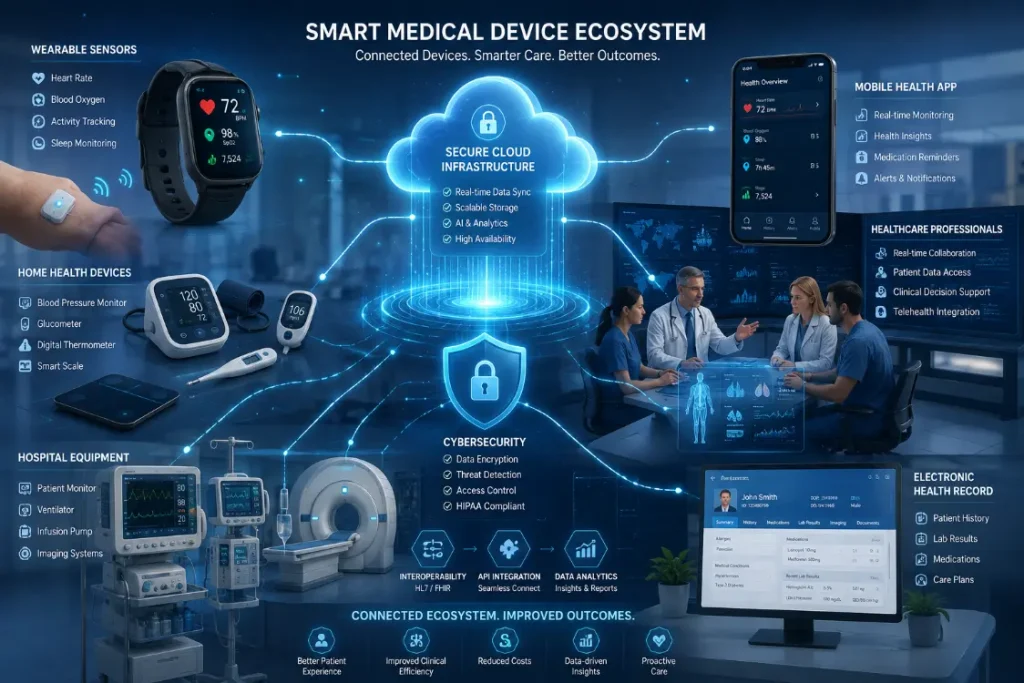
Connected smart healthcare ecosystem-Custom Software for Medical Devices 2

Why Choose Custom Software Instead of Off-the-Shelf Solutions?

Every medical device has different performance requirements. Custom software for medical devices provides the flexibility that generic platforms cannot. It is designed to match specific hardware, clinical workflows, and regulatory requirements, helping manufacturers build reliable, secure, and scalable healthcare solutions.

Common Applications of Custom Medical Device Software

Custom software powers a wide range of healthcare technologies.

Medical DeviceSoftware Function
Patient Monitoring SystemsReal-time vital sign monitoring and alerts
Wearable DevicesActivity tracking, ECG monitoring, health analytics
Diagnostic EquipmentImage processing and clinical data analysis
Infusion PumpsDosage control and safety monitoring
Smart InhalersMedication tracking and patient reminders
Laboratory InstrumentsSample processing and automated reporting
Surgical DevicesPrecision control and workflow management
Telemedicine DevicesRemote monitoring and physician connectivity

Key Features of Custom Software for Medical Devices

A successful medical device software solution typically includes:

  • Real-time device communication
  • Secure user authentication
  • Data encryption
  • Cloud synchronization
  • Remote monitoring capabilities
  • Automated alerts and notifications
  • Electronic Health Record (EHR) integration
  • Software update management
  • Audit logs for compliance
  • User-friendly interface for clinicians and patients

Medical Device Software Development Process

Developing software for healthcare requires careful planning and validation.

Development StagePurpose
Requirement AnalysisDefine clinical and technical needs
Risk AssessmentIdentify potential safety risks
Software DesignCreate system architecture and workflows
DevelopmentBuild software modules
Verification & ValidationTest functionality and safety
Regulatory DocumentationPrepare required technical documents
DeploymentLaunch software with the medical device
MaintenanceDeliver updates, fixes, and improvements

Regulatory Considerations

Medical device software must comply with industry standards depending on the target market.

Some commonly followed standards include:

·        IEC 62304 – Medical device software lifecycle

·        ISO 13485 – Quality management systems

·        ISO 14971 – Risk management

·        FDA Guidance for Software as a Medical Device (SaMD)

·        HIPAA for patient data privacy (United States)

·        GDPR for healthcare data protection (European Union)

Meeting these requirements helps improve product safety while supporting market approval.


Challenges in Medical Device Software Development

Medical software development presents unique technical and regulatory challenges.

Some common challenges include:

  • Maintaining patient data security
  • Managing cybersecurity risks
  • Meeting changing regulatory requirements
  • Ensuring compatibility with multiple devices
  • Supporting long-term software maintenance
  • Validating software for clinical safety
  • Integrating with legacy healthcare systems

Addressing these challenges early can reduce development delays and compliance issues.


How Custom Software Improves Patient Care

Well-designed software benefits both healthcare professionals and patients.

Some practical improvements include:

  • Faster access to clinical data
  • More accurate device performance
  • Improved treatment monitoring
  • Reduced manual documentation
  • Better remote patient management
  • Earlier detection of device issues
  • Enhanced patient engagement through connected applications

These improvements contribute to more efficient healthcare delivery while supporting informed clinical decision-making.

Also Read: Medical Software Development


Choosing the Right Development Partner

Selecting an experienced software development partner is just as important as choosing the right technology.

Consider a company that offers:

  • Experience in medical device software development
  • Knowledge of healthcare regulations
  • Strong cybersecurity practices
  • Expertise in embedded systems and cloud platforms
  • Comprehensive testing and validation processes
  • Long-term maintenance and software support

A partner familiar with both engineering and regulatory expectations can help streamline development and reduce compliance risks.

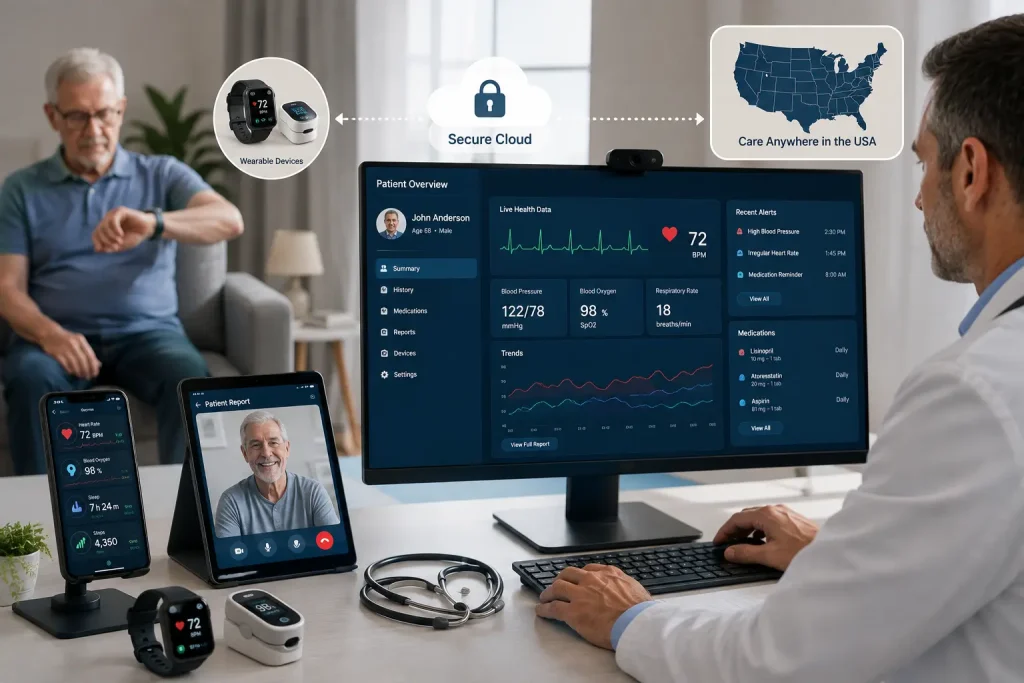
Remote patient monitoring platform-Custom Software for Medical Devices 3

Final Thoughts

As medical devices continue to evolve, software has become a critical component of healthcare innovation. Custom software for medical devices enables manufacturers to build solutions that align with specific device functionality, regulatory requirements, and clinical needs.

By focusing on security, reliability, scalability, and compliance from the beginning, organizations can develop software that supports better device performance and enhances patient care. Investing in custom software also provides the flexibility to adapt to future technologies, making it a valuable long-term strategy for medical device manufacturers.

Frequently Asked Questions (FAQs)

1. What is custom software for medical devices?

Custom software for medical devices is software specifically developed for a particular medical device or healthcare application. It is designed to meet the device’s functional, safety, regulatory, and performance requirements rather than using a generic software solution.

2. Why is custom software better than off-the-shelf software for medical devices?

Custom software is tailored to the device’s exact requirements, making it easier to integrate with hardware, support regulatory compliance, improve security, and add new features as the product evolves.

3. Why is cybersecurity important in Custom Software for Medical Devices?

Medical devices often process sensitive patient information and may connect to hospital networks or cloud services. Strong cybersecurity measures—such as encryption, secure authentication, and regular software updates—help protect patient data and maintain device integrity.

4. How does custom software improve patient care?

Custom Software for Medical Devices enables more accurate device performance, real-time monitoring, faster access to clinical information, remote patient management, and better support for healthcare professionals, leading to improved patient outcomes.

Also Read: AI Medical Software

READ MORE
AI in Medical Software
Umesh Kumar KhiriAugust 6, 2026 0 Comments
Share article:TwitterFacebookLinkedin
17 Views
9 Likes

Effective Medical Practice Management Software

Healthcare providers today must balance excellent patient care with the growing demands of administrative management. From scheduling appointments and maintaining patient records to handling billing and insurance claims, daily operations involve numerous tasks that can consume valuable time. Managing these responsibilities manually often leads to delays, errors, and reduced productivity. This is where effective medical practice management software becomes an essential tool for modern healthcare organizations.

Key Takeaways

  • Automates scheduling, billing, and patient management.
  • Improves clinic efficiency and staff productivity.
  • Enhances patient experience with streamlined workflows.
  • Supports better financial management and practice growth.

Medical practice management software is designed to simplify administrative workflows by bringing multiple functions into a single digital platform. It helps healthcare providers organize appointments, manage patient information, streamline billing, process insurance claims, and generate reports, allowing medical teams to spend more time caring for patients rather than handling paperwork.

Why Effective Medical Practice Management Software Matters?

As patient expectations continue to evolve, clinics are expected to provide quick, convenient, and organized services. Manual systems often struggle to keep pace with increasing patient volumes, leading to scheduling conflicts, billing mistakes, and communication gaps. An efficient practice management system automates routine tasks, improves coordination among staff, and ensures smoother daily operations.

By reducing repetitive administrative work, healthcare professionals can improve patient satisfaction while maintaining greater operational control.

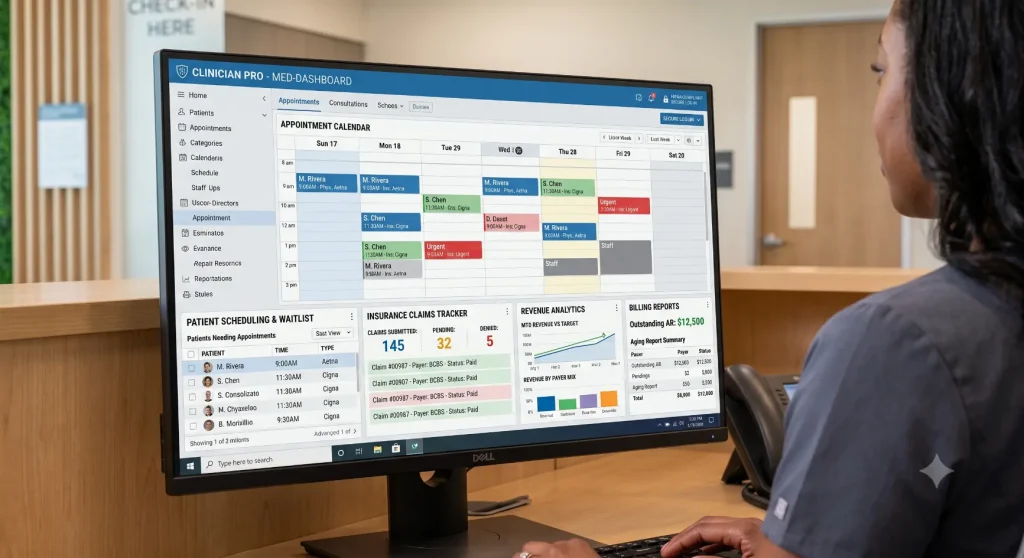
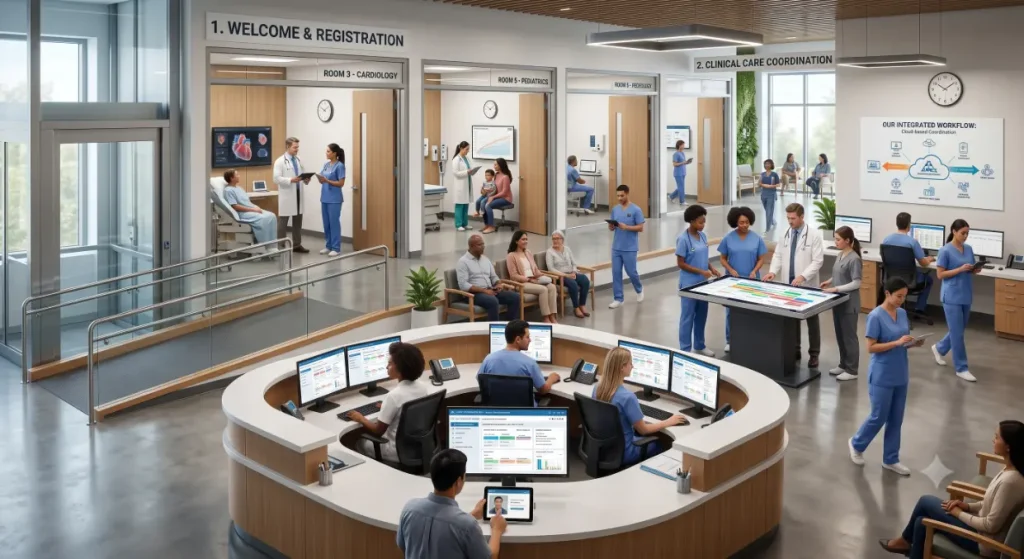
Medical administrator views clinic dashboard-Effective Medical Practice Management Software 2

Also Read: Medical Software Development

Key Features of Effective Medical Practice Management Software

An ideal practice management solution offers several essential features that improve efficiency across the entire healthcare facility.

FeatureBenefit
Appointment SchedulingOrganizes bookings and reduces scheduling conflicts
Patient RegistrationStores patient information securely in one place
Billing & PaymentsAutomates invoicing and payment tracking
Insurance ClaimsSimplifies claim submission and monitoring
Reporting & AnalyticsProvides insights into clinic performance
Patient CommunicationSends reminders and follow-up notifications automatically

These features work together to reduce manual effort while improving accuracy and workflow efficiency.

Benefits for Healthcare Practices

One of the biggest advantages of effective medical practice management software is improved productivity. Administrative staff spend less time handling repetitive tasks, allowing them to focus on supporting patients and healthcare providers. Automated appointment reminders help reduce missed visits, while digital registration speeds up patient check-in. Billing automation minimizes calculation errors and enables clinics to process payments more efficiently. Insurance claim management also becomes more organized, reducing delays and improving reimbursement rates. Additionally, effective medical practice management software strengthens patient communication by sending appointment confirmations, follow-up reminders, and important notifications through SMS or email. It also provides real-time reporting dashboards that allow clinic managers to track appointment trends, revenue, payment status, and staff performance, supporting smarter operational and financial decisions.

Choosing the Right Practice Management Software

Selecting the right software requires careful evaluation of your clinic’s needs. Healthcare providers should look for a solution that is simple to use, secure, and capable of growing with the organization.

Important factors include:

  • User-friendly interface
  • Secure cloud-based access
  • Data encryption and privacy protection
  • Integration with Electronic Health Records (EHR)
  • Customizable reporting
  • Multi-location support
  • Reliable technical support
  • Scalability for future growth

Choosing software with these capabilities helps ensure long-term operational efficiency and minimizes the need for future system changes.

The Future of Practice Management

Healthcare technology continues to evolve rapidly. Modern practice management platforms increasingly incorporate artificial intelligence, automated scheduling, telemedicine integration, mobile applications, digital payments, and predictive analytics. These innovations further simplify administrative work while improving patient access to healthcare services.

As healthcare organizations continue their digital transformation, practice management software will play an even greater role in improving efficiency, supporting informed decision-making, and enhancing the overall patient experience.

Modern clinic workflow with digital screens-Effective Medical Practice Management Software 3

Conclusion

Effective medical practice management software has become an essential component of modern healthcare operations. By automating appointment scheduling, patient registration, billing, insurance processing, reporting, and communication, it helps healthcare organizations reduce administrative burdens while improving workflow efficiency. The result is better coordination, higher productivity, improved financial performance, and a more satisfying experience for patients. Investing in a reliable and scalable practice management solution enables clinics and hospitals to operate more efficiently while remaining focused on delivering high-quality patient care.

Also Read: Services

Frequently Asked Questions

1. What is medical practice management software?

Medical practice management software is a digital solution that helps healthcare providers manage appointments, billing, patient registration, insurance claims, and administrative workflows.

2. Can small clinics benefit from practice management software?

Yes. It helps clinics of all sizes improve efficiency, reduce paperwork, and streamline daily operations.

3. Does practice management software integrate with EHR systems?

Most modern solutions support integration with Electronic Health Record (EHR) systems for seamless clinical and administrative workflows.

4. How does practice management software improve patient satisfaction?

It reduces waiting times, simplifies appointment booking, automates reminders, and improves communication throughout the patient’s healthcare journey.

5. What features should healthcare providers prioritize?

Look for appointment scheduling, billing, insurance management, patient communication, reporting, cloud access, security, and integration capabilities.

READ MORE
AI in Medical Software
Umesh Kumar KhiriAugust 5, 2026 0 Comments
Share article:TwitterFacebookLinkedin
16 Views
10 Likes

AI Medical Software

Healthcare professionals spend a significant portion of their day managing appointments, updating patient records, preparing reports, and coordinating workflows. While these tasks are essential, they often reduce the time available for direct patient care. This is why AI medical software has become an important investment for hospitals, clinics, and specialty practices.

Key Takeaways

  • AI automates healthcare workflows.
  • Reduces administrative workload.
  • RetinaWiseAI improves practice efficiency.
  • More time for quality patient care.

Modern AI-powered healthcare solutions automate repetitive administrative processes, improve operational efficiency, and help medical teams work smarter. From intelligent scheduling to automated documentation and image analysis, the right software reduces workload while improving the overall patient experience.

Why Medical Practices Need AI Medical Software?

Administrative tasks continue to increase as healthcare regulations, documentation requirements, and patient volumes grow. AI medical software helps practices simplify these responsibilities without disrupting existing workflows.

Common Administrative Challenges

  • Time-consuming patient documentation
  • Appointment scheduling conflicts
  • Manual report preparation
  • Managing electronic health records (EHR)
  • Billing and insurance documentation
  • Coordinating patient follow-ups
  • Handling large volumes of diagnostic images

Automating these tasks allows physicians and clinical staff to spend more time focusing on patient care instead of paperwork.

Also Read:Medical Equipment Software

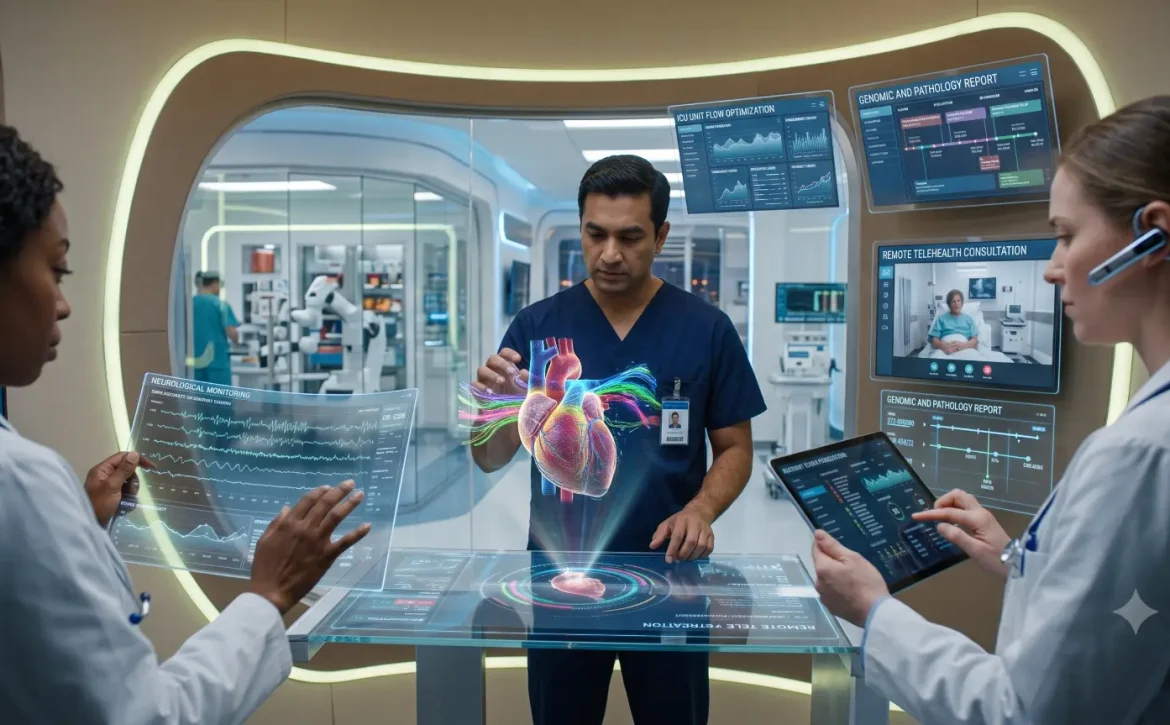
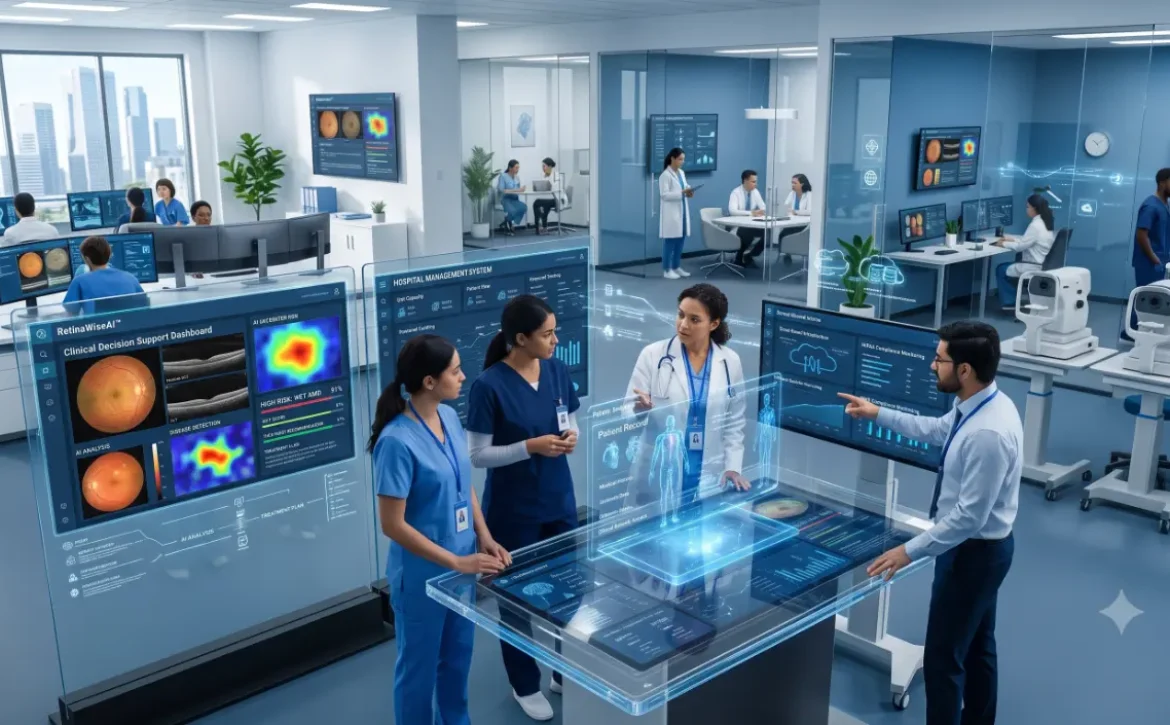
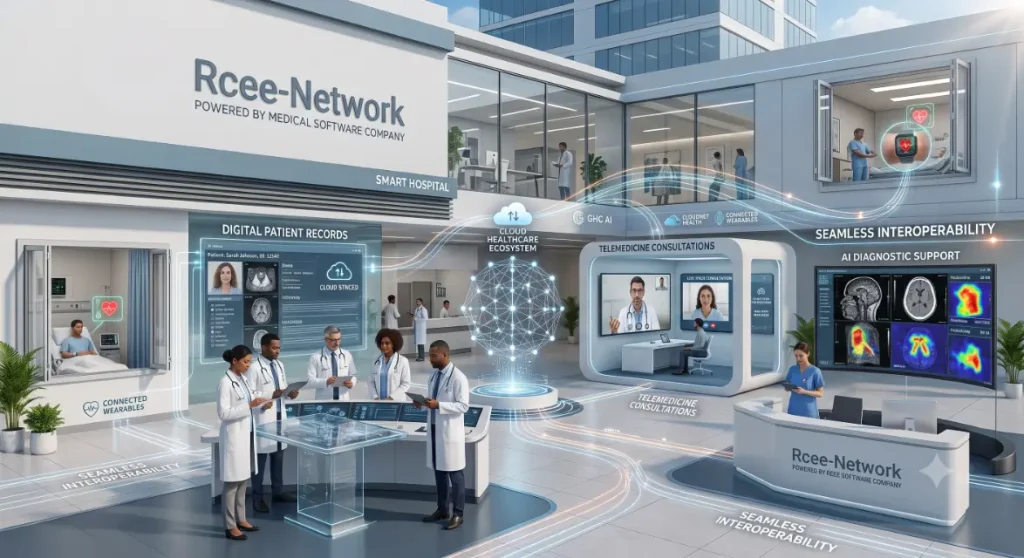
Doctors collaborate in a futuristic smart hospital-AI Medical Software 2

Key Benefits of AI Medical Software

FeatureBenefit
Workflow AutomationReduces repetitive administrative tasks
Smart SchedulingMinimizes missed appointments and scheduling errors
Electronic Record ManagementFaster access to patient information
Automated ReportingSaves time preparing clinical reports
Medical Image AnalysisSpeeds up image review and clinical workflows
Cloud AccessSecure access from multiple locations
Data IntegrationConnects with existing healthcare systems

Features to Look for in AI Medical Software

Choosing the right platform requires more than just automation. The best solutions combine clinical support with efficient practice management.

Look for software that offers:

  • AI-powered workflow automation
  • Electronic health record integration
  • Automated patient documentation
  • Secure cloud-based storage
  • Medical image analysis
  • Report generation
  • Patient management dashboard
  • HIPAA and GDPR compliance
  • Easy integration with existing devices

As a result, physical labor is reduced, time is saved, and the speed and efficiency of the entire operation increase.

Best Software for Reducing Administrative Burden in Medical Practices

When evaluating the best software for reducing administrative burden in medical practices, healthcare providers should prioritize solutions that automate workflows while supporting clinical decision-making.

For ophthalmology clinics and eye care providers, RetinaWiseAI stands out as one of the most effective AI-powered platforms available.

RetinaWiseAI combines intelligent retinal image analysis with workflow automation, helping practices streamline both clinical and administrative operations. Instead of manually organizing retinal scans, preparing reports, and managing patient imaging records, clinicians can work through a centralized platform that simplifies daily workflows.

Why RetinaWiseAI?

✔ AI-assisted retinal image analysis

✔ Faster report generation

✔ Centralized patient image management

✔ Integration with retinal imaging devices

✔ Secure cloud-based platform

✔ Simplified workflow for ophthalmology clinics

✔ Supports faster patient review and follow-up

By reducing manual administrative work, RetinaWiseAI allows healthcare professionals to dedicate more attention to diagnosis, treatment planning, and patient care rather than paperwork.

How AI Medical Software Improves Daily Operations?

Here’s how AI makes a measurable difference in everyday clinical practice.

Administrative TaskTraditional ProcessAI Medical Software
Patient SchedulingManual bookingAutomated scheduling
Clinical DocumentationManual entryAI-assisted documentation
Medical ReportsTime-consuming preparationAutomated report generation
Patient RecordsMultiple systemsCentralized digital access
Image ReviewManual organizationAI-assisted image management
Workflow TrackingManual coordinationReal-time workflow management

The result is a more organized practice with reduced administrative workload and improved operational efficiency.

Also Read: Cloud Medical Software

Who Can Benefit?

AI medical software is suitable for various healthcare organizations, including:

  • Hospitals
  • Ophthalmology clinics
  • Optometry practices
  • Diagnostic centers
  • Multi-specialty hospitals
  • Community healthcare centers
  • Telemedicine providers

Practices handling large patient volumes often experience the greatest improvement because automation reduces repetitive administrative tasks across departments.

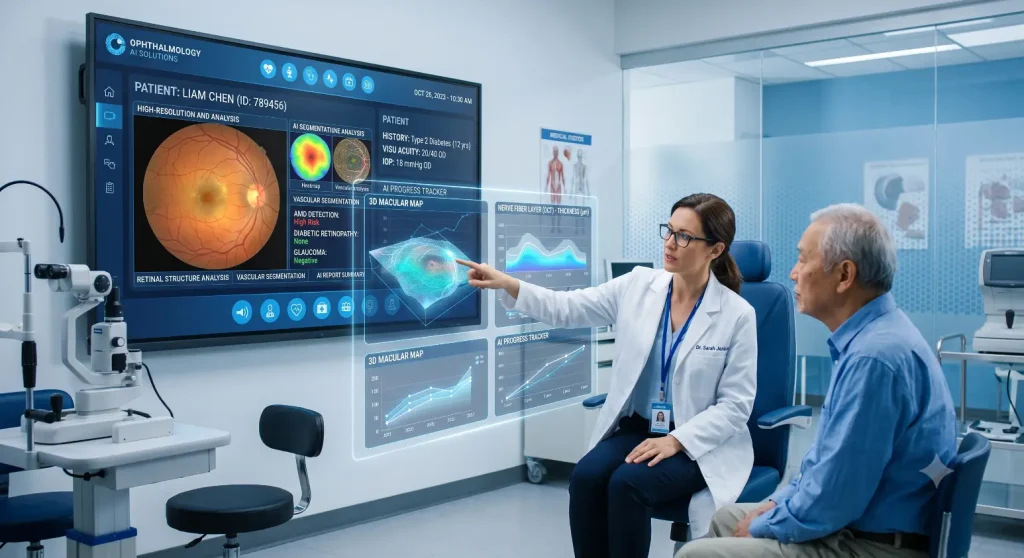
Doctor and patient examine retinal scan on monitor-AI Medical Software 3

The Future of AI in Healthcare Administration

With the continuous advancement of healthcare technology, artificial intelligence (AI) is making modern medical systems smarter, faster, and more effective. Future AI platforms will provide even greater automation, predictive analytics, intelligent patient management, and seamless integration across healthcare systems.

Practices that adopt AI today can improve efficiency, reduce operational costs, and create a better experience for both healthcare professionals and patients.

Conclusion

Managing administrative responsibilities doesn’t have to slow down patient care. AI medical software enables healthcare providers to automate routine tasks, improve workflow efficiency, and reduce operational burdens while maintaining high-quality clinical services.

For eye care providers searching for the best software for reducing administrative burden in medical practices, RetinaWiseAI is an excellent choice. Its combination of AI-powered retinal image analysis, intelligent workflow management, secure cloud infrastructure, and streamlined reporting helps ophthalmology practices operate more efficiently while allowing clinicians to focus on delivering exceptional patient care.

Frequently Asked Questions (FAQs)

1. What is AI medical software?

AI medical software uses artificial intelligence to automate administrative tasks, assist with clinical workflows, analyze medical data, and improve operational efficiency in healthcare settings.

2. How does AI medical software reduce administrative burden?

AI-powered medical software reduces administrative burdens by automating appointment scheduling, patient data management, medical report generation, Electronic Health Record (EHR) management, and workflow coordination. As a result, healthcare providers can devote their time and attention to patient care more efficiently.

3. What is the best software for reducing administrative burden in medical practices?

The best software depends on your specialty and workflow requirements. For ophthalmology and vision care practices, RetinaWiseAI is an excellent choice because it combines AI-powered retinal image analysis with workflow automation, secure patient data management, and faster report generation.

4. Is AI medical software suitable for small clinics?

Yes. Many AI medical software solutions are scalable and can be used by private clinics, specialty practices, diagnostic centers, and large hospitals. They help improve efficiency regardless of practice size.

5. Can AI medical software integrate with existing healthcare systems?

Most modern AI medical software is designed to integrate with Electronic Health Record (EHR) systems, retinal imaging devices, hospital information systems, and cloud-based platforms, ensuring a smooth workflow without replacing existing infrastructure.

6. Is patient data secure with AI medical software?

Reputable AI medical software platforms use encryption, secure cloud infrastructure, and comply with healthcare data protection standards such as HIPAA and GDPR to safeguard patient information.

7. Does AI medical software replace doctors?

No. AI medical software is designed to support healthcare professionals by automating routine tasks and providing clinical decision support. Final diagnoses and treatment decisions remain the responsibility of qualified medical practitioners.

READ MORE
AI in Medical Software
Umesh Kumar KhiriAugust 3, 2026 0 Comments
Share article:TwitterFacebookLinkedin
17 Views
8 Likes

Cloud Medical Software

Healthcare providers are increasingly adopting cloud medical software to simplify clinical workflows, improve data accessibility, and enhance patient care. Instead of relying on local servers, cloud-based solutions securely store medical data online, allowing authorized users to access patient information, medical images, and reports from virtually anywhere.

Key Takeaways

  • This software enables secure, remote access to healthcare data.
  • It reduces IT costs while improving collaboration and workflow efficiency.
  • Cloud platforms support medical imaging, telemedicine, and EHR integration.
  • Solutions like RetinaWiseAI™ combine cloud technology with AI-powered clinical decision-support.

From hospitals and clinics to diagnostic centers and ophthalmology practices, cloud medical software helps organizations reduce IT costs while improving collaboration and operational efficiency.


What Is Cloud Medical Software?

This is a healthcare application hosted on secure cloud infrastructure. It enables healthcare professionals to manage patient records, diagnostic data, scheduling, billing, and clinical workflows through a secure internet connection.

Key Benefits

  1. Access patient records from any authorized location
  2. Reduce hardware and server maintenance costs
  3. Automatic software updates and backups
  4. Secure cloud storage with data encryption
  5. Easy collaboration between healthcare teams
  6. Scalable for growing healthcare organizations

Also Read:Medical Equipment Software


Key Features of Cloud Medical Software

FeatureBenefit
Cloud Data StorageSecurely stores medical records and images
Electronic Health Records (EHR)Centralized patient information
Appointment ManagementSimplifies scheduling
Medical Imaging SupportAccess diagnostic images remotely
Billing & ClaimsStreamlines financial workflows
Analytics DashboardImproves operational insights
Multi-User AccessSupports team collaboration
Security & ComplianceProtects sensitive healthcare data

Applications of Cloud Medical Software

This medical software is widely used across different healthcare settings.

  • Hospitals
  • Multi-specialty clinics
  • Diagnostic laboratories
  • Radiology centers
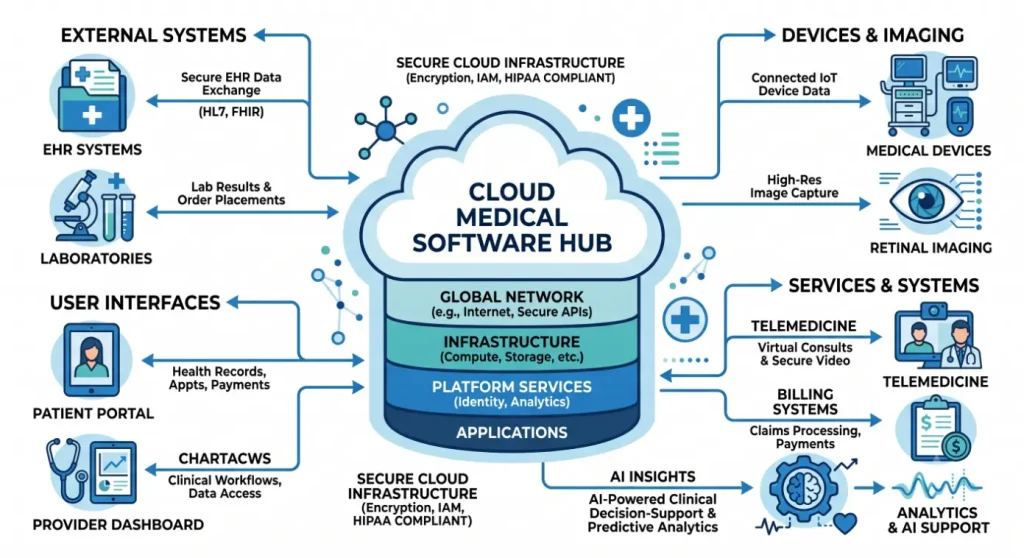
  • Ophthalmology practices
  • Telemedicine providers
  • Community screening programs
  • Medical device management
Infographic about medical cloud systems-Cloud Medical Software 2

.


Why Healthcare Providers Choose Cloud Medical Software

Healthcare organizations are investing in cloud platforms because they offer measurable operational benefits.

1.Clinical Benefits

  • Faster access to patient records
  • Better coordination between departments
  • Simplified diagnostic workflows
  • Improved medical image sharing
  • Support for remote consultations

2.Business Benefits

  • Lower infrastructure costs
  • Reduced software maintenance
  • Automatic system upgrades
  • Easy scalability for multiple locations
  • Improved disaster recovery

3.Security Features

Security is one of the most important aspects of this software. Modern platforms typically include:

  • End-to-end encryption
  • Multi-factor authentication
  • Automatic cloud backups
  • User access controls
  • Audit logs
  • Disaster recovery support
  • Compliance with healthcare privacy standards

These features help healthcare organizations protect sensitive patient information while maintaining regulatory compliance.


Cloud Medical Software vs Traditional Medical Software

Cloud Medical SoftwareTraditional Software
Accessible from anywhereLimited to local computers
Automatic updatesManual updates
Cloud backupManual backup
Lower infrastructure costsHigher hardware investment
Easy scalabilityExpansion requires additional hardware
Better remote collaborationLimited accessibility

Choosing the Right Cloud Medical Software

When evaluating a cloud medical solution, consider the following:

  • Secure cloud infrastructure
  • Healthcare compliance standards
  • EHR/EMR integration
  • Medical imaging compatibility
  • User-friendly interface
  • Scalability for future growth
  • Reliable technical support
  • Backup and disaster recovery options

If your organization works with diagnostic imaging, selecting software that integrates with retinal cameras, OCT devices, or other medical imaging systems can further improve workflow efficiency.


Future of Cloud Medical Software

Cloud technology continues to transform healthcare through:

  • AI-powered clinical decision-support
  • Remote patient monitoring
  • Telemedicine integration
  • Cloud-based medical imaging
  • Predictive healthcare analytics
  • Population health management
  • Connected medical devices

As healthcare becomes increasingly digital, cloud medical software will play a central role in improving efficiency, accessibility, and patient outcomes.

Doctor viewing patient cloud data-Cloud Medical Software 3

Conclusion

This software provides healthcare organizations with a secure, scalable, and cost-effective way to manage clinical operations. From patient records and billing to diagnostic imaging and telemedicine, cloud-based platforms simplify workflows while supporting better collaboration across healthcare teams.

Also Read: Medical Software Development

Solutions like RetinaWiseAI™ highlight how cloud medical software can extend beyond data storage by integrating secure retinal image management with AI-powered clinical decision-support. This enables eye care providers to streamline screening workflows, improve access to diagnostic information, and support informed clinical decisions while maintaining the highest standards of patient data security.

Frequently Asked Questions (FAQs)

1. What is cloud medical software?

Cloud medical software is a healthcare solution hosted on secure cloud servers that allows providers to access patient records, medical imaging, billing, and clinical workflows online.

2. What are the benefits of cloud medical software?

It offers remote access, lower IT costs, automatic updates, secure data storage, better collaboration, and easy scalability for healthcare organizations.

3. Is cloud medical software secure?

Yes. Most cloud medical software includes encryption, role-based access, multi-factor authentication, regular backups, and compliance with healthcare data privacy standards.

4. Can cloud medical software integrate with medical imaging systems?

Yes. Many platforms integrate with medical imaging devices, EHR/EMR systems, and AI-powered clinical decision-support tools to streamline diagnostic workflows.

READ MORE
AI in Medical Software
Umesh Kumar KhiriAugust 3, 2026 0 Comments
Share article:TwitterFacebookLinkedin
17 Views
11 Likes

Medical Equipment Software

Medical devices are at the heart of modern healthcare, but managing them manually can be time-consuming and prone to errors. Medical equipment software helps hospitals, clinics, laboratories, and specialty healthcare providers track, maintain, and optimize medical devices from installation to replacement. It centralizes equipment information, automates maintenance schedules, and improves operational efficiency while supporting regulatory compliance.

4 Short Key Takeaways

  • Centralizes medical equipment management.
  • Reduces downtime with preventive maintenance.
  • Integrates with hospital systems and diagnostic devices.
  • Supports AI-powered clinical decision-support.

Whether managing a few devices or thousands of assets, the right software reduces downtime and ensures equipment is always ready for patient care.


Why Medical Equipment Software Matters

Healthcare organizations use medical equipment software to simplify everyday equipment management.

Key Advantages

  • Centralized equipment inventory
  • Automated preventive maintenance
  • Real-time equipment tracking
  • Faster repair management
  • Reduced operational costs
  • Improved compliance documentation
  • Better equipment utilization
  • Increased patient safety

Core Features of Medical Equipment Software

FeaturePurposeBenefit
Asset InventoryMaintain a digital equipment databaseEasy asset tracking
Preventive MaintenanceSchedule routine servicingReduce unexpected breakdowns
Work Order ManagementAssign repair requestsFaster maintenance
Calibration TrackingMonitor calibration datesAccurate device performance
Warranty ManagementTrack vendor contractsLower repair expenses
Service HistoryStore maintenance recordsBetter audit readiness
Dashboard & ReportsMonitor equipment statusData-driven decisions
User Access ControlSecure role-based accessEnhanced data security

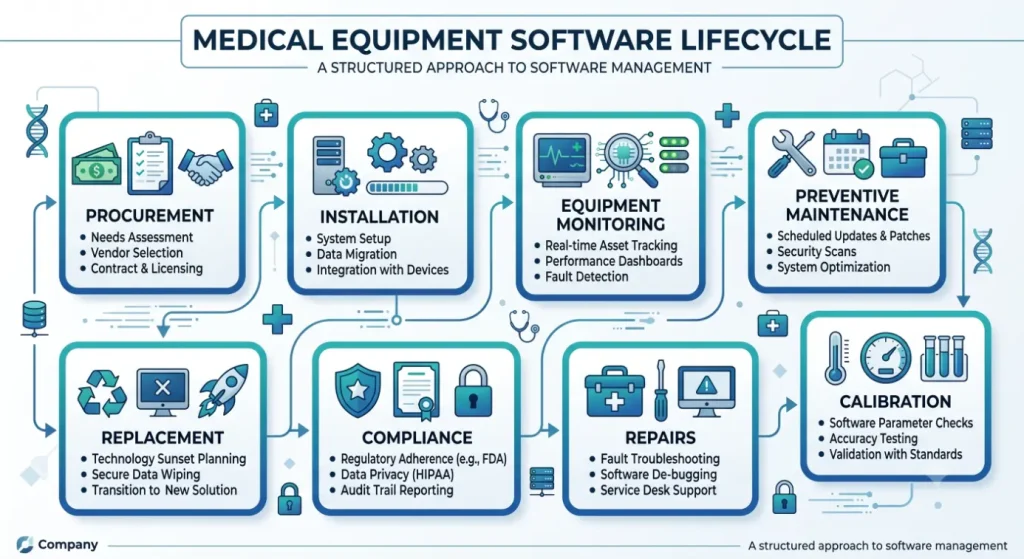
Medical Equipment Lifecycle Management

A complete medical equipment software solution supports every stage of an asset’s lifecycle.

Lifecycle StageSoftware Function
ProcurementRegister new equipment
InstallationCreate equipment profile
Daily UsageMonitor equipment status
MaintenanceSchedule preventive servicing
RepairsTrack service requests
CalibrationMaintain compliance records
ReplacementAnalyze asset performance

Where Medical Equipment Software is Used

Medical equipment software is suitable for various healthcare environments.

  • Hospitals
  • Multi-specialty clinics
  • Diagnostic centers
  • Imaging centers
  • Laboratories
  • Surgical centers
  • Ophthalmology clinics
  • Biomedical engineering departments
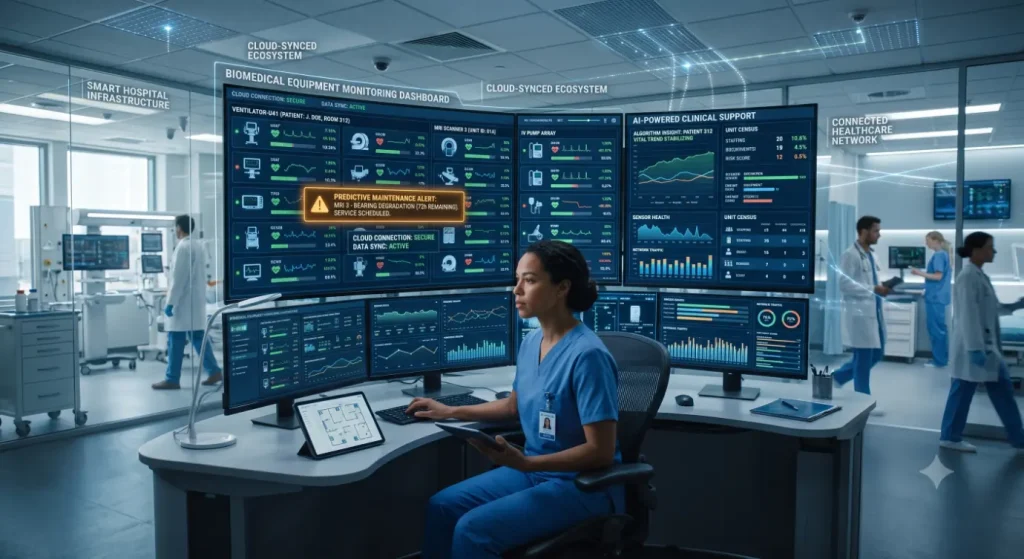
Biomedical engineer in a high-tech smart hospital-Medical Equipment Software 3

Essential Modules to Consider

Before choosing a solution, ensure it includes these important modules:

1.       Equipment inventory management

2.       Preventive maintenance scheduler

3.       Asset lifecycle management

4.       Calibration management

5.       Warranty tracking

6.       Vendor management

7.       Compliance reporting

8.       Dashboard and analytics

9.       Mobile technician support

10.    Multi-location asset management


Integration with Healthcare Systems

Modern medical equipment software delivers greater value when connected with existing hospital platforms.

Common Integrations

SystemPurpose
EHR / EMRPatient record synchronization
HISHospital workflow integration
LISLaboratory equipment connectivity
PACSImaging data management
Cloud PlatformsRemote access and backup
IoT Medical DevicesReal-time equipment monitoring

These integrations reduce manual data entry and improve workflow efficiency.


Medical Equipment Software in Ophthalmology

Medical equipment software is increasingly used in eye care to connect diagnostic devices with digital workflows. A good example is RetinaWiseAI™ by RCEENetworks, which demonstrates how intelligent software can work alongside retinal imaging equipment.

Also Read:Medical Software Company

Instead of functioning only as an asset management tool, RetinaWiseAI™ integrates retinal imaging devices with cloud technology and AI-powered clinical decision-support to streamline ophthalmology workflows.

RetinaWiseAI™ Highlights

CapabilityBenefit
Fundus Camera CompatibilityConnects with retinal imaging devices
OCT Image SupportSupports advanced eye diagnostics
Cloud-Based AccessSecure image storage and sharing
EMR/EHR IntegrationSimplifies clinical workflows
AI-Powered Clinical Decision-SupportAssists healthcare professionals during image analysis
Secure Data ManagementSupports HIPAA & GDPR compliance
Multi-Clinic AccessCentralized workflow management

Benefits for Healthcare Providers

Implementing medical equipment software helps organizations improve operational performance.

Operational Benefits

1.       Reduce equipment downtime

2.       Improve maintenance planning

3.       Extend equipment lifespan

4.       Simplify regulatory compliance

5.       Improve technician productivity

6.       Enhance equipment visibility

7.       Support faster clinical workflows

8.       Reduce paperwork

A clean medical software lifecycle chart-Medical Equipment Software 2

How AI-Powered Clinical Decision-Support Adds Value

Many modern medical equipment software platforms include intelligent capabilities that assist healthcare professionals.

Examples include:

  • Predictive maintenance alerts
  • Equipment health monitoring
  • Device utilization analytics
  • Workflow optimization
  • Image quality assessment
  • Automated maintenance reminders

These tools help healthcare teams make informed decisions while maintaining reliable equipment performance.


Choosing the Right Medical Equipment Software

Before investing, compare solutions based on these factors.

Selection CriteriaWhy It Matters
ScalabilitySupports future growth
IntegrationWorks with existing hospital systems
SecurityProtects healthcare data
ComplianceMeets healthcare regulations
User-Friendly InterfaceFaster staff adoption
ReportingBetter operational insights
Technical SupportReliable long-term assistance

Conclusion

As healthcare facilities continue to digitize operations, medical equipment software has become an essential solution for managing medical devices efficiently. It helps healthcare organizations automate maintenance, improve compliance, reduce downtime, and optimize equipment performance through centralized management.

Advanced platforms like RetinaWiseAI™ also demonstrate how medical equipment software can integrate with specialized diagnostic devices, cloud technology, and AI-powered clinical decision-support to create smarter, more connected healthcare workflows. Investing in the right software not only protects valuable medical assets but also supports better clinical efficiency and patient care.

Also Read: Medical Device Software Design


FAQs

What is medical equipment software?

Medical equipment software helps healthcare organizations manage, monitor, maintain, and optimize medical devices throughout their lifecycle.

Who uses medical equipment software?

Hospitals, diagnostic centers, laboratories, imaging facilities, specialty clinics, and biomedical engineering teams.

Can medical equipment software integrate with hospital systems?

Yes. Most modern solutions integrate with EHR, EMR, HIS, LIS, PACS, and cloud-based healthcare platforms.

Does medical equipment software improve compliance?

Yes. It maintains maintenance logs, calibration records, service history, and compliance documentation.

READ MORE
AI in Medical Software
Umesh Kumar KhiriAugust 1, 2026 0 Comments
Share article:TwitterFacebookLinkedin
16 Views
16 Likes

Medical Device Software Design

Healthcare is becoming increasingly software-driven, making medical device software design a critical part of modern medical technology. From diagnostic imaging systems and connected medical devices to AI-powered clinical decision-support platforms, well-designed software improves efficiency, supports accurate clinical decisions, and enhances patient care.

Key Takeaways

  • Medical device software design ensures healthcare software is safe, secure, and compliant.
  • Standards like IEC 62304 and ISO 14971 guide quality development.
  • Platforms like RetinaWiseAI demonstrate how intelligent software improves clinical workflows.
  • Scalable architecture, cybersecurity, and interoperability are essential for future-ready medical solutions.

Beyond functionality, successful medical device software must prioritize patient safety, regulatory compliance, cybersecurity, and seamless integration with existing healthcare systems. A structured design approach helps organizations develop reliable solutions that meet both clinical and regulatory expectations.


What Is Medical Device Software Design?

Medical device software design is the process of planning, developing, testing, and maintaining software used in or with medical devices. The goal is to create secure, reliable, and compliant software that supports healthcare professionals while ensuring patient safety.

Common applications include:

  • Diagnostic imaging software
  • Patient monitoring systems
  • Medical laboratory equipment
  • Connected healthcare devices
  • AI-powered clinical decision-support solutions
  • Remote patient monitoring platforms

Whether embedded within a device or delivered as Software as a Medical Device (SaMD), effective design ensures consistent performance throughout the product lifecycle.


Key Components of Medical Device Software Design

A successful development process typically includes the following stages:

Design StagePurpose
Requirements AnalysisDefine clinical, technical, and regulatory requirements
Software ArchitectureBuild a secure and scalable system
Risk ManagementIdentify and reduce patient safety risks
UI/UX DesignCreate intuitive workflows for clinicians
Verification & ValidationConfirm software performs as intended
DocumentationSupport regulatory compliance and traceability

Each stage contributes to delivering high-quality medical software that healthcare providers can trust.

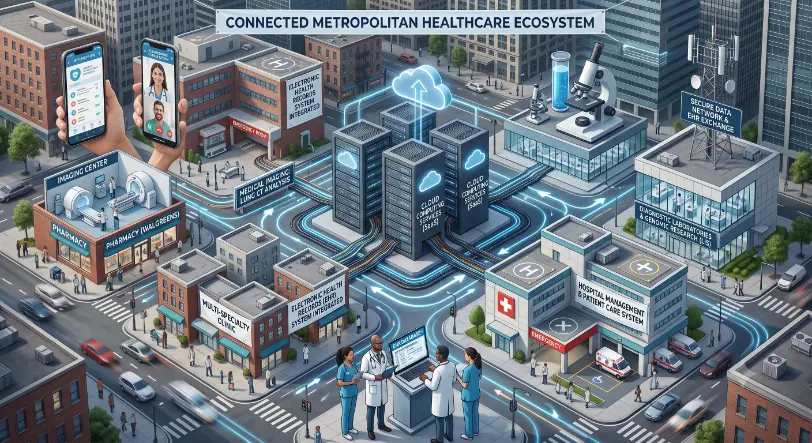
High-tech digital healthcare urban hub at Rcee-Network-Medical Device Software Design 2

Essential Design Considerations

When developing medical device software, organizations should focus on:

  • Patient safety and risk reduction
  • Regulatory compliance
  • Cybersecurity and data privacy
  • User-friendly clinical interfaces
  • Reliable system performance
  • Integration with EMR/EHR systems
  • Scalability for future updates

Addressing these considerations early helps reduce development risks and accelerates product deployment.

Also Read:Medical Softwares


Real-World Example: RetinaWiseAI

A practical example of medical device software design is RetinaWiseAI, an AI-powered clinical decision-support platform developed for retinal imaging workflows. The platform demonstrates how intelligent software can enhance clinical efficiency while maintaining security and interoperability.

RetinaWiseAI Design Highlights

FeatureClinical Benefit
Cloud-based deploymentEnables secure access across multiple clinics
Fundus & OCT image supportCompatible with multiple retinal imaging systems
EMR/EHR integrationSimplifies patient record management
Secure image processingProtects sensitive patient data
Automated workflow supportReduces manual tasks and improves productivity
Scalable architectureSupports clinics, hospitals, and healthcare networks

By combining intelligent image analysis with secure cloud infrastructure and seamless integration, RetinaWiseAI reflects the principles of modern medical device software design—creating software that improves clinical workflows while supporting healthcare professionals in making informed decisions.


Industry Standards That Matter

Medical device software should be developed according to internationally recognized standards.

StandardPurpose
IEC 62304Medical device software lifecycle
ISO 14971Risk management
ISO 13485Quality management system
IEC 62366Usability engineering
FDA GuidanceSoftware validation and compliance

Following these standards helps improve software quality and supports regulatory approval.


Benefits of Effective Medical Device Software Design

A well-designed software solution provides significant advantages for healthcare organizations.

  • Improves patient safety
  • Enhances software reliability
  • Supports regulatory compliance
  • Strengthens cybersecurity
  • Simplifies maintenance and updates
  • Improves clinical workflow efficiency
  • Enables interoperability across healthcare systems
  • Scales with evolving healthcare needs
A detailed digital healthcare urban map-Medical Device Software Design 3

Best Practices for Development

To build high-quality medical device software, development teams should:

  • Define clear software requirements before coding.
  • Apply risk management throughout development.
  • Build security into every layer of the application.
  • Conduct comprehensive verification and validation testing.
  • Maintain detailed regulatory documentation.
  • Design intuitive interfaces for healthcare professionals.
  • Develop scalable and modular software architectures.

These practices help reduce errors, improve compliance, and support long-term product success.


Conclusion

As healthcare technology continues to evolve, medical device software design has become essential for creating safe, secure, and intelligent healthcare solutions. By combining regulatory compliance, strong cybersecurity, intuitive user experiences, and scalable architecture, organizations can develop software that supports clinicians and improves patient outcomes.

Solutions like RetinaWiseAI demonstrate how modern medical software can integrate advanced imaging, secure cloud infrastructure, and AI-powered clinical decision-support into a unified platform, helping healthcare providers deliver more efficient and informed care.


Frequently Asked Questions

1.     What is medical device software design?

Medical device software design is the process of developing software that operates medical devices or supports clinical functions while meeting safety, quality, and regulatory requirements.

2.     Why is software design important for medical devices?

It helps ensure patient safety, reliable performance, cybersecurity, regulatory compliance, and efficient clinical workflows.

3.     What standards are commonly used for medical device software?

IEC 62304, ISO 14971, ISO 13485, and IEC 62366 are among the most widely followed standards for medical device software development.

4.     How does RetinaWiseAI reflect modern medical device software design?

RetinaWiseAI combines cloud deployment, retinal image compatibility, EMR/EHR integration, secure image processing, and AI-powered clinical decision-support to create an efficient, scalable, and clinician-friendly platform.

Also Read:Medical Software Company

READ MORE
AI in Medical Software
Umesh Kumar KhiriAugust 1, 2026 0 Comments
Share article:TwitterFacebookLinkedin
14 Views
12 Likes

Medical Software Company

Healthcare is becoming more connected, data-driven, and patient-focused than ever before. From electronic health records to telemedicine platforms and AI-powered clinical tools, digital solutions are transforming how healthcare providers deliver care. Choosing the right medical software company is essential for developing secure, scalable, and compliant applications that improve both clinical and operational efficiency.

Key Takeaways

  • Choose a medical software company with proven healthcare expertise.
  • A medical software development firm delivers secure, custom-built solutions.
  • Healthcare software improves efficiency, patient care, and data security.
  • Scalable, compliant software supports long-term digital transformation.

An experienced medical software development firm understands the unique challenges of the healthcare industry and develops solutions tailored to hospitals, clinics, laboratories, diagnostic centers, and healthcare startups.


Why Choose a Medical Software Company?

Healthcare software requires more than technical expertise. It must comply with industry regulations, integrate with existing systems, and provide a seamless experience for both healthcare professionals and patients.

Benefits of Partnering with a Medical Software Company

  1. Custom software tailored to healthcare workflows
  2. Improved patient data management
  3. Enhanced cybersecurity and data protection
  4. Integration with existing healthcare systems
  5. Reduced administrative workload
  6. Better patient engagement
  7. Scalable cloud-based infrastructure
  8. Ongoing technical support and maintenan

Healthcare Software Solutions We Develop

A professional medical software development firm offers a wide range of customized healthcare applications.

SolutionPurpose
Electronic Health Records (EHR)Digital patient record management
Hospital Management SystemsManage hospital operations and workflows
Telemedicine PlatformsSecure virtual consultations
Laboratory Information Systems (LIS)Laboratory workflow automation
Medical Imaging SoftwareImage storage, analysis, and reporting
Pharmacy Management SoftwarePrescription and inventory management
Mobile Healthcare AppsPatient engagement and remote care
Healthcare Analytics DashboardsClinical and operational insights

Features of Modern Medical Software

Successful healthcare applications combine security, usability, and interoperability.

Core Features

  • Secure patient record management
  • Appointment scheduling
  • e-Prescription management
  • Billing and insurance integration
  • Role-based access control
  • Cloud deployment
  • Real-time analytics and reporting
  • API integration with third-party systems
  • Multi-device accessibility
  • Data backup and recovery
Multi-specialty medical team analyses-Medical Software Company 2Medical team analyzes data in high-tech clinic-Medical Software Company 1

Why Custom Healthcare Software?

Every healthcare organization has unique workflows. A custom solution developed by a medical software company provides greater flexibility than generic software.

Custom SoftwareOff-the-Shelf Software
Designed for your workflowStandardized features
Easy customizationLimited flexibility
Better scalabilityDifficult to modify
Seamless integrationLimited compatibility
Long-term valueMay require replacement

Featured Solution: RetinaWiseAI™

As an innovative medical software company, RCEENetworks has developed RetinaWiseAI™, an advanced retinal imaging and AI-powered clinical decision-support platform designed for ophthalmologists, optometrists, hospitals, and vision care centers.

RetinaWiseAI™ helps healthcare professionals streamline retinal screening, securely manage retinal images, and support clinical decision-making while integrating with existing healthcare workflows.

Key Capabilities

CapabilityBenefit
Cloud-Based PlatformSecure access to retinal images anytime
AI-Powered Clinical Decision SupportAssists clinicians with retinal image analysis
EMR/EHR IntegrationSeamless workflow integration
HIPAA & GDPR ComplianceEnhanced patient data security
Fundus & OCT CompatibilitySupports multiple retinal imaging devices
Follow-Up MonitoringTrack patient progression over time

Why RetinaWiseAI™?

  • Supports faster retinal screening
  • Improves workflow efficiency
  • Enables secure cloud-based image management
  • Reduces manual administrative tasks
  • Compatible with modern retinal imaging devices
  • Supports scalable deployment across hospitals and clinics

This solution reflects how a trusted medical software development firm combines healthcare expertise with advanced technology to improve clinical efficiency and patient care.


Industries We Serve

Our healthcare software solutions are designed for:

  • Hospitals
  • Multi-specialty clinics
  • Diagnostic laboratories
  • Imaging centers
  • Pharmacies
  • Ophthalmology clinics
  • Dental practices
  • Healthcare startups
  • Telemedicine providers
  • Research organizations

Why Partner With an Experienced Medical Software Development Firm?

Selecting the right technology partner ensures long-term success.

What to Look For

✔ Healthcare domain expertise

✔ Regulatory compliance knowledge

✔ Custom software development

✔ Secure cloud architecture

✔ Integration capabilities

✔ Agile development process

✔ Long-term support and maintenance

A reliable medical software development firm doesn’t just build software—it creates solutions that evolve with your healthcare organization.

Connected digital healthcare ecosystem view-Medical Software Company 3

Conclusion

Choosing the right medical software company is an investment in the future of healthcare. From hospital management systems and telemedicine platforms to specialized solutions like RetinaWiseAI™, modern medical software improves operational efficiency, enhances patient care, and strengthens data security.

Also Read:Medical Softwares

At RCEENetworks, we combine healthcare expertise with advanced technology to develop scalable, secure, and user-friendly healthcare solutions. As a trusted medical software development firm, our goal is to help healthcare organizations accelerate digital transformation while delivering better clinical outcomes.


Frequently Asked Questions

1.     What does a medical software company do?

A medical software company develops healthcare applications such as EHR systems, telemedicine platforms, hospital management software, medical imaging solutions, and patient engagement applications.

2.     Why choose a medical software development firm?

A specialized medical software development firm understands healthcare regulations, security requirements, interoperability standards, and clinical workflows, ensuring your software is reliable, compliant, and scalable.

3.     What healthcare organizations benefit from medical software?

Medical software is widely used by hospitals, clinics, laboratories, pharmacies, diagnostic centers, imaging facilities, telemedicine providers, and healthcare startups.

4.     Can medical software integrate with existing hospital systems?

Yes. Most modern healthcare applications are designed to integrate with EHR, EMR, laboratory systems, billing platforms, PACS, and other healthcare technologies to improve workflow efficiency.

5.     Why is custom medical software better than off-the-shelf solutions?

Custom medical software is built around your organization’s specific requirements, making it easier to scale, integrate with existing systems, improve security, and adapt to changing healthcare needs.

READ MORE
  • 1
  • 2

Recent Posts

  • Best Cloud-Based Medical Practice Software for Small Clinics
  • Medical Software Solutions for Reducing Patient Wait Times
  • Integrated Medical Software
  • FDA Software as a Medical Device Guidance
  • Exploring enterprise-level analytics in medical software solutions

Recent Comments

No comments to show.

Archives

  • August 2026
  • July 2026

Categories

  • AI in Medical Software
  • iMACAM Support
  • Retinal Image Analysis
  • Uncategorized
Recent Posts
  • Best Cloud-Based Medical Practice Software for Small Clinics
    Best Cloud-Based Medical Practice Software for Small Clinics
    August 18, 2026
  • Medical Software Solutions for Reducing Patient Wait Times
    Medical Software Solutions for Reducing Patient Wait Times
    August 15, 2026
  • Integrated Medical Software
    Integrated Medical Software
    August 14, 2026
Categories
  • AI in Medical Software11
  • iMACAM Support1
  • Retinal Image Analysis8
  • Uncategorized3
logotype

RCEENetworks LLC

Dallas based Opthalmic Technology for Retinal Imaging, Workflow Optimization, and Enterprise Healthcare Software

1-844-284-3695

info@rceenetworks.com

3010 Lyndon B Johnson Fwy #1200, Dallas, TX 75234, United States

Menu

HomeRetinaWiseAI™

IMACAM™Blog

About

Contact

Other Links

Privacy PolicyContent PolicyTerms & Conditions

Social Links

TwitterFacebookInstagramLinkedin

Copyright © 2026 RCEENetworks LLC. All Rights Reserved