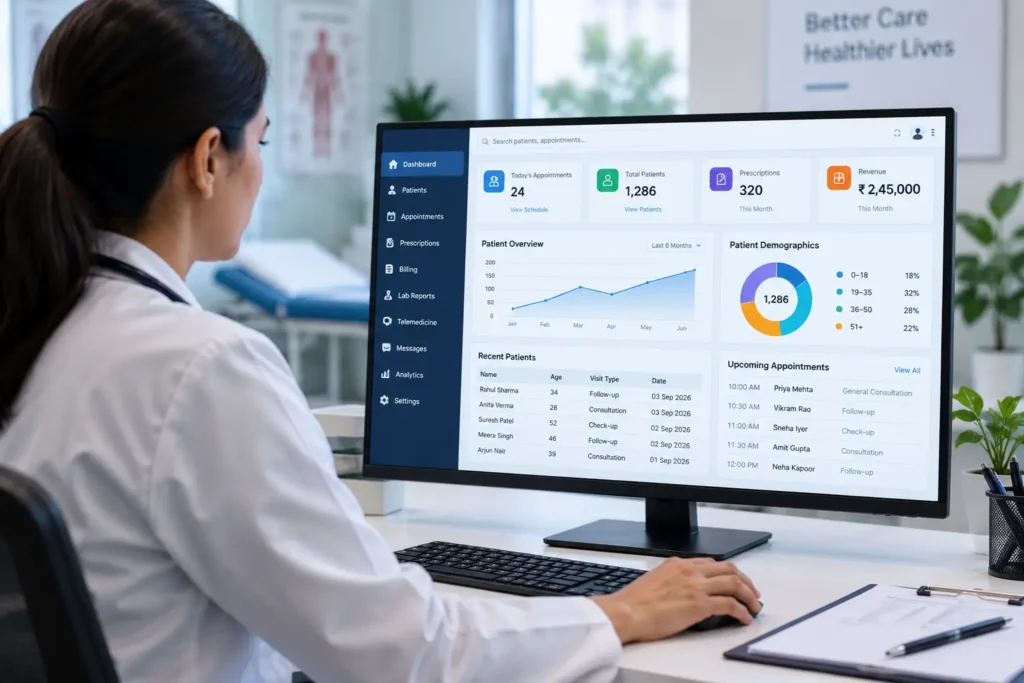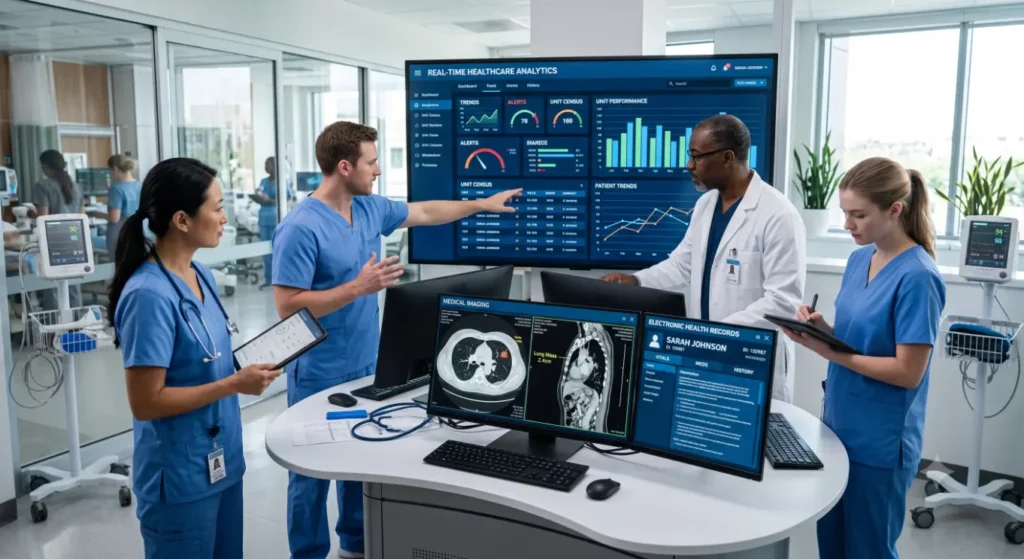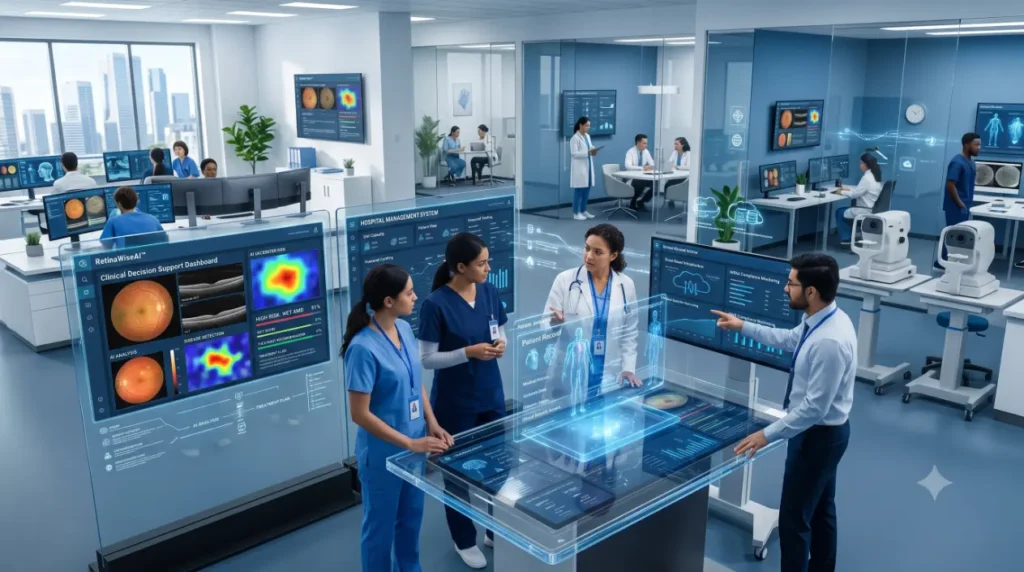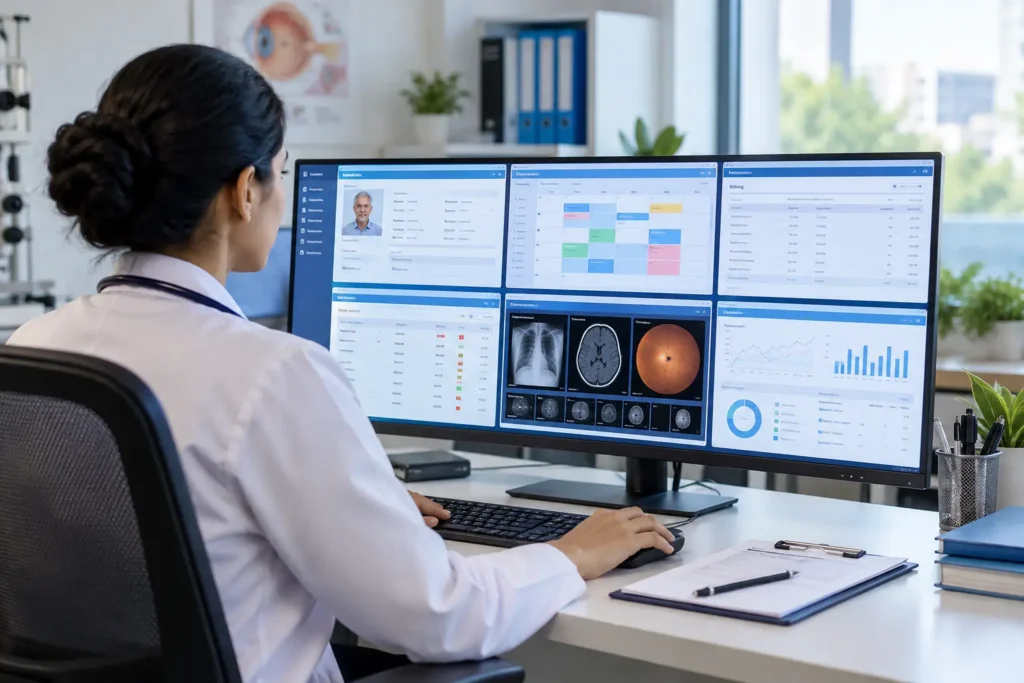
Healthcare involves a lot of information, from patient histories and prescriptions to laboratory reports, appointments, billing, and medical images. Managing all of this manually can take considerable time and may make it harder for healthcare professionals to find the information they need.
Key Takeaways
- Medical software supports clinical, administrative, diagnostic, and patient-care activities.
- EHR, EMR, LIS, RIS, PACS, and telemedicine systems serve different healthcare needs.
- The right software depends on practice size, workflow, security, integration, and budget.
- Clinical decision-support software assists healthcare professionals but does not replace their judgment.
This is where Different Medical Software Systems come in. Different types of software are designed for different healthcare tasks. A small clinic may need software for appointments and electronic records, while a hospital may require several connected systems for clinical and administrative operations.
Understanding these Different Medical Software Systems can help healthcare organizations choose technology that fits their actual needs.
Also Read:Integrated Medical Software
What Are Medical Software Systems?
Medical software systems are digital tools used to manage healthcare information, clinical activities, administrative work, and patient services. They can be used by doctors, nurses, laboratory staff, pharmacists, reception teams, hospital administrators, and patients.
Some Different Medical Software Systems focus on one specific function, while others combine several features in a single platform.

Common Types of Medical Software Systems
| Software Type | Main Purpose | Common Users |
|---|---|---|
| EHR Software | Stores and manages patient health records | Doctors, nurses, hospitals |
| EMR Software | Maintains digital clinical records | Clinics, doctors |
| Hospital Management System | Manages hospital operations | Hospitals, administrators |
| Practice Management Software | Handles clinic administration | Clinics, private practices |
| Medical Billing Software | Manages payments and claims | Billing teams, providers |
| Laboratory Information System | Manages laboratory tests and reports | Laboratories |
| Radiology Information System | Organizes radiology workflows | Radiologists, imaging centers |
| PACS | Stores and shares medical images | Radiology departments |
| Pharmacy Software | Manages medicines and inventory | Pharmacies, hospitals |
| Telemedicine Software | Supports remote consultations | Doctors, patients |
| Clinical Decision-Support Software | Provides information to support clinical decisions | Healthcare professionals |
1. Electronic Health Record Software
Electronic Health Record (EHR) software allows healthcare providers to store patient information digitally. Depending on the system, records can include medical history, diagnoses, medications, allergies, test results, clinical notes, and treatment information.
EHRs can make relevant information easier for authorized healthcare professionals to access and review.
2. Electronic Medical Record Software
An Electronic Medical Record (EMR) is generally used to maintain a patient’s digital clinical record within a particular medical practice or healthcare setting.
It may include:
- Patient details
- Consultation notes
- Diagnoses
- Prescriptions
- Treatment history
- Follow-up information
EMR and EHR are often used to describe similar technologies, although EHRs generally have a broader focus on information sharing across healthcare settings.
3. Hospital Management Systems
A Hospital Management System (HMS) helps coordinate different hospital departments and administrative activities.
Typical functions include:
- Patient registration
- Appointment scheduling
- Admission and discharge
- Bed management
- Billing
- Pharmacy management
- Laboratory services
- Inventory management
- Staff administration
Large hospitals may also connect the system with EHR, laboratory, radiology, and pharmacy applications.
4. Laboratory and Radiology Software
Diagnostic services generate large amounts of information, which is why specialized systems are commonly used.
A Laboratory Information System (LIS) can manage test orders, samples, results, and laboratory reports.
A Radiology Information System (RIS) helps manage imaging appointments, examinations, reporting, and radiology workflows.
Picture Archiving and Communication Systems (PACS) are used to store and access medical images such as X-rays, CT scans, MRI scans, and ultrasound images.
5. Medical Billing and Practice Management Software
Not every healthcare software system is focused on clinical care.
Practice management software helps clinics handle appointments, registration, billing, staff schedules, and administrative records.
Medical billing software focuses more specifically on invoices, payments, insurance claims, billing records, and financial reporting.
These Different Medical Software Systems can reduce repetitive administrative work and make financial information easier to track.
6. Telemedicine and Patient Engagement Software
Telemedicine software allows healthcare professionals to consult with patients remotely. Depending on the platform, it may support video consultations, online appointments, digital prescriptions, messaging, and follow-up communication.
Patient engagement software may provide:
- Appointment reminders
- Patient portals
- Secure messaging
- Access to selected health records
- Follow-up notifications
- Online forms

7. Clinical Decision-Support Software
Clinical decision-support software provides healthcare professionals with relevant information that can assist with clinical decisions.
It may support activities such as:
- Risk assessment
- Medication alerts
- Clinical guidelines
- Diagnostic support
- Medical image analysis
- Patient monitoring
These systems are designed to assist qualified healthcare professionals, not replace clinical examination or professional judgment.
Benefits of Different Medical Software Systems
When properly selected and implemented, Different Medical Software Systems can help organizations:
- Keep healthcare information organized
- Reduce paperwork
- Improve access to patient records
- Coordinate clinical and administrative tasks
- Manage appointments more effectively
- Track billing and payments
- Support communication with patients
- Improve reporting and record management
- Assist healthcare professionals with clinical information
The benefits depend heavily on proper implementation, staff training, data quality, and information security.
How to Choose Different Medical Software Systems
Before selecting a Different Medical Software Systems, healthcare organizations should consider:
- Type of practice: A clinic and a multi-specialty hospital have different requirements.
- Required features: Identify the functions staff actually use.
- Integration: Check whether the system can work with existing laboratory, imaging, billing, or record systems.
- Security: Look for appropriate access controls, authentication, encryption, backups, and audit capabilities.
- Ease of use: Staff should be able to learn and use the system without unnecessary complexity.
- Scalability: Consider whether the software can support future growth.
Conclusion
Different Medical Software Systems cover a wide range of healthcare needs. EHRs manage patient information, hospital systems coordinate operations, LIS and RIS support diagnostic services, PACS manages medical images, and telemedicine platforms support remote care.
The right choice depends on the organization’s size, specialty, workflow, budget, security requirements, and future needs. Rather than choosing software based only on the number of features, healthcare providers should focus on whether the system solves real problems and fits naturally into their daily work.
Also Read: AI Medical Software
Frequently Asked Questions
1. What is Different Medical Software Systems?
Medical software refers to digital applications used to support healthcare activities such as patient records, appointments, billing, diagnostics, pharmacy management, telemedicine, and clinical decision support.
2. What is the most common type of medical software?
EHR and EMR systems are widely used for maintaining digital patient records. However, the appropriate software depends on the healthcare organization’s size and requirements.
3. Can one software system manage an entire hospital?
Yes. Some hospital management platforms combine multiple functions, although hospitals may also use specialized systems for laboratory, radiology, pharmacy, billing, and other departments.
4. Is medical software useful for small clinics?
Yes. Small clinics can use practice management, EMR, billing, appointment, and patient communication software to manage routine operations more effectively.
5. Does clinical decision-support software replace doctors?
No. Clinical decision-support software is intended to provide information or recommendations that can assist healthcare professionals. Clinical decisions should remain under appropriate professional judgment.