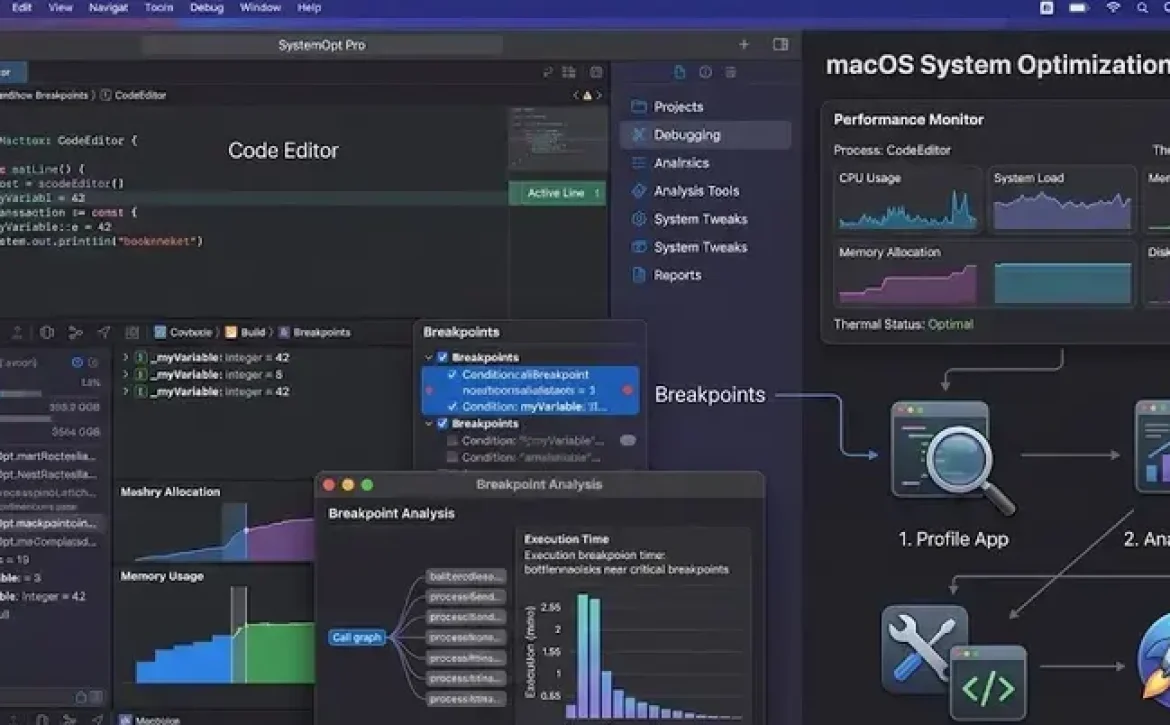
Generative AI in mobile app development is the application of AI systems capable of generating text, code, images, recommendations, and conversational outputs within mobile applications. These technologies help developers automate repetitive tasks, improve user engagement, and accelerate application deployment. As mobile ecosystems become more data-driven, generative AI is increasingly integrated into Android, iOS, and cross-platform development frameworks to enhance operational efficiency and user experiences.
Key Takeaways
- Generative AI automates coding, testing, and content generation in mobile applications.
- Mobile apps use AI for personalization, predictive analytics, and conversational support.
- Industries including healthcare and retail increasingly rely on AI-driven mobile systems.
- Regulatory compliance and data security remain critical implementation requirements.
- Future applications will integrate real-time, adaptive, and multimodal AI capabilities.
What Is Generative AI in Mobile App Development?
Generative AI in mobile app development involves machine learning models that create or modify digital outputs based on user input and data patterns. These systems can generate application code, chatbot responses, interface layouts, product recommendations, and multimedia content.
Common technologies include:
- Large language models (LLMs)
- Natural language processing (NLP)
- AI image generation systems
- Predictive recommendation engines
- Conversational AI assistants
Typical use cases include:
| Application Area | Example |
| Customer Support | AI chat assistants |
| UI/UX Design | Automated layout suggestions |
| Coding Assistance | Code generation and debugging |
| Personalization | Dynamic content recommendations |
| Accessibility | Real-time language translation |
Generative AI is often discussed alongside AI-powered app automation, intelligent chatbots, predictive analytics, and personalized mobile experiences.
What role does generative AI play in improving mobile app development efficiency?
Generative AI in mobile app development improves development workflows by automating coding, testing, and deployment activities.
Key improvements include:
- Automated Code Generation
AI coding assistants generate reusable code snippets and reduce manual programming effort. - Faster Application Testing
AI systems simulate user interactions to identify bugs and compatibility issues across devices. - Enhanced UI/UX Prototyping
Developers can create interface drafts and design suggestions automatically. - Smart Documentation
AI tools generate technical documentation, summaries, and API descriptions. - Predictive Maintenance
Applications can detect performance anomalies before failures occur.
Industry practices commonly integrate generative AI with Agile and DevOps methodologies for continuous development cycles.
Where is generative AI commonly used in mobile applications?
Generative AI in mobile app development supports multiple commercial and enterprise applications.
Major applications include:
- Personalized shopping recommendations
- AI-based virtual assistants
- Voice-enabled navigation systems
- Automated content generation
- Healthcare symptom-checking interfaces
- AI tutoring systems in education apps
- Financial forecasting dashboards
Sector-wise examples
| Industry | Generative AI Application |
| Healthcare | Medical assistant chatbots |
| Retail | Product recommendation engines |
| Banking | Fraud detection support |
| Education | Adaptive learning systems |
| Entertainment | AI-generated media content |
Many streaming and e-commerce platforms use generative AI to optimize user engagement and retention through behavioral analysis.
What benefits does generative AI bring to mobile app development?
Generative AI supports operational performance, technical innovation, and commercial growth in mobile apps.
Primary benefits
- Faster software development cycles
- Reduced operational costs
- Improved customer engagement
- Advanced personalization capabilities
- Better scalability for enterprise apps
- Enhanced multilingual support
- Increased developer productivity
Technical advantages
| Benefit | Impact |
| Automation | Reduces repetitive tasks |
| Scalability | Supports growing user demand |
| Data Analysis | Improves decision-making |
| Real-Time Interaction | Enhances user responsiveness |
Organizations increasingly use generative AI to support cloud-native and edge-computing mobile environments.
What Challenges Exist in Generative AI Mobile Applications?
Generative AI in mobile app development also introduces technical and regulatory challenges that organizations must manage carefully.
Common challenges
- Data privacy and security concerns
- Model bias and inaccurate outputs
- High computational requirements
- Intellectual property considerations
- Integration complexity with legacy systems
Important regulatory considerations
Developers often follow:
- General Data Protection Regulation (GDPR)
- California Consumer Privacy Act (CCPA)
- ISO/IEC software quality standards
- Mobile application security frameworks
Responsible AI governance requires transparency, data protection, and human oversight during deployment.
How Is Generative AI Shaping the Future of Mobile Apps?
Generative AI in mobile app development is expected to support increasingly adaptive and autonomous applications. Future mobile apps may combine multimodal AI, real-time analytics, and contextual reasoning to improve personalization and automation.
Emerging developments include:
- AI-generated augmented reality experiences
- Autonomous workflow assistants
- Hyper-personalized healthcare apps
- Voice-first mobile interfaces
- Real-time multilingual communication
Advancements in on-device AI processing are also reducing latency and improving privacy protection for mobile users.

Conclusion
Generative AI is revolutionizing mobile app development through smarter application design, deployment, and operational management. Its structured classifications—including conversational AI, predictive systems, and generative content engines—provide scalable frameworks for intelligent mobile ecosystems.
As organizations continue integrating AI-driven systems into healthcare and imaging technologies, related innovations such as AI based Retinal image Analysis are also contributing to more advanced digital healthcare solutions and diagnostic support platforms.
FAQs
What is generative AI in mobile app development?
Generative AI in mobile app development uses AI models to create code, content, interfaces, and automated responses within applications.
How does generative AI help mobile developers?
It automates coding, testing, documentation, and personalization tasks, helping developers improve efficiency and reduce development time.
Which industries use generative AI mobile applications?
Healthcare, retail, banking, education, entertainment, and logistics industries widely use generative AI applications.
What are the risks of generative AI in mobile apps?
Typical concerns include data privacy risks, inaccurate responses, compatibility challenges, and algorithmic bias.
Can generative AI improve user experiences in mobile apps?
Yes. Generative AI supports personalized recommendations, intelligent assistants, multilingual communication, and adaptive interfaces.
Sources
https://www.techaheadcorp.com/blog/how-generative-ai-is-transforming-mobile-app-experiences
https://newgensoft.com/in/resources/article/role-of-generative-ai-in-app-development
https://www.coursera.org/specializations/generative-ai-for-mobile-app-developers
https://softwaremind.com/blog/how-to-use-ai-in-mobile-app-development