Medical practices rely on software for much more than storing patient information. Today, it can support medical imaging, clinical documentation, appointment management, reporting, communication, billing, and clinical decision-making. As healthcare technology continues to change, the Future-Proof Medical Software a practice chooses needs to keep up.
This is why future-proof medical software matters. It does not mean buying the newest system on the market. It means choosing software that can adapt when your practice grows, new devices are introduced, or healthcare workflows change.
What Is Future-Proof Medical Software?
Future-proof medical software is built to remain useful over time. It should work with the systems you already use while leaving room for new technologies and changing requirements.
A future-ready platform should ideally offer:
- Easy integration with existing healthcare systems
- Support for different medical devices
- Secure patient data management
- Regular software and security updates
- Scalable storage and user capacity
- Flexible workflows
- Cloud, on-premises, or hybrid deployment options
- Support for emerging clinical technologies
The main idea is simple: your software should not become a limitation as your practice develops.
Why Does Future-Proof Medical Software Matter?
Replacing medical software can take considerable time and money. It may involve transferring patient records, configuring devices, training staff, and changing established workflows.
A system that can adapt can reduce the need for frequent replacement.
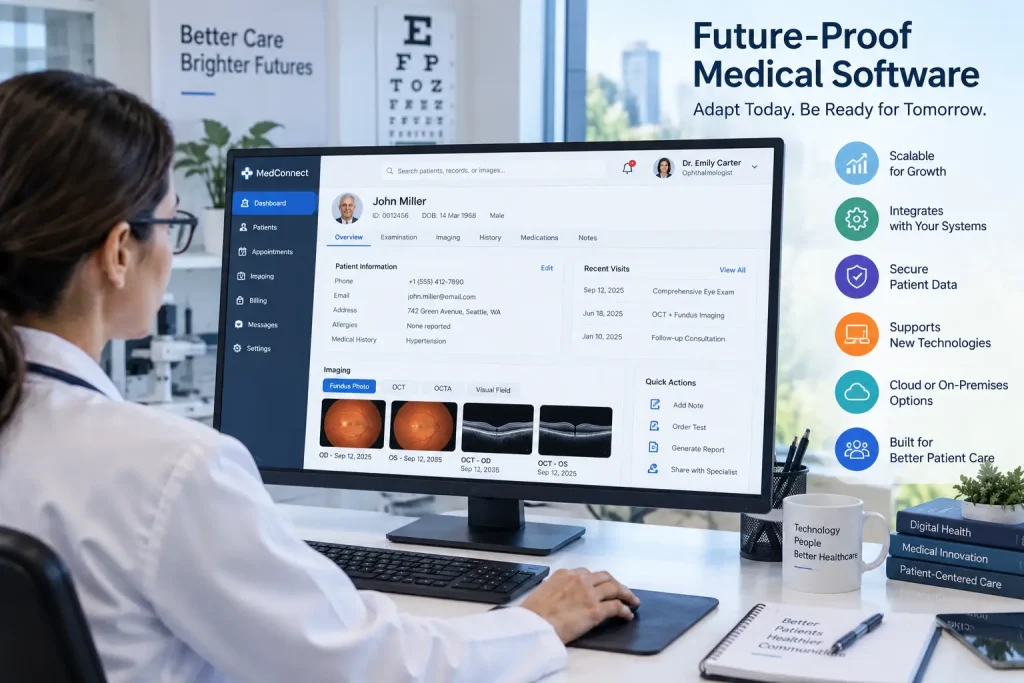
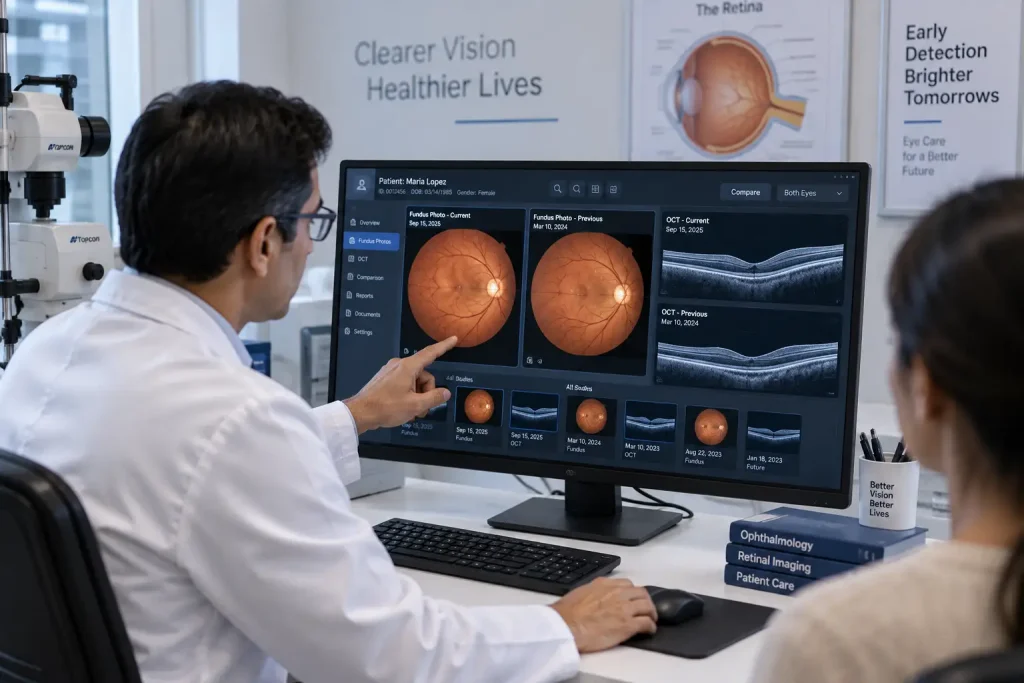
For example, an ophthalmology clinic may start by managing fundus photographs. Later, it may need to work with OCT images, compare examinations over time, share images with another specialist, or introduce AI-powered clinical decision-support. A flexible platform can make these changes easier to manage.
Also Read:AI Medical Software
Features to Look For Future-Proof Medical Software
1. Integration With Other Systems
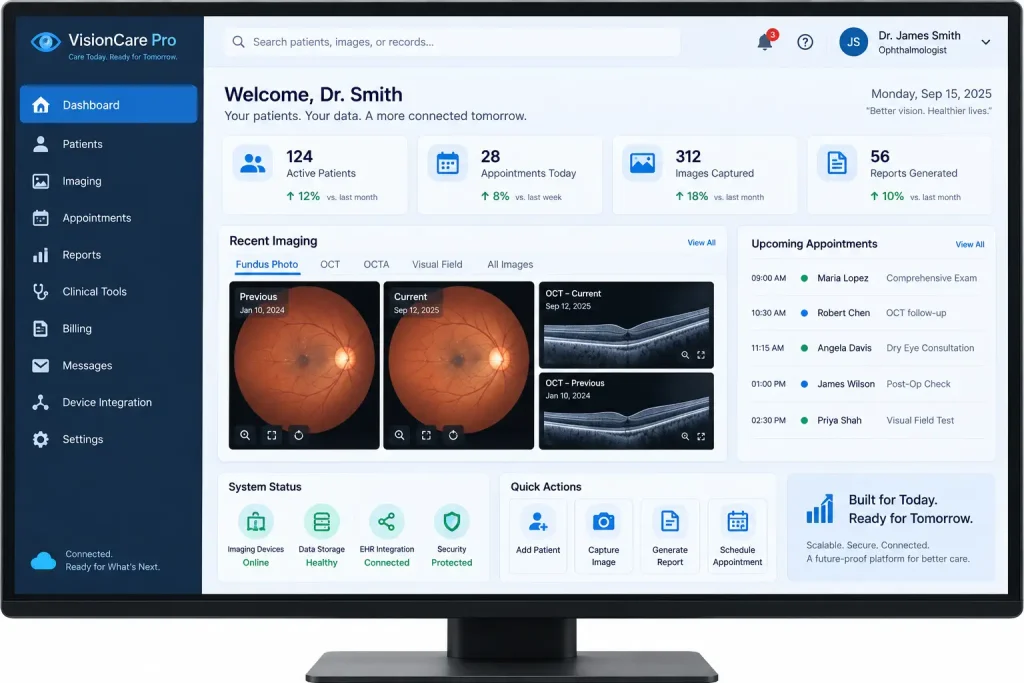
Most healthcare organizations use several systems rather than one application. Your medical software may need to communicate with EHRs, imaging devices, laboratory systems, billing platforms, or other clinical applications.
Before choosing a system, ask:
- What systems can it connect with?
- Does it support relevant healthcare data standards?
- Can new devices be added later?
- How difficult is integration?
Good integration can reduce repetitive work and make patient information easier to access.
2. Scalability
Your software should be able to grow with your practice.
Consider whether it can support:
| Requirement | What to Consider |
| More patients | Can the database handle growth? |
| More users | Can additional staff access the system? |
| Multiple locations | Can different clinics use the same platform? |
| More images | Can storage expand as needed? |
| New devices | Can additional equipment be integrated? |
Planning for growth is usually easier than replacing an entire system later.
3. Security and Data Protection
Medical information requires careful protection. Security should be considered before implementation, not after a problem occurs.
Look for features such as:
- User authentication
- Role-based access
- Encryption
- Audit logs
- Secure backups
- Data recovery options
- Regular security patches
Organizations should also make sure the software and its data practices fit the privacy and regulatory requirements that apply to them.
4. Medical Imaging Support
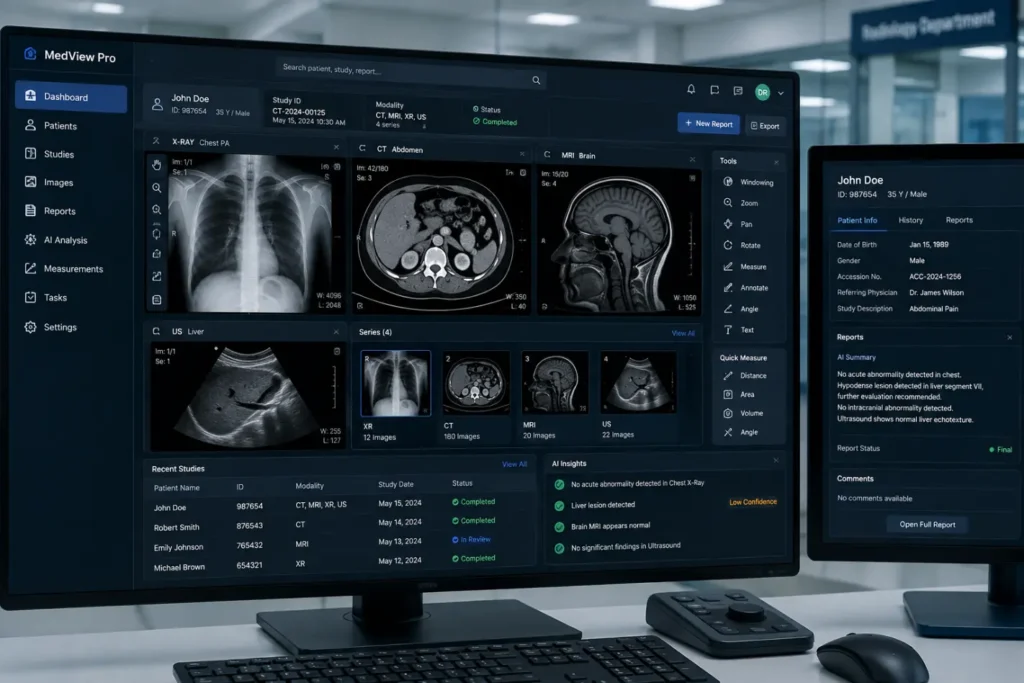
For radiology, ophthalmology, cardiology, and other imaging-focused specialties, image management is an important part of software selection.
A capable system should make it easy to:
- Store and retrieve images
- Compare current and previous examinations
- Organize patient imaging records
- Share information securely with authorized professionals
- Connect with compatible imaging equipment
This becomes particularly important as image volumes increase.
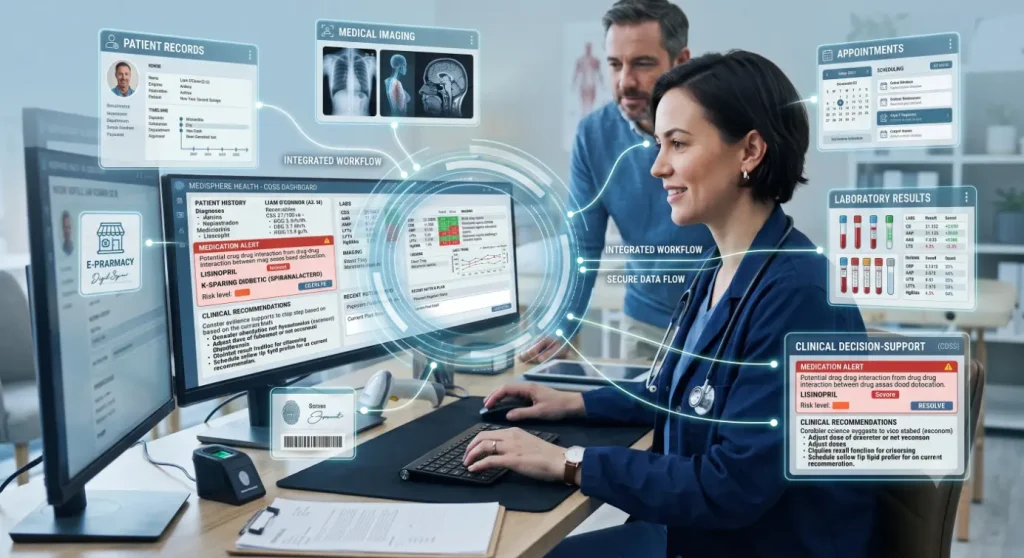
5. Room for Clinical Decision-Support
Healthcare software is increasingly incorporating AI-powered clinical decision-support. These tools can assist clinicians with tasks such as reviewing images, identifying patterns, or prioritizing cases that may require closer attention.
However, decision-support technology should complement professional judgment rather than replace clinical examination.
When evaluating software, consider whether its architecture can accommodate new clinical-support tools in the future.
How to Choose the Right System
Do not evaluate medical software only by looking at its current feature list. Think about how it may fit your practice several years from now.
Ask vendors about:
- Product updates and maintenance
- Technical support
- Integration options
- Data migration
- Security practices
- Storage expansion
- Device compatibility
- Training and onboarding
- Long-term costs
A system that works well today but cannot adapt tomorrow may create unnecessary costs later.
Final Thoughts
Future-proof medical software is less about predicting the future and more about being prepared for change. Healthcare practices should look for systems that can grow with their needs, connect with other technologies, protect patient information, and accommodate new clinical tools.
The right software should support your work today while leaving enough flexibility for what comes next.
FAQs
What is future-proof medical software?
It is software designed to adapt to changing healthcare needs, technologies, devices, workflows, and organizational growth without requiring frequent replacement.
Does future-proof medical software need AI?
No. AI-powered clinical decision-support can be useful, but future-proofing also depends on integration, scalability, security, maintainability, and flexibility.
Is cloud-based medical software more future-proof?
Not necessarily. Cloud, on-premises, and hybrid systems can all be suitable. The important question is whether the chosen approach fits the organization’s security, operational, and technical requirements.
Why is interoperability important in medical software?
Interoperability allows different healthcare applications and devices to exchange information, which can help reduce duplicate data entry and support connected clinical workflows.
How can a clinic prepare for future technology?
Start by choosing software with flexible integration, scalable storage, regular updates, strong security, and support for new devices and clinical technologies.