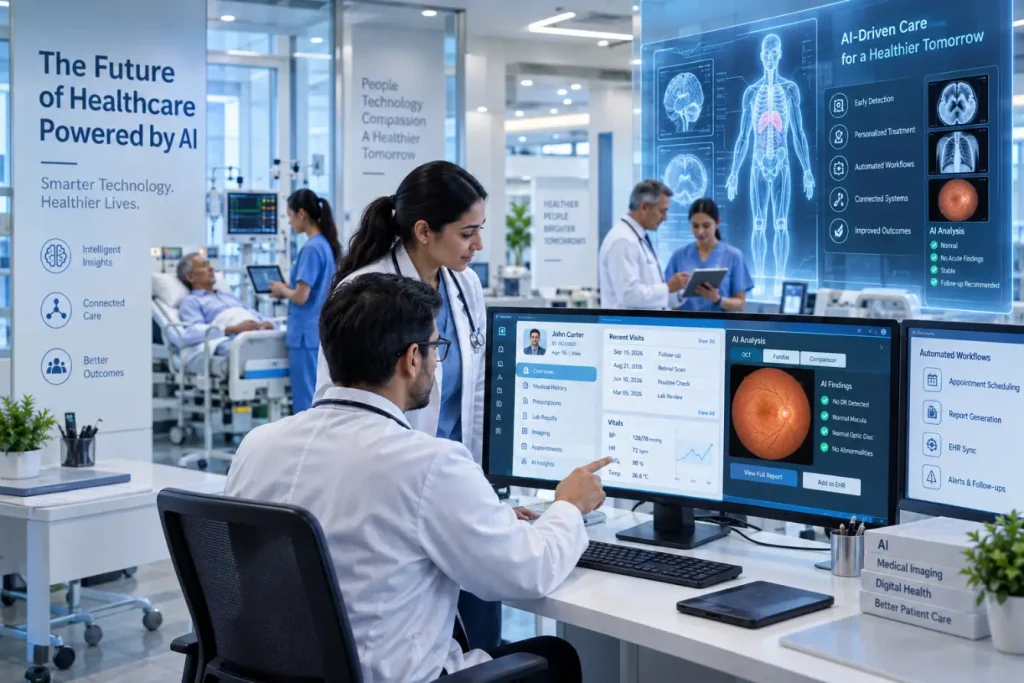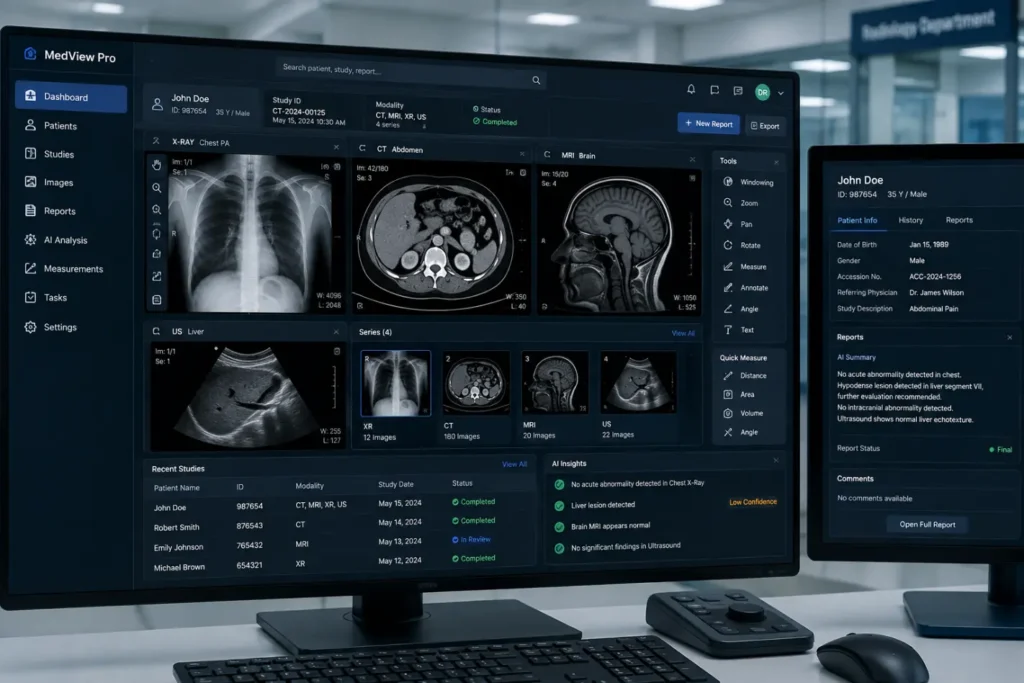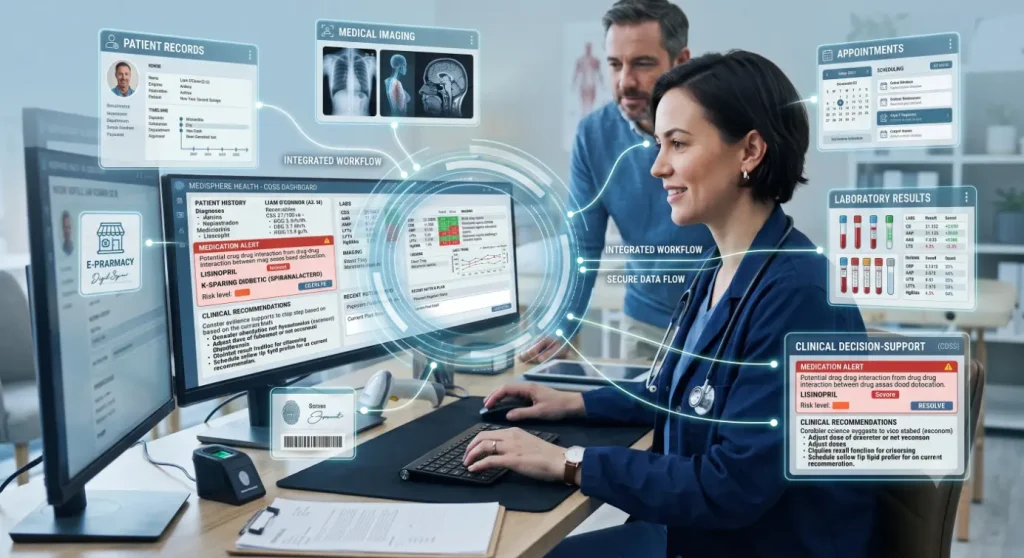
Medical software development for startups is the work of designing, building, and launching healthcare software on a tight budget while meeting strict privacy, safety, and regulatory rules. Unlike a typical app launch, a bug can delay patient care, a leaked record can sink a young company, and a missed approval can freeze a release for months. This guide explains what founders should build first, which regulations apply, how to move from idea to a safe MVP, and what it realistically costs.
Key Takeaways
- Medical software development for startups starts with one question: will regulators see your product as a medical device?
- HIPAA applies as soon as you handle patient data for a provider or insurer, and a signed business associate agreement is part of that.
- A focused healthtech MVP that solves one clinical problem beats a feature-heavy first release.
- Interoperability and security should be designed in from the start, not bolted on before launch.
- Budgets vary widely, and scope, integrations, and regulatory work drive cost more than platform choice.
- The right medical software development company brings healthcare experience, not just coding skill.
Why Medical Software Development for Startups Works Differently
A normal app can ship fast, break something, and get patched by Friday. Healthcare does not forgive that rhythm. A confusing screen can lead to a charting error, a weak login can expose thousands of records, and a missing approval can stall a launch.
Your users are different too. Clinicians work under heavy time pressure and will drop any tool that adds extra clicks. Patients may be unwell, anxious, or not very comfortable with technology. Buyers such as hospitals and clinics run long security and procurement reviews before they let a new vendor near patient data.Medical software development for startups also requires a clear understanding of clinical workflows, user expectations, and data security to create solutions that healthcare professionals can trust.
On top of that, a startup has limited runway. In healthcare software development, the practical answer is to plan for safety, privacy, and speed together from the beginning rather than treating compliance as a final polish.
Types of Medical Software Startups Commonly Build
Most companies working on medical software development for startups begin in one of these areas:
- Electronic health records (EHR/EMR) and practice management tools
- Telemedicine and virtual care platforms
- Remote patient monitoring connected to wearables and home devices
- Mobile health apps for chronic care, mental health, and medication adherence
- Clinical decision support tools that flag risks or suggest next steps
- Medical imaging and AI-assisted diagnostics
- Digital therapeutics, where the software itself delivers treatment
- Billing, claims, and revenue cycle tools
- Companion apps for connected medical devices
- Lab, pharmacy, and inventory systems
EChoosing the right product category is an important part of medical software development for startups, as it helps founders define their development priorities, budget, and compliance requirements.
Each category carries a different regulatory load. A scheduling tool and a diagnostic algorithm are both software, but they live in very different worlds. If you are exploring healthcare app development or a patient-facing product such as telemedicine app development, decide early which category your custom medical software really belongs to.
Then pick one problem and solve it well. Startups that try to replace an entire hospital system in version one rarely finish.
Check Whether Your Software Counts as a Medical Device
In medical software development for startups, regulation is the first thing to settle. Regulators look at what your software is meant to do, not at the technology behind it. If it is intended to diagnose, treat, prevent, or mitigate a condition, it may be regulated as a medical device.
The FDA treats stand-alone software with a medical purpose as one of three software categories linked to medical devices, so reading its overview of Software as a Medical Device early can save you from expensive surprises later.
Not everything is regulated. Scheduling, billing, and general wellness tools often fall outside device rules, and certain clinical decision support functions can be excluded under the 21st Century Cures Act when they meet strict conditions. The details matter, so write a clear intended-use statement and test it against the official criteria.
If your product is a device, risk decides the route. Lower-risk software may qualify for a 510(k) clearance or a De Novo request, while higher-risk products face the more demanding premarket approval process. Asking the FDA for early feedback through its pre-submission process can clarify the path before you commit budget.
A few quick examples show how the line gets drawn:
| Type of software | Likely regulatory position |
| Appointment scheduling or billing tool | Usually outside device rules |
| Software that only transfers, stores, converts, or displays data from medical devices | FDA treats this as its own category, called medical device data systems |
| ECG or X-ray image analysis software | Software as a Medical Device |
| Engine that recommends a diagnosis or treatment | Likely a device, unless it meets the clinical decision support conditions |
These are general examples. Your intended-use statement decides, not the label on the product.
Two more FDA points matter if you plan AI features or a connected product. The FDA finalized guidance in December 2024 on predetermined change control plans, which let makers of AI-enabled device software describe planned model updates in advance. And for products that count as cyber devices, section 524B of the FD&C Act requires cybersecurity information in the submission, so the FDA can refuse one that lacks it.
Selling abroad adds another layer. The EU Medical Device Regulation, for example, uses its own classification rules, so map your target markets before you design the product.
Compliance and Security Essentials
Compliance feels heavy for a small team, but most of it becomes manageable once you know which rules actually apply to you.For medical software development for startups, identifying these requirements early can prevent compliance issues and reduce unexpected development costs.
| Requirement | Applies when | What it means for your build |
| HIPAA | You handle protected health information for a covered entity | Encryption, access controls, audit logs, risk assessment, breach procedures |
| Business associate agreement | You or your vendors store or process patient data | Signed contracts with customers and with hosting providers or other subcontractors |
| FDA QMSR and ISO 13485 | Your software is a regulated medical device | Quality management covering design controls, documentation, and corrective actions |
| IEC 62304 | You develop medical device software | Defined software lifecycle, traceability, and maintenance processes |
| ISO 14971 | Your product is a medical device | Documented risk management from design through release |
| GDPR and state privacy laws | You serve EU residents or users covered by state health privacy rules | Consent, data access rights, and retention limits |
| HL7 and FHIR | You exchange data with EHRs and labs | Standard interfaces for sharing records |
| SOC 2 or ISO/IEC 27001 | Enterprise buyers ask for security proof | Independent evidence of your security practices |
HIPAA deserves special attention. If you create, receive, store, or transmit patient data for a provider or insurer, you are likely a business associate. That means signing business associate agreements with your customers and with any subcontractor that touches the data, including your cloud host. HHS guidance is clear that a cloud provider maintaining electronic patient data on your behalf needs a BAA as well.
Security should run through the whole build rather than sit at the end. Encryption in transit and at rest, role-based access, multi-factor login, and detailed audit logs are the baseline. Teams that offer HIPAA compliance services or security reviews can help you document these controls in the format hospital buyers and investors expect.
If your software is a regulated device, quality management changes too. The FDA’s Quality Management System Regulation took effect on February 2, 2026, and it builds on ISO 13485:2016. Build your documentation habits around it from the first sprint.
A Step-by-Step Process for Medical Software Development for Startups
A reliable process keeps you from burning runway on the wrong thing. This sequence works for most teams.A structured approach to medical software development for startups helps teams manage resources effectively while keeping product quality, patient safety, and business goals aligned.
1. Validate the clinical problem
Talk to the people who will use and pay for the product: clinicians, front-desk staff, billing teams, and patients. Confirm the pain is real, frequent, and worth solving. Also work out who signs the contract, because the buyer is often not the user.
2. Settle your regulatory strategy
Use your intended-use statement to decide whether you are building a regulated device. Bring in a regulatory advisor at this stage rather than after launch, because the answer changes your timeline, team, and documentation.
3. Scope a focused MVP
A healthtech MVP should prove one claim: that your product solves one problem for one type of user. Define a single workflow, cut everything else, and write down what you are deliberately leaving for version two. A partner offering MVP development services built around short discovery sprints can help you hold that line.
Not sure which stage you are at? A proof of concept tests whether something is technically possible, a prototype tests how it looks and feels, and an MVP tests whether real users will rely on it.
4. Design with clinicians, not just for them
Healthcare interfaces must be calm, clear, and hard to misuse. Test prototypes with real clinicians early, keep clicks to a minimum, and follow accessibility guidelines so patients with limited vision or mobility can use the product. Strong UI/UX design for healthcare reduces training time and lowers the chance of errors.
5. Plan architecture and integrations
Decide where data lives, how it moves, and which systems you must connect to. Integration with hospital records is often the slowest part of a healthcare project, and many hospital deals depend on it. A standards-based approach using FHIR keeps later EHR integration services simpler and cheaper.
6. Build and integrate
Work in short sprints with working demos so clinicians can react before features harden. Keep real patient data out of development and test environments, and use synthetic data instead.
7. Test and validate
Go beyond bug hunting. Run functional, performance, accessibility, and usability tests, plus penetration testing for security. Regulated software also needs documented verification and validation. Software testing and QA services with healthcare experience can keep this rigorous.
8. Pilot with real users
Launch to one clinic or a small patient group first. Track outcomes that matter to buyers, such as time saved, errors avoided, or patient engagement. A strong pilot also becomes your best sales asset.
9. Launch, monitor, and update
After release, watch performance, security alerts, and user feedback. Set up a patch process and change control, because for regulated software some updates may need regulatory review before they go live.
The Team You Need Beyond Developers
Code is only one part of a safe health product. Even a small founding team should cover these roles, whether in-house, part-time, or through advisors:
- A clinical advisor who still sees patients and can tell you when a workflow is unrealistic
- A product owner who protects the MVP scope
- A regulatory and quality lead who owns the intended-use statement and documentation
- A security and privacy lead who owns HIPAA controls and vendor agreements
- A UX researcher or designer with healthcare experience
- QA engineers who test beyond the happy path
- Developers comfortable with FHIR, encryption, and audit requirements
Choosing a Tech Stack for Healthcare Software
In healthcare software development there is no single best stack. Pick technology your team can maintain, that scales with demand, and that supports compliant hosting.
- Front end: React or Angular for provider portals and dashboards
- Mobile: Swift, Kotlin, React Native, or Flutter, depending on budget and platform priorities
- Back end: Node.js, Python, .NET, or Java with secure, well-documented APIs
- Database: PostgreSQL or similar, with field-level encryption for sensitive data
- Cloud: AWS, Azure, or Google Cloud in HIPAA-eligible setups with a signed BAA, plus cloud and DevOps services to automate monitoring and backups
- Interoperability: FHIR with USCDI data classes for modern exchange, HL7 v2 for older hospital interfaces, and coding systems such as SNOMED CT, LOINC, RxNorm, ICD-10, and CPT
AI features need extra care. Training data quality, bias, explainability, and ongoing validation all affect safety, and a feature that influences diagnosis or treatment can change your regulatory status. If you send patient data to a third-party AI service, that vendor needs a BAA as well.
Cost of Medical Software Development for Startups
There is no fixed price. The ranges below come from cost guides that healthcare software development firms published in 2026, and they broadly agree with one another. Still, they are estimates, not quotes, and rates in the United States are generally higher than in lower-cost regions.
| Stage | What it usually includes | Indicative range (USD) |
| HIPAA-ready MVP | One core workflow, limited integrations | $40,000 – $100,000 |
| Mid-complexity product | Several user roles, reporting, and one or two integrations | $100,000 – $250,000 |
| EHR-integrated or enterprise platform | Full interoperability, enterprise security, high availability | $250,000 – $500,000+ |
| Regulated device software (SaMD) | Adds a quality system, clinical evidence, and an FDA pathway | Often starts around $250,000 |
A few factors move the number more than anything else:
- Scope and the number of features
- The number of platforms (iOS, Android, web)
- Depth of EHR and third-party integrations
- Compliance and regulatory work
- AI or analytics features
- Team location and experience
Plan for upkeep as well. Security patches, hosting, compliance reviews, and feature updates continue long after launch, and custom medical software needs a maintenance budget from day one. To keep spending under control, narrow the first release, reuse HIPAA-eligible cloud services, and phase your integrations instead of building them all at once.
Making Your Product Ready for Investors and Hospital Buyers
Investors and health systems judge you on more than features. They want proof that the product is safe, that someone will pay for it, and that you will still be standing in two years. Prepare these items early:
- Security and privacy documentation, including a risk assessment, policies, and signed BAAs
- Architecture notes that show how data flows and where it is stored
- Pilot results that show a measurable outcome, such as time saved or errors avoided
- A clear answer to who pays: a provider licence, a per-seat subscription, a payer contract, or reimbursement
- A regulatory roadmap that says what you will file and when
- An integration roadmap for the EHRs your buyers use

Common Mistakes Startups Make
Most failures in medical software development for startups trace back to a handful of avoidable errors:
- Building first and checking regulation later, which can force a costly redesign
- Treating HIPAA as a last-minute checklist instead of a design principle
- Overbuilding the healthtech MVP with features nobody asked for
- Ignoring clinical workflow, so the product adds work instead of removing it
- Leaving EHR integration until the end, even though buyers often require it
- Keeping weak documentation that fails investor or hospital due diligence
- Forgetting that maintenance, updates, and security monitoring never stop
How to Choose a Medical Software Development Company
Whether you hire in-house or outsource, healthcare experience matters more than the lowest hourly rate. A capable medical software development company should be able to explain how it protects patient data, not just show you polished screenshots. Building custom medical software is a long relationship, so choose a team you can talk to honestly.
- Healthcare work you can verify, with references from companies at a similar stage
- Working knowledge of HIPAA, FDA expectations, IEC 62304, and FHIR
- Willingness to sign a BAA and a clear approach to security
- Full ownership of source code and documentation passing to you
- A transparent process with sprints, demos, and direct access to engineers
- Post-launch support and maintenance options
Ask whether the team will challenge your scope. A strong custom software development partner pushes back on feature creep early because it protects your budget and your timeline.
Where Healthcare Software Is Heading
A few trends are shaping what buyers will expect over the next few years:
- AI-assisted documentation, triage, and imaging analysis, with growing regulatory attention
- Remote monitoring and hospital-at-home models
- Stronger interoperability expectations between systems
- More patient control over personal health data
None of these remove the need for sound foundations. Teams that get privacy, security, and clinical validation right will adapt fastest.
Pre-Launch Checklist for Healthtech Founders
Run through this list before your first real patient or clinician touches the product:
- Intended-use statement written and reviewed by a regulatory advisor
- Risk assessment completed and documented
- BAAs signed with customers and every vendor that touches patient data
- Encryption, role-based access, multi-factor login, and audit logs verified
- Penetration test finished and critical findings fixed
- Real clinicians have tested the main workflow
- Accessibility checks passed
- Breach response plan and patch process in place
- Monitoring, support channels, and rollback steps ready
Frequently Asked Questions
How much does medical software development for startups cost?
Published 2026 estimates put a HIPAA-ready MVP at roughly $40,000 to $100,000, a mid-complexity product at $100,000 to $250,000, and an EHR-integrated enterprise platform at $250,000 to $500,000 or more. Scope, integrations, and regulatory needs decide where you fall. Ask for a discovery-phase estimate before committing to a full build.
How long does it take to build a healthtech MVP?
Published estimates put a basic MVP at about three to six months, and closer to six to nine months once EHR integration is involved. AI features or regulatory work can extend that further, so ask for a phased roadmap with clear milestones.
Does my medical app need FDA approval?
Only if it meets the definition of a medical device. Many scheduling, administrative, and wellness apps do not. For software that does qualify, the FDA uses clearance, De Novo authorization, or approval depending on risk. Confirm your status early with a regulatory advisor.
Is HIPAA compliance mandatory for health startups?
It is mandatory when you handle protected health information for a covered entity such as a provider or health plan, which makes you a business associate. Consumer apps outside HIPAA are not rule-free, though. The FTC still polices unfair or deceptive data practices, and a growing number of state privacy laws, such as Washington’s My Health My Data Act, can apply.
What is the best tech stack for medical software?
There is no universal answer. Choose proven tools your team can support, host on HIPAA-eligible cloud services with a BAA, and use FHIR or HL7 for integrations. For medical software development for startups, maintainability and security usually matter more than the newest framework.
Bottom Line
Medical software development for startups rewards teams that stay disciplined. Start with one clinical problem, confirm early whether regulators see your product as a device, and build privacy and security into the foundations instead of adding them later.
From there, keep the first release small, test it with real clinicians, and budget for life after launch. Choose partners who understand healthcare as well as code, and let evidence from a real pilot guide what you build next.
Do those things well, and medical software development for startups stops feeling like a maze and becomes a repeatable path from idea to trusted product.