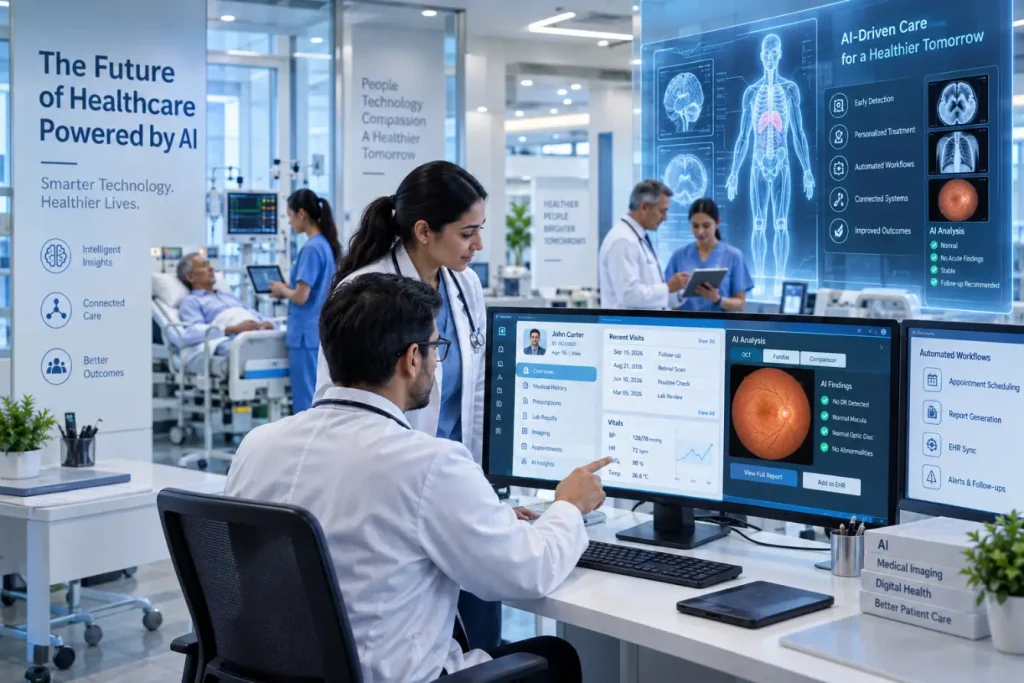
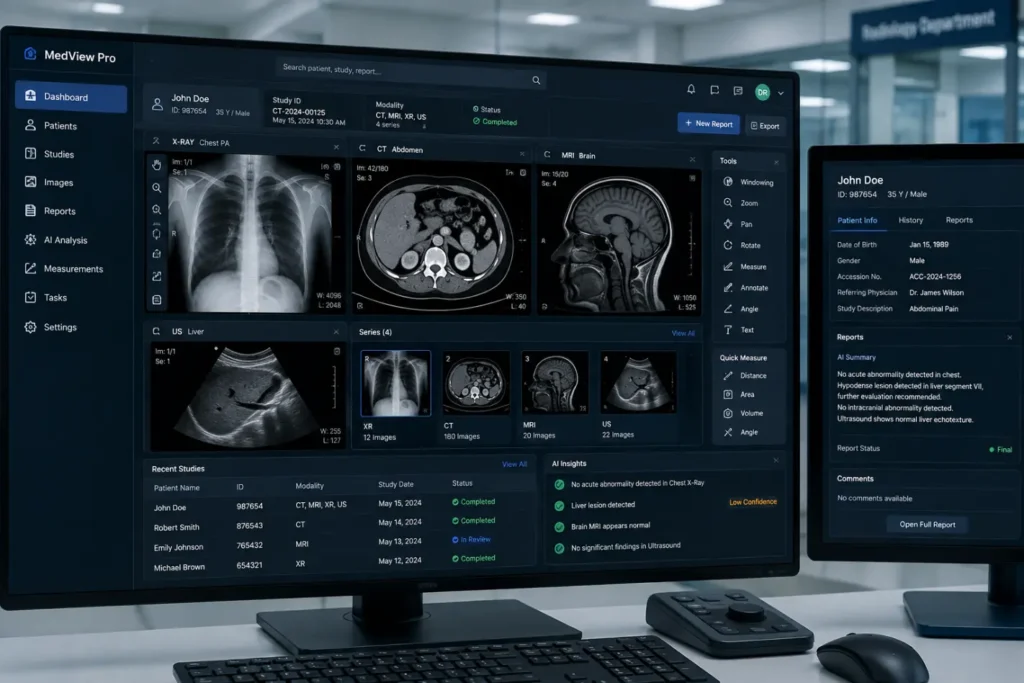
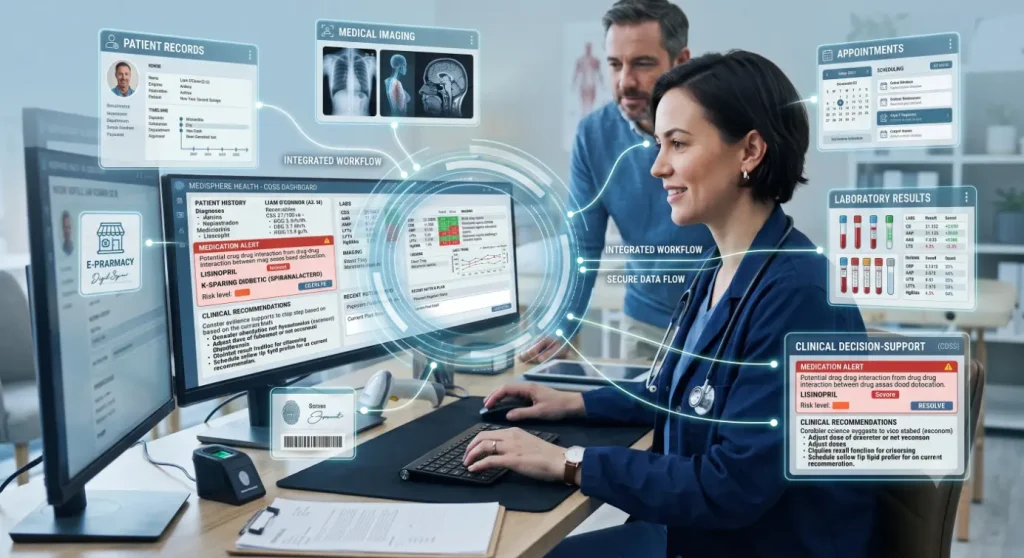
The most popular medical software helps healthcare providers manage patient records, appointments, billing, prescriptions, communication, and clinical workflows. These digital solutions are used by clinics, hospitals, laboratories, and other healthcare organizations.
Medical software is no longer limited to electronic patient records. Modern platforms can combine clinical, administrative, financial, and communication functions. Choosing the right system depends on the organization’s size, specialty, workflow, budget, and technology needs.
Table of Contents
Most Popular Medical Software Categories
The most popular medical software falls into several categories. Each category addresses different healthcare requirements, from clinical documentation to financial management and patient communication.
1. Electronic Health Record Software
Electronic Health Record (EHR) software contains all the data of a patient in digital form. The data includes the medical history of the patient, diagnosis, medicines prescribed, any allergic reactions that they have, lab results, and other clinical data.
The EHR system allows authorized personnel in the health care sector to have access to the necessary patient data during treatment.
2. Electronic Medical Record Software
The Electronic Medical Record (EMR) software contains the records of patients in digital form in the medical practice. This software can assist doctors in managing the clinical data of patients.
The EMR software consists of scheduling appointments, patient tracking, digitized prescription writing, clinical notes, and record management.
3. Practice Management Software
Practice management software focuses on the administrative side of healthcare. It can help practices manage appointments, patient registration, billing, claims, payments, and reporting.
4. Medical Billing Software
Medical billing software helps healthcare organizations manage charges, claims, payments, and revenue-related processes. Depending on the system, it may support insurance eligibility checks, claim submissions, payment tracking, and denial management. Automating repetitive billing tasks can reduce manual work.
5. Telemedicine Software
Telemedicine software assists health care professionals in performing consultations through remote means. Some typical functions of telemedicine software are video consultation, scheduling, digital communication, electronic prescription, and clinical documentation.
6. E-Prescribing Software
This type of software is useful for health care professionals in creating and sending prescriptions through electronic means. This may help eliminate dependency on written prescriptions.
E-prescribing software may either be a stand-alone software or a part of an EHR/EMR software.
7. Patient Engagement Software
Patient engagement software assists health care professionals in communicating with their patients. Some common functions of this software include patient portals, scheduling reminders, online forms, and messaging.
Features to Look for in Medical Software
The most popular medical software usually offers features that address several clinical and administrative needs.
- Patient record management is essential for storing and retrieving healthcare information. Appointment scheduling helps staff organize provider calendars and reduce scheduling conflicts.
- Billing and claims management can support financial workflows. Telemedicine features can help providers deliver remote consultations.
- Security features are equally important. Healthcare systems handle sensitive patient information, so organizations should evaluate authentication, access controls, encryption, audit trails, and applicable compliance requirements.
- Integration is another important consideration. Software that connects with laboratories, pharmacies, billing platforms, medical devices, or other healthcare systems can reduce information silos.
Benefits of Using Medical Software
The most popular medical software can help healthcare organizations move away from disconnected manual processes.
- Healthcare providers and administrative teams can access patient information more efficiently when records are properly organized.
- Automation can reduce repetitive data entry. It can also help staff spend less time on routine administrative activities and more time supporting patients.
- Integrated software can provide better visibility across different parts of a healthcare organization. This can be particularly useful for practices managing large patient volumes or multiple locations.
How to Choose Medical Software
The most popular medical software can be used by different healthcare facilities according to their needs.
- Larger facilities will, on the other hand, have greater needs like those that include different departments, comprehensive reporting options, integration with other programs, user roles, and many other features.
- The first step will be to assess the main needs of the facility. List down the procedures that need to be improved upon.
- The ease of use of the software is another aspect that needs consideration. A very complex software can result in difficulty when it comes to training and adopting it.
- Scalability is another key factor that should be considered by growing practices. The software should be capable of supporting growth in terms of more users, physicians, and patients.
- Price considerations are essential when choosing a program.
Importance of Security and Integration
The most popular medical software often handles highly sensitive healthcare information. Security should therefore be considered before software adoption.
- There is need to consider how a particular software provider secures its data and handles user access. Role based access and logs could help organizations limit access to sensitive data.
- It is important to consider integration as well since healthcare data usually exists in many platforms. Integration of software could make the exchange of data easier and eliminate redundant data entry.
- Confirm the capability of the software to comply with standards and regulations in your healthcare environment.
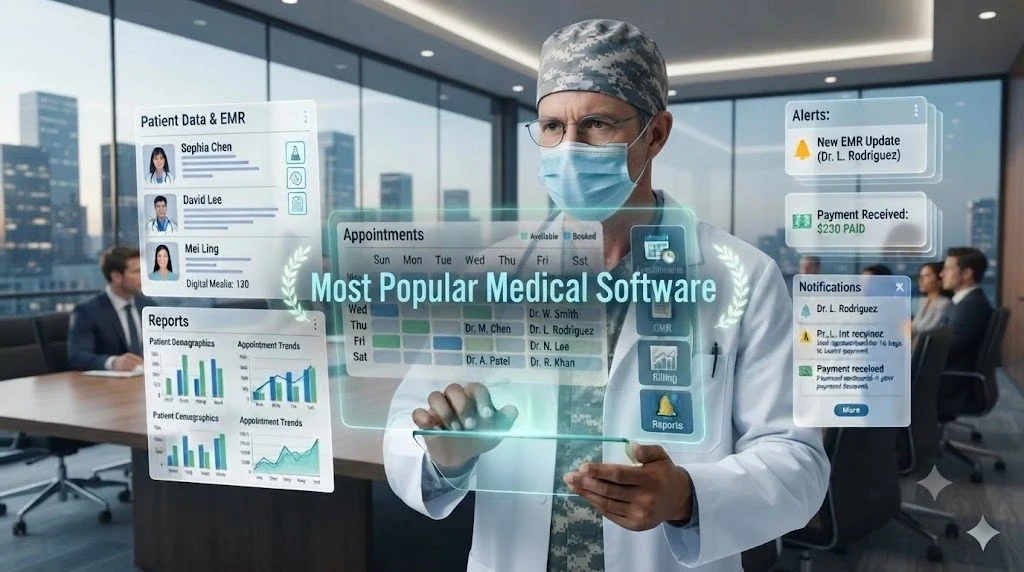
Future of Medical Software
Popular medical software is more likely to integrate the cloud technology, automation, artificial intelligence, telehealth, and data analytics.
Artificial intelligence can help in such areas as documentation, information searching, and administrative automation. Cloud technology could provide authorized personnel with access to healthcare software at different locations.
With the advancements mentioned above, the world will have more integrated healthcare digital platforms. At the same time, security, data quality, integration, usability, and other issues should be considered before implementing any technology.
Wrapping Up
Some of the most popular medical software include EHR, EMR, practice management software, billing software, telemedicine software, e-prescribing, and patient engagement software.
In choosing medical software, one should pay attention not only to its popularity but also to functionality, security, integration, scalability, usability, and price. A medical software database could simplify the process for the user to find and compare the software needed.
Frequently Asked Questions
1. What is the most commonly used medical software?
EHR and EMR systems are widely used for managing digital patient records. Practices may also use billing, scheduling, e-prescribing, and telemedicine software.
2. What software do most doctors use?
Doctors commonly use EMR or EHR platforms for patient records, along with scheduling, e-prescribing, billing, and communication tools.
3. What are the main types of medical software?
Major types include EHR, EMR, practice management, medical billing, telemedicine, e-prescribing, patient engagement, and AI-powered clinical software.
4. How do I choose medical software?
Look for security, integration, usability, scalability, pricing, support, and compliance features before selecting a medical software solution.