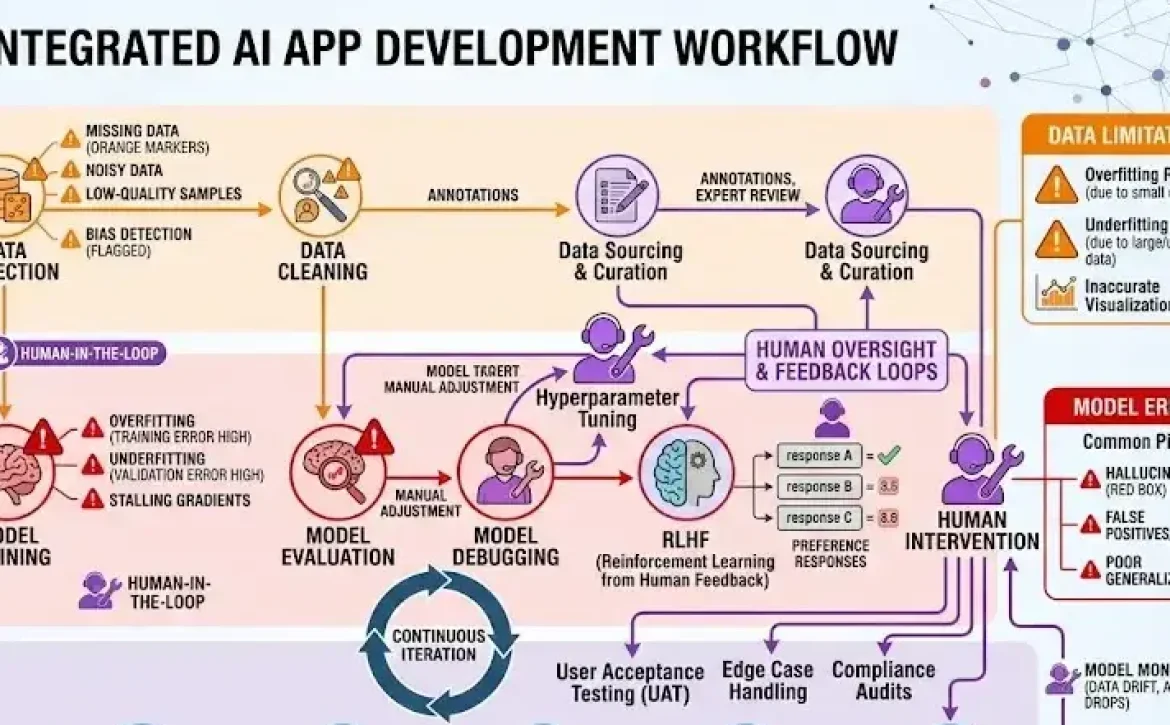
What is backtracking in software debugging? Backtracking in software debugging is a systematic method of tracing a program’s execution path backward from a detected failure, error message, or incorrect output to locate the original source of the problem. It helps developers understand how a fault occurred and is particularly useful in complex software systems where errors may originate far from where they become visible.
Key Takeaways
- Backtracking traces software execution backward from a failure point.
- It helps identify the root cause of defects systematically.
- The technique is widely used in software testing and maintenance.
- Backtracking differs from induction, deduction, and brute-force debugging methods.
- Interactive debugging tools often enhance backtracking investigations.
- Understanding execution flow is critical for effective backtracking.
- The method improves troubleshooting accuracy in complex software systems.
What Is Backtracking in Software Debugging?
What is backtracking in software debugging, and how does it work in practice? It involves starting from the point where an error is observed and moving backward through the program’s execution history until the underlying defect is found.
Key characteristics include:
- Begins at the failure point
- Traces data and control flow backward
- Identifies the sequence of events causing the defect
- Helps isolate root causes efficiently
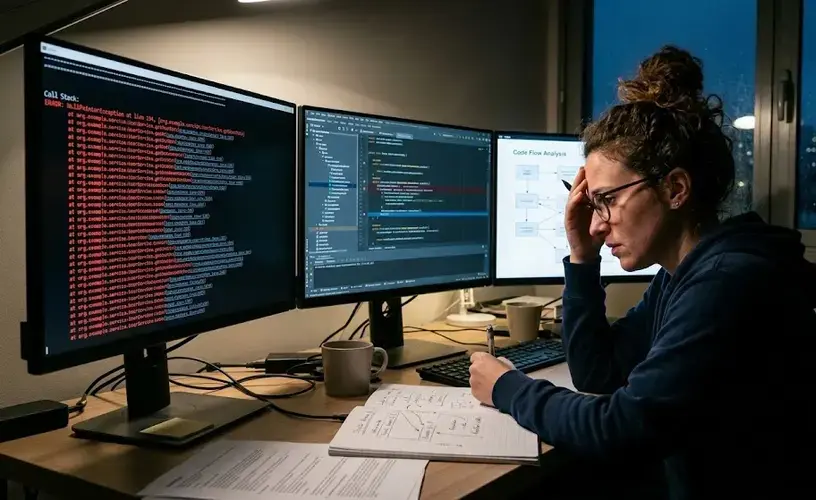
This approach is commonly used when logs, stack traces, or debugging tools provide evidence of where a failure occurred.
Example of Backtracking in Software Debugging
| Step | Observation |
| 1 | Application displays incorrect invoice total |
| 2 | Developer checks calculation module |
| 3 | Finds incorrect tax value passed to function |
| 4 | Traces tax value to database retrieval process |
| 5 | Discovers outdated tax rate stored in database |
The defect is identified by tracing the issue backward from the visible error.
What Is Debugging in Software Development?
What is backtracking in software debugging becomes easier to understand when debugging itself is defined. Debugging is the process of identifying, analyzing, and correcting software defects that cause unexpected behavior.
Common debugging objectives include:
- Eliminating runtime errors
- Correcting logic flaws
- Improving system reliability
- Verifying software functionality
Debugging is a standard activity throughout the software development lifecycle.
What Are the Steps in Software Debugging?
What is backtracking in software debugging can be understood through the typical debugging workflow.
Standard Debugging Process
- Detect the error.
- Reproduce the problem.
- Collect diagnostic information.
- Apply backtracking techniques.
- Identify the root cause.
- Fix the defect.
- Verify the solution through testing.
Following a structured process helps reduce the risk of introducing new defects during correction.
Why Do We Need Debugging in Software?
What is backtracking in software debugging is important because software failures can affect performance, security, reliability, and user experience.
Benefits of debugging include:
- Improved software quality
- Faster issue resolution
- Reduced maintenance costs
- Better system stability
- Increased customer satisfaction
In safety-critical industries such as healthcare, aerospace, and finance, effective debugging is essential for dependable system operation.
Related topics often discussed alongside backtracking include stack tracing, breakpoint debugging, code profiling, and root cause analysis.
How Does Backtracking Differ From Other Debugging Methods?
What is backtracking in software debugging compared with other approaches? Several debugging methods are used depending on the nature of the defect.
| Method | Description |
| Backtracking | Traces execution backward from failure |
| Brute Force | Uses logs, prints, and monitoring extensively |
| Induction | Draws conclusions from observed evidence |
| Deduction | Uses reasoning from known system behavior |
Backtracking is particularly effective when the failure point is known but the source of the defect is unclear.
Debugging Methods in System Software
System software developers often use:
- Backtracking
- Breakpoint analysis
- Memory inspection
- Log analysis
- Stack trace examination
These methods help diagnose low-level system and performance issues.
Debugging by Induction in System Software
Debugging by induction involves collecting observations from program execution and identifying patterns that suggest the cause of a defect. Unlike backtracking, it focuses on evidence-based reasoning rather than tracing execution paths backward.
What Is Interactive Debugging Systems in System Software?
Interactive debugging systems allow developers to inspect and control program execution in real time.
Common capabilities include:
- Setting breakpoints
- Monitoring variables
- Executing code step-by-step
- Viewing memory contents
- Analyzing call stacks
Interactive debugging tools often complement backtracking techniques.
What Are the Advantages and Limitations of Backtracking?
What is backtracking in software debugging also involves understanding its strengths and constraints.
Advantages
- Efficient root cause identification
- Structured investigation process
- Useful for complex applications
- Supports systematic troubleshooting
Limitations
- Time-consuming in large systems
- Requires detailed execution information
- Less effective when failure points are unknown
- May be difficult in distributed environments
Conclusion
Backtracking remains one of the most effective techniques for tracing software failures to their source and identifying root causes systematically. Understanding its relationship with other debugging approaches helps developers select the most appropriate troubleshooting strategy. For broader diagnostic practices, it is also useful to study various software tools used for debugging and how they support modern software maintenance.
FAQ
What is backtracking in software debugging?
Backtracking in software debugging is a method of tracing program execution backward from an observed error to locate the original cause of the defect.
What is an example of backtracking in software debugging?
A developer investigating an incorrect calculation traces the faulty output backward through functions and data sources until the defective input or logic is found.
Is backtracking the same as the backtracking algorithm?
No. A backtracking algorithm is a problem-solving technique used in computing, while backtracking in debugging is a fault-isolation method used to locate software defects.
When is backtracking most useful?
It is most useful when the failure point is known but the root cause remains unclear.
What tools support backtracking in debugging?
Debuggers, stack trace analyzers, logging systems, memory inspection tools, and integrated development environments (IDEs) commonly support backtracking activities.
Sources
- https://www.geeksforgeeks.org/dsa/introduction-to-backtracking-2/
- https://www.acte.in/overview-of-backtracking-algorithm
- https://www.ranorex.com/blog/what-is-debugging-software-testing/
- https://www.perfecto.io/blog/debugging-software
- https://www.scribd.com/document/530200748/DEBUGGING
- https://newsletter.francofernando.com/p/backtracking
- https://vikramnayyarcs.medium.com/backtracking-what-is-it-why-should-i-use-it-7f1ab03a671
- https://www.oreilly.com/library/view/the-art-of/9780471469124/9780471469124_debugging_by_backtracking.html