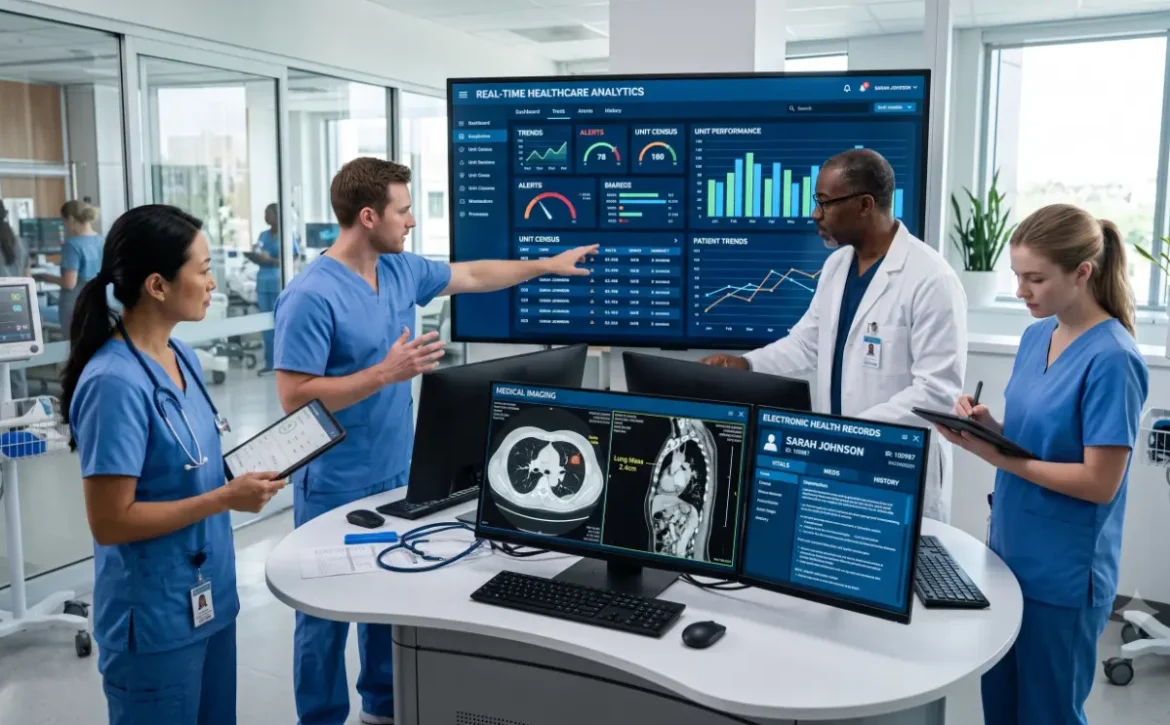
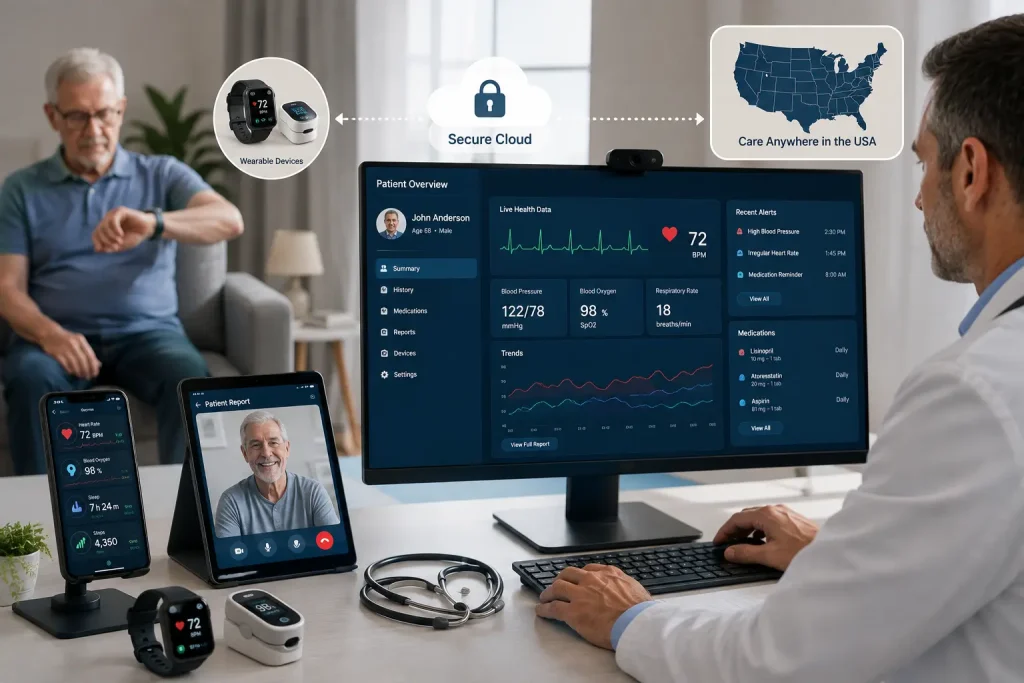
Medical devices are becoming smarter, more connected, and increasingly dependent on software. From wearable health monitors and diagnostic imaging systems to infusion pumps and remote patient monitoring platforms, software now plays a central role in how these devices function.While off-the-shelf software may work for general applications, medical device manufacturers often need solutions built around their unique hardware, regulatory requirements, and clinical workflows. That’s where custom software for medical devices provides a significant advantage.
Key Advantages
- Designed specifically for your medical device
- Improves device performance and reliability
- Supports regulatory compliance requirements
- Enables secure patient data management
- Integrates with healthcare systems and cloud platforms
- Allows future updates and feature expansion
- Reduces unnecessary software complexit
What Is Custom Software for Medical Devices?
Custom software for medical devices is software specifically designed and developed to work with a particular medical device or healthcare solution. Unlike generic software, it is created to meet precise functional, safety, and compliance requirements.
It may be embedded directly into a device, support device management through a mobile or web application, or connect devices with hospital information systems and cloud platforms.
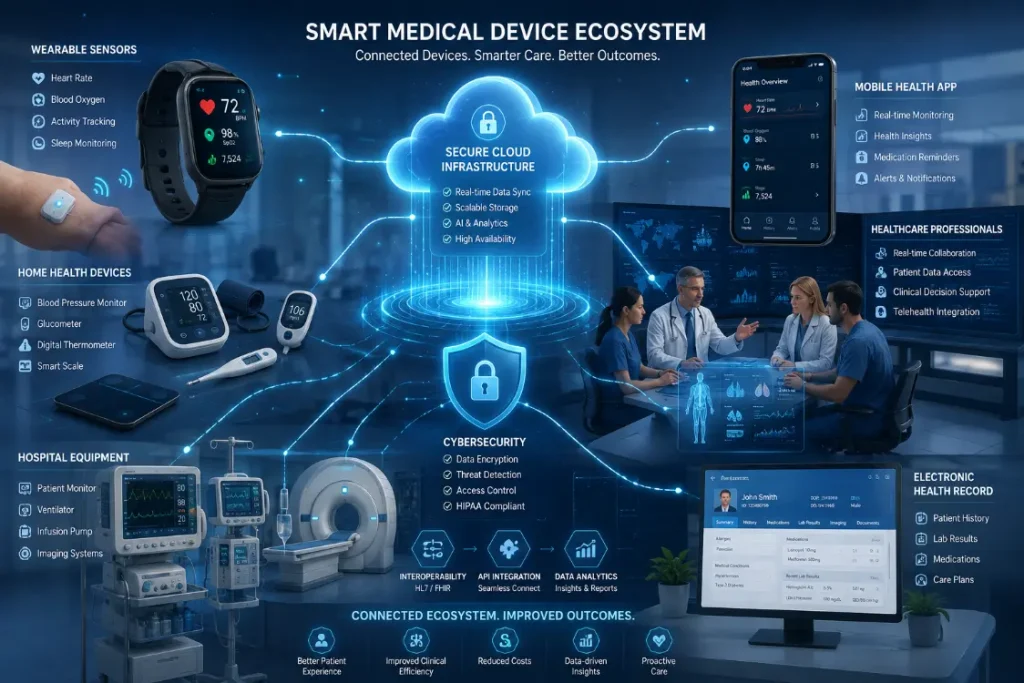
Why Choose Custom Software Instead of Off-the-Shelf Solutions?
Every medical device has different performance requirements. Custom software for medical devices provides the flexibility that generic platforms cannot. It is designed to match specific hardware, clinical workflows, and regulatory requirements, helping manufacturers build reliable, secure, and scalable healthcare solutions.
Common Applications of Custom Medical Device Software
Custom software powers a wide range of healthcare technologies.
| Medical Device | Software Function |
| Patient Monitoring Systems | Real-time vital sign monitoring and alerts |
| Wearable Devices | Activity tracking, ECG monitoring, health analytics |
| Diagnostic Equipment | Image processing and clinical data analysis |
| Infusion Pumps | Dosage control and safety monitoring |
| Smart Inhalers | Medication tracking and patient reminders |
| Laboratory Instruments | Sample processing and automated reporting |
| Surgical Devices | Precision control and workflow management |
| Telemedicine Devices | Remote monitoring and physician connectivity |
Key Features of Custom Software for Medical Devices
A successful medical device software solution typically includes:
- Real-time device communication
- Secure user authentication
- Data encryption
- Cloud synchronization
- Remote monitoring capabilities
- Automated alerts and notifications
- Electronic Health Record (EHR) integration
- Software update management
- Audit logs for compliance
- User-friendly interface for clinicians and patients
Medical Device Software Development Process
Developing software for healthcare requires careful planning and validation.
| Development Stage | Purpose |
| Requirement Analysis | Define clinical and technical needs |
| Risk Assessment | Identify potential safety risks |
| Software Design | Create system architecture and workflows |
| Development | Build software modules |
| Verification & Validation | Test functionality and safety |
| Regulatory Documentation | Prepare required technical documents |
| Deployment | Launch software with the medical device |
| Maintenance | Deliver updates, fixes, and improvements |
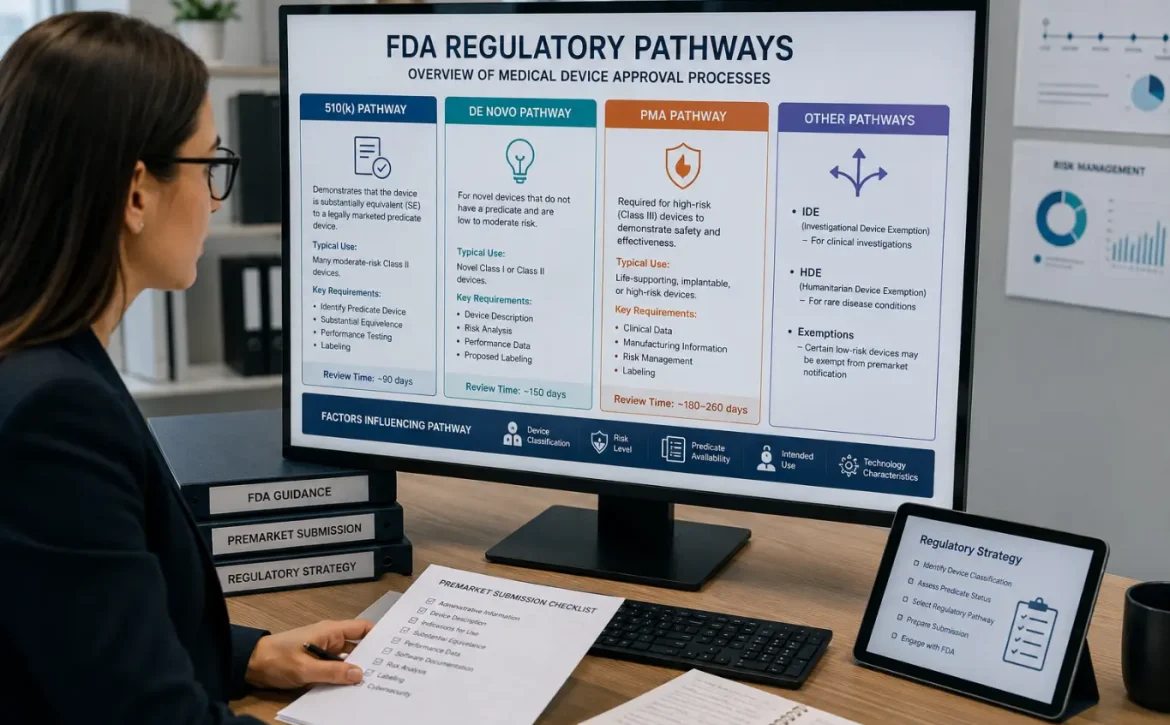
Regulatory Considerations
Medical device software must comply with industry standards depending on the target market.
Some commonly followed standards include:
· IEC 62304 – Medical device software lifecycle
· ISO 13485 – Quality management systems
· ISO 14971 – Risk management
· FDA Guidance for Software as a Medical Device (SaMD)
· HIPAA for patient data privacy (United States)
· GDPR for healthcare data protection (European Union)
Meeting these requirements helps improve product safety while supporting market approval.
Challenges in Medical Device Software Development
Medical software development presents unique technical and regulatory challenges.
Some common challenges include:
- Maintaining patient data security
- Managing cybersecurity risks
- Meeting changing regulatory requirements
- Ensuring compatibility with multiple devices
- Supporting long-term software maintenance
- Validating software for clinical safety
- Integrating with legacy healthcare systems
Addressing these challenges early can reduce development delays and compliance issues.
How Custom Software Improves Patient Care
Well-designed software benefits both healthcare professionals and patients.
Some practical improvements include:
- Faster access to clinical data
- More accurate device performance
- Improved treatment monitoring
- Reduced manual documentation
- Better remote patient management
- Earlier detection of device issues
- Enhanced patient engagement through connected applications
These improvements contribute to more efficient healthcare delivery while supporting informed clinical decision-making.
Also Read: Medical Software Development
Choosing the Right Development Partner
Selecting an experienced software development partner is just as important as choosing the right technology.
Consider a company that offers:
- Experience in medical device software development
- Knowledge of healthcare regulations
- Strong cybersecurity practices
- Expertise in embedded systems and cloud platforms
- Comprehensive testing and validation processes
- Long-term maintenance and software support
A partner familiar with both engineering and regulatory expectations can help streamline development and reduce compliance risks.
Final Thoughts
As medical devices continue to evolve, software has become a critical component of healthcare innovation. Custom software for medical devices enables manufacturers to build solutions that align with specific device functionality, regulatory requirements, and clinical needs.
By focusing on security, reliability, scalability, and compliance from the beginning, organizations can develop software that supports better device performance and enhances patient care. Investing in custom software also provides the flexibility to adapt to future technologies, making it a valuable long-term strategy for medical device manufacturers.
Frequently Asked Questions (FAQs)
1. What is custom software for medical devices?
Custom software for medical devices is software specifically developed for a particular medical device or healthcare application. It is designed to meet the device’s functional, safety, regulatory, and performance requirements rather than using a generic software solution.
2. Why is custom software better than off-the-shelf software for medical devices?
Custom software is tailored to the device’s exact requirements, making it easier to integrate with hardware, support regulatory compliance, improve security, and add new features as the product evolves.
3. Why is cybersecurity important in Custom Software for Medical Devices?
Medical devices often process sensitive patient information and may connect to hospital networks or cloud services. Strong cybersecurity measures—such as encryption, secure authentication, and regular software updates—help protect patient data and maintain device integrity.
4. How does custom software improve patient care?
Custom Software for Medical Devices enables more accurate device performance, real-time monitoring, faster access to clinical information, remote patient management, and better support for healthcare professionals, leading to improved patient outcomes.
Also Read: AI Medical Software