Artificial intelligence for software testing and debugging refers to the use of intelligent automation and data-driven systems to identify software defects, improve test coverage, and accelerate debugging activities. Modern software environments generate large volumes of code, logs, and test cases, making automated analysis increasingly important. Organizations in finance, healthcare, automotive, and cloud computing use these technologies to improve reliability, compliance, and release efficiency.
Key Takeaways
- Artificial intelligence improves software testing efficiency and debugging accuracy.
- Automated systems help detect defects earlier in development cycles.
- Debugging focuses on fixing defects, while testing focuses on identifying them.
- Intelligent testing tools support DevOps and continuous integration workflows.
- Structured debugging processes improve software reliability and compliance.
Software Testing and Debugging Techniques
Artificial intelligence for software testing and debugging improves testing techniques by automating repetitive validation tasks and identifying defect patterns faster than traditional manual methods.
Software Testing vs Debugging: Key Differences Explained
Software testing verifies whether software meets functional and performance requirements, while debugging identifies and fixes the root causes of failures.
| Aspect | Software Testing | Debugging |
| Primary Goal | Detect defects | Fix defects |
| Performed By | QA engineers, testers | Developers |
| Process Type | Validation | Root-cause analysis |
| Output | Test reports | Corrected code |
Common testing approaches include:
- Unit testing
- Integration testing
- Regression testing
- Performance testing
- Security testing
Debugging methods often include:
- Log analysis
- Breakpoint tracing
- Static code analysis
- Memory inspection
- Automated anomaly detection
A related area often discussed with this topic includes AI-powered software testing, free AI tools for software testing, and software testing in the AI era.
Testing and Debugging in Software Engineering
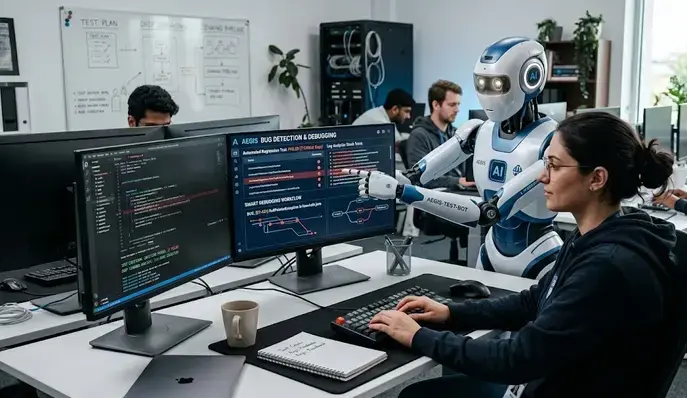
Testing and debugging in software engineering support continuous integration and continuous delivery pipelines. Many organizations integrate intelligent testing systems into DevOps environments to reduce deployment failures.
Industry practices include:
- Automated regression testing during every build
- Predictive defect analysis using historical bug data
- Intelligent prioritization of high-risk code sections
- Automated generation of test cases from user behavior
Standards such as ISO/IEC/IEEE 29119 for software testing provide structured guidance for test documentation and execution.
What Is the Debugging Process in Software Testing?
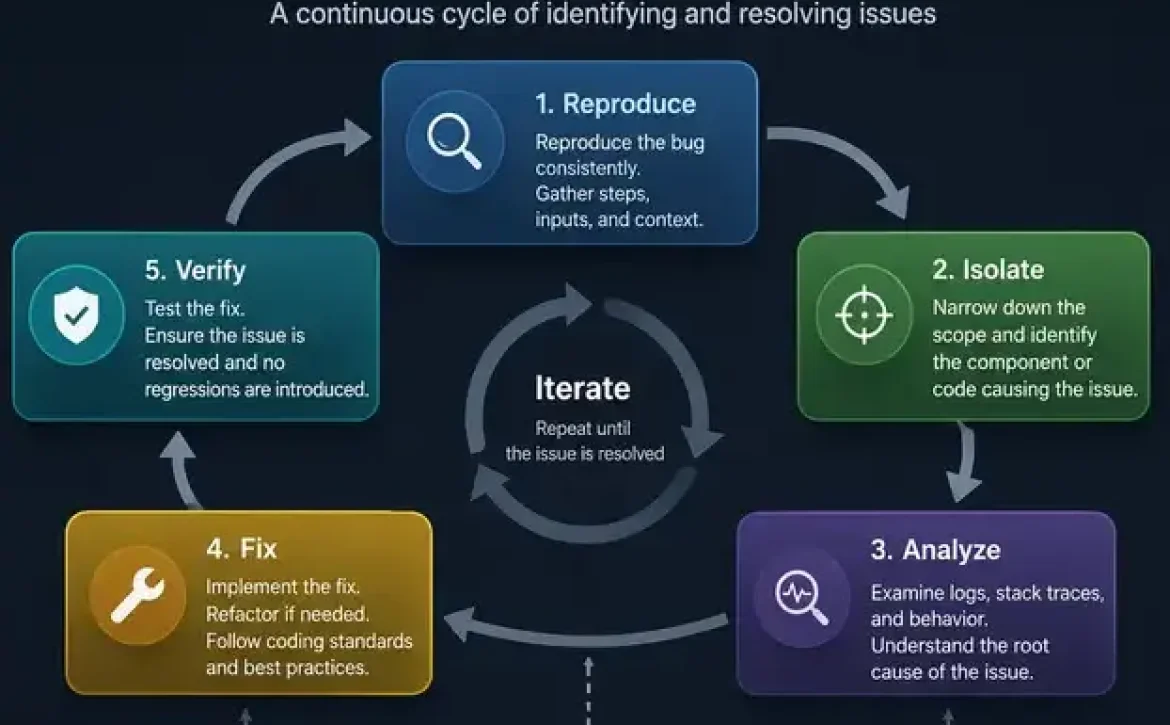
The debugging process in software testing involves identifying, isolating, analyzing, and correcting software defects after failures are detected.
Typical debugging stages include:
- Reproducing the defect
- Collecting logs and diagnostic data
- Isolating the affected module
- Identifying root causes
- Implementing fixes
- Retesting the application
Modern debugging systems can automatically correlate crash logs, runtime anomalies, and historical defect patterns to reduce investigation time.
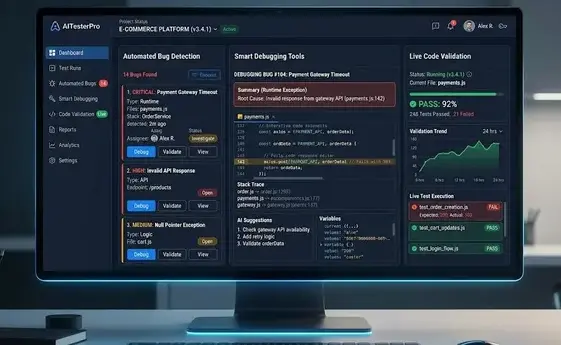
Software Debugging Tools
Artificial intelligence for software testing and debugging relies on advanced debugging platforms that support automated code inspection, monitoring, and fault prediction.
Popular categories of debugging tools include:
| Tool Category | Primary Function |
| Static Analysis Tools | Detect code vulnerabilities |
| Runtime Monitoring Tools | Analyze live application behavior |
| Automated Test Platforms | Execute repetitive test scenarios |
| Error Tracking Systems | Capture and classify failures |
| Log Management Tools | Centralize debugging information |
Commonly used enterprise tools include:
- Selenium-based automation frameworks
- JUnit and TestNG
- SonarQube
- Postman testing environments
- AI-assisted bug tracking platforms
These tools improve productivity by reducing manual inspection workloads and increasing test accuracy across large codebases.
Importance of Debugging in Software Development
Artificial intelligence for software testing and debugging strengthens software reliability by reducing production failures and improving system stability.
Key benefits include:
- Faster defect detection
- Reduced software downtime
- Improved customer experience
- Better regulatory compliance
- Increased release confidence
Industries such as healthcare, aerospace, and automotive depend on rigorous debugging because software failures may create operational or safety risks. Intelligent testing systems also support secure software development practices by identifying vulnerabilities earlier in the development lifecycle.
Organizations increasingly use predictive analytics to estimate defect-prone modules before deployment, helping teams prioritize testing resources more effectively.

Conclusion
Artificial intelligence for software testing and debugging continues to transform software quality assurance through automated analysis, predictive defect detection, and intelligent debugging workflows. As software systems become more complex, structured testing classifications and advanced debugging strategies will remain essential for maintaining reliability and compliance.
For broader technical context, readers exploring advanced quality assurance workflows may also benefit from understanding the art of debugging process in software engineering and its role in modern development environments.
FAQ
What is artificial intelligence for software testing and debugging?
It is the use of intelligent automation and data analysis systems to improve software testing accuracy, defect detection, and debugging efficiency.
How does AI improve software testing?
AI improves software testing by automating repetitive tasks, generating test cases, predicting defects, and analyzing large testing datasets faster.
What are the benefits of AI-powered software testing?
Benefits include reduced testing time, improved defect detection accuracy, better regression testing, and faster software releases.
Which industries use AI for software testing and debugging?
Industries such as finance, healthcare, automotive, aerospace, telecommunications, and cloud computing commonly use these technologies.
Can AI replace human software testers?
AI assists software testers by automating repetitive processes, but human expertise remains essential for exploratory testing, validation, and decision-making.
Sources
- https://teo.dk/en/the-role-of-ai-in-software-testing-and-debugging-transforming-the-qa-process/
- https://www.aeologic.com/blog/the-role-of-ai-in-automating-software-testing-and-debugging/
- https://www.aspiresys.com/blog/software-testing-services/test-automation/what-transformative-role-ai-plays-in-software-testing-and-debugging/
- https://qase.io/blog/ai-in-software-testing/
- https://testgrid.io/blog/ai-in-software-testing/
- https://www.lizard.global/en/blog/how-ai-is-transforming-quality-assurance-in-software-development-debugging-and-automated-testing
- https://www.vibidsoft.com/blog/ai-powered-tools-for-debugging-and-testing-in-software-development-a-complete-guide/
- https://www.inflectra.com/Ideas/Entry/ai-software-development-1532.aspx
- https://www.kualitee.com/blog/ai/role-of-ai-in-software-testing-enhancing-efficiency-and-accuracy/