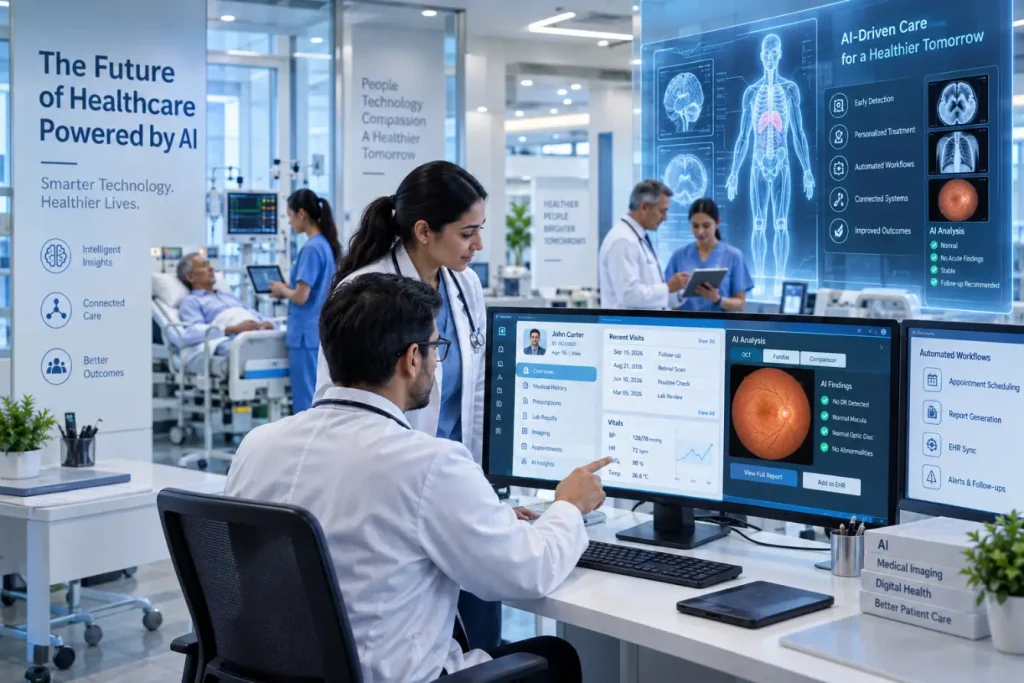
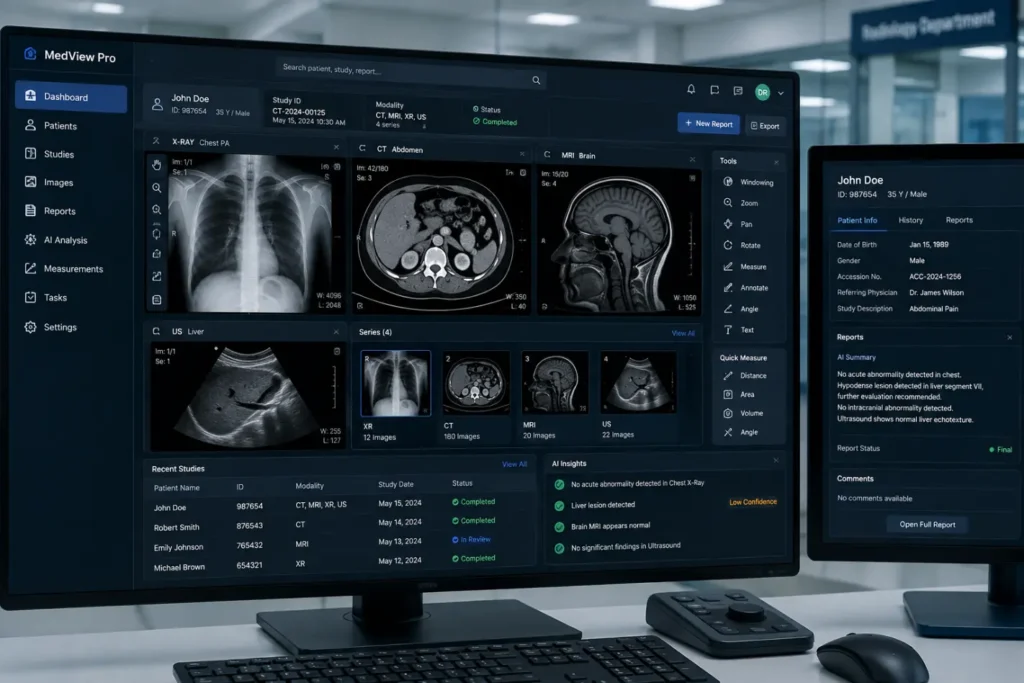
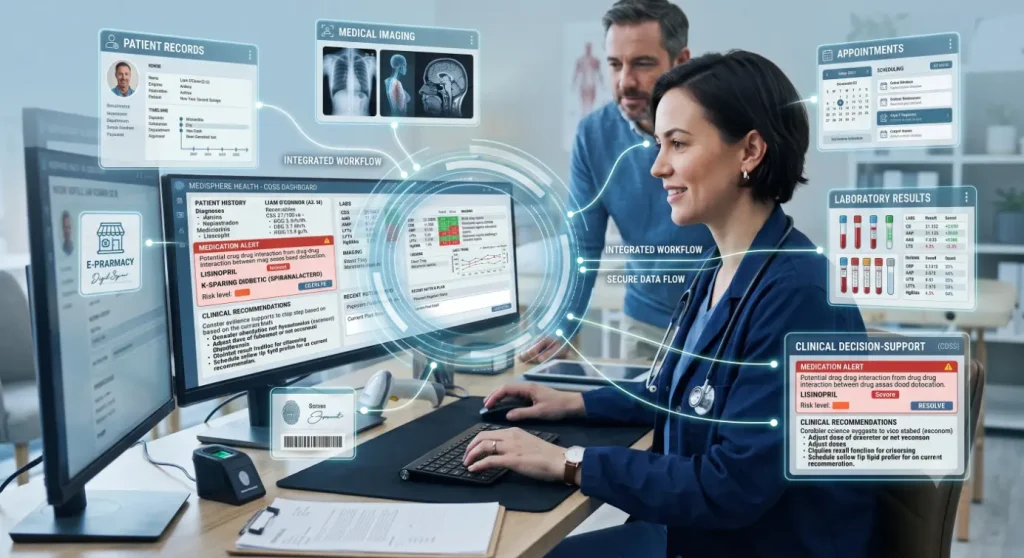
Custom medical software solutions help healthcare organizations develop digital applications that address their specific clinical, administrative, and operational requirements. From electronic health records to remote patient monitoring, customized applications improve information management, support healthcare professionals, and streamline patient services.
Unlike generic software, custom solutions are designed around an organization’s workflows, technical requirements, and security needs. They also offer flexibility for future upgrades, system integration, and changing healthcare demands.
Key Takeaways
- Custom medical software addresses specific healthcare requirements.
- Effective design improves usability, security, and clinical workflows.
- Testing and risk management support software reliability and patient safety.
Table of Contents
What Are Custom Medical Software Solutions?
Custom medical software solutions are applications developed specifically for healthcare providers, hospitals, laboratories, medical device manufacturers, and healthcare technology businesses.
These applications can manage patient information, automate administrative activities, connect medical devices, and support clinical operations.
For example, a hospital may require an integrated platform for appointments, patient records, billing, and laboratory reports. A medical device manufacturer may need specialized software to monitor device performance and process clinical data.
Common examples include:
| Software Type | Main Function |
| Electronic Health Records | Stores and manages patient information |
| Hospital Management Systems | Coordinates hospital operations |
| Telemedicine Applications | Supports remote consultations |
| Laboratory Software | Organizes diagnostic workflows |
| Medical Imaging Software | Processes and manages medical images |
| Patient Monitoring Software | Tracks health information |
| Medical Device Software | Supports specific device functions |
The choice depends on the organization’s goals, intended users, and regulatory responsibilities.
Benefits of Customized Medical Software Solutions
Healthcare organizations often use multiple applications to manage daily activities. However, disconnected systems and unsuitable workflows can create operational difficulties.
Customized medical software solutions address these challenges through specialized functionality.
1. Improved Workflow Efficiency
Custom applications can automate repetitive tasks, including appointment scheduling, patient registration, report generation, and billing. This helps reduce administrative work.
2. Better Data Management
Healthcare software can organize patient information, diagnostic reports, treatment histories, and other records. Authorized professionals can access relevant information through appropriate interfaces.
3. Improved System Integration
Customized applications can connect with existing EHR platforms, laboratory systems, medical devices, and other healthcare technologies.
4. Flexible Development
Organizations can introduce new features as their requirements change. This flexibility supports future expansion without depending entirely on generic software products.
5. Enhanced Security Controls
Custom applications can incorporate encryption, authentication, access permissions, and audit logs to protect sensitive information.
However, customization alone does not guarantee security or regulatory compliance. Appropriate testing and maintenance remain essential.
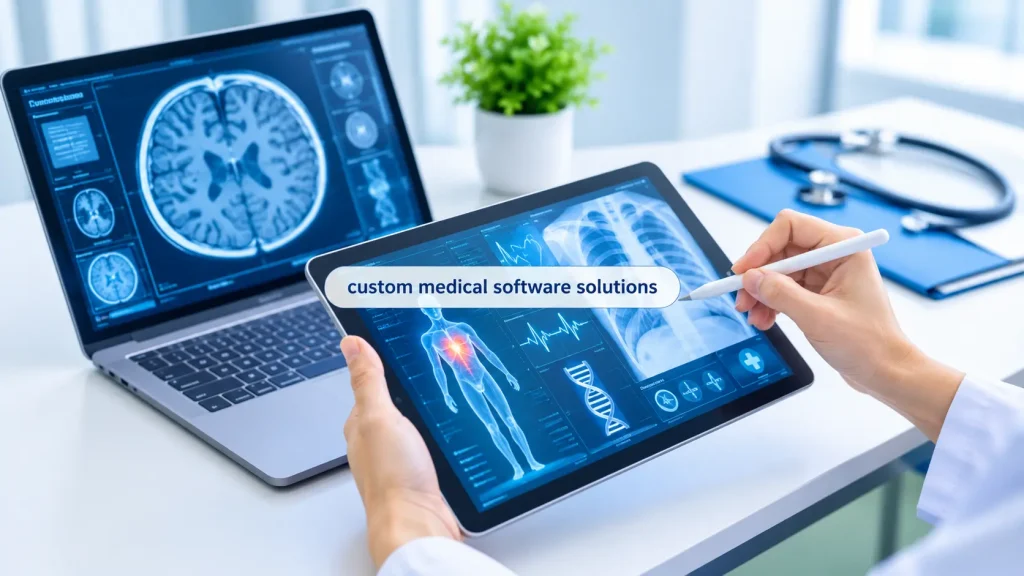
Important Steps Involved in Developing Medical Software
Developing a medical software application requires careful planning. The process should consider technical requirements, intended functionality, user needs, and potential safety risks.
1. Requirement Analysis
The first step involves understanding the organization’s requirements.
Developers should identify intended users, existing workflows, required features, integration needs, and applicable regulations.
2. Software Architecture Planning
The development team establishes the application’s technical structure. This includes selecting suitable programming technologies, databases, hosting environments, and integration methods.
Scalability and system reliability should be considered during this stage.
3. Designing Medical Software
Designing medical software requires attention to usability and accessibility.
Healthcare professionals often work under time constraints. Therefore, applications should present information clearly and make important functions easy to locate.
4. Development and Integration
Once the design is approved, developers build the application and implement its required functionality.
Integration may involve healthcare standards such as HL7 and FHIR, depending on the systems involved. These standards support structured information exchange between compatible healthcare applications.
5. Testing and Validation
Testing helps identify software defects and performance problems.
Depending on the application’s purpose, testing may include functional verification, cybersecurity assessments, usability testing, performance evaluation, and risk-based validation.
6. Deployment and Maintenance
After appropriate testing, the application can be deployed. Regular maintenance includes security updates, bug fixes, performance monitoring, and compatibility improvements.
Customizing Medical Software for Different Healthcare Needs
Customizing medical software involves adapting applications to specific clinical and operational requirements.
For example, a diagnostic laboratory may need automated sample tracking and report management. A hospital may prioritize patient admission, discharge, and billing functions.
Medical device manufacturers may require software that processes sensor information, monitors device performance, or displays measurement results.
Other applications include:
- Telehealth: Video consultations and secure patient communication.
- Remote Monitoring: Collection of information from connected medical devices.
- Clinical Decision Support: Tools that help healthcare professionals evaluate relevant information.
- Pharmacy Management: Prescription processing and medication inventory.
- Medical Imaging: Storage, retrieval, and viewing of diagnostic images.
Organizations should select features according to actual requirements rather than adding unnecessary functionality.
Customized Medical Software Solutions Canada: Important Considerations
Healthcare organizations seeking customized medical software solutions Canada should consider local privacy, security, and regulatory requirements.
Canadian healthcare applications may need to address the Personal Information Protection and Electronic Documents Act (PIPEDA), applicable provincial privacy legislation, and relevant medical device requirements.
For example, software intended for medical purposes may fall under Health Canada’s medical device regulatory framework, depending on its intended use and classification.
Organizations should also consider Canadian healthcare interoperability requirements, data hosting arrangements, and integration with existing clinical systems.
Conclusion
Custom medical software solutions help healthcare organizations address specialized requirements through flexible, integrated, and user-focused applications. From patient management to medical device monitoring, customized development supports different aspects of modern healthcare.
However, successful implementation requires more than programming. Requirement analysis, thoughtful design, secure development, software testing, and ongoing risk management are equally important.
Looking for Medical Device Software Risk Management Support?
RceeNetworks provides information and support related to medical device software risk management
Frequently Asked Questions
1. What are custom medical software solutions?
They are healthcare applications developed to meet specific organizational requirements. Examples include EHR systems, telemedicine platforms, laboratory software, and medical device applications.
2. How long does developing medical software take?
The timeline depends on application complexity, features, integrations, testing, and regulatory requirements. Basic applications may take several months, while complex medical platforms can require a year or longer.
3. Why is designing medical software important?
Good design improves usability, accessibility, and workflow efficiency. Clear interfaces help healthcare professionals access information and complete tasks more effectively.
4. What regulations apply to medical software development?
Requirements depend on the software’s intended purpose, location, and regulatory classification. They may include HIPAA, GDPR, PIPEDA, and applicable medical device regulations. The FDA Digital Health Center of Excellence provides additional guidance on medical software regulation.
Also Read: Largest Medical Software