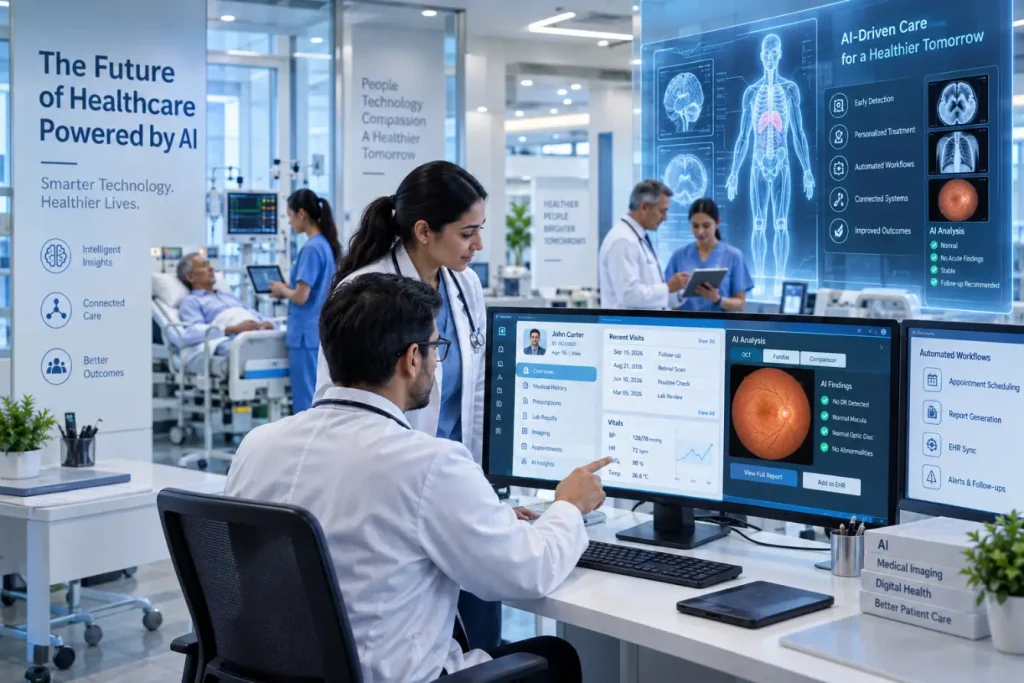
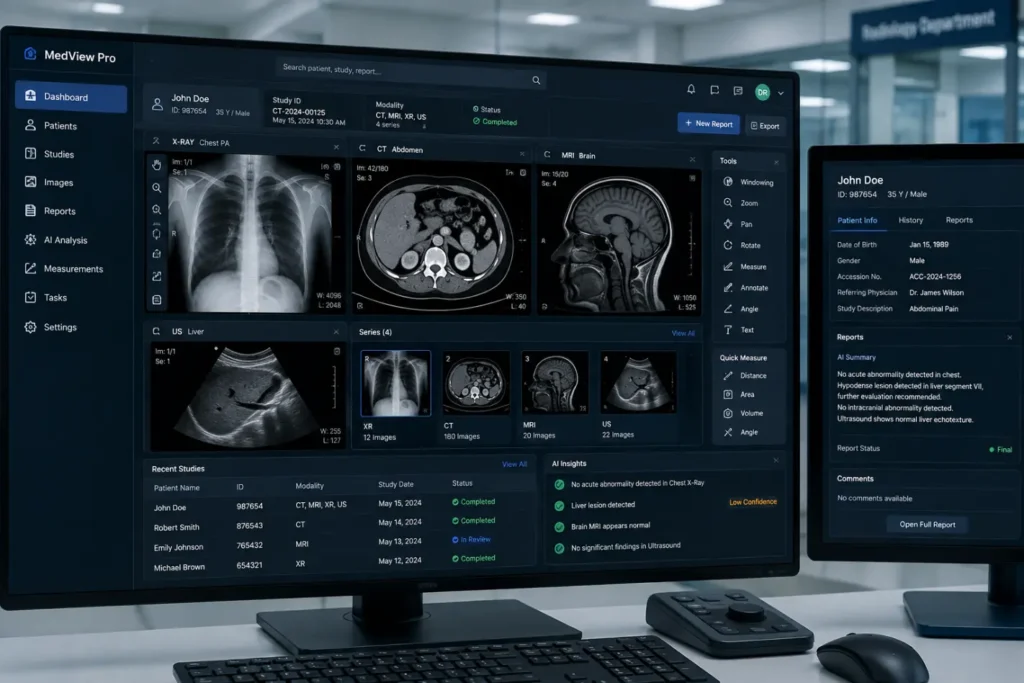
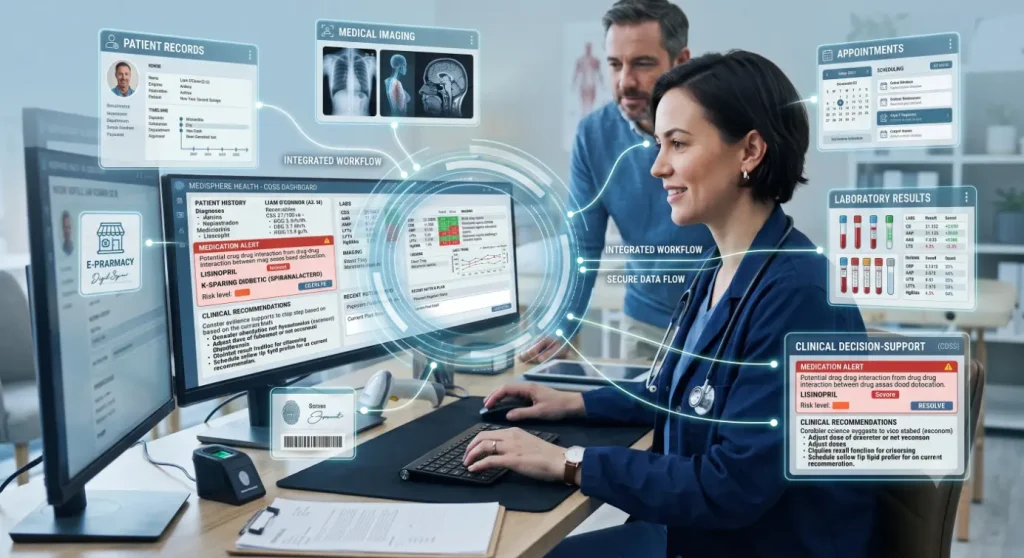
Finding the largest medical software is harder than it sounds, because “largest” can mean most hospitals served, most patient records, highest revenue, or broadest product range. Healthcare organizations run dozens of tools, from electronic health records and imaging systems to billing and telehealth platforms. This guide explains which vendors lead the market, how size is measured, and why the biggest name is not always the safest or most suitable choice.
Key Takeaways
- Epic Systems holds the largest share of U.S. hospital electronic health record (EHR) installations.
- “Largest” depends on the category: EHRs, imaging, billing, and telehealth each have different leaders.
- Regulatory compliance and software risk management matter as much as vendor size.
Table of Contents
Largest Medical Software: Who Leads the Market?
The clearest way to rank medical software is by EHR installations in hospitals, since the EHR is the core system most other tools connect to. According to Definitive Healthcare’s April 2026 analysis of U.S. hospitals, the top vendors look like this:
| Rank | EHR Vendor | Share of U.S. Hospital Installations |
| 1 | Epic Systems | 43.90% |
| 2 | Oracle Cerner (Oracle Health) | 18.90% |
| 3 | MEDITECH | 10.70% |
| 4 | TruBridge | 4.30% |
| 5 | WellSky | 3.40% |
Together, Epic and Oracle Cerner account for more than 62% of the inpatient EHR market. Epic dominates large health systems and academic medical centers. Oracle Cerner serves many large hospitals and government organizations, while MEDITECH is popular with community hospitals. Share figures differ between research firms and depend on whether you count hospitals, beds, or outpatient clinics, so treat any single number as a snapshot rather than a final verdict.
Why Size Depends on the Category
Medical software is not one product. A vendor that leads one category may barely appear in another.
- EHR and EMR systems: Epic, Oracle Health, and MEDITECH lead in hospitals. In outpatient care, athenahealth, eClinicalWorks, and similar vendors are widely used.
- Medical imaging and PACS: Companies such as Philips, GE HealthCare, and Sectra supply software for storing and reading scans.
- Revenue cycle and billing: Large service providers manage claims and coding for many hospital networks.
- Telehealth: Platforms like Amwell and Doxy.me support virtual visits.
- Clinical trials software: Tools such as Veeva Vault EDC help sponsors and research organizations manage study data.
Large technology and services firms also build or support healthcare systems, but they are mostly broader IT companies rather than pure medical software makers. That is why ranking by revenue alone can mislead.
What Makes a Medical Software Platform Truly Large?
When people call a platform the largest, they usually mean a combination of these factors:
- Installed base: The number of hospitals, clinics, or users relying on it.
- Patient records managed: How many people’s data live in the system.
- Module breadth: Whether it covers clinical, billing, scheduling, and patient portals in one suite.
- Interoperability: How easily it exchanges data with other systems through standards like HL7 and FHIR.
- Ecosystem: The partners, integrations, and trained workforce around it.
A big installed base can also bring benefits, such as a large pool of trained staff and well-tested integrations. The trade-offs can include high implementation costs, long rollouts, and less flexibility for unusual workflows.
Bigger Is Not Always Safer
Choosing the largest vendor doesn’t remove risk. Any software that touches patient care carries safety, privacy, and security responsibilities, and a hospital still has to manage them for its own configuration, integrations, and users.
Three areas deserve attention:
- Patient safety: Software errors, such as incorrect dosing displays or lost alerts, can harm patients. Risk management standards like ISO 14971 guide how manufacturers identify and control these hazards.
- Software lifecycle quality: IEC 62304 sets expectations for developing and maintaining medical device software in a controlled, documented way.
- Cybersecurity and privacy: Health data is a frequent target. Organizations must protect it under HIPAA and follow regulator guidance on device and software security.
Software that qualifies as a medical device, including some diagnostic and clinical decision tools, may also face FDA oversight. Companies building or integrating such tools should plan for documentation, testing, and post-release monitoring from the start rather than after launch.

Final Thoughts
The largest medical software is not necessarily the best fit for every organization. Epic, Oracle Health, and MEDITECH lead the hospital EHR market, but the right choice depends on your size, specialty, workflows, and tolerance for risk. A big installed base brings proven integrations and a trained workforce, yet it cannot replace careful evaluation, strong security, and a clear plan for regulatory compliance. Treat vendor size as one factor among many, test with real clinical users, and build risk management into every stage of selection and deployment. In healthcare, the safest software is the one that is chosen, configured, and monitored with patient safety in mind.
Need help managing risk in your medical software? Contact Rceenetworks today to build safer, compliant solutions with confidence.
Frequently Asked Questions
1. What is the largest medical software company?
By U.S. hospital EHR installations, Epic Systems is the largest. By overall revenue, large healthcare technology and services companies may rank higher, depending on how “medical software” is defined.
2. What is the most used EHR software?
Epic is the most widely used inpatient EHR in the United States, followed by Oracle Cerner and MEDITECH. In outpatient settings, athenahealth and eClinicalWorks are also very common.
3. What are the main types of medical software?
Common categories include EHR and EMR systems, medical imaging and PACS, billing and revenue cycle tools, telehealth platforms, clinical trial software, and patient engagement apps. Many organizations combine several of these.
4. Is medical software regulated by the FDA?
Some of it is. Software that diagnoses, treats, or drives a medical device can be regulated as a medical device, while many administrative tools are not. For official guidance, see the FDA’s overview of software as a medical device.
Also Read: Online Medical Software