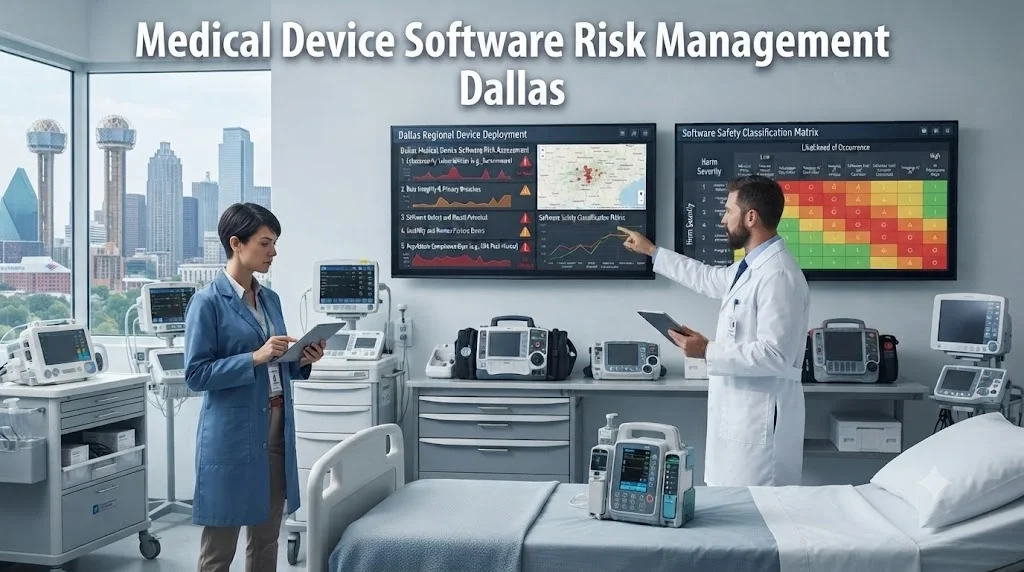
Medical device software risk management Dallas is an important consideration for healthcare technology companies developing safe, reliable, and compliant medical software. Software failure can have implications on patient safety, data integrity, and clinical judgment in the application of software for diagnostic purposes or in connecting devices.
Risk management in the development of medical software enables the identification and assessment of risks as well as the implementation of appropriate control measures.
Table of Contents
Why Medical Device Software Risk Management Dallas Matters
For businesses that are located in Dallas and all over the United States, risk management needs to be integrated in software development at the very outset. Otherwise, detecting safety issues only at the testing phase will raise software development expenses and slow down product launch.
An efficient process allows the team to:
- Detect hazards before they harm patients.
- Evaluate the probability and impact of possible threats.
- Develop controls to lower detected risks.
- Verify that the software is working as designed.
- Keep records to audit and review them.
- Reevaluate the risk post update or incident.
Common Risks in Medical Device Software
Medical software can experience several types of failures. Identifying these risks early helps developers establish appropriate preventive measures. Medical device software risk management Dallas involves assessing cybersecurity vulnerabilities, data integrity issues, and system failures.
1. Software defects: Coding errors, miscalculations, and unpredictable system behavior can influence the clinical outcomes.
2. Data integrity challenges: Inaccurate, incomplete, or duplicate information about patients can impact clinical processes. Validation mechanisms, access controls, and proper data management can address these risks.
3. Cybersecurity threats: Any unauthorized access, malicious software, or insecure connections might jeopardize the system. Secure development methodologies, vulnerability analysis, and prompt patches can mitigate these risks.
4. Integration challenges: The medical software usually communicates with other systems like electronic health records, diagnostic devices, and hospital information systems. Compatibility testing allows to detect these issues.
5. Usability challenges: Unintuitive interface, insufficient alerts, and improper workflow design can lead to user errors. Human factors evaluation allows understanding the interaction between the intended user and the product.
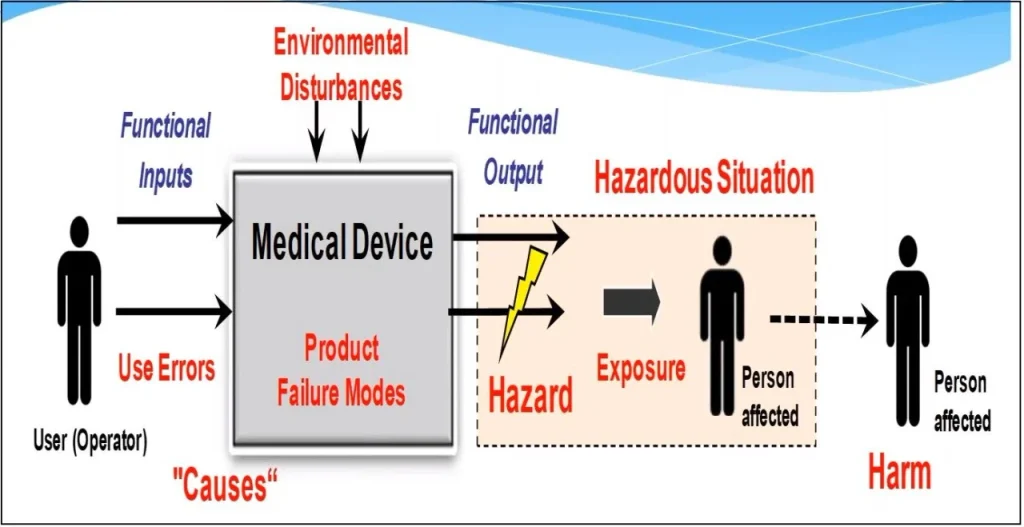
Essential Steps in a Medical Software Risk Management Process
A consistent process allows development teams to identify, evaluate, control, and monitor risks throughout the software lifecycle.
1. Identify Potential Hazards
Begin by examining the software’s intended purpose, users, operating environment, and clinical functions. Teams can use techniques such as failure mode and effects analysis (FMEA), hazard analysis, and fault-tree analysis. The selected method should suit the product’s complexity and potential consequences.
2. Evaluate and Prioritize Risks
Assess all hazards based on their potential severity and probability of occurrence where necessary using established criteria to establish if risk is tolerable or further controls are required.
Prioritization allows engineering teams to allocate their efforts on hazards that pose greater risks from a safety standpoint.
3. Apply Risk Controls
Risk controls could include software protection mechanisms, access control, validation of input, alerts, automatic detection and prevention systems and redesign.
4. Test/Verify and Validate Risk Controls
Testing should prove that risk controls perform as intended. Link hazards to software requirements, implementation, test cases and evidence of verification.
This provides for traceability making it easier to find missing tests and understand impacts on product safety. Companies use Medical device software risk management Dallas strategies to support regulatory compliance and maintain accurate documentation.
5. Monitor Risks After Release
Risk management continues after deployment. Customer complaints, cybersecurity reports, software updates, and real-world performance may reveal previously unknown hazards.
Regular reviews help teams update risk assessments and determine whether existing controls remain effective.
Standards and Compliance Considerations
Medical software developers should determine which regulatory requirements apply to their specific product, intended use, and market.
ISO 14971 provides a framework for medical device risk management throughout the product lifecycle. It covers risk analysis, evaluation, control, and monitoring of residual risks.
IEC 62304 addresses medical device software lifecycle processes, including development, maintenance, and software-related risk activities.
FDA requirements may apply to software that qualifies as a medical device or forms part of a regulated medical device.
Medical Device Risk Management Software Dallas – Choosing Essential Tools
Proper tools allow teams to manage risk records, documentation, relate requirements and testing and manage corrective actions. But not all medical software platforms necessarily come with built-in medical device risk management functions.
Questions for assessment of tools include:
- Traceability: Is it capable of linking hazards, controls, requirements, and testing results?
- Documentation: Does it enable record-keeping and version control?
- Workflow compatibility: Is it compatible with workflows of development and quality?
- Security: Does it offer proper access controls and protection of data?
- Scalability: Does it have the ability to grow along with your product portfolio?
- Reporting: Are you able to identify unresolved risks and generate compliance documents?
Best Practices for Long-Term Risk Management
Sustainable risk management requires collaboration between software engineers, quality professionals, cybersecurity specialists, regulatory teams, and clinical experts. Implementing medical device software risk management Dallas processes helps medical software developers monitor risks throughout the product lifecycle.
Start risk assessments early and update them whenever significant design changes occur. Maintain clear responsibility for each risk and establish deadlines for corrective actions.
Use repeatable testing procedures, document decisions, and review unresolved issues before release. Training also helps employees understand safety responsibilities and follow established procedures.
Finally, treat post-market information as an essential feedback source. Reviewing incidents, complaints, and software performance can help organizations identify emerging risks and improve future releases. Effective medical device software risk management Dallas practices can reduce software defects and improve product reliability.
Concluding Thoughts
Medical device software risk management Dallas not only includes detection of software bugs, but it also calls for a structured approach to address issues pertaining to patient safety, compliance with regulations, verification, security of information, and continuous monitoring. The proper use of expertise in the form of teams, processes, and software tools will assist organizations in managing risks.
Learn more about RCEENetworks’ medical software services online to discover digital solutions that can help you meet the operational demands of your healthcare business.
Frequently Asked Questions
1. What is medical device software risk management?
Medical device software risk management is a procedure that entails identifying software-related hazards, assessing their potential to cause any harm, control measures, and risk management all through the lifecycle of a product.
2. Which standard is used for medical device risk management?
ISO 14971 is a key standard for medical device risk management. IEC 62304 also addresses software lifecycle processes for medical device software. Applicable requirements depend on the product and its intended use.
3. How can medical software companies reduce software-related risks?
Risk management could entail doing hazard analysis, secure development practices, verification of risk management measures, extensive testing of the software, traceability, and reviews of any post-market information.
4. Where can I learn about FDA requirements for medical device software?
The FDA provides guidance on software functions, medical device regulation, and related compliance considerations. Start with the official FDA Digital Health and Medical Devices resources to explore applicable requirements and guidance.
Also Read: Software used in medical offices