RCEE+Networks LLC
  • Home
  • About
  • Services
    • IMACAM™ Tech Support
  • Products
    • RetinaWiseAI™
  • Contact
1-844-2-THEOWL
info@rceenetworks.com
logotype
  • Home
  • About
  • Services
    • IMACAM™ Tech Support
  • Products
    • RetinaWiseAI™
  • Contact
logotype
  • Home
  • About
  • Services
    • IMACAM™ Tech Support
  • Products
    • RetinaWiseAI™
  • Contact
Uncategorized
Home Uncategorized Page 9

Category: Uncategorized

Uncategorized
Umesh Kumar KhiriMay 5, 2026 0 Comments
Share article:TwitterFacebookLinkedin
19 Views
3 Likes

How to Use AI in Mobile App Development: 7 Powerful, Practical Steps

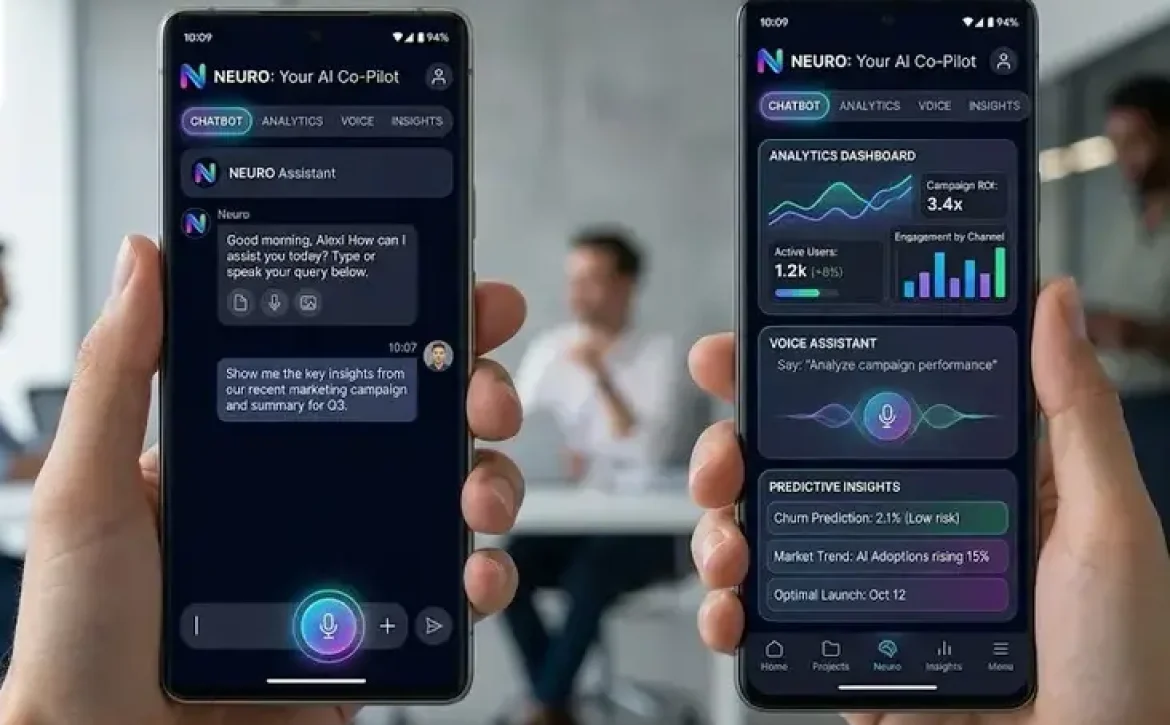
How to use AI in mobile app development refers to AI in mobile app development is the process of integrating predictive models, machine learning, and NLP into applications to enable smart behavior. It empowers apps to analyze information, automate tasks, and enhance user interaction in real time. What practical steps are needed for implementation?

Key Takeaways

  • How to use AI in mobile app development follows a structured lifecycle
  • Data quality and model selection are critical success factors
  • Tools like TensorFlow Lite and Core ML enable mobile integration
  • Use cases include personalization, automation, and prediction
  • Performance optimization ensures scalability and efficiency

What steps and components are involved in practically using AI in mobile app development?

How to use AI in mobile app development begins with aligning business goals to intelligent features.

Core components include:

  • Data pipelines: Collection, cleaning, and labeling
  • Model selection: Supervised, unsupervised, or deep learning
  • Integration layers: APIs, SDKs, or on-device models
  • Continuous monitoring: Performance and bias checks

Example:
A banking app uses fraud detection models to flag abnormal transactions based on user behavior patterns.

How do you integrate AI into mobile app development step by step?

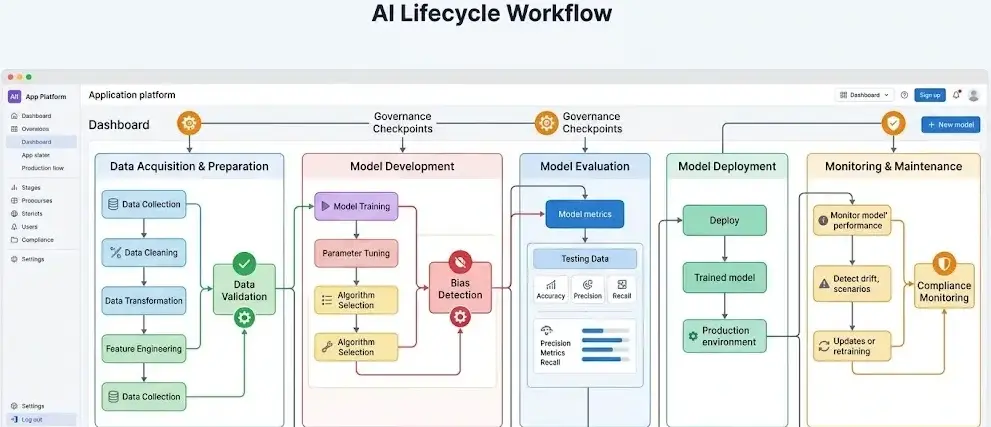
AI integration in mobile app development is carried out through a structured and sequential lifecycle.

  1. Define use case (e.g., recommendation engine)
  2. Collect and prepare data (user activity, logs)
  3. Choose tools and frameworks (TensorFlow Lite, Core ML)
  4. Train and validate models
  5. Integrate into app backend or device
  6. Test for accuracy and latency
  7. Deploy and monitor performance

Industry practice:
Retail apps use recommendation engines to increase conversions through personalized suggestions.

What technologies are used for AI in mobile app development?

How to use AI in mobile app development is determined by the selection of suitable tools.

CategoryTools/FrameworksUse Case
ML frameworksTensorFlow Lite, PyTorchModel deployment
NLP toolsDialogflow, spaCyChatbots, voice assistants
Cloud platformsAWS AI, Google AIScalable processing
On-device AICore ML, ML KitOffline intelligence

Example:
Voice assistants in apps rely on NLP tools for speech recognition and intent detection.

How is AI commonly used in mobile app development?

Applying AI in mobile app development results in several practical and widely used applications.

  • Personalization: Content recommendations (streaming apps)
  • Image recognition: Face unlock, object detection
  • Predictive analytics: Sales forecasting, health monitoring
  • Automation: Chatbots for customer support

A mobile app often overlaps with interests such as AI-powered app features, machine learning tools for developers, and intelligent user experience design.

What obstacles come with using AI in mobile app development?

Applying AI in mobile app development involves challenges in both system design and legal requirements.

  • Data privacy compliance: GDPR, HIPAA requirements
  • Model accuracy: Bias and overfitting risks
  • Performance constraints: Battery and latency issues
  • Integration complexity: Compatibility with legacy systems

Best practice:
Use on-device processing for sensitive data to improve privacy and reduce latency

How to optimize performance when using AI in mobile apps?

Optimizing performance is crucial for successfully using AI in mobile app development.

  • Model compression: Reduce size for mobile deployment
  • Edge computing: Process data locally
  • Efficient APIs: Minimize server calls
  • Regular updates: Retrain models with new data

Example:
Fitness apps optimize models to track activity in real time without draining battery life.
Conclusion

How to use AI in mobile app development requires structured implementation, from data preparation to deployment and monitoring. Organizations that follow this framework can build scalable, adaptive applications. For foundational understanding, refer to what is ai in mobile app development, which explains the core concepts behind these implementations.

FAQs

Can I develop a mobile app using AI?

Yes, developers can integrate AI using frameworks, APIs, and pre-trained models to add intelligent features.

How is AI used in mobile apps?

AI is used for personalization, automation, prediction, and recognition tasks within apps.

What are 7 types of AI?

Reactive systems, limited memory frameworks, theory of mind intelligence, self-aware AI, narrow AI, general AI, and advanced super AI.

What is the 10 20 70 rule for AI?

It suggests 10% algorithms, 20% data infrastructure, and 70% business process integration for successful AI adoption.

Do mobile apps require cloud AI?

Not always; many apps use on-device AI for faster processing and improved privacy.

Sources

https://ripenapps.com/blog/ai-in-mobile-app-development-explanation-examples-benefits/
https://objects.ws/blog/ai-in-mobile-apps/
https://velvetech.com/blog/ai-in-mobile-app-development/
https://smtlabs.io/blog/ai-in-mobile-app-development
https://www.alignminds.com/ai-is-transforming-mobile-app-development/
https://www.spaceotechnologies.com/blog/artificial-intelligence-in-mobile-app-development/
https://dreamertechnoland.com/how-ai-is-transforming-android-app-development/
https://softwaremind.com/blog/how-to-use-ai-in-mobile-app-development/
https://webandcrafts.com/blog/ai-in-mobile-app-development

READ MORE
Uncategorized
Umesh Kumar KhiriMay 5, 2026 0 Comments
Share article:TwitterFacebookLinkedin
17 Views
3 Likes

What Is AI in Mobile App Development? 7 Powerful Facts Explained

What is AI in mobile app development? It is the use of data-driven models and automated decision systems within mobile applications to simulate human-like intelligence. They analyze datasets, recognize meaningful patterns, and improve outcomes over time. This approach is essential for building responsive, scalable, and context-aware applications used in sectors such as healthcare, finance, and retail.

Key Takeaways

  • AI in mobile app development enables intelligent and adaptive app behavior
  • It supports features like voice recognition, chatbots, and predictive analytics
  • Widely used across healthcare, finance, retail, and logistics
  • Requires structured implementation and regulatory compliance
  • Enhances personalization, automation, and decision-making

What is AI in mobile app development? and How Does It Work?

AI in mobile app development works by embedding trained models into applications to process user data and generate intelligent outputs.

Core components include:

  • Data collection and preprocessing
  • Model training and deployment
  • Real-time inference on-device or via cloud

Example:
A fitness app uses activity data to recommend personalized workouts.

Industry practice:

  • On-device processing (e.g., Android ML Kit) improves privacy and speed
  • Cloud-based AI supports heavy computation tasks

What Are the Key Features of AI in Mobile Applications?

AI in mobile app development enables features that enhance usability and automation.

Common features:

  • Voice recognition (virtual assistants)
  • Image recognition (face unlock, object detection)
  • Predictive analytics (user behavior forecasting)
  • Natural language processing (chatbots)

Table: Feature vs Function

FeatureFunction
Speech recognitionConverts voice to text
Recommendation enginesSuggests content/products
Computer visionDetects images and objects
ChatbotsAutomates user interaction

What Are the Key Benefits of AI in Mobile App Development?

AI in mobile app development improves performance, engagement, and operational efficiency.

Key benefits:

  • Personalized user experience
  • Faster decision-making
  • Reduced manual intervention
  • Enhanced security through anomaly detection

Example:

Modern banking apps use intelligent systems to recognize and alert suspicious transactions as they occur.

What Are the Common Applications Across Industries?

AI in mobile app development is applied across multiple sectors.

Industry use cases:

  • Healthcare: Symptom checkers and diagnostics
  • E-commerce: Product recommendations
  • Finance: Fraud detection and credit scoring
  • Logistics: Route optimization

A mobile app using AI is often discussed alongside machine learning apps, AI-powered chatbots, and predictive analytics tools.

What Tools and Technologies Support AI Integration?

AI in mobile app development relies on specific frameworks and tools.

Popular tools:

  • TensorFlow Lite (on-device inference)
  • Core ML (iOS AI integration)
  • Android ML Kit (Google-supported AI tools)

Development steps:

  1. Define use case
  2. Collect and prepare data
  3. Train model
  4. Integrate into app
  5. Test and optimize
  6. Deploy and monitor

What Issues Are Faced When Incorporating AI into Mobile Applications?

AI in mobile app development presents technical and operational challenges.

Major challenges:

  • Data privacy and compliance (e.g., GDPR)
  • High computational requirements
  • Model accuracy and bias
  • Integration complexity

Best practice:
Use lightweight models and ensure compliance with data protection regulations.

Conclusion

AI in mobile app development drives smart, responsive, and data-based applications across different sectors. Its structured implementation—from data processing to deployment—ensures scalable and efficient solutions. Future advancements will increasingly depend on frameworks like responsible ai governance in app development platforms to maintain ethical and secure deployment standards.

FAQ

What is AI mobile app development?

It is the process of integrating intelligent systems into mobile apps to enable automation, prediction, and personalization.

What are the 4 types of AI?

Reactive machines, limited memory frameworks, theory of mind, and self-aware technologies.

What are the 7 steps of AI?

Data acquisition, cleaning, model selection, training, evaluation, deployment, and ongoing monitoring.

What are 5 examples of AI?

Chatbots, recommendation systems, voice assistants, fraud detection systems, and image recognition tools.

Sources

https://developer.android.com/ai
https://www.techaheadcorp.com/blog/role-of-ai-machine-learning-mobile-app-development/
https://www.neuronimbus.com/blog/incorporating-ai-into-mobile-apps-trends-challenges-and-best-practices
https://karol-wrotniak.medium.com/10-ways-ai-can-speed-up-your-mobile-app-development-68e59b2cb44b
https://www.spaceotechnologies.com/blog/artificial-intelligence-in-mobile-app-development/
https://smtlabs.io/blog/ai-in-mobile-app-development
https://www.linkedin.com/pulse/ai-mobile-app-development-transforming-user-experiences-oghwc
https://ahex.co/ai-mobile-app-development/
https://www.coursera.org/specializations/generative-ai-for-mobile-app-developers

READ MORE
Uncategorized
Umesh Kumar KhiriMay 5, 2026 0 Comments
Share article:TwitterFacebookLinkedin
18 Views
2 Likes

Responsible AI Governance in App Development Platforms: 7 Essential Principles for Secure and Ethical Systems

Responsible AI governance in app development platforms describes a systematic approach using policies and controls to maintain ethical, transparent, and secure AI behavior. It governs how models are designed, deployed, and monitored. Why is this critical? Because unmanaged AI systems can introduce bias, security risks, and regulatory violations across digital applications.

Key Takeaways

  • Responsible ai governance in app development platforms ensures ethical and compliant AI use
  • Transparency and accountability are foundational strategies
  • Governance frameworks vary across industries but share core principles
  • Centralized ownership improves effectiveness and reduces risk
  • Balancing innovation and control is a key governance challenge

How does responsible AI governance apply to app development platforms?

Responsible ai governance in app development platforms is a formal system that ensures AI models follow ethical, legal, and operational standards throughout their lifecycle.

Core components include:

  • Policy frameworks: Define acceptable AI use
  • Risk management: Identify and mitigate bias or misuse
  • Compliance controls: Align with regulations such as GDPR and industry standards
  • Auditability: Maintain logs for transparency and review

Example: A fintech app implements governance rules to detect bias in loan approval algorithms and logs decisions for audit.

Which two strategies are important for ensuring responsible and ethical use of AI?

Responsible ai governance in app development platforms relies heavily on two key strategies:

  1. Transparency and explainability
    • Clear model decisions
    • User-facing explanations
    • Documentation of data sources
  2. Accountability and oversight
    • Defined ownership of AI outcomes
    • Regular audits and reviews
    • Human-in-the-loop validation

These strategies reduce risks and improve trust in AI-powered applications.

What are practical examples of responsible ai governance in app development platforms?

Responsible ai governance in app development platforms can be observed across industries:

IndustryGovernance Application Example
HealthcareValidating diagnostic models to avoid bias
FinanceMonitoring fraud detection systems for fairness
E-commerceRegulating recommendation engines for transparency
Public sectorEnsuring fair allocation of social services

A related concept often discussed alongside this topic includes AI risk management, model monitoring, and algorithmic accountability frameworks.

What is AI governance and its primary objective in public policy?

Responsible ai governance in app development platforms extends into public policy where the primary objective is:

  • Protecting citizens from harmful AI outcomes
  • Ensuring fairness and non-discrimination
  • Promoting transparency in automated decisions

Governments use governance frameworks to regulate high-risk AI applications such as surveillance, healthcare diagnostics, and financial systems.

What does accountability mean in AI systems used in governance?

Responsible ai governance in app development platforms requires accountability, meaning:

  • Every AI decision must be traceable
  • Responsible individuals or teams must be clearly assigned
  • Systems must allow audit and correction mechanisms

Example: If an AI system denies a service request, the organization must explain the reason and provide recourse.

What is a critical consequence of distributing AI governance responsibility across too many roles?

Responsible ai governance in app development platforms becomes ineffective when accountability is fragmented.

Key consequence:

  • Lack of accountability creates delays and risk exposure; best practice is to implement clear ownership structures.

Best practice:

  • Establish a central governance authority with defined responsibilities
  • Support with cross-functional collaboration, not dilution of ownership

What is the key trade-off faced in AI governance?

Responsible ai governance in app development platforms often balances:

  • Innovation vs. control
FactorGovernance Impact
Strict controlsHigher compliance, slower innovation
Flexible policiesFaster deployment, higher risk

Organizations must align governance levels with application sensitivity and regulatory requirements.

Conclusion

Responsible ai governance in app development platforms ensures structured, accountable, and compliant AI deployment across industries. A clear governance model reduces risks while maintaining operational efficiency. As adoption grows, integrating governance with evolving practices such as role of ai in web and app development will remain essential for sustainable and secure innovation.

FAQs

What is AI governance?

It is a formal framework that ensures AI systems operate responsibly, securely, and in line with regulations.

Which two strategies ensure responsible AI use?

Transparency in decision-making and accountability through oversight are the two most critical strategies.

What is the primary objective of AI governance in public policy?

Its main goal is to protect users, ensure fairness, and regulate high-risk AI applications.

What does accountability in AI systems mean?

It means AI decisions are traceable and assigned to responsible individuals or teams for oversight.

What is a key risk of poor governance structure?

Distributing responsibility across too many roles can lead to unclear ownership and compliance failures.

Sources

https://star.global/posts/why-responsible-ai-governance-is-important/
https://bigid.com/blog/what-is-ai-governance/
https://katharostechie.in/ai-governance-platforms-ensuring-ethical-and-responsible-ai
https://cogentinfo.com/resources/ai-governance-platforms-ensuring-ethical-ai-implementation
https://www.microsoft.com/en-us/ai/responsible-ai
https://nasscom.in/ai/responsible-ai/ai-governance-framework.html
https://mlconference.ai/generative-ai-content/responsible-ai-api-governance/
https://www.ibm.com/think/topics/responsible-ai
https://indatalabs.com/blog/artificial-intelligence-governance
https://www.pega.com/responsible-ai

READ MORE
Uncategorized
Umesh Kumar KhiriMay 5, 2026 0 Comments
Share article:TwitterFacebookLinkedin
16 Views
4 Likes

Role of AI in Web and App Development: 7 Powerful Functions Explained

The role of AI in web and app development refers to the use of intelligent computational models to automate, optimize, and enhance software creation and user interaction. It allows systems to examine data, estimate future outcomes, and modify behavior dynamically. How does this impact modern development workflows and application performance?

Key Takeaways

  • The role of AI in web and app development centers on automation and optimization
  • It enhances user experience through personalization and real-time adaptation
  • Core technologies include machine learning, NLP, and computer vision
  • AI improves testing, security, and operational efficiency
  • Adoption requires compliance with data protection and ethical standards

How is AI utilized within web and app development workflows?

The role of AI in web and app development improves development workflows by automating repetitive tasks and supporting decision-making.

Key functions include:

  • Automated code generation and debugging
  • UI/UX personalization using behavioral data
  • Predictive analytics for user engagement
  • Continuous testing and deployment optimization

Example:
AI-powered tools can scan codebases to detect vulnerabilities aligned with standards like OWASP Top 10.

What impact does AI have on user experience in applications?

The role of AI in web and app development enhances user experience by enabling personalization and real-time responsiveness.

Common implementations:

  • Recommendation systems (e.g., e-commerce apps)
  • Chatbots for instant support
  • Voice and natural language interfaces
  • Adaptive UI based on user behavior

Industry practice:
Platforms use AI to analyze session data and adjust layouts dynamically, improving retention and usability.

What technologies form the basis of AI integration?

Multiple essential technologies enable AI integration in web and app development.

TechnologyFunction
Machine LearningPattern recognition and predictions
Natural Language ProcessingText and speech understanding
Computer VisionImage and video analysis
Deep LearningComplex decision-making models

These technologies operate within compliance frameworks such as GDPR and ISO/IEC 27001 for data protection.

How is AI used in testing and quality assurance?

The role of AI in web and app development significantly improves testing efficiency and accuracy.

AI-driven QA capabilities:

  • Automated test case generation
  • Bug prediction using historical data
  • Visual testing for UI consistency
  • Performance monitoring under load conditions

Example workflow:

  1. Analyze previous defects
  2. Generate predictive test cases
  3. Execute automated testing
  4. Report anomalies in real time

What are the business benefits of AI in development?

The role of AI in web and app development provides measurable operational and financial benefits.

Key advantages:

  • Reduced development time
  • Lower operational costs
  • Improved scalability
  • Enhanced security through anomaly detection

Classification of benefits:

  • Technical: automation, accuracy
  • Operational: efficiency, reliability
  • Strategic: data-driven decision-making

A related concept often explored alongside this topic includes AI-driven UX design, automated DevOps, and predictive analytics in software systems.

What challenges affect AI adoption in development?

The role of AI in web and app development also introduces implementation challenges.

Common obstacles:

  • Data privacy and compliance requirements
  • High initial integration cost
  • Need for skilled professionals
  • Model bias and accuracy concerns

Regulatory consideration:
Organizations must align with data protection laws and ethical AI usage guidelines to ensure responsible deployment.

Conclusion

The role of AI in web and app development is defined by its ability to automate processes, enhance user experiences, and support scalable systems within regulatory frameworks. As adoption grows, structured implementation and compliance will remain critical. For broader context, understanding ai and ml in mobile app development helps clarify how these systems extend into mobile-first ecosystems.

FAQ

What is the role of AI in web development?

It handles coding automation, upgrades user experience, and strengthens website performance through analytical insights.

What is the role of AI in app development?

It enables personalization, predictive analytics, and efficient testing in mobile and software applications.

Which 3 jobs will survive AI?

Creative roles, strategic decision-making jobs, and human-centered professions like healthcare will remain essential.

What are the 4 types of AI?

Reactive systems, limited memory intelligence, theory of mind models, and self-aware machines.

Is AI necessary for modern development?

It is not mandatory but increasingly important for efficiency, scalability, and competitive performance.

Sources

https://qcstech.com/ai-in-web-and-app-development.html
https://www.abbacustechnologies.com/the-role-of-artificial-intelligence-in-modern-web-development/
https://www.locofy.ai/blog/the-role-of-artificial-intelligence-in-web-development-opportunities-and-challenges
https://www.linkedin.com/pulse/role-ai-web-mobile-app-development-how-impacts-project-neil-s-zwojc
https://www.sherbetdonkey.co.uk/blog/the-role-of-ai-in-web-development/
https://quantumitinnovation.com/blog/role-of-ai-in-web-app-development
https://www.mindpathtech.com/blog/ai-in-web-development/
https://webandcrafts.com/blog/ai-in-mobile-app-development

https://ahex.co/ai-in-web-development-guide/

READ MORE
Uncategorized
Umesh Kumar KhiriMay 4, 2026 0 Comments
Share article:TwitterFacebookLinkedin
18 Views
4 Likes

ai and ml in mobile app development: 7 Powerful Insights for Scalable Innovation

AI and ML in mobile app development include the use of machine learning techniques and intelligent frameworks to enhance app capabilities and automate workflows. They function by analyzing datasets, discovering patterns, and predicting results without explicit human intervention. How do modern apps deliver personalized and real-time experiences at scale? The answer lies in intelligent data processing and adaptive learning capabilities.

Key Takeaways

  • AI and ML enable predictive, automated, and personalized app experiences
  • Widely used across healthcare, finance, retail, and logistics
  • Require robust data infrastructure and compliance frameworks
  • Improve scalability and operational efficiency
  • Implementation involves structured data, model training, and monitoring

 What are the functions of ai and ml in mobile app development?

AI and ML in mobile app development primarily enable automation, prediction, and personalization.

Key functions include:

  • Predictive analytics: Forecast user behavior (e.g., shopping preferences)
  • Natural language processing: Power chatbots and voice assistants
  • Computer vision: Enable image recognition and scanning features
  • Recommendation systems: Suggest products, content, or services

Example:
Streaming apps use ML algorithms to recommend content based on user history.

How do ai and ml in mobile app development improve user experience?

AI and ML in mobile app development boost user experience by offering intelligent and customized interactions.

Key enhancements include:

  • Personalized dashboards and content feeds
  • Voice-based navigation and commands
  • Real-time language translation
  • Smart notifications based on user behavior

Industry practice:
E-commerce apps use AI to dynamically adjust pricing and recommendations.

What are the leading use cases in different industries?

AI and ML in mobile app development are broadly incorporated across a wide range of industries.

IndustryApplication Example
HealthcarePredictive diagnostics, virtual assistants
FinanceFraud detection, credit scoring
RetailRecommendation engines, inventory forecasting
LogisticsRoute optimization, demand prediction

These applications typically follow established data protection laws, including GDPR and relevant industry regulations.

What tools are commonly used for ai and ml in mobile app development? 

AI and ML in mobile app development rely on a combination of tools and frameworks.

Common technologies:

  • Machine learning frameworks (TensorFlow, PyTorch)
  • Cloud platforms for scalable computing
  • APIs for speech, vision, and language processing
  • Edge computing for real-time inference

Steps for implementation:

  • Data preparation
  • model training and testing system
  • integration via APIs or SDKs, and
  • ongoing monitoring and improvement.

What challenges hinder the adoption of ai and ml in mobile app development?

AI and ML in mobile app development pose multiple technical and operational difficulties.

Key challenges:

  • High computational requirements
  • Data privacy and regulatory compliance
  • Model bias and accuracy issues
  • Integration complexity with legacy systems

Best practice:
Enterprises use safeguarded data pipelines and model oversight frameworks to achieve compliance and dependable performance.

How do ai and ml in mobile app development impact scalability and performance?

AI and ML in mobile app development enable scalable and efficient systems through automation.

Performance benefits:

  • Reduced manual intervention
  • Faster decision-making processes
  • Optimized resource utilization
  • Improved backend efficiency through predictive load balancing

A mobile application ecosystem is often discussed alongside chatbot integration, predictive analytics platforms, and intelligent automation tools.

Conclusion

AI and ML in mobile app development are reshaping how applications operate by enabling adaptive, data-driven functionality. As industries evolve, these technologies will define scalable and compliant digital systems. For broader context, understanding can ai in mobile app development create revolution helps frame their long-term transformative potential.

FAQs

What is ai and ml in mobile app development?

It refers to integrating intelligent algorithms that enable apps to learn from data and automate decisions.

How do AI and ML improve mobile apps?

They enhance personalization, automate processes, and provide predictive insights.

Are AI-powered mobile apps secure?

Yes, when implemented with proper encryption, compliance standards, and secure data handling practices.

Which industries benefit most from AI in mobile apps?

The healthcare, finance, retail, and logistics sectors see considerable gains due to their dependence on data-driven activities.

What are the main challenges of AI integration?

Major challenges consist of safeguarding data privacy, managing high expenses, and handling integration complexities.

Sources

https://ripenapps.com/blog/ai-in-mobile-app-development-explanation-examples-benefits/
https://www.techaheadcorp.com/blog/role-of-ai-machine-learning-mobile-app-development/
https://www.sculptsoft.com/how-can-ai-ml-transform-the-mobile-app-user-experience/
https://webcastletech.com/blog/the-role-of-ai-and-machine-learning-in-mobile-apps/
https://www.neuronimbus.com/blog/incorporating-ai-into-mobile-apps-trends-challenges-and-best-practices
https://www.linkedin.com/pulse/how-ai-ml-work-mobile-apps-kumudika-de-silva-mf08c
https://unilawtech.com/blogs/how-ai-and-machine-learning-are-revolutionizing-mobile-app-development
https://smtlabs.io/blog/ai-in-mobile-app-development
https://www.whitelotuscorporation.com/ai-and-ml-in-mobile-app-development-everything-you-need-to-know/

READ MORE
Uncategorized
Umesh Kumar KhiriMay 4, 2026 0 Comments
Share article:TwitterFacebookLinkedin
18 Views
3 Likes

Can AI in Mobile App Development Create Revolution? 7 Powerful Facts Explained

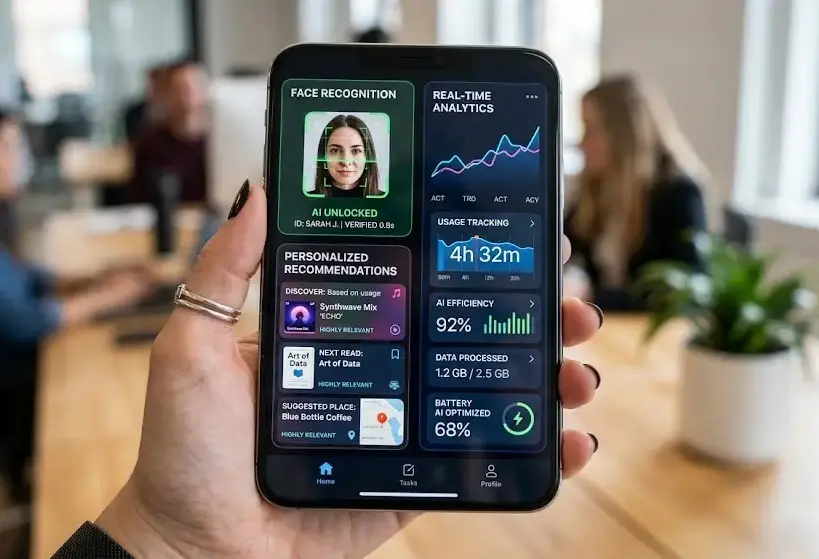
Can ai in mobile app development create revolution is defined as the use of advanced computational models and data-driven systems to automate processes, improve decision-making, and enhance mobile application functionality. These technologies let apps interpret user patterns and continuously refine their behavior. As industries demand scalable and intelligent solutions, this transformation is becoming a core requirement for modern application development.

Key Takeaways

  • AI-driven systems enable personalized and adaptive mobile experiences
  • Core technologies include machine learning, NLP, and computer vision
  • Multiple industries benefit from improved efficiency and automation
  • Challenges include data privacy, cost, and integration complexity
  • Future trends focus on real-time, autonomous, and intelligent applications

How can ai in mobile app development create revolution in user experience?

Can ai in mobile app development create revolution by delivering user-specific and continuously refined interface experiences.

Key mechanisms include:

  • Behavioral analysis for personalized recommendations
  • Voice and chat-based interfaces for accessibility
  • Predictive actions based on usage patterns

Example:
Streaming and ecommerce apps suggest content or products based on past interactions, improving engagement and retention.

What technologies support ai in mobile app development revolution?

Can ai in mobile app development create revolution using a blend of intelligent technological systems.

TechnologyFunction
Machine LearningPattern recognition and predictions
Natural Language ProcessingVoice and text understanding
Computer VisionImage and video analysis
Edge ComputingReal-time processing on devices

Working together, these technologies boost performance and responsiveness.

Can ai in mobile app development create revolution across diverse business domains?

Can ai in mobile app development create revolution by transforming multiple sectors:

  • Healthcare: Diagnostic assistance and patient monitoring
  • Finance: Fraud detection and risk analysis
  • Retail: Personalized shopping experiences
  • Logistics: Route optimization and demand forecasting

These applications follow industry standards such as data protection regulations and interoperability frameworks.

What value does the ai in mobile app development revolution bring?

Can ai in mobile app development create revolution by offering clear and practical benefits.

Improved operational efficiency

  • Enhanced user engagement
  • Reduced development and maintenance costs
  • Real-time decision-making capabilities

Industry practice:
Enterprises adopt automated testing and monitoring solutions to sustain performance consistency and compliance.

What challenges limit ai in mobile app development revolution?

Can ai in mobile app development create revolution, yet there are notable limitations to consider.

Data privacy and regulatory compliance (e.g., GDPR-like frameworks)

  • High initial implementation cost
  • Dependency on high-quality datasets
  • Integration complexity with legacy systems

Addressing these challenges requires structured governance and secure data handling practices.

How is ai in mobile app development transforming future applications?

Can ai in mobile app development create revolution with autonomous systems that adapt to their surroundings.

Future trends include:

  1. Hyper-personalized interfaces
  2. AI-driven security systems
  3. Real-time analytics integration
  4. Cross-platform intelligent ecosystems

A mobile app ecosystem is often discussed alongside intelligent automation tools, predictive analytics platforms, and adaptive user interface systems.

Conclusion

Can ai in mobile app development create revolution by redefining how applications are built, deployed, and experienced across industries. As frameworks evolve, structured implementation and compliance will remain essential for sustainable adoption. For continued innovation, approaches like app development using ai in natural language are expected to further simplify and accelerate development processes.

FAQ

Can ai in mobile app development create revolution in small businesses?

Yes, it enables automation, cost reduction, and improved customer engagement for scalable growth.

Is ai in mobile app development secure?

Security depends on proper data governance, encryption, and compliance with regulatory standards.

What industries benefit most from this revolution?

The highest impact is seen in healthcare, finance, retail, and logistics because of their strong dependence on data.

Does implementing ai increase development cost?

Initial costs may be higher, but long-term efficiency reduces overall expenses.

Can ai replace traditional app development methods?

It enhances rather than replaces traditional methods by adding intelligence and automation.

Sources

https://www.alignminds.com/ai-is-transforming-mobile-app-development/
https://geekinformatic.com/how-ai-is-revolutionizing-mobile-app-development/
https://quantal.ai/insights/how-ai-is-revolutionizing-mobile-app-development
https://smtlabs.io/blog/ai-in-mobile-app-development
https://www.linkedin.com/pulse/ai-revolution-your-pocket-how-artificial-intelligence-transforming-3itdc
https://www.evoortsolutions.com/blog/evolving-mobile-app-development-the-role-of-ai
https://www.fingent.com/blog/how-artificial-intelligence-can-help-create-transforming-mobile-apps/
https://webandcrafts.com/blog/ai-in-mobile-app-development
READ MORE
Uncategorized
Umesh Kumar KhiriMay 4, 2026 0 Comments
Share article:TwitterFacebookLinkedin
20 Views
3 Likes

app development using ai in natural language: 7 Powerful Methods That Transform Software Creation

App development using ai in natural language is the process of creating applications by converting human language instructions into functional software components. It reduces dependency on manual coding while enabling faster prototyping and deployment. How does this approach reshape traditional development workflows while maintaining quality and compliance?

Key Takeaways

  • Converts human language into functional software components
  • Reduces development time and technical barriers
  • Relies on NLP, machine learning, and automation tools
  • Used widely in enterprise and automation systems
  • Requires validation and compliance for accuracy and security

What is app development using ai in natural language and how does it work?

App development using ai in natural language works by translating user-written instructions into structured logic, code, or workflows.

Core components include:

  • Natural language processing (NLP) for understanding intent
  • Code generation engines for translating instructions
  • Pre-trained models for contextual accuracy

Example workflow:

  1. User inputs: “Create a login page with email validation”
  2. System interprets intent
  3. Code modules are generated automatically
  4. Output is refined through validation tools

What are the key benefits of app development using ai in natural language?

App development using ai in natural language improves efficiency, accessibility, and development speed.

Key benefits:

  • Reduced development time through automation
  • Lower technical barriers for non-developers
  • Faster prototyping and iteration cycles
  • Improved collaboration between technical and non-technical teams

Industry example:
Enterprise platforms use natural language tools to generate dashboards and workflows without manual scripting.

What technologies support app development using ai in natural language?

App development using ai in natural language relies on multiple technologies working together.

TechnologyFunction
NLP (Natural Language Processing)Interprets user input
Machine Learning ModelsImprove accuracy over time
APIs & SDKsIntegrate generated logic into apps
Low-code PlatformsEnable visual development

Standards and practices:

  • ISO/IEC 25010 for software quality
  • GDPR compliance for data handling
  • Secure API integration frameworks

How is app development using ai in natural language applied in real-world scenarios?

App development using ai in natural language is used across industries to streamline operations.

Common applications:

  • Customer support chatbots
  • Automated report generation
  • Business workflow automation
  • Voice-enabled mobile apps

Example use case:
A retail platform can generate inventory management systems by describing requirements in plain language.

It is often discussed alongside no-code platforms, conversational interfaces, and intelligent automation tools.

What are the challenges in app development using ai in natural language?

App development using ai in natural language introduces technical and operational challenges.

Key challenges:

  • Ambiguity in language interpretation
  • Limited customization in complex systems
  • Data privacy and compliance risks
  • Dependence on training data quality

Mitigation strategies:

  • Use structured prompts
  • Apply validation layers
  • Conduct regular compliance audits

How can businesses implement app development using ai in natural language effectively?

App development using ai in natural language requires a structured implementation approach.

Steps to follow:

  1. Define clear use cases
  2. Select appropriate platforms or tools
  3. Train systems with domain-specific data
  4. Integrate with existing infrastructure
  5. Monitor and optimize outputs

Best practices:

  • Maintain human oversight
  • Ensure data security compliance
  • Use iterative development cycles

Conclusion

App development using ai in natural language enables faster and more accessible software creation through structured interpretation and automation. As organizations adopt this approach, combining it with strategies like ai-powered review management benefits in app development strengthens both development efficiency and user feedback integration.

FAQs

What is app development using ai in natural language?

It is a method of building applications by converting human language instructions into code or workflows.

Is coding knowledge required for this approach?

Basic understanding helps, but many platforms allow non-developers to create applications.

What industries use this method?

It is used in healthcare, retail, finance, and enterprise software development.

What are the main risks?

Risks include misinterpretation of input, data privacy issues, and limited customization.

How accurate is natural language-based development?

Accuracy depends on model quality, input clarity, and validation mechanisms.

Sources

https://linkupst.com/software/blog-software/ai-app-development
https://newgensoft.com/in/resources/article/role-of-generative-ai-in-app-development/
https://softwaremind.com/blog/how-to-use-ai-in-mobile-app-development/
https://www.salesforce.com/in/platform/enterprise-app-development/ai-app-development/
https://www.lucentinnovation.com/resources/technology-posts/ai-in-app-development
https://www.couchbase.com/blog/ai-app-development/
https://www.codelessone.com/blog/the-role-of-natural-language-processing-in-no-code-app-development/
https://www.empat.tech/blog/ai-app-development
https://www.rapidinnovation.io/post/natural-language-processing-for-ai-apps
https://www.iqlance.com/guide-to-ai-in-mobile-app-development/

READ MORE
Uncategorized
Umesh Kumar KhiriMay 4, 2026 0 Comments
Share article:TwitterFacebookLinkedin
18 Views
5 Likes

ai-powered review management benefits in app development: 7 Proven Advantages for Scalable Growth

ai-powered review management benefits in app development involve automated systems that process user reviews, extract insights, and support faster decision-making. These systems help development teams understand user sentiment, detect issues, and optimize app performance. How can applications maintain consistent quality when feedback volume increases across platforms?

Key Takeaways

  • ai-powered review management benefits in app development enable scalable feedback analysis
  • They improve user experience through faster issue resolution
  • Data-driven insights support better product decisions
  • Compliance and quality standards are easier to maintain
  • Implementation requires structured integration and continuous optimization

What Are the Core ai-powered review management benefits in app development?

ai-powered review management benefits in app development enable structured feedback processing and actionable insights.

Key benefits include:

  • Automated sentiment classification (positive, neutral, negative)
  • Real-time feedback aggregation across app stores
  • Keyword extraction for feature requests and bugs
  • Prioritization of critical issues

Example:
A mobile banking app can instantly detect recurring complaints about login failures and trigger fixes.

How Do ai-powered review management benefits in app development Improve User Experience?

ai-powered review management benefits in app development enhance user experience by enabling faster response cycles.

Practical improvements:

  • Quick identification of usability issues
  • Personalized response generation
  • Continuous UX optimization based on feedback trends

Industry practice:
Apps in fintech and healthcare use structured review monitoring to meet user satisfaction benchmarks and regulatory expectations.

What Role Do ai-powered review management benefits in app development Play in Decision-Making?

ai-powered review management benefits in app development support data-driven product decisions.

Decision support includes:

  1. Feature prioritization based on user demand
  2. Bug tracking through review clustering
  3. Release planning aligned with feedback patterns
Insight TypeApplication Use Case
Sentiment trendsProduct roadmap adjustments
Feature requestsNew feature development
Complaint clustersBug fixing and patch releases

How Do ai-powered review management benefits in app development Support Compliance and Quality Standards?

ai-powered review management benefits in app development help maintain compliance with industry standards.

Relevant standards and practices:

  • Data privacy regulations (GDPR-like frameworks)
  • App store review policies
  • Quality assurance benchmarks

Example:
Healthcare apps must monitor reviews for safety concerns and respond in line with compliance requirements.

How Are ai-powered review management benefits in app development Applied Across Industries?

ai-powered review management benefits in app development are widely used across sectors.

Industry applications:

  • Ecommerce: Product feedback analysis for better recommendations
  • Healthcare: Monitoring patient app experiences
  • Logistics: Tracking delivery-related complaints
  • Fintech: Identifying transaction issues

A review management system is often discussed alongside sentiment analysis tools, customer feedback automation, and app performance monitoring systems.

What Are the Implementation Steps for ai-powered review management benefits in app development?

ai-powered review management benefits in app development require structured integration.

Implementation steps:

  1. Integrate review APIs from app stores
  2. Apply sentiment and text analysis models
  3. Build dashboards for insights visualization
  4. Automate response workflows
  5. Continuously refine based on feedback accuracy

Best practice:
Combine review insights with analytics data for comprehensive performance tracking.

Conclusion

ai-powered review management benefits in app development provide a structured framework for feedback analysis, quality control, and user-centric improvements. As applications scale, integrating these systems ensures consistent performance and informed decision-making. For broader system-level strategies, understanding ai integration in enterprise app development alternatives helps align review management with enterprise architecture.

FAQs

What are ai-powered review management benefits in app development?

They refer to automated systems that analyze user reviews to improve app quality and decision-making.

How do these systems improve app performance?

They identify bugs, track sentiment, and prioritize updates based on real user feedback.

Are these solutions suitable for all industries?

Yes, they are widely used in ecommerce, healthcare, fintech, and logistics applications.

Do they support compliance requirements?

Yes, they help monitor feedback and ensure responses align with regulatory and platform standards.

What tools are commonly used?

Tools include sentiment analysis engines, review aggregation platforms, and automated response systems.

Sources

https://appfollow.io/blog/what-are-the-benefits-of-AI-powered-review-management-for-mobile-apps
https://manysphere.com/blog/ai-mobile-app-development-benefits-use-cases
https://cubehq.ai/blogs/ai-review-management-businesses/
https://unify360.com/how-ai-driven-review-management-changes-the-game-for-small-businesses/
https://dbaplatform.com/blog/ai-powered-solution-revolutionizes-business-review-management
https://www.mooglelabs.com/case-study/ai-powered-review-management
https://piconext.com/platform/ai-reviews-management/
https://www.mindpathtech.com/blog/ai-in-mobile-app-development-benefit/
https://www.krishangtechnolab.com/blog/ai-in-software-development/
https://www.zoho.com/creator/decode/ai-assisted-software-development-applications-and-benefits

READ MORE
Uncategorized
Umesh Kumar KhiriMay 4, 2026 0 Comments
Share article:TwitterFacebookLinkedin
22 Views
3 Likes

AI Integration in Enterprise App Development Alternatives: 7 Proven Options

AI integration in enterprise app development alternatives is the process of incorporating intelligent functionalities into enterprise applications using varied frameworks, platforms, or architectures instead of a single standardized approach. These alternatives are essential because enterprises differ in infrastructure, data sensitivity, and operational scale. How can organizations select the most suitable integration path while maintaining compliance and performance?

Key Takeaways

  • AI integration alternatives include cloud, on-premise, hybrid, edge, and API-based models
  • Security and compliance drive architecture decisions in enterprises
  • Low-code platforms simplify and accelerate implementation
  • API-based integration enables modular and cost-effective deployment
  • Hybrid models are increasingly preferred for balancing flexibility and control

What are the main AI integration in enterprise app development alternatives?

AI integration in enterprise app development alternatives can be categorized into several structured approaches based on deployment and architecture:

Alternative TypeDescriptionExample Use Case
Cloud-based AIUses third-party cloud servicesChatbots, analytics dashboards
On-premise AIHosted within enterprise infrastructureBanking fraud detection
Hybrid AICombines cloud and local processingHealthcare data systems
Edge AIProcesses data on local devicesIoT-based monitoring
API-based AIIntegrates pre-built AI services via APIsNLP-based customer support

These classifications allow enterprises to align integration with security and scalability needs.

How do cloud and on-premise alternatives differ in enterprise applications?

AI integration in enterprise app development alternatives often involves choosing between cloud and on-premise models:

Cloud-based approach:

  • Scalable and cost-efficient
  • Faster deployment
  • Dependent on internet connectivity

On-premise approach:

  • Greater data control and privacy
  • Higher upfront infrastructure cost
  • Suitable for regulated industries

Industry practice shows finance and healthcare prefer on-premise or hybrid models due to strict compliance requirements such as GDPR and HIPAA-like frameworks.

What role do low-code and no-code platforms play in AI integration alternatives?

AI integration in enterprise app development alternatives increasingly includes low-code and no-code platforms to simplify development:

Key benefits:

  • Reduced development time
  • Minimal coding expertise required
  • Built-in AI modules (prediction, automation)

Examples of usage:

  • Workflow automation systems
  • CRM customization
  • Internal enterprise dashboards

These platforms enable faster experimentation without extensive engineering resources

How do API-based AI services function as an alternative?

AI integration in enterprise app development alternatives frequently relies on API-based services for modular implementation.

How it works:

  1. Select AI service (e.g., NLP, vision, recommendation)
  2. Integrate via REST or SDK
  3. Process enterprise data through external models

Advantages:

  • Rapid integration
  • No need for model training
  • Cost-effective for small to mid-scale applications

This method is widely used in customer support automation and document processing systems.

What are the compliance and security considerations for AI integration alternatives?

AI integration in enterprise app development alternatives is required to follow recognized governance and security protocols.

Key considerations:

  • Data encryption (in transit and at rest)
  • Access control and identity management
  • Model transparency and auditability

Relevant standards:

  • ISO/IEC 27001 for information security
  • GDPR for data protection
  • SOC 2 compliance for service providers

Enterprises handling sensitive data often prefer hybrid or on-premise models to meet these requirements.

How do enterprises choose the right AI integration alternative?

AI integration in enterprise app development alternatives is selected based on structured evaluation:

Decision factors:

  • Data sensitivity level
  • Budget constraints
  • Infrastructure readiness
  • Required scalability
  • Real-time processing needs

Selection steps:

  1. Define business objective
  2. Assess data availability
  3. Evaluate deployment environment
  4. Test integration approach
  5. Monitor performance and compliance

A related concept often discussed alongside this topic includes enterprise automation platforms, intelligent workflows, and predictive analytics systems.

Conclusion

AI integration in enterprise app development alternatives provides flexible pathways for implementing intelligent capabilities across diverse business environments. Selecting the right model depends on infrastructure, compliance needs, and operational goals. As adoption expands into specialized domains such as ai in healthcare app development, enterprises will increasingly rely on hybrid and modular approaches for sustainable innovation.

FAQ

What are AI integration alternatives in enterprise development?

They are different methods such as cloud, on-premise, hybrid, and API-based approaches used to embed intelligent features into enterprise systems.

Which AI integration alternative is most secure?

On-premise and hybrid models are generally more secure due to greater control over sensitive data.

Why do enterprises use API-based AI integration?

It allows efficient deployment without building models anew, minimizing both time investment and development costs.

Are low-code platforms suitable for enterprise AI integration?

Yes, they are effective for rapid development and prototyping with built-in intelligent features.

What factors influence the choice of integration alternative?

Key factors include data sensitivity, cost, scalability requirements, and compliance obligations.

Sources

https://www.whitelotuscorporation.com/building-smarter-apps-integrating-ai-into-modern-development/
https://www.trootech.com/blog/ai-integration-enterprise-systems
https://www.g2.com/products/ai-integration-in-enterprise-applications/competitors/alternatives
https://www.kellton.com/kellton-tech-blog/enterprise-ai-integration-beyond-app-modernization
https://www.zoho.com/creator/decode/why-ai-assisted-app-development-is-future-of-enterprise-app-building
https://www.outsystems.com/ai/ai-software-development/
https://medium.com/@joshi.vignesh/integrating-ai-into-enterprise-apps-isnt-optional-it-s-a-necessity-5a35b2813152
https://reflex.dev/blog/top-7-enterprise-ai-app-builders/
https://triazinesoft.com/us/blog-details.php?post=how-ai-powered-enterprise-software-development-services-are-transforming-modern-businesses

READ MORE
Uncategorized
Umesh Kumar KhiriMay 2, 2026 0 Comments
Share article:TwitterFacebookLinkedin
17 Views
5 Likes

AI in Healthcare App Development: 7 Powerful Use Cases and Practical Insights

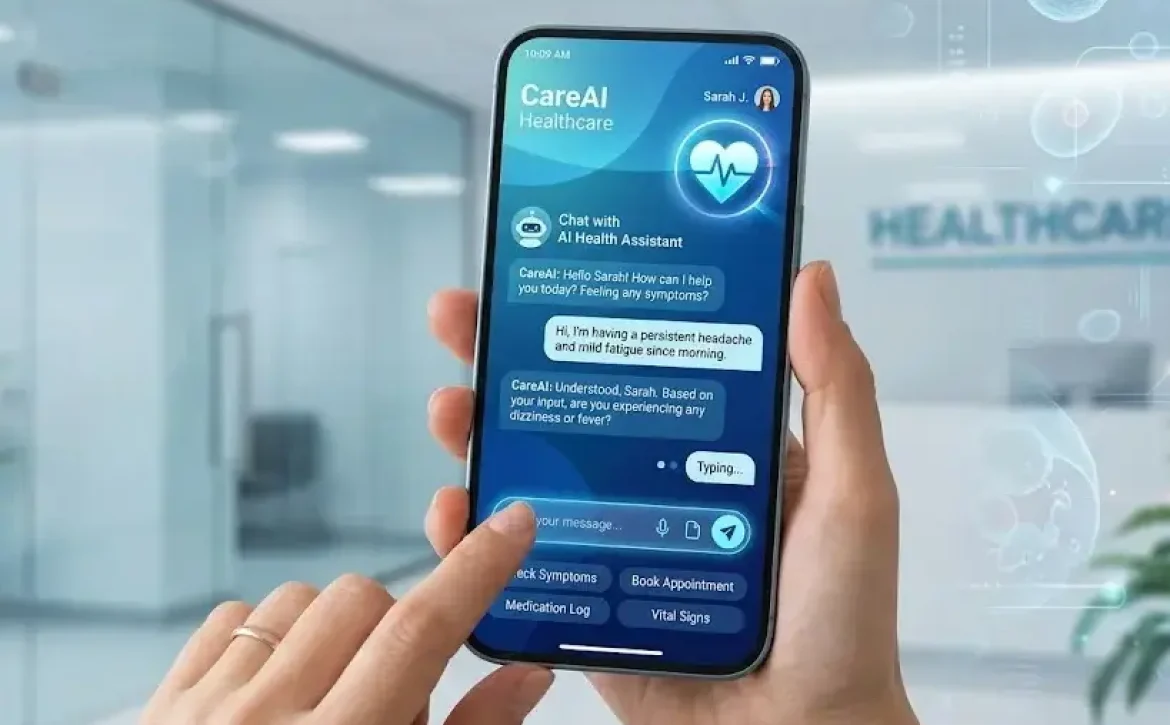
AI in healthcare app development is the use of data-driven models and automation within healthcare applications to support clinical decisions, patient monitoring, and operational efficiency. It supports healthcare providers in managing large datasets, refining diagnostic outcomes, and personalizing patient care. How does this technology reshape modern healthcare delivery?

Key Takeaways

  • AI in healthcare app development improves clinical accuracy and efficiency
  • Common applications include diagnostics, monitoring, and virtual assistants
  • Development requires structured processes and regulatory compliance
  • Challenges include data privacy, bias, and system integration
  • Adoption is expanding across multiple healthcare and technology domains

How does AI contribute to healthcare app development?

AI in healthcare app development plays a functional role in improving decision-making and automation within medical systems.

Key roles include:

  • Clinical decision support: Assists doctors with diagnosis recommendations
  • Predictive analytics: Identifies risks such as disease progression
  • Workflow automation: Reduces administrative workload
  • Patient engagement: Enables chatbots and virtual assistants

Example:
AI-driven radiology applications interpret medical images to detect anomalies quicker than conventional methods.

What are the primary use cases of AI in healthcare apps?

AI in healthcare app development supports multiple real-world applications across medical domains.

Application AreaDescription
Medical imagingDetects tumors, fractures, anomalies
Virtual health assistantsProvides symptom checking and guidance
Remote patient monitoringTracks vitals using wearable devices
Drug discoveryAccelerates research and molecule prediction
Personalized medicineTailors treatments using patient data

A healthcare application ecosystem is often discussed alongside telemedicine platforms, wearable health apps, and electronic health record systems.

Why is AI in healthcare app development important?

AI in healthcare app development is important due to its measurable impact on healthcare quality and efficiency.

Core benefits:

  • Improved accuracy: Reduces diagnostic errors
  • Cost efficiency: Automates repetitive processes
  • Scalability: Supports large patient populations
  • Faster insights: Processes vast clinical datasets quickly

Industry reference:
The World Health Organization and similar global institutions encourage the safe and responsible adoption of intelligent healthcare technologies.

How is AI applied in real-world healthcare app development scenarios?

AI in healthcare app development includes several practical implementations used globally.

Examples:

  • Diagnostic apps: Skin disease detection tools using image recognition
  • Mental health apps: Chat-based therapy assistants
  • Fitness and wellness apps: Personalized health recommendations
  • Chronic disease management apps: Diabetes and heart monitoring tools

These examples demonstrate how AI improves both preventive and clinical care delivery.

How is AI in healthcare app development built and implemented?

AI in healthcare app development follows structured development steps aligned with healthcare standards.

Typical process:

  1. Data collection: Gather clinical and patient data
  2. Model training: Train algorithms using datasets
  3. Integration: Embed models into mobile or web apps
  4. Testing: Validate accuracy and reliability
  5. Compliance check: Ensure adherence to standards like HIPAA or GDPR
  6. Deployment: Launch with continuous monitoring

Best practices:

  • Use secure cloud or hybrid deployment
  • Ensure data privacy and encryption
  • Validate models with clinical experts

What challenges exist in AI in healthcare app development?

AI in healthcare app development deals with a range of technical and regulatory complexities.

Key challenges:

  • Data privacy risks: Sensitive patient data handling
  • Regulatory compliance: Meeting healthcare laws and standards
  • Bias in data: Inaccurate outcomes due to unbalanced datasets
  • Integration complexity: Compatibility with legacy systems

Addressing these challenges requires strong governance frameworks and validation processes.

Conclusion

AI in healthcare app development is transforming clinical workflows through structured applications such as diagnostics, monitoring, and predictive analytics. Its classification into applications, processes, and compliance frameworks provides clarity for implementation. As industries evolve, similar structured adoption can also be observed in domains like ai in food delivery app development, reflecting broader cross-sector innovation.

FAQs

What is AI in healthcare app development?

It is the integration of intelligent data-processing systems into healthcare apps to improve diagnosis, monitoring, and decision-making.

What are key benefits of AI in healthcare apps?

They improve accuracy, automate workflows, and enable personalized treatment approaches.

What technologies are used in AI healthcare apps?

These technologies commonly involve machine learning, natural language processing, and computer vision.

Is AI in healthcare app development regulated?

Yes, it is required to meet regulatory requirements such as HIPAA, GDPR, and medical device guidelines.

Can students build AI healthcare projects?

Yes, common projects include disease prediction models, symptom checkers, and health monitoring apps.

Sources

https://pmc.ncbi.nlm.nih.gov/articles/PMC8285156/
https://www.aleaitsolutions.com/ai-in-healthcare-app-development
https://www.coursera.org/in/articles/ai-in-health-care
https://trigma.com/industries/ai-healthcare-app-development/
https://www.delveinsight.com/blog/top-artificial-intelligence-based-healthcare-mobile-apps
https://appinventiv.com/guide/healthcare-app-development-guide/
https://solveit.dev/blog/healthcare-app-development-guide
https://www.aress.com/blog/read/steps-to-create-an-ai-healthcare-android-app-in-2025
https://www.who.int/teams/digital-health-and-innovation/harnessing-artificial-intelligence-for-health

READ MORE
  • 1
  • …
  • 7
  • 8
  • 9
  • 10
  • 11
  • …
  • 13

Recent Posts

  • Debugging Goals in Software Testing: 7 Powerful Benefits for Reliable Applications
  • Importance of Debugging in Software Development: 7 Powerful Benefits for Software Quality
  • What Is the Purpose of Debugging in Software Testing? 7 Powerful Benefits You Must Know
  • How to Debug Software: 7 Essential Methods for Finding and Fixing Errors
  • Debugging in Software Development Cycle: 7 Powerful Techniques for Error-Free Applications

Recent Comments

  1. Fred Hyman on Yellow Cap
  2. Fred Hyman on T-Shirt Full Hand
  3. Fred Hyman on Yellow Cap
  4. Randal Gray on Black T-Shirt
  5. John Harris on Black T-Shirt

Archives

  • June 2026
  • May 2026
  • April 2026
  • March 2026

Categories

  • AI in App Development
  • Uncategorized
Recent Posts
  • Debugging Goals in Software Testing: 7 Powerful Benefits for Reliable Applications
    Debugging Goals in Software Testing: 7 Powerful Benefits for Reliable Applications
    June 9, 2026
  • Importance of Debugging in Software Development: 7 Powerful Benefits for Software Quality
    Importance of Debugging in Software Development: 7 Powerful Benefits for Software Quality
    June 9, 2026
  • What Is the Purpose of Debugging in Software Testing? 7 Powerful Benefits You Must Know
    What Is the Purpose of Debugging in Software Testing? 7 Powerful Benefits You Must Know
    June 8, 2026
Categories
  • AI in App Development5
  • Uncategorized129
logotype

RCEENetworks LLC

1-844-284-3695

info@rceenetworks.com

3010 Lyndon B Johnson Fwy #1200, Dallas, TX 75234, United States

Menu

HomeServices

ProductsBlog

Contact

Other Links

RetinaWiseAI™Privacy PolicyContent PolicyTerms & Conditions

Social Links

TwitterFacebookInstagramLinkedin

Copyright © 2026 RCEENetworks LLC. All Rights Reserved