RCEE+Networks LLC
  • Home
  • About
  • Services
    • IMACAM™ Tech Support
  • Products
    • RetinaWiseAI™
  • Contact
1-844-2-THEOWL
info@rceenetworks.com
logotype
  • Home
  • About
  • Services
    • IMACAM™ Tech Support
  • Products
    • RetinaWiseAI™
  • Contact
logotype
  • Home
  • About
  • Services
    • IMACAM™ Tech Support
  • Products
    • RetinaWiseAI™
  • Contact
Author: Umesh Kumar Khiri
Home Umesh Kumar Khiri Page 10
Uncategorized
Umesh Kumar KhiriMay 2, 2026 0 Comments
Share article:TwitterFacebookLinkedin
21 Views
4 Likes

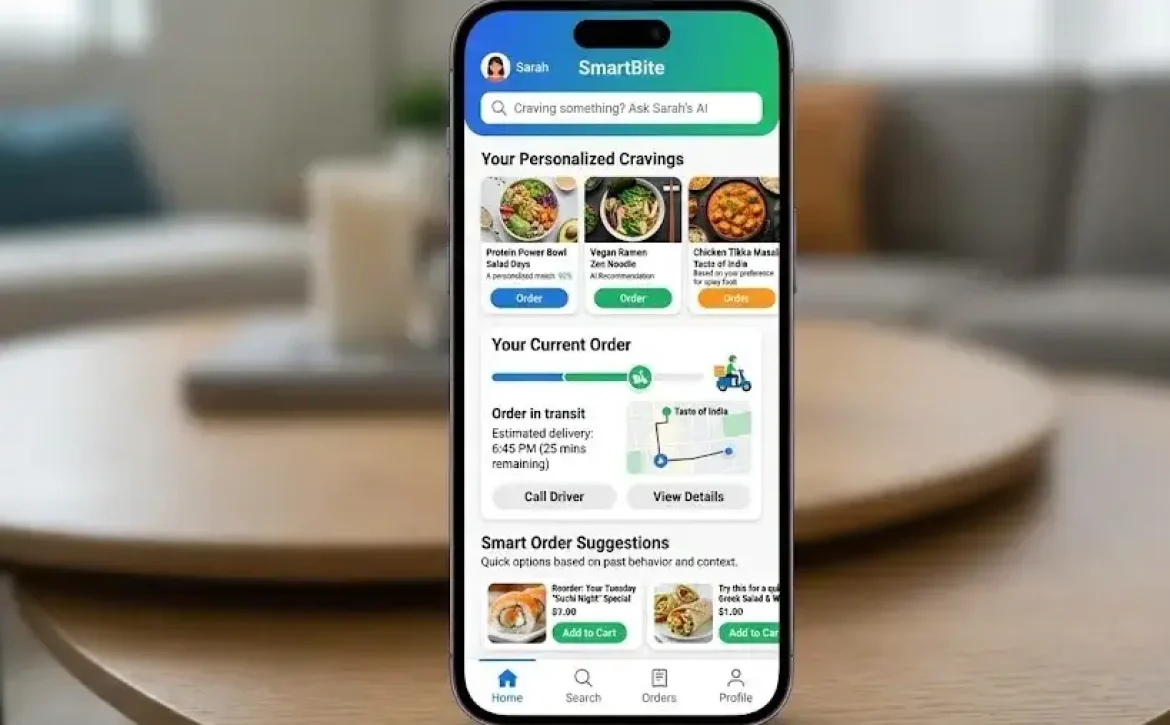
ai in food delivery app development: 7 Powerful Capabilities Transforming Digital Ordering

AI in food delivery app development utilizes sophisticated computational methods to refine order processing, logistics management, and customer engagement. It supports real-time insights, predictive modeling, and automated workflows. How do these advancements drive better performance and user satisfaction in a competitive landscape?

Key Takeaways

  • ai in food delivery app development enhances efficiency and personalization
  • Core applications include logistics optimization and demand forecasting
  • Technologies include ML, NLP, and cloud computing
  • Challenges include cost, data privacy, and system complexity
  • Widely adopted across modern digital food platforms

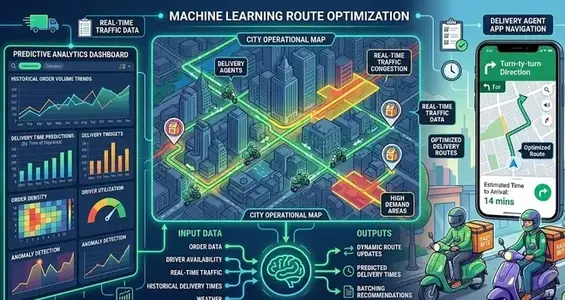
How does AI in food delivery app development work, and what does it involve?

ai in food delivery app development operates by analyzing large datasets from user behavior, orders, and logistics systems to improve decision-making.

Core components include:

  • Predictive models using machine learning for demand estimation
  • NLP-driven chatbots and voice ordering interfaces
  • Intelligent routing systems for efficient deliveries

Example workflow:

  1. User places an order
  2. System predicts preparation and delivery time
  3. Delivery route is optimized in real time

These systems align with data processing standards and API-driven architectures for scalability.

How does ai in food delivery app development improve customer experience?

AI in food delivery app development elevates customer experience with personalized features and efficient operations.

Key improvements:

  • Personalized food recommendations based on order history
  • Smart search and voice-enabled ordering
  • Real-time order tracking with predictive delivery time

Example:
Apps suggest meals during peak hours based on previous preferences, increasing engagement and repeat orders.

What practical use cases define AI in food delivery app development?

ai in food delivery app development is applied across multiple operational and customer-facing functions.

Primary use cases:

Use CaseFunctionality
Demand forecastingPredicts order volume by time/location
Delivery optimizationReduces delivery time and fuel costs
ChatbotsHandles customer queries automatically
Fraud detectionIdentifies suspicious transactions

These applications are commonly integrated into cloud-based and hybrid deployment models.

How does ai in food delivery app development optimize logistics and operations?

ai in food delivery app development improves backend efficiency through automation and predictive systems.

Operational benefits:

  • Dynamic route planning using traffic and weather data
  • Automated order assignment to delivery agents
  • Inventory prediction for restaurants

Industry practice:
Platforms use real-time GPS data and predictive analytics to minimize delays and maximize delivery efficiency.

Which tools and technologies support AI in food delivery app development?

ai in food delivery app development relies on multiple technologies working together.

Core technologies include:

  • Machine learning for predictions
  • Computer vision for food image recognition
  • Cloud computing for scalability
  • Big data analytics for insights

These technologies comply with data security and interoperability standards such as RESTful APIs and cloud compliance frameworks.

What are the challenges in implementing ai in food delivery app development?

ai in food delivery app development presents several technical and operational challenges.

Common challenges:

  • High initial development and integration costs
  • Data privacy and regulatory compliance issues
  • Model accuracy and bias in predictions
  • Infrastructure requirements for real-time processing

Addressing these requires structured data governance and continuous system optimization.

Related Context

ai in food delivery app development is often discussed alongside AI food delivery app systems, AI in food technology, and artificial intelligence in food industry research applications.
Conclusion

AI in food delivery app development is enhancing modern food platforms with smart, automated, and user-focused technologies. Its classification into customer experience, logistics optimization, and operational intelligence provides a clear implementation framework. As digital commerce evolves, its integration aligns closely with broader innovations such as ai in ecommerce app development.

FAQs

What is ai in food delivery app development?

It is the use of intelligent systems to optimize ordering, delivery, and customer engagement in food delivery platforms.

How does AI improve food delivery apps?

It enhances personalization, delivery speed, and operational efficiency through predictive analytics and automation.

What are examples of AI in food delivery apps?

Examples include recommendation engines, delivery route optimization, and chatbot-based customer support.

Is AI expensive to implement in food delivery apps?

Initial costs can be high, but long-term automation and efficiency reduce operational expenses.

What technologies are used in AI food delivery apps?

It relies on machine learning, natural language processing, computer vision, and cloud computing technologies.

Sources

https://appinventiv.com/blog/ai-in-food-industry/
https://www.algosoft.co/blogs/ai-powered-food-delivery-app-development-company/
https://toxsl.ae/blog/27/how-ai-is-helping-food-delivery-app-development
https://www.orangemantra.com/blog/how-is-ai-empowering-food-delivery-apps-like-doordash/
https://appcrunk.com/blogs/food-delivery-apps-with-intelligent-ai-features
https://www.protocloudtechnologies.com/ai-in-food-delivery-app-development/
https://kodytechnolab.com/blog/ai-in-food-delivery-apps/
https://blocktechbrew.com/how-to-build-a-food-delivery-app-for-restaurant-with-ai-powered-features/
https://75way.com/food-delivery-app-development-company


READ MORE
Uncategorized
Umesh Kumar KhiriMay 2, 2026 0 Comments
Share article:TwitterFacebookLinkedin
20 Views
6 Likes

AI in Ecommerce App Development: 7 Powerful Applications and Practical Insights

AI in ecommerce app development utilizes intelligent algorithms and data analysis to enhance and optimize ecommerce applications. It enables systems to analyze user behavior, predict demand, and automate operations. How does this improve digital commerce efficiency and scalability? By reducing manual processes and delivering real-time personalization across platforms.

Key Takeaways

  • AI in ecommerce app development enhances personalization and automation
  • It includes machine learning, NLP, and computer vision technologies
  • Improves both customer experience and backend operations
  • Requires structured implementation and quality data
  • Supports scalable and data-driven digital commerce systems

What is the Role of AI in Ecommerce App Development?

AI in ecommerce app development plays a central role in optimizing both customer-facing and backend operations.

Key roles include:

  • Personalization: Product recommendations based on browsing and purchase history
  • Automation: Chatbots and virtual assistants for customer support
  • Inventory management: Demand forecasting and stock optimization
  • Fraud detection: Identifying unusual transaction patterns

Example:
Retail ecommerce systems rely on recommendation engines to improve conversion performance and grow order value.

What are the different forms of AI in ecommerce app development?

AI in ecommerce app development is grouped based on how it functions and how it is deployed.

TypeFunctionExample Use Case
Machine LearningPredictive analytics and recommendationsProduct suggestions
Natural Language ProcessingText and voice interactionChatbots, voice search
Computer VisionImage recognition and analysisVisual search
Robotic Process AutomationTask automationOrder processing

Such types are typically integrated into hybrid frameworks for optimized performance.

How does AI contribute to better customer experience in ecommerce apps?

AI in ecommerce app development improves customer experience through personalization and real-time interaction.

Key improvements:

  • Dynamic pricing based on demand and behavior
  • Smart search with intent recognition
  • 24/7 customer support via chatbots
  • Personalized marketing campaigns

Industry practice:
Ecommerce platforms integrate AI-driven recommendation engines to display relevant products on homepages and checkout pages.

How is AI utilized within ecommerce operations and logistics?

AI in ecommerce app development improves operational workflows and boosts supply chain efficiency.

Applications include:

  • Demand forecasting: Predicting sales trends
  • Warehouse automation: Robotics and smart sorting
  • Route optimization: Faster delivery planning
  • Inventory tracking: Real-time stock updates

Standards reference:
Systems are often designed in accordance with ISO standards to achieve operational consistency.

What opportunities and obstacles does AI present in ecommerce app development?

AI in ecommerce app development offers measurable benefits but also introduces challenges.

Benefits:

  • Increased conversion rates
  • Reduced operational costs
  • Improved decision-making accuracy
  • Scalable infrastructure

Challenges:

  • Data privacy compliance (e.g., GDPR-like frameworks)
  • High initial implementation cost
  • Data dependency for accuracy

What Are the Key Implementation Steps for AI in Ecommerce Apps?

AI in ecommerce app development requires a structured implementation approach.

Step-by-step process:

  1. Define business objectives and use cases
  2. Collect and preprocess data
  3. Select appropriate AI models
  4. Integrate with existing ecommerce systems
  5. Test for accuracy and performance
  6. Monitor and optimize continuously

A related area often discussed includes mobile commerce optimization, omnichannel retail systems, and digital payment integration.

Conclusion

AI in ecommerce app development provides a structured framework for personalization, automation, and operational efficiency. Its classification into machine learning, NLP, and computer vision enables targeted implementation across business functions. As digital ecosystems expand, its integration with areas like ai in android app development will further enhance mobile commerce capabilities and user engagement.

FAQ

What is AI in ecommerce app development?

It is the integration of intelligent technologies to automate, personalize, and optimize ecommerce applications.

How does AI improve ecommerce sales?

It increases conversions through personalized recommendations, dynamic pricing, and targeted marketing.

What technologies are used in AI ecommerce apps?

These platforms often make use of machine learning, natural language processing, and computer vision.

Is AI in ecommerce expensive to implement?

The starting cost may be high, but automation and efficiency decrease expenses over time.

Can small businesses use AI in ecommerce apps?

Yes, scalable cloud-based solutions make AI accessible to small and medium enterprises.

Sources

https://www.devstree.com/ai-in-e-commerce-apps-use-cases-benefits/
https://api2cart.com/ecommerce/ai-in-ecommerce-software-development/
https://dev-story.com/blog/ai-in-ecommerce/
https://hopinfirst.com/how-ai-is-driving-ecommerce-app-development/
https://www.linkedin.com/pulse/how-ai-ml-reshaping-ecommerce-app-development-2025-qftkf
https://devoxsoftware.com/blog/ai-in-e-commerce-applications-benefits-and-challenges/
https://www.blockchainappsdeveloper.com/ai-in-ecommerce
https://www.xicom.biz/blog/ai-in-ecommerce/

READ MORE
Uncategorized
Umesh Kumar KhiriMay 2, 2026 0 Comments
Share article:TwitterFacebookLinkedin
17 Views
3 Likes

AI in Android App Development: 7 Powerful Applications and Practical Insights

AI in Android app development is the integration of intelligent algorithms and data-driven models into Android applications to enable automation, personalization, and predictive functionality. It allows apps to analyze data, recognize patterns, and make decisions in real time. How does this impact modern mobile applications? It transforms them into adaptive systems capable of improving user engagement and operational efficiency.

Key Takeaways

  • AI in Android app development enhances automation and personalization
  • Integration methods include on-device, cloud, and hybrid models
  • Common use cases span healthcare, finance, and retail
  • Tools like TensorFlow Lite and ML Kit simplify implementation
  • Challenges include data privacy, complexity, and performance optimization

What is AI in Android App Development and How Does It Work?

AI in Android app development works by embedding trained models into applications or connecting them to cloud-based services.

Core components include:

  • Machine Learning (ML): Predicts user behavior and trends
  • Natural Language Processing (NLP): Enables chatbots and voice assistants
  • Computer Vision: Processes images and videos
  • Recommendation Systems: Personalizes content

Workflow:

  1. Data collection and preprocessing
  2. Model training using frameworks
  3. Integration via APIs or on-device deployment
  4. Continuous learning and updates

What Are Common Use Cases of AI in Android App Development?

AI in Android app development is applied across multiple real-world scenarios.

Examples:

  • E-commerce: Product recommendations and dynamic pricing
  • Healthcare: Symptom analysis and patient monitoring
  • Finance: Fraud detection and credit scoring
  • Navigation: Real-time traffic prediction

Industry Practice:
Apps often combine on-device processing with cloud AI for speed and scalability.

How Is AI Integrated into Android Applications?

AI in Android app development can be integrated using established tools and platforms.

Common integration methods:

MethodDescription
On-device AIRuns models locally using TensorFlow Lite
Cloud-based AIUses APIs for complex processing
Hybrid deploymentCombines local speed with cloud intelligence

Steps:

  1. Choose AI model or service
  2. Use SDKs like ML Kit or Firebase
  3. Optimize model for mobile performance
  4. Test accuracy and latency

What Are the Benefits of AI in Android App Development?

AI in Android app development improves both functionality and business outcomes.

Key benefits:

  • Enhanced personalization
  • Faster decision-making
  • Automation of repetitive tasks
  • Improved security through anomaly detection
  • Better user retention

Standard Practice:
Developers prioritize lightweight models to ensure performance on low-end devices.

What Are the Challenges and Limitations?

AI in Android app development introduces technical and operational challenges.

Major limitations:

  • High data requirements
  • Privacy and compliance concerns
  • Increased development complexity
  • Device compatibility issues

Regulatory Considerations:

  • Data protection laws (e.g., GDPR-like frameworks)
  • Transparency in automated decisions

What Tools and Frameworks Are Used in AI in Android App Development?

AI in Android app development relies on specialized tools.

Popular tools:

  • TensorFlow Lite
  • Firebase ML
  • Android ML Kit
  • PyTorch Mobile

Typical features:

  • Pre-trained models
  • Real-time inference
  • Edge AI capabilities

A related context often explored alongside this topic includes AI in mobile app development, on-device AI Android, and tools to create Android apps with AI prompts.

What Are Practical Examples of AI in Android Apps?

AI in Android app development is visible in widely used applications.

Examples:

  • Voice assistants with speech recognition
  • Camera apps with object detection
  • Fitness apps with activity tracking
  • Banking apps with fraud alerts

Classification:

  • Predictive AI
  • Conversational AI
  • Visual AI
  • Behavioral AI

Conclusion

AI in Android app development enables structured implementation of predictive, conversational, and visual intelligence within mobile ecosystems. Its classification into on-device, cloud, and hybrid deployment provides a practical framework for adoption. As adoption expands globally, trends seen in ai in mobile app development usa highlight increasing emphasis on scalability, compliance, and real-time intelligence.

FAQ

Can AI develop an Android app?

Yes, AI tools can assist in designing, coding, and testing Android apps, but human oversight is required.

What are 7 types of AI?

Reactive machines, limited memory, theory of mind, self-aware AI, machine learning, natural language processing, and computer vision.

Is there any AI for app development?

Yes, platforms like TensorFlow, Firebase, and ML Kit support AI-driven app development.

Is there any AI app for Android?

Yes, many Android apps use AI, including voice assistants, recommendation apps, and image recognition tools.

Sources

https://www.thedroidsonroids.com/blog/ai-mobile-app-development-guide
https://developer.android.com/ai
https://sumeetpanchal-21.medium.com/leveraging-ai-in-android-application-development-from-beginner-to-proficient-developer-84ca38cf6acc
https://www.linkedin.com/pulse/how-ai-transforming-android-app-development-ahmed-jawad-aman-pk4df
https://levelup.gitconnected.com/from-ai-to-first-subscription-how-i-built-an-android-app-without-writing-a-single-line-of-code-d8c1a85d2289
https://developer.android.com/ai/overview
https://firebase.google.com/products/generative-ai
https://www.reddit.com/r/androiddev/comments/1jtsrnf/question_which_ai_do_you_use_for_android/
https://www.sapphiresolutions.net/blog/integrating-ai-into-android-app-development

READ MORE
Uncategorized
Umesh Kumar KhiriMay 1, 2026 0 Comments
Share article:TwitterFacebookLinkedin
20 Views
4 Likes

AI in Mobile App Development USA: 7 Powerful Insights and Practical Applications

AI in mobile app development USA involves embedding intelligent algorithms into mobile applications to enhance functionality, automation, and user experience. This technology is extensively utilized in healthcare, fintech, retail, and logistics industries. In what ways does it impact development workflows and regulatory obligations in the United States?

Key Takeaways

  • AI in mobile app development USA enables automation, personalization, and predictive insights
  • It is widely applied across healthcare, fintech, retail, and logistics
  • Compliance with HIPAA, CCPA, and GDPR is essential
  • Deployment models include cloud, hybrid, and edge AI
  • Challenges include data management, cost, and integration complexity

What is AI in mobile app development USA and how does it work?

AI in mobile app development USA operates by integrating data-driven models into application architecture to perform tasks that typically require human intelligence.

Core components include:

• ML models designed to generate predictions from data
• NLP integrated for automated chat and voice interactions
• Computer vision applied for image and pattern recognition
• Recommendation engines enhancing user personalization

Basic workflow:

  1. Data collection from user interactions
  2. Model training using structured datasets
  3. Integration via APIs or on-device processing
  4. Continuous learning through feedback loops

Why is AI in mobile app development USA widely adopted across industries?

AI in mobile app development USA is widely adopted as it helps optimize efficiency and strengthen analytical decision-making.

Key industry use cases:

IndustryAI Application Example
HealthcareSymptom checkers, diagnostic support
FintechFraud detection, credit scoring
RetailPersonalized product recommendations
LogisticsRoute optimization and demand forecasting

Common advantages:

  • Real-time analytics
  • Reduced operational costs
  • Improved customer engagement

What are the main technologies used in AI in mobile app development USA?

AI in mobile app development USA relies on a structured technology stack.

Primary technologies:

  • Frameworks: TensorFlow Lite, Core ML
  • Cloud platforms: AWS AI, Google Cloud AI
  • APIs: Speech recognition, vision APIs
  • Edge AI: On-device processing for privacy-sensitive apps

Classification of AI integration:

  • Fully cloud-based AI
  • Hybrid AI (cloud + edge)
  • On-device AI (offline functionality)

How does AI in mobile app development USA address data privacy and regulations?

AI in mobile app development USA must comply with strict legal frameworks governing user data.

Key regulations:

  • HIPAA (healthcare data protection)
  • CCPA (consumer privacy in California)
  • GDPR (for apps handling EU user data)

Best practices:

  • Data anonymization
  • Secure API communication (HTTPS, OAuth)
  • Transparent consent mechanisms

What are the challenges in implementing AI in mobile app development USA?

AI in mobile app development USA presents technical and operational challenges.

Major challenges:

  • High-quality data availability
  • Model accuracy and bias control
  • Integration complexity with legacy systems
  • Increased development costs

Mitigation strategies:

  • Use pre-trained models where applicable
  • Implement continuous monitoring systems
  • Adopt modular architecture

How is AI in mobile app development USA evolving with emerging trends?

AI in mobile app development USA is advancing with new capabilities and architectures.

Emerging trends:

  • Generative AI for content creation
  • Voice-first and conversational interfaces
  • AI-powered cybersecurity
  • Hyper-personalization using behavioral analytics

A mobile AI application is often discussed alongside AI-powered chatbots, predictive analytics apps, and intelligent automation tools used across digital platforms.

Conclusion

AI in mobile app development USA continues to expand through structured implementation models, regulatory alignment, and industry-specific applications. Classifying it as cloud, hybrid, and edge AI helps outline a systematic deployment approach. For broader strategic context, understanding the benefits of developing ai apps in the united states supports informed decision-making and long-term scalability.

FAQ

What is AI in mobile app development USA?

It is the integration of intelligent algorithms into mobile apps to automate tasks and enhance user experience.

Which industries use AI in mobile apps in the USA?

Healthcare, financial technology, retail, and logistics lead in the use of AI-driven mobile applications.

Is AI in mobile apps regulated in the United States?

Yes, regulations like HIPAA and CCPA govern data privacy and usage in AI-based applications.

What technologies are used for AI mobile app development?

Common technologies include TensorFlow Lite, Core ML, cloud AI platforms, and NLP APIs.

What are the main challenges of AI in mobile apps?

Challenges include data quality, model accuracy, integration complexity, and compliance requirements.

Sources

https://smtlabs.io/blog/ai-in-mobile-app-development
https://www.neuronimbus.com/blog/how-usa-based-mobile-app-development-companies-are-pioneering-ai-integration
https://itechindia.co/us/mobile-application-development-services/
https://www.iqlance.com/guide-to-ai-in-mobile-app-development/
https://www.techavidus.com/blogs/ai-powered-mobile-apps
https://manysphere.com/blog/ai-mobile-app-development-benefits-use-cases
https://www.manektech.com/ai-app-development
https://technext.it/ai-app-development-companies/
https://www.mindinventory.com/blog/ai-in-mobile-app-development/

READ MORE
Uncategorized
Umesh Kumar KhiriMay 1, 2026 0 Comments
Share article:TwitterFacebookLinkedin
21 Views
5 Likes

benefits of developing ai apps in the united states: 7 Powerful Advantages for Scalable Innovation

Benefits of developing ai apps in the united states refer to the strategic, technical, and regulatory advantages available within one of the world’s most advanced technology ecosystems. The country provides a combination of innovation hubs, legal frameworks, and investment networks. Why does this environment consistently attract global AI development initiatives?

Key Takeaways

  • The U.S. offers a highly advanced AI development ecosystem
  • Regulatory clarity supports secure and compliant applications
  • Strong talent availability accelerates innovation
  • Infrastructure enables scalable deployment
  • Industry adoption drives measurable business value

What are the key benefits of developing ai apps in the united states?

Benefits of developing ai apps in the united states include a combination of infrastructure, talent, and policy support that accelerates development cycles.

Core advantages:

  • Access to high-performance cloud infrastructure
  • Mature venture capital ecosystem
  • Strong intellectual property protection
  • Integration with global tech supply chains

Example:
AI-driven healthcare apps in the U.S. often integrate with HIPAA-compliant systems, enabling secure patient data processing.

How does regulatory clarity support ai app development?

Benefits of developing ai apps in the united states are strengthened by well-defined regulatory frameworks that guide ethical and secure deployment.

Key regulatory elements:

AreaStandard/FrameworkImpact
Data PrivacyHIPAA, CCPAEnsures secure data handling
AI GovernanceNIST AI Risk FrameworkPromotes responsible AI use
Financial AISEC & FINRA rulesEnables compliant fintech apps

These frameworks reduce uncertainty and support enterprise adoption.

Why is talent availability a major advantage?

Benefits of developing ai apps in the united states include access to a highly skilled workforce across engineering, data science, and product development.

Talent ecosystem highlights:

  • Top universities producing AI specialists
  • Industry-experienced engineers
  • Cross-functional teams (AI + UX + compliance)

Example industries:

  • Healthcare diagnostics
  • Autonomous systems
  • Financial risk modeling

How does infrastructure enhance scalability?

Benefits of developing ai apps in the united states are amplified by advanced digital infrastructure.

Infrastructure components:

  • Cloud platforms (AWS, Azure, Google Cloud)
  • High-speed data centers
  • Edge computing networks

Practical outcome:

  • Faster model training
  • Real-time analytics capabilities
  • Scalable deployment across regions

What role do innovation hubs play in AI development?

ai app development in California

Benefits of developing ai apps in the united states are evident in California’s Silicon Valley ecosystem.

  • Dense startup network
  • Access to venture funding
  • Proximity to major tech companies

ai app development in Los Angeles

Los Angeles supports AI applications in media, entertainment, and content personalization.

  • AI in streaming platforms
  • Computer vision in film production

ai app development in New York

New York is a hub for fintech and enterprise AI solutions.

  • AI in banking and trading
  • Data-driven marketing platforms

How do industry applications increase ROI?

Benefits of developing ai apps in the united states include strong industry adoption, leading to measurable returns.

High-impact sectors:

  • Healthcare: predictive diagnostics
  • Finance: fraud detection
  • Retail: personalized recommendations

Related context:
AI applications are often discussed alongside automation systems, machine learning platforms, and predictive analytics tools used across enterprise workflows.

What are the economic and investment advantages?

Benefits of developing ai apps in the united states are supported by robust funding and economic incentives.

Investment ecosystem:

  • Venture capital firms
  • Government grants
  • Corporate innovation programs

Economic benefits:

  • Faster time-to-market
  • Reduced operational risk
  • Higher scalability potential

Conclusion

Benefits of developing ai apps in the united states combine regulatory structure, infrastructure, and innovation ecosystems into a scalable development environment. This framework supports consistent growth and enterprise adoption. For broader strategic context, exploring leading companies in ai app development helps identify how these advantages are applied in real-world scenarios.

FAQ

What are the main benefits of developing ai apps in the united states?

They include access to advanced infrastructure, skilled talent, strong regulations, and investment opportunities.

Why is the U.S. preferred for AI app development?

The U.S. offers a mature ecosystem with innovation hubs, funding access, and clear compliance standards.

Is AI app development in the U.S. expensive?

Costs are higher than some regions, but efficiency, scalability, and quality often offset the investment.

Which industries benefit most from AI apps in the U.S.?

Healthcare, finance, retail, and media industries see significant advantages from AI integration.

Are there regulations for AI development in the U.S.?

Yes, frameworks like HIPAA, CCPA, and NIST guidelines govern data use and AI deployment.

Sources

https://www.devstree.com/ai-app-development-cost-in-the-usa-benefits-of-outsourcing/
https://community.nasscom.in/communities/mobile-web-development/ai-web-development-top-10-benefits-and-use-cases-us-market
https://www.online.uc.edu/blog/artificial-intelligence-ai-benefits.html
https://2021-2025.state.gov/artificial-intelligence/
https://kmfinfotech.com/blogs/the-impact-of-ai-on-app-development-in-the-usa/
https://www.umu.com/ask/q11122301573854190308
https://www.mindpathtech.com/blog/ai-in-mobile-app-development-benefit/
https://www.cbo.gov/publication/61147
https://www.ht-apps.eu/en/app-development-with-ia-benefits/
https://www.tableau.com/data-insights/ai/advantages-disadvantages

READ MORE
Uncategorized
Umesh Kumar KhiriMay 1, 2026 0 Comments
Share article:TwitterFacebookLinkedin
21 Views
3 Likes

Leading Companies in AI App Development: 12 Powerful Industry Leaders

Leading companies in ai app development are organizations that build applications using data-driven technologies for automation, prediction, and decision support. These firms deliver enterprise-grade systems aligned with compliance frameworks and infrastructure requirements. What factors distinguish top providers from the rest in a competitive global market?

Key Takeaways

  • Leading companies in ai app development are defined by technical capability and compliance
  • Global leaders include both large enterprises and specialized firms
  • India is a major hub for cost-effective development services
  • Healthcare applications require strict regulatory adherence
  • Business solutions focus on system integration and scalability

What defines leading companies in ai app development?

Leading companies in ai app development are identified by their technical depth, compliance readiness, and deployment scalability.

Core evaluation criteria:

  • Technical capability: Data modeling, automation, language processing
  • Industry compliance: GDPR, HIPAA, PCI DSS
  • Deployment models: Cloud-native, hybrid, on-premise
  • Security standards: Encryption, audit trails, access control

Classification table:

CategoryFocus Area
Enterprise firmsLarge-scale transformation
Specialized firmsDomain-specific solutions
Consulting firmsStrategy and execution

Which are the top 10 leading companies in ai app development globally?

Leading companies in ai app development globally include major technology providers and consulting organizations.

Top 10 examples:

  1. Google
  2. Microsoft
  3. IBM
  4. Amazon Web Services
  5. NVIDIA
  6. Accenture
  7. Tata Consultancy Services (TCS)
  8. Infosys
  9. Wipro
  10. HCLTech

Industry practice:
These companies provide end-to-end services including data engineering, system integration, and lifecycle management.

Who are the leading companies in ai app development in India?

Leading companies in ai app development in India are known for scalable delivery and cost efficiency.

Top companies in India:

  • Tata Consultancy Services (TCS)
  • Infosys
  • Wipro
  • HCLTech
  • Tech Mahindra

Key strengths:

  • Skilled engineering workforce
  • Experience with global regulatory standards
  • Flexible pricing and outsourcing models

This segment is often discussed alongside top AI companies to invest in, listed artificial intelligence companies in India, and emerging technology firms.

How do companies specialize in medical ai app development?

Leading companies in ai app development for healthcare prioritize compliance and clinical reliability.

Specialized solutions:

  • Diagnostic imaging systems
  • Patient monitoring platforms
  • Electronic health record integration

Regulatory frameworks:

  • HIPAA (United States)
  • GDPR (Europe)
  • CDSCO (India)

Use cases:

  • Clinical decision support
  • Remote patient care
  • Drug discovery systems

What are the best app development companies in ai for business solutions?

Leading companies in ai app development for enterprises concentrate on integrating applications into existing workflows and platforms.

Core capabilities:

  • CRM and ERP integration
  • Workflow automation
  • Predictive analytics dashboards

Typical architecture:

  • API-first systems
  • Microservices-based deployment
  • Real-time data pipelines

Which companies specialize in custom ai development for mobile apps?

Leading companies in ai app development for mobile applications emphasize performance and personalization.

Custom development areas:

  • Recommendation engines
  • Voice-enabled interfaces
  • On-device processing

Development process:

  1. Data preparation
  2. Model development
  3. Mobile optimization
  4. Deployment and monitoring

Conclusion

Leading companies in ai app development are distinguished by their ability to combine compliance, scalability, and domain expertise. Selecting providers based on specialization and integration capabilities ensures long-term operational value. For broader implementation strategies, understanding gen ai in app development provides essential context for evolving application ecosystems.

FAQs

What are leading companies in ai app development?

They are enterprises that build data-driven applications focused on automation, analytics, and operational decision-making.

Which country has the most ai app development companies?

The United States and India account for the greatest concentration because of their advanced technology environments.

How do I choose the best ai app development company?

Evaluate technical expertise, compliance standards, scalability, and industry experience.

Are ai app development services expensive?

The overall cost is influenced by project difficulty, data requirements, and deployment scale.

What industries use ai app development the most?

Healthcare, finance, retail, manufacturing, and logistics are the primary users.

Sources

https://75way.com/blog/top-ai-app-development-companies
https://www.linkedin.com/pulse/top-10-ai-app-development-companies-lfq0c
https://dribbble.com/resources/agencies/ai-app-development-companies
https://www.forbes.com/lists/ai50/
https://indatalabs.com/blog/ai-software-development-companies
https://fixnhour.com/blog/top-ai-app-companies-in-bangalore
https://www.secuodsoft.com/blog/machine-learning-and-ai/top-10-ai-development-companies-in-india.php
https://riseuplabs.com/ai-app-development-companies/
https://www.businessofapps.com/app-developers/
https://limeup.io/blog/ai-app-development-company/

READ MORE
Uncategorized
Umesh Kumar KhiriMay 1, 2026 0 Comments
Share article:TwitterFacebookLinkedin
22 Views
4 Likes

gen ai in app development: 7 Powerful Insights for Building Scalable Applications

Gen ai in app development is the application of generative systems to design, build, and enhance software through automated content generation, intelligent workflows, and adaptive user interfaces. It supports faster development and improved system efficiency. How does this approach influence modern application architecture and deployment practices?

Key Takeaways

  • Gen ai in app development enables automated and scalable application features
  • Mobile apps benefit from personalization and real-time interactions
  • Cloud platforms support deployment and infrastructure needs
  • Compliance and governance are critical for implementation
  • Adoption is expanding across industries with diverse use cases

generative ai in mobile app development

What is the role of gen ai in app development for mobile platforms?

Gen ai in app development enables mobile apps to deliver dynamic, personalized, and automated user experiences.

Key roles:

  • Real-time content and UI generation
  • Personalized recommendations based on user behavior
  • Voice-enabled interactions and chat-based interfaces
  • Automated notifications and predictive features

Example:
Retail apps generate product descriptions and suggest items based on browsing history.

develop generative ai apps in azure

How does gen ai in app development integrate with Azure platforms?

Gen ai in app development uses Azure services to manage infrastructure, data processing, and deployment pipelines.

Implementation steps:

  1. Select pre-trained or custom models
  2. Integrate APIs into application logic
  3. Configure data pipelines
  4. Deploy using cloud services

Table: Key Components

ComponentPurpose
API ServicesContent and logic generation
Storage SystemsData handling and retrieval
Compute EnginesModel execution and scaling
Security LayersCompliance and access control

What are the core benefits of gen ai in app development?

Gen ai in app development improves efficiency and scalability while enhancing user engagement.

Benefits include:

  • Faster development through automation
  • Scalable personalization across users
  • Reduced manual content creation
  • Continuous system improvement through feedback

Industry practice:
Customer service applications automate responses to reduce workload and improve response time.

What challenges exist in gen ai in app development?

Gen ai in app development presents several operational and regulatory challenges.

Common challenges:

  • Data privacy and protection concerns
  • Output inconsistency and bias
  • High infrastructure requirements
  • Complex system integration

Mitigation approaches:

  • Implement strict data governance policies
  • Use validation and monitoring systems
  • Apply modular architecture for easier integration

How is gen ai in app development applied across industries?

Gen ai in app development is widely adopted across multiple sectors.

Use cases:

  • Healthcare: automated documentation
  • Finance: report generation and risk analysis
  • Education: adaptive learning content
  • Retail: personalized shopping experiences

A closely related area often explored alongside this topic includes prompt design, model customization, and intelligent workflow automation.

What standards guide gen ai in app development?

Gen ai in app development follows established frameworks to ensure reliability and compliance.

Key standards:

  • ISO/IEC 23053 for system lifecycle
  • GDPR for data protection and privacy
  • Industry-specific compliance requirements

Best practices:

  • Maintain audit logs and monitoring systems
  • Apply role-based access control
  • Ensure transparency in system outputs

Conclusion

Gen ai in app development is shaping modern software by enabling automation, scalability, and adaptive functionality. As frameworks and standards evolve, structured implementation ensures reliability and compliance. This progression also aligns with emerging applications such as medical AI as doctors’ assistant, where similar systems enhance decision-making and operational efficiency.

FAQ

What is gen ai in app development?

It is the use of generative systems to automate content creation and enhance application functionality.

How is generative AI used in mobile apps?

It enables personalization, dynamic content, and intelligent user interactions in real time.

What platforms support generative AI development?

Cloud platforms like Azure provide infrastructure, APIs, and deployment tools.

What are the main risks in gen ai in app development?

Risks include data privacy issues, biased outputs, and integration complexity.

Is gen ai suitable for enterprise applications?

Yes, when implemented with proper governance, scalability, and compliance standards.

Sources

https://www.zoondia.com/blog/generative-ai-in-mobile-app-development/
https://newgensoft.com/in/resources/article/role-of-generative-ai-in-app-development/
https://www.mindpathtech.com/blog/generative-ai-in-app-development/
https://www.outsystems.com/ai/generative/software/
https://www.c-metric.com/blog/gen-ai-in-mobile-app-development-boost-productivity-innovation/
https://sjinnovation.com/essential-guide-generative-ai-helping-smarter-application-development
https://www.techaheadcorp.com/blog/how-generative-ai-is-transforming-mobile-app-experiences/
https://firebase.google.com/products/generative-ai
https://www.coursera.org/specializations/generative-ai-for-mobile-app-developers
https://www.aspiresys.com/blog/digital-software-engineering/genai-software-development/a-comprehensive-guide-to-generative-ai-application-development/

READ MORE
Uncategorized
Umesh Kumar KhiriMay 1, 2026 0 Comments
Share article:TwitterFacebookLinkedin
20 Views
3 Likes

Medical AI as Doctors’ Assistant: 6 Powerful Clinical Applications Explained

Medical AI as doctors’ assistant is the use of computational systems to support clinical decision-making, patient management, and healthcare workflows. These systems analyze medical data, assist in diagnosis, and streamline administrative processes. How can healthcare providers balance efficiency with accuracy while managing increasing patient volumes?

Key Takeaways

  • Medical AI as doctors’ assistant enhances clinical decision-making
  • Improves diagnostic accuracy through data analysis
  • Reduces administrative workload in healthcare systems
  • Enables early detection of diseases, especially in imaging
  • Requires strict regulatory compliance and human oversight

What is medical AI as doctors’ assistant in clinical practice?

Medical AI as doctors’ assistant functions as a support layer that enhances physician performance rather than replacing it.

Key functions include:

  • Clinical decision support using patient data
  • Automated documentation (e.g., visit summaries)
  • Diagnostic image interpretation
  • Workflow optimization in hospitals

Example:
In outpatient clinics, digital assistants transcribe patient visits and generate structured electronic health records (EHRs), reducing manual workload.

How does medical AI as doctors’ assistant improve diagnosis accuracy?

Medical AI as doctors’ assistant improves diagnostic precision by identifying patterns across large datasets.

Applications:

  • Radiology: Detecting tumors in imaging scans
  • Pathology: Classifying tissue samples
  • Cardiology: Predicting cardiac risks

Comparison Table:

TaskTraditional MethodAssisted Method
Image AnalysisManual reviewPattern detection
Data InterpretationLimited datasetsLarge-scale analysis
Error RateVariableReduced variability

Industry Practice:
Hospitals integrate diagnostic support tools alongside clinician review to ensure accuracy and compliance with medical standards.

What role does medical AI as doctors’ assistant play in patient workflow?

Medical AI as doctors’ assistant streamlines patient visits by reducing administrative burden.

Workflow improvements:

  1. Automated appointment scheduling
  2. Real-time transcription during consultations
  3. Instant clinical documentation
  4. Follow-up reminders and alerts

Outcome:

  • Reduced physician burnout
  • Increased patient throughput
  • Improved record accuracy

How is medical AI as doctors’ assistant used in early disease detection?

Medical AI as doctors’ assistant is widely applied in early detection, especially in imaging-based conditions.

Examples:

  • Retinal disease screening (diabetic retinopathy)
  • Cancer detection in early stages
  • Neurological disorder prediction

AI-Based Retinal Image Analysis (3rd level keyword):

  • Detects microaneurysms and hemorrhages
  • Classifies severity levels
  • Supports ophthalmologists in screening programs

How does medical AI as doctors’ assistant support optometry and ophthalmology?

Medical AI as doctors’ assistant enhances precision in vision-related specialties.

AI in Optometry

  • Automated vision testing
  • Prescription recommendations
  • Eye health monitoring

AI in Ophthalmology

  • Detection of glaucoma and cataracts
  • Retinal imaging interpretation
  • Surgical planning assistance

Clinical Benefit:
Faster screening allows early intervention, particularly in high-volume healthcare settings.

What are regulatory and safety considerations for medical AI as doctors’ assistant?

Medical AI as doctors’ assistant must comply with healthcare regulations and validation standards.

Key considerations:

  • Clinical validation before deployment
  • Data privacy compliance (e.g., patient confidentiality laws)
  • Human oversight in decision-making
  • Risk classification based on clinical impact

Standards:

  • FDA (U.S.) software as medical device (SaMD)
  • CE marking (Europe)
  • National digital health guidelines

Related context:
Medical AI as doctors’ assistant is often discussed alongside AI medical chatbot, medical chat AI free tools, and medical AI for medical students.

Conclusion

Medical AI as doctors’ assistant is evolving into a standardized clinical support layer that improves accuracy, efficiency, and early diagnosis. Its classification across diagnostic, workflow, and predictive systems ensures structured adoption in healthcare. As digital healthcare expands, integration with areas like ai in mobile app development will further extend accessibility and real-time clinical support.

FAQ

What is medical AI as doctors’ assistant?

It is software that supports doctors in diagnosis, documentation, and patient management using data-driven insights.

Can medical AI replace doctors?

No, it functions as a support tool while final decisions remain with qualified medical professionals.

Is medical AI as doctors’ assistant accurate?

Accuracy depends on data quality and validation, but it generally reduces variability in diagnostics.

Where is medical AI most commonly used?

It is widely used in radiology, ophthalmology, pathology, and primary care workflows.

Is medical AI regulated?

Yes, it must comply with medical device regulations and healthcare data protection standards.

Sources

https://play.google.com/store/apps/details?id=com.ai.medical.doctor&hl=en_IN
https://medical.chat-data.com/
https://www.meegle.com/en_us/topics/ai-assistant/ai-assistant-for-doctors
https://www.doctronic.ai/
https://apps.apple.com/cd/app/med-ai-doctor-assistant/id6747831331
https://pmc.ncbi.nlm.nih.gov/articles/PMC8285156/
https://doctorassist.ai/
https://insight.kellogg.northwestern.edu/article/what-happens-when-we-give-doctors-an-ai-assistant
https://www.medicalassistants.ai/

READ MORE
Uncategorized
Umesh Kumar KhiriApril 30, 2026 0 Comments
Share article:TwitterFacebookLinkedin
24 Views
4 Likes

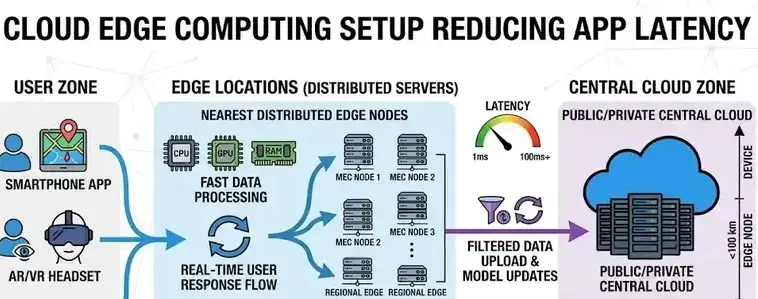
AI Tools for Reducing Latency in App Development: 7 Powerful Solutions

AI tools for reducing latency in app development are technologies and frameworks designed to optimize response times in intelligent applications. They work by improving computation speed, reducing data transfer delays, and optimizing system architecture. How can developers ensure consistent low latency across distributed systems and real-time applications?

Key Takeaways

  • AI tools for reducing latency in app development optimize speed across multiple system layers
  • Model compression and edge deployment are critical techniques
  • Infrastructure design directly impacts response time
  • Monitoring tools ensure consistent performance
  • Industry standards support secure and efficient implementation

What Are the Most Effective AI Tools for Reducing Latency in App Development?

AI tools for reducing latency in app development include platforms and frameworks that optimize inference, caching, and infrastructure.

Common tools and platforms:

  • Model optimization: TensorRT, ONNX Runtime
  • Monitoring systems: Prometheus, Grafana
  • Edge computing platforms: Cloudflare Workers, AWS Lambda@Edge
  • Distributed databases: Aerospike, Redis

Key capabilities:

  • Real-time inference acceleration
  • Memory-efficient execution
  • Load balancing across nodes

How Do AI Tools for Reducing Latency in App Development Work?

AI tools for reducing latency in app development operate by optimizing different layers of the application stack.

Core mechanisms:

  1. Model compression – Reduces model size using quantization and pruning
  2. Edge deployment – Moves computation closer to users
  3. Caching strategies – Stores frequent responses for instant retrieval
  4. Parallel processing – Executes tasks simultaneously
LayerOptimization TechniqueImpact on Latency
Model LayerQuantization, pruningFaster inference
Network LayerCDN, edge nodesReduced travel time
Data LayerIn-memory cachingInstant access

Which Industry Practices Help Reduce Latency in AI Applications?

AI tools for reducing latency in app development are most effective when aligned with industry practices.

Best practices:

  • Use event-driven architectures for real-time responsiveness
  • Implement asynchronous processing pipelines
  • Adopt microservices architecture for modular scaling
  • Monitor latency using Service Level Objectives (SLOs)

Regulatory alignment:

  • ISO/IEC 27001 for secure data handling
  • GDPR for data locality compliance
  • SOC 2 for system reliability

How Can Developers Optimize AI Agents and Frameworks for Speed?

AI tools for reducing latency in app development improve agent performance through targeted optimizations.

Steps to improve speed:

  1. Reduce prompt size and complexity
  2. Cache intermediate responses
  3. Use streaming outputs instead of batch responses
  4. Optimize frameworks such as LangChain with memory control

A common related consideration includes improving agent execution speed, optimizing LangChain workflows, and reducing response delays in distributed systems.

What Role Does Infrastructure Play in Latency Reduction?

AI tools for reducing latency in app development depend heavily on infrastructure design.

Infrastructure strategies:

  • Deploy multi-region servers to reduce geographic delay
  • Use GPU acceleration for heavy computation
  • Implement load balancing to distribute traffic
  • Adopt serverless architectures for dynamic scaling

Example:
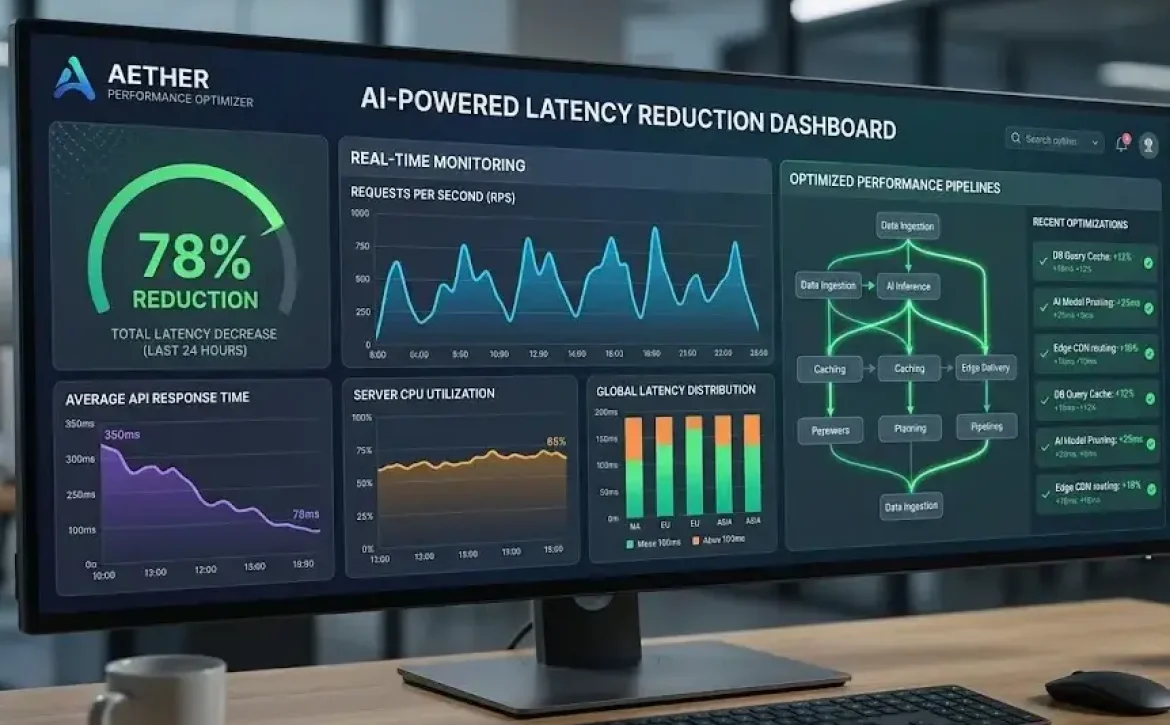
A fintech app using edge computing can reduce transaction response time from 300ms to under 100ms.

How Is Latency Measured and Monitored in AI Systems?

AI tools for reducing latency in app development include monitoring systems to track performance in real time.

Key metrics:

  • Response time (ms)
  • Throughput (requests per second)
  • Time to first byte (TTFB)

Monitoring tools:

  • Real-time dashboards
  • Distributed tracing systems
  • Log-based anomaly detection

Conclusion

AI tools for reducing latency in app development provide structured methods to optimize performance across models, infrastructure, and data layers. Their effectiveness depends on combining technical tools with standardized practices and scalable architecture. Future implementations should align with frameworks such as responsible ai practices in app development to ensure both performance and system reliability.

FAQ

What are AI tools for reducing latency in app development?

They are platforms and techniques used to minimize response time in intelligent applications through optimization and efficient resource use.

Why is latency important in app development?

Low latency ensures faster response times, improving user experience and system performance in real-time applications.

How can latency be reduced in AI systems?

By using model optimization, caching, edge computing, and efficient infrastructure design.

What is the role of edge computing in latency reduction?

It processes data closer to users, reducing network delays and improving response speed.

Which industries benefit most from low-latency AI applications?

Finance, healthcare, gaming, and real-time analytics platforms benefit significantly from reduced latency.

Sources

https://www.walturn.com/insights/reducing-latency-in-generative-ai-applications
https://coralogix.com/ai-blog/reducing-latency-in-ai-model-monitoring-strategies-and-tools/
https://medium.com/@yuxiaojian/building-responsive-ai-a-practical-guide-to-optimizing-agent-latency-7364e12937af
https://www.linkedin.com/pulse/optimizing-performance-flutter-ai-apps-reducing-latency-cdq1f
https://latitude.so/blog/5-ways-to-reduce-latency-in-event-driven-ai-systems
https://www.novumlogic.com/eli5/how-do-we-reduce-latency-in-our-ai-stack
https://techexactly.com/blogs/latency-in-ai-applications
https://www.cqlsys.com/Latency-real-time-apps-gaming-fintech
https://aerospike.com/blog/real-time-ai-latency-cost-reduction/

READ MORE
Uncategorized
Umesh Kumar KhiriApril 30, 2026 0 Comments
Share article:TwitterFacebookLinkedin
19 Views
5 Likes

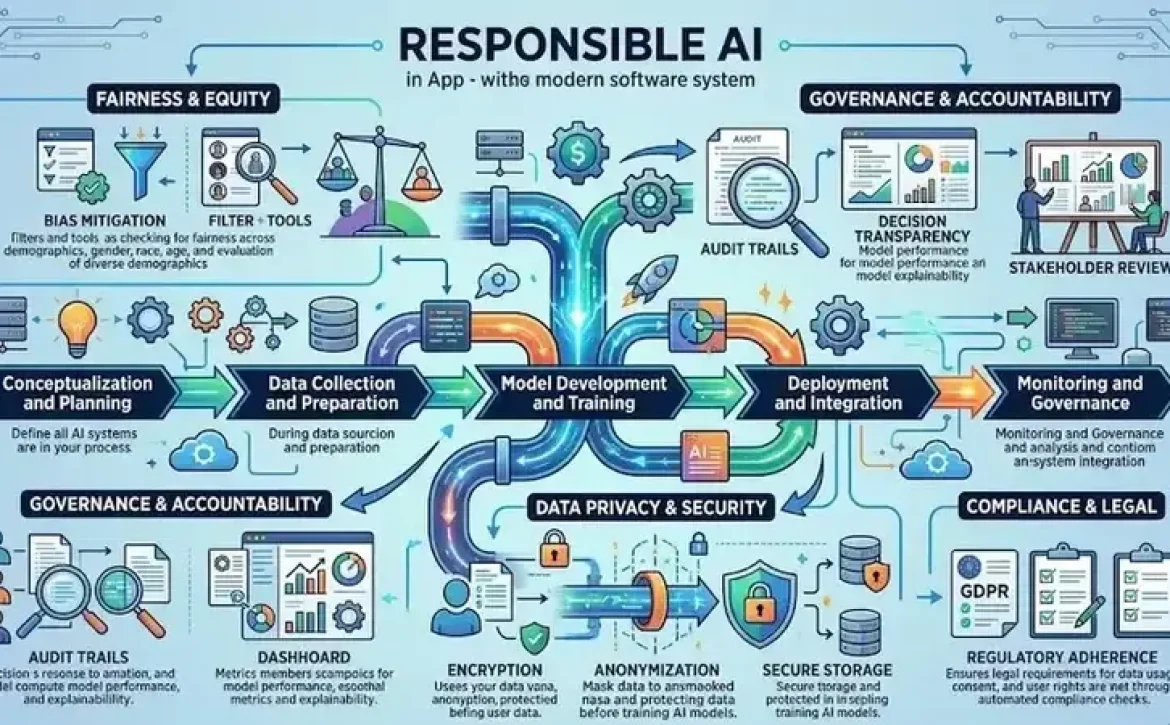
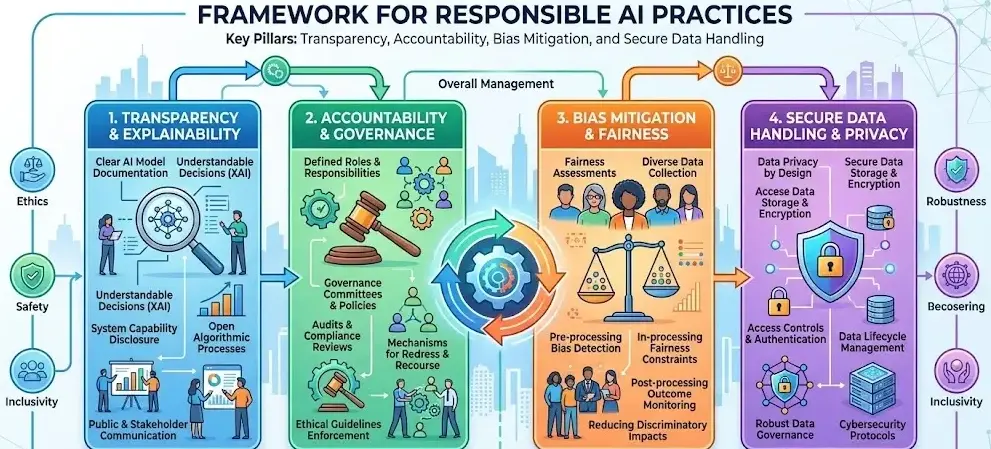
Responsible AI Practices in App Development: 7 Essential Principles for Reliable Systems

Responsible ai practices in app development refer to the implementation of ethical, transparent, and accountable methods when designing and deploying intelligent application features. These practices ensure that systems operate reliably, respect user rights, and comply with regulatory standards. How can organizations ensure that intelligent systems remain fair, secure, and auditable at scale?

Key Takeaways

  • Responsible ai practices ensure fairness, transparency, and accountability
  • Governance frameworks are essential for oversight and compliance
  • Regulatory standards guide implementation across industries
  • Continuous monitoring helps mitigate risks and biases
  • Practical applications span healthcare, finance, and retail sectors

What are responsible ai practices in app development and why are they important?

Responsible ai practices in app development establish safeguards that ensure systems behave predictably and ethically.

Key objectives include:

  • Ensuring fairness in automated decisions
  • Maintaining data privacy and security
  • Enabling transparency and explainability
  • Supporting regulatory compliance

Example:
A financial application using credit scoring models must prevent bias against demographic groups and provide explainable outcomes.

What principles define responsible ai practices in app development?

Responsible ai practices in app development are built on widely accepted principles used across industries.

PrincipleDescription
FairnessAvoids discrimination in outputs
AccountabilityAssigns responsibility for system outcomes
TransparencyEnsures decisions can be understood
PrivacyProtects user data and sensitive information
SecurityPrevents misuse and unauthorized access

Industry Practice:
Organizations implement bias detection tools and conduct fairness audits during model validation.

How is responsible ai governance applied in app development platforms?

Responsible AI governance in app development platforms

Responsible ai practices in app development rely heavily on governance frameworks to ensure consistent oversight.

Core governance components:

  • Policy frameworks: Define acceptable system behavior
  • Risk assessments: Identify potential ethical or operational risks
  • Audit mechanisms: Track decisions and system outputs
  • Compliance checks: Align with standards like GDPR and ISO/IEC 27001

Example Workflow:

  1. Define governance policies
  2. Conduct risk classification
  3. Implement monitoring tools
  4. Perform periodic audits

What are common challenges in implementing responsible ai practices in app development?

Responsible ai practices in app development face several operational and technical challenges.

Key challenges:

  • Data bias and incomplete datasets
  • Lack of explainability in complex models
  • Integration with legacy systems
  • Evolving regulatory requirements

Mitigation strategies:

  • Use diverse and representative datasets
  • Apply explainable model techniques
  • Establish continuous monitoring systems

How do regulatory standards support responsible ai practices in app development?

Responsible ai practices in app development are aligned with global regulatory frameworks.

Common standards:

  • GDPR: Data protection and user consent
  • HIPAA: Healthcare data security
  • ISO/IEC 27001: Information security management

Example:
A healthcare application must comply with HIPAA by ensuring encrypted data storage and controlled access.

What are practical examples of responsible ai practices in app development?

Responsible ai practices in app development are implemented across various industries.

Examples:

  • Healthcare apps: Diagnostic support systems with audit trails
  • Retail apps: Personalized recommendations with user consent
  • Finance apps: Fraud detection with explainable alerts

A responsible ai practices in app development pdf is often referenced alongside ethical ai frameworks, compliance guidelines, and model risk management documentation.

Conclusion

Responsible ai practices in app development provide a structured framework for building reliable, compliant, and transparent systems. Organizations that integrate governance, fairness, and accountability can ensure long-term system integrity. For broader context, understanding the limitations of ai in app development helps refine these practices and address real-world constraints effectively.

FAQs

What are responsible ai practices in app development?

They are structured methods ensuring fairness, transparency, and compliance in intelligent application systems.

Why are responsible ai practices important?

They reduce risks such as bias, data misuse, and regulatory violations.

Is governance a core part of responsible ai practices?

Yes, governance ensures oversight, accountability, and compliance throughout the development lifecycle.

What industries require responsible ai practices the most?

Healthcare, finance, and retail rely heavily on these practices due to sensitive data and decision-making impact.

How can developers implement responsible ai practices effectively?

By using ethical guidelines, conducting audits, and aligning with regulatory standards.

Sources

https://www.sap.com/slovenia/resources/what-is-responsible-ai
https://inapp.com/blog/ethical-considerations-in-ai-development-importance-of-responsible-ai-practices/
https://www.cometchat.com/blog/15-responsible-ai-practices
https://www.microsoft.com/en-us/ai/responsible-ai
https://www.ibm.com/think/topics/responsible-ai
https://hightechinstitute.nl/cultivating-responsible-ai-practices-in-software-development/
https://rootstack.com/en/blog/responsible-software-development-ai-rootstack-best-practices
https://medium.com/@techwave/ai-ethics-in-application-development-key-considerations-for-responsible-innovation-fa1f49b8f12b
https://www.calls9.com/blogs/responsible-ai-why-it-matters-and-how-to-get-it-right

READ MORE
  • 1
  • …
  • 8
  • 9
  • 10
  • 11
  • 12
  • …
  • 14

Recent Posts

  • Debugging Goals in Software Testing: 7 Powerful Benefits for Reliable Applications
  • Importance of Debugging in Software Development: 7 Powerful Benefits for Software Quality
  • What Is the Purpose of Debugging in Software Testing? 7 Powerful Benefits You Must Know
  • How to Debug Software: 7 Essential Methods for Finding and Fixing Errors
  • Debugging in Software Development Cycle: 7 Powerful Techniques for Error-Free Applications

Recent Comments

  1. Fred Hyman on Yellow Cap
  2. Fred Hyman on T-Shirt Full Hand
  3. Fred Hyman on Yellow Cap
  4. Randal Gray on Black T-Shirt
  5. John Harris on Black T-Shirt

Archives

  • June 2026
  • May 2026
  • April 2026
  • March 2026

Categories

  • AI in App Development
  • Uncategorized
Recent Posts
  • Debugging Goals in Software Testing: 7 Powerful Benefits for Reliable Applications
    Debugging Goals in Software Testing: 7 Powerful Benefits for Reliable Applications
    June 9, 2026
  • Importance of Debugging in Software Development: 7 Powerful Benefits for Software Quality
    Importance of Debugging in Software Development: 7 Powerful Benefits for Software Quality
    June 9, 2026
  • What Is the Purpose of Debugging in Software Testing? 7 Powerful Benefits You Must Know
    What Is the Purpose of Debugging in Software Testing? 7 Powerful Benefits You Must Know
    June 8, 2026
Categories
  • AI in App Development5
  • Uncategorized129
logotype

RCEENetworks LLC

1-844-284-3695

info@rceenetworks.com

3010 Lyndon B Johnson Fwy #1200, Dallas, TX 75234, United States

Menu

HomeServices

ProductsBlog

Contact

Other Links

RetinaWiseAI™Privacy PolicyContent PolicyTerms & Conditions

Social Links

TwitterFacebookInstagramLinkedin

Copyright © 2026 RCEENetworks LLC. All Rights Reserved